Showing posts with label Vespers. Show all posts

Wednesday, February 22, 2017

Foundation Day

I headed off bright and early this morning to drive the 150 km south to Colebrook, arriving at 9:45 am. Gradually more and more familiar faces arrived. For we were all assembled with our Archbishop, well over a hundred laity and clergy together, to celebrate the foundation today of Notre Dame Priory at St Patrick’s, a beautiful Pugin-designed church that has waited 160 years for this great day, when, as we all remarked afterward, it was finally used for what it was built for: the full traditional liturgy of Solemn High Mass coram archiepiscopo in the late morning and Solemn Vespers mid-afternoon. The servers were the five young men who are the first candidates for the monastic life to arrive and begin the foundation, for the present in temporary accommodation in Lindisfarne; more will arrive in due course. 

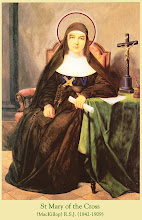
The Mass Propers of the Chair of St Peter were expertly sung by Ronan and friends, as was the Ordinary of the Mass (Mass IV and the little-used Credo V), all sensitively accompanied by Stephen Smith on the church’s recently-installed organ. His Grace preached, and, the sacred mysteries consummated and received, Fr Prior gave a speech of thanks after the Last Gospel, before a final Sub tuum at the Lady Altar together with prayer to St Joseph and invocations of St Mary of the Cross, secondary patroness of the new monastery, and of St Patrick, titular of the church. The morning liturgy lasted an hour and forty minutes all told.

We decamped to the Colebrook Hall for luncheon, where all and sundry had a great time catching up, toasting the foundation and delighting in such a joyful day. Afterwards, I had time to stroll around the little township before returning to church for Solemn Vespers (again expertly sung, lasting about 35 minutes) followed by Benediction (at exposition, Jesu dulcis memoria, then silent adoration, the usual Tantum ergo &c. before the blessing, the Divine Praises afterward, and at reposition the Benedictine Te decet laus), concluding at 5:30 pm.

After final farewells, I set off for home at six o’clock, and got back by eight. A wonderful day!

Thursday, November 17, 2011

Everyone: Pray Lauds, Vespers and Compline

“I would like to renew my call to everyone to pray the Psalms, to become accustomed to using the Liturgy of the Hours, Lauds, Vespers, and Compline. Our relationship with God can only be enriched by our journeying towards Him day after day”.

— Benedict XVI, Wednesday General Audience, 16th November 2011

I must step up my prayer life to meet this pontifical encouragement: for too long, while I pray Lauds in the Carmelite chapel since I attend an early Mass there daily, I've let pressure of work distract me from the rest, although I make time for Compline.  Hence, I resolve to return to Vespers.

Friday, January 21, 2011

Vernacular Liturgy: Dolphins, bless the Lord

While in a very interesting bookshop off Cuba Street in Wellington, I found a useful book: Lauds, Vespers and Compline in English (Collegeville: The Liturgical Press, 1965).  It advertises itself as being reprinted from (in conformity with Sacrosanctum concilium) "an officially approved edition of the Roman Breviary".

Therefore, I have this week (recovering from my holiday) been using this book for Lauds, Vespers and Compline: it's curious to pray in English again.  I find the translation of the psalms used - the Confraternity version adapted to the Breviary - strangely reminiscent of the Grail Version.  It is most useful as regards the Office Hymns, which it wisely translates as prose.

Some of the phrases used are a little odd: this morning, for the feast of St Agnes, the Sunday psalms being appointed, I was amazed to read in the Benedicite, "You dolphins and all water creatures, bless the Lord"!  I thought cetus meant whale; but perhaps the translators understood it to signify cetaceans in general.

Sunday, July 18, 2010

Vespers at St Mary's Cathedral

Solemn Vespers with Benediction at St Mary's Cathedral, Sydney, was most grand, sung by a male choir of about fourteen singers, with several servers assisting a priest in cope - and biretta!

The Vespers were those of Sunday in the 4th week of the Psalter, being according to the modern Divine Office, but were expertly and movingly sung in Latin, but for the Short Reading, and the concluding Intercessions, Lord's Prayer and Collect, being done in English as was quite reasonable.  The choir sang all parts in plainchant, but for a glorious polyphonic Magnificat.

After Vespers, the choir sang Palestrina's exquisite O sacrum convivium; then choir – who had relocated to kneel at the altar rails – and people sang the O salutaris Hostia, the Sacrament was exposed in the monstrance, and the usual Prayer for Christian Unity, then Tantum ergo, versicle and prayer followed, all still in Latin; Benediction having been given, the choir sang the Divine Praises in English, before, at Reposition, the Adoremus in æternum with Psalm 116, Laudate Dominum.  The simple Salve concluded a devout period of prayer.

The whole service took just over 40 minutes, what with beautiful organ music before and after, ending with a Bach toccata.  As Dylan Thomas had a character say in Welsh, Ahh, Bach vach!

Saturday, January 30, 2010

Vespers pre- and post-1912

As all men know, Pope St Pius X did two very daring things: 
  • first, he caused a change to the traditional order of reception of the sacraments - not of set purpose but because he desired to encourage all frequently to partake of Holy Communion, and so ordered that all children having reached the age of reason could communicate - as the age for Confirmation remained what it had been previously, in most countries it transpired that children began making their first Holy Communion before being confirmed; 
  • second, he had the weekly order of reciting the psalmody in the Divine Office rearranged - so that nearly all the psalms were recited only once in the week (rather than some being repeated every day), and thereby shortening the Office, while ensuring, by a change of the rubricks, that on most days (other than the great feasts) the ferial psalms were said, so that each week most of the Psalter was prayed (by the growth in the number of feasts over the centuries, which took their psalms from the Common, many psalms allotted to ferial days were hardly ever said).

Whatever of the first concern, the second I think, over all - beware, those besotted with the ancient Roman cursus psalmorum! "Rome has spoken..." and all that - to have been beneficial.  

For a start, rather than daily reading the long Psalm 118 at the  Little Hours, and having twelve psalms to get through each night at Matins, it was decided to reduce Matins to nine psalms or portions thereof, and to redistribute the surplus psalms over Prime, Terce, Sext and None, moreover making each of those Hours somewhat shorter than before.  

This to be honest made the Little Hours much more interesting, and reduced the fatigue of the Night Office - certainly I enjoy the daily variation at Prime, Terce, Sext and None (unfortunately, the lengthy and highly repetitive nature of Psalm 118 still can make these Hours difficult on Sundays and feasts, I find), and given that I find even nine psalms or parts thereof rather tiring, I hate to imagine how twelve full psalms would seem.  The reforms reduced the length of Matins on most days by half, or even by two-thirds!

(That said, it is said that an angel appeared to one of the Desert Fathers to reveal that twelve was the right number of psalms for Matins.  Then again, I'm not a holy hermit!)

I will leave aside the changes made to Lauds for a later post...

As for Compline, I do wish that it hadn't been changed, and had remained invariable - Psalms 4, 90 and 133 are supremely suitable for the Hour.  As it is, on ferias other psalms, redistributed from Matins, were introduced, which rather destroyed one beauty of Compline: that it could be said from memory in darkness just before retiring for the night.  (Benedictines retained both their ancient invariable Compline, and the lovely custom of singing it in choir entirely unlit, but for a candle burning before the image of Our Lady, to which all turned at the end to sing her anthem.)

But my real interest is Vespers, pre- and post-1912.

Vespers had always consisted of five psalms each day, taken in order from Psalms 109 to 147 (except for four: 117, used at Prime or Lauds; 118, used at the Little Hours; 133, at Compline; and 142 at Lauds one morning).  Psalms 1 to 108 were nearly all used at Matins, and some at Lauds, Prime and Compline; Psalms 148 to 150, the Laudate psalms par excellence, were used daily together at Lauds, which was named after them.

Surprisingly little change was made: only five psalms were removed entirely (and employed at Lauds), and four were moved forward by a day, while four were divided into portions:

  • Sunday — Pss 109, 110, 111, 112, 113 [unchanged]
  • Monday — Pss 114, 115, (116 - moved to Lauds), 119, 120 (plus 121 from Tuesday)
  • Tuesday — Pss (121 - moved back), 122, 123, 124, 125 (plus 126 from Wednesday)
  • Wednesday — Pss (126 - moved back), 127, 128, 129, 130 (plus 131 from Thursday)
  • Thursday — Pss (131 - moved back), 132, (134 - moved to Lauds) 135 (broken into two), 136 (plus 137 from Friday)
  • Friday — Pss (137 - moved back), 138 (broken into two), 139, 140, 141
  • Saturday — Pss 143 (broken into two), 144 (broken into three), (145, 146, 147 - all moved to Lauds)
One happy consequence of this reform was that the disparity in length of psalmody (measured by the number of verses of the psalms to be recited) between different evenings at Vespers was diminished: before 1912, Monday, Tuesday and Wednesday Vespers were all very short, less than half as long as Vespers of the other days - while Thursday evening had a particularly lengthy Vespers, which was cut down to size by the reforms.  By roughly evening the evenings up, it would seem that some good was effected.

In summary, Sunday Vespers remained unchanged, Vespers of Monday through to Friday more or less had two changes each, but remained mainly unchanged, and only Saturday Vespers (first Vespers of Sunday) was markedly affected.

Yes, it will be noticed that it is Saturday Vespers - such as first Vespers of Septuagesima, which I've claimed below can be truly called the start of the Church's Year of Grace - that has been cut down.

Perhaps, pro pia devotione, one could read Psalms 145, 146 and 147 after Saturday Vespers, to experience somewhat of the character of that Hour in its older form.

Friday, October 2, 2009

Vespers of the Holy Guardian Angels

Vespers of our Angel Guardians has a twofold focus: first, as always, praise of God, imitating the chief and eternal duty and joy of His Angels; secondly, respectful veneration of the Angels in gratitude for their ready care for us, as the Lord commands.

"The Lord hath mandated his Angels concerning thee, that they guard thee in all thy ways" (first antiphon); "Blessed be God, Who sent His Angel, and freed His servants who believed in Him" (fourth); "Behold, I will send My Angel, Who shall precede thee and guard thee in the way and bring thee to the place which I have prepared: obey him and listen to his voice" (little chapter); "Holy Angels, our guards, defend us in battle, that we perish not at the tremendous Judgement" (Magnificat antiphon): these sentences sum up our knowledge of and trust in those ministering spirits sent to help us, the heirs of salvation.

In the other antiphons, the primary concern of the angels - the adoration of God Almighty - is confessed, and our lowly praise is joined to theirs (as every Preface sings at Mass): "Let us praise the Lord, Whom the Angels praise, Whom the Cherubim and Seraphim proclaim Holy, holy, holy" (second antiphon); "Their Angels ever behold the Face of My Father, Who is in heaven" (third); "Praise the Lord, all His Angels; praise Him, all His Powers" (fifth); "In the sight of the Angels I will psalm unto Thee, my God - I will worship toward Thy holy temple, and confess Thy Name" (versicle).

The hymn (by St Robert Bellarmine) sums up much of this - here is a translation, perhaps by Neale:

The Guardians of our race, our Angel Guides we hail;
our Father sendeth forth to aid our nature frail
these heavenly friends, lest we should suffer overthrow
through cunning of our subtle foe.

For he, who justly lost the honour once his own,
the traitor angel, rues his lost and vacant throne,
with burning envy strives to make them fall away
whom God doth call to heavenly day.

Then, watchful Guardian, spread thy wings and cleave the air,
haste hither to our home committed to thy care;
drive thence each noxious ill that might the soul infest,
nor suffer danger here to rest.

Now to the holy Three your praise devoutly pour;
His glorious Godhead guides and governs evermore
this triple fame; to him ascribe we all our praise
who reigns through everlasting days. Amen.

Triple Vespers

It seemed right that this Friday evening, as penance and devotion both, to read Vespers of Our Lady (since I use her Little Office), then Vespers of the day - that is, of the Holy Guardian Angels - and then straightaway (after the Benedicamus Domino) Vespers of the Dead, in suffrage for the many who have perished in natural disasters this week.

Having read back-to-back these prayers, it was interesting to reflect on something of all three Vespers: for a start, their psalms: Pss 109, 112, 121, 126 and 147 (as for feasts of the Virgin); Pss 109, 110, 111, 112 and 137 (the Sunday psalms, but for the last, which is proper for feasts of Angels on account of its second verse); and Pss 114, 119, 120, 129 and 137 (as appointed when praying for the deceased) - three of which I'd read at the Little Hours of the Little Office.

Dixit Dominus (Ps 109), that grand mysterious messianic psalm, is read in honour of the Incarnate Lord, both on feasts of His Mother, and on well-nigh all important feasts, for He is Lord of all. Laudate pueri Dominum (Ps 112) reminds us that the Lord looks down to lift up the lowly, and to gladden the childless with children - hence the Marian dimension; while in allusion to the angels, He it is Who cares for us, who are so lowly, via His messengers, sent from above. Interestingly, Confitebor tibi Domine (Ps 137) is used for Vespers of the Dead as well as on to-day's feast of the Guardian Angels, given its reference to the Lord regarding the lowly, not despising the works of His Hands (the Hands of the Father are the Son and the Spirit, according to the Fathers).

Posture, too, comes into all this: I customarily kneel (when praying more formally) before beginning the Hour standing (for the Deus in adjutorium), and of course bow for the Glory be's in worship of the Trinity; after the first antiphon and first half-verse, one sits for the psalmody; one rises for the little chapter and remains standing through to the end - but for the Ave maris stella, for whose first stanza one kneels. Finishing Vespers of Our Lady, one does the same for the day's Vespers (of the Holy Angels), but, for Placebo (Vespers of the Dead), one sits for the psalmody (nor are there Glory be's to bow for), rising only for the Magnificat, then kneels for the concluding prayers.

During the combined Hours, some gestures are constant: the sign of the Cross at the Deus in adjutorium and Magnificat; bowing one's head at the Holy Names of Jesus and Mary; and, by custom, bowing one's head also at the words Sanctum et terribile nomen ejus (Ps 110:9a) and Sit nomen Domini benedictum (Ps 112:2a), and, following less common practice, at et sanctum nomen ejus (fourth verse of the Magnificat) and at Sanctificetur nomen tuum (in the Lord's Prayer).

Am I niggling and wasting my time on absurdities? If this outward practice were the sum of my cares, yes! But if the posture reflect something of the heart, then external reverence reinforces the wavering flame of interior piety. I hope in blogging about "shutting the door and praying to your Father in secret" I have not lost my reward (!), but offer these thoughts in case others pray in similar ways, and may find these little points of interest.

Thursday, September 17, 2009

Vespers? Vespers! Vespers - II

Sorry, gentle readers, about the break in transmission...

******

Finally, after exploring Florence for some hours, I came to enter the great Baptistery. What a magnificent ceiling, in Byzantine mosaic, effulgent with gold, with Christos Pantokrator enthroned amid the choirs of angels!
Over opposite the Baptistery altar - where there is Mass twice daily, by the way - there is the famous font, where so many Florentines have received the sacred laver of regeneration. There, St Philip Neri received the spark of divine grace, that, by his remaining ever faithful to which, flowered into everlasting glory. All his particular graces - even the miraculous dilation of his heart by the Holy Ghost - were as nothing compared to this sacramental elevation that made his soul capax Dei.
Holy Baptism is never sufficiently to be praised. The Universal Call to Holiness consists in our fidelity to this saving grace given by our new birth from the font. If, unlike St Philip, we have not preserved our baptismal innocence, we can at least take his urgent advice and frequent the confessional, which is the "second plank after shipwreck", clinging to which we can be rescued from the lamentable ruin of sin.
******
The Duomo was closed to tourists by this hour, but I gained admittance by asking to attend Vespri (as was advertised). Vespers? No, not on a feria after all, but instead there was Rosario in Italiano - I just gave the responses in Latin. (Despite my advertisement of it, I don't say it nearly enough.)
******
On to Vespers! At the Badia Fiorentina - where the "Monastic Communities of Jerusalem", one of those new religious movements, has its house here in Florence - there was Vespers at six, to be followed by Mass.
Vespers turned out to be sui generis: there were twenty of the monks and nuns present (the two live separately but worship together), with many laity also. Vespers were sung (but for the reading) in four-part harmony, all in Italian but for one item. The order of service was as follows:
  • "God, come to my aid" and Glory Be with Alleluia;
  • Hymn to the Holy Spirit;
  • Verses proper to the feast, with the first stanza of the Stabat Mater (in Latin) as an antiphon;
  • Lucernarium (Ps 140:1-2) *, during which a monk censed the altar and people;
  • Phos hilaron (that very ancient evening hymn), during which a nun lit the altar candles;
  • Psalms 29 and 42;
  • Canticle from the Old Testament (Isaias liv, 11-15. 17);
  • Canticle from the New Testament (Apoc. iv, 11 & v, 9b-10. 12b);
  • Lesson - which to my ears sounded awfully like an extract from the Lamentation of the Theotokos by St Romanos the Melodist! - then organ music;
  • Intercessions with response;
  • Trisagion ("Holy God, Holy Mighty, Holy Immortal, have mercy on us"), sung thrice, with doxology, in Byzantine style, making a metanoia (bowing and touching the ground before crossing oneself) each time.
As can be seen, the Communities seem to have drawn on Ambrosian (*) and Byzantine sources for their liturgy.
Then it was time for Mass....
The celebrant, I was surprised to find, was the Archbishop of Florence. One of the communities' priests was principal concelebrant; the other four only joined them at the altar for the Eucharistic Prayer. Most of the service (unlike their Vespers) was not sung: however, the Kyrie, Responsorial Psalm, Alleluia, Gospel responses, Sanctus, Memorial Acclamation, Agnus Dei, Communion hymn, and a final Magnificat afterward (normally sung at the end of Vespers, with a Pater noster and Collect?) were.
The ritual seemed Catholic but a bit eccentric - if they have permissions for these oddities, well and good, they seemed pious, but I wonder...
For example, not the Archbishop, but one of the monks (standing in front of the altar) censed the oblations while His Grace offered them at the Offertory, and one of the nuns had previously led the offertory procession with a lighted candle, which she placed on the altar (a Sanctus candle?!). While in Italy it is the custom to kneel just for the Epiclesis and Consecration and Elevations, the monks and nuns merely bowed most devoutly and deeply. Come the sign of peace, they floated very piously through the church, bringing silent greetings to all of us! For Communion, they filed into the sanctuary, to receive at the same time as the Archbishop and priests (this was misguided, I believe, since there is an hierarchical order to be observed: as the ancient Mozarabic Rite had it, Accedite locis vestris - "Approach your [respective] places").
In any case, it was good to receive the Pontifical Blessing after my second Communion of the day.
Then, I read proper 1962 Vespers ad mentem Summi Pontificis.
******
Dinner (€20) was mixed antipasti, then bistecca fiorentina (what else would one eat?) and biscotti with vin santo. Very good.
I took a stroll around the city in the evening, then back to my hotel for a real long soak in the bathtub for my tired feet - luxury!

Monday, August 10, 2009

Triple Vespers

The Levite Lawrence hath wrought a good work,
who by the Sign of the Cross gave sight to the blind,
and gave the treasures of the Church to the poor.
– Magnificat antiphon of 1st Vespers of St Lawrence

Having been grilled alive, defying the most impious tyrant by telling him, "I'm cooked, turn and eat!", by a surprising piece of ecclesiastical grim humour, St Lawrence is the Patron Saint of cooks: how appropriate, therefore, on this his feast ten years ago that devout Catholic Jennifer Paterson breathed her last, she of "Two Fat Ladies" fame...

I recall the amusing story about her and how she came to be a food writer and later a television personality: for years she was cook at the London offices of The Spectator, but was finally driven mad by the last-minute demands of her boss the editor ("Oh, Jennifer, we're having fifteen extra at lunch, including the Prince of Wales - they'll be here in forty-five minutes"), promptly opened the kitchen window and threw out all the crockery, which smashed in the courtyard far below - but, instead of sacking her, the editor admired her plucky spirit, and made her a writer for the magazine instead.

Famously, Paterson was a parishioner of the London Oratory, and her uncle was gentiluomo to Cardinal Hume; apparently a bequest from her helped the publication of The Catholic Hymn Book, a fine collection of hymns. I pray that St Lawrence, St Philip and the Blessed Virgin intercede for her, that she have eternal rest in Christ.

I myself am one of those people that enjoy the pleasures of the table, and also quite like reading cookbooks - in fact, providentially a new tome arrived today: Darra Goldstein's The Georgian Feast: The Vibrant Culture and Savory [sic] Food of the Republic of Georgia. (I have hopes of travelling to Georgia in time, but unfortunately the situation there remains tense, with 30,000 Georgian refugees still unable to return to South Ossetia, still more displaced from Abkhazia, both those puppet states being propped up by the Russian military in a shameless manner: Georgia remains straitened within her narrow bounds - only just larger in area than Tasmania - with 18% of her territory under foreign occupation. It seems to me to be somewhat imprudent to travel there at present, alas.)

I think those in the know would agree with me that Georgian cuisine is underrated and not well-enough known: after all, from Poti (ancient Phasis) on the Georgian Black Sea coast (ancient Colchis, end of Jason's quest, the land of the Golden Fleece) came in the beginning the bird of Phasis - the pheasant, king of birds, Phasianus colchicus. I could go on...

But to return to St Lawrence: whenever I think of him, I recall the first portion of the antiphon quoted above - "The Levite Lawrence hath wrought a good work, / Who by the Sign of the Cross gave sight to the blind" - which is also used in shorter form both as another antiphon and as a versicle, and in longer form as the first responsory of his Matins:

R/. The Levite Lawrence hath wrought a good work,
who by the Sign of the Cross gave sight to the blind,
* and gave the treasures of the Church to the poor.
V/. He dispersed, and gave to the poor:
his justice shall abide world without end.
* And he gave the treasures of the Church to the poor.

All true miracles are gratia gratis data, ad ædificandam Ecclesiam: graces given gratis, for the building up of the Church; so it was no wonder that Lawrence the Deacon, that is, one who was a Minister and a Servant, a sacramental icon of Christ the Servant and Minister, performed a signal sign by curing the blind - most significantly, by the Sign of the Cross, that which from a ignominious gibbet has become the Sign of Salvation.

Christ gave sight to the blind, in token that He was the true and only Light of the world, and to shew that in due process of time He would bring light to them that sat in darkness and in the shadow of death, by opening unto them the gate and door of salvation. The servant is not greater than his Master, but follows in His steps: St Lawrence wrought a good work, by freeing from physical blindness a man, thereby giving visible proof to the invisible realities at work, that God through His servants and ministers can not only cure the blind, but through holy Baptism bring illumination to the blind, sinladen soul: not for nothing was Baptism anciently called Photismos and the bath of enlightenment.

Christ may have healed but a few in His day, as the Gospels tell, but by His Cross He saved the dying world going down to death, rising again to be its Life. Likewise, in due measure, St Lawrence, faithful and true witness to Him Who is Faithful and True, healed one, but by his great martyrdom - so the Fathers dare to say - merited the final conversion of pagan Rome, thus bringing salvation to a great Empire of earth, so extending the rule of Christ the King.

It must also be noted that St Lawrence combined in his own person, as servant of the Church of Rome, and in a sense locum tenens thereof (Pope St Sixtus II having but days before been slaughtered at the altar), both faith and good works in an heroic degree: by his miracles he gave proof positive of the power of God, and by his brave almsdeeds he gave witness to the overflowing charity that Christ preached: for as He, being rich, became poor for our sakes, that we may be made rich by His poverty, so St Lawrence, rather than hand over the Church's treasures to bulge the insatiable Imperial purse and feed the licentious luxury of the tyrant, gave rather to the poor these goods for their support, converting gold and silver into everlasting riches stored up in heaven: For inasmuch as ye have done so unto the least of My brethren, ye have done so unto Me, saith the Lord.

To celebrate his feast day, I read Vespers of Our Lady first (keeping to her Little Office as is my wont nowadays), then Vespers of St Lawrence (making my first use of the Breviary Office for some weeks), and finally Vespers of the Dead, in suffrage for the suffering souls in Purgatory, enduring purification by penitential fire (praying for all the faithful departed, including dearly departed Jennifer).

As his Collect reminds us, it is through, with, and in Christ our Lord, by His all-meritorious Passion, by His power and grace, that St Lawrence was able to overcome the dread trial of being charred and cooked on a gridion, and that we may overcome our own vices, burn and inflame they us ever so hotly:

Grant us, we beg, almighty God, to extinguish the flames of our vices, Who didst give unto blessed Lawrence to overcome the fires of his torments: through Christ our Lord. Amen.

Blessed Lawrence, Martyr of Christ, intercede for us.

Sunday, June 14, 2009

Schola Gregoriana Hobartiensis: a Retrospect

While filing papers this evening I found my old Gregorian chant folders from my years as a member of the Schola Gregoriana Hobartiensis Spiritus Sancti ("the Schola"), from 1995 until 1999 - from when I learnt of its existence from a member, Bronwyn (please pray for her - she has a hole in the heart), to when I left Hobart for Melbourne, though I remained a guest member when in town...  

The Schola had been founded some years before by Bede Dunne, an accomplished musician and chant expert who had been conducting church choirs since before the Council; he is now very old, blind and frail (pray for him and his dear wife Joan, herself unwell), and in the past few years the Schola as I knew it, with its Benedictine ethos, died a natural death, though its latter function of providing music for the monthly Missa cantata has been continued by a new choir arising phœnix-like under new leadership with a new membership.

When I joined the Schola, its raison d'être was to chant Vespers roughly monthly (and occasionally other paraliturgical devotions, such as singing the Litanies of the Saints on St Gregory's day at the Cathedral, though that was before my time).  Once Fr (now Bp) Jarrett organized to begin monthly Latin Masses, he prevailed upon Bede to change our purpose to singing at these Missæ cantatæ, although in effect this meant the end of our orientation toward the sung Office.  

Despite this, the Schola maintained a monastic spirit: our weekly practices always began with the chanting of the hymn Veni Creator Spiritus, with versicle and collect, and concluded with sung Compline according to the Monastic Rite, observing due ceremonial.  I remember that my role (later taken by Ben) was to chant the lectio brevis - but one night, at the mention of adversarius vester Diabolus, who goeth about as a roaring lion seeking whom he may devour, Yvonne mischievously made a comic clawing gesture toward me - I couldn't sing my part straight-faced for a year afterward!

At one stage, Bede, in an access of fervour, even designed cream habits for us Gregorianists to wear, complete with scapulars embellished with a design signifying our Schola... owing to the embarrassment some of us felt at thus appearing in public (and in one newspaper article), these costumes were quietly laid aside.

But to return to my beginnings, chant-wise: the first liturgical function at which I sang with the Schola was (Monastic) Vespers of the Ascension, which was held at St John's, Richmond - site of our recent pilgrimage - back on Sunday (yes) the 28th of May 1995; as I recall, there was Benediction to follow, and Fr Hayres was only too pleased to preside.  According to my surviving copy, I was to intone the first antiphon, Viri Galilæi, and later the Magnificat antiphon O Rex gloriæ; still their tunes are in my head, as some of the first chant that ever I learnt.  It's strange to think that was fourteen years ago...

The weekend of Friday the 2nd to Sunday the 4th of February 1996 was used for a Gregorian chant workshop: Terce, Sext and None according to the Monastic Rite for Saturday and for Sunday, plus first Vespers of Septuagesima, all practiced hectically then sung in the church of St Canice - and there was much else...

Vespers of St Matthew, at St Matthew's, Pontville (1998); of the First Sunday of Advent at the Cathedral (1998); St Cecilia's Day at St John's, Glenorchy; various Sundays after Pentecost (such as in late October 1997 at the Cathedral again); Vespers of the Dead, which we sang at our practice venue, the parish hall of Sacred Heart, New Town; the fourth Sunday of Advent, according to the Roman Rite, at Corpus Christi, Bellerive (1997); Passion Sunday; the second Sunday after Easter; the third Sunday after Pentecost, or "within the Octave of the Sacred Heart", sung at Sacred Heart with Fr Jarrett presiding...

We even sang - and sang, and sang - unusually for us, mainly in English, at Sr Catherine Maria's eremitical consecration at St Francis Xavier's, South Hobart.  I can still hear Bede referring to "I am the Bread of Life" as having "a fairground tune"!

About the last Masses I find myself having sung were those of the Epiphany, and of a Sunday after the Epiphany, in early 2001.  But there were many others: Septuagesima 1996; second Sunday of Lent, 1996; Fourth after Easter, 1996; Trinity Sunday, 1996 and 1998; sixth and tenth and nineteenth and twenty-third after Pentecost, 1996; Advent Sunday, 1996; second Sunday of Advent, 1997 and 1998; Candlemas, 1997; third Sunday of Lent, 1997; Low Sunday, 1997; fifth after Easter, 1997; Corpus Christi, 1997; seventh and eleventh and sixteenth and twentieth after Pentecost, 1997; All Souls, 1997; fourth after Epiphany, 1998; first Sunday of Lent, 1998; Palm Sunday, 1998; third after Easter, 1998; fifth and ninth and fourteenth and eighteenth after Pentecost, 1998; All Saints, 1998; Sexagesima 1999; sixth and tenth after Pentecost again, in 1999...

During Bede's absences overseas or, increasingly, due to ill-health, Em would step in as choir-mistress pro tempore, but she was always first among equals, helping us master simple psalm-tones; Bede it was who would make our heads go round in circles as he carefully expounded the secrets contained in the adiastematic notation transcribed from old manuscripts into the Graduale Triplex, while we struggled to hit the right note!  We learnt many useful terms, such as celeriter, quilisma, epizema, and so forth world without end.

The Schola, when singing Mass, tended to restrict itself to attempting the proper Gregorian Introit, Offertory and Communion, plus perhaps the Alleluia (but not its verse); the Gradual was too difficult usually, and if time were short or our skills unequal, we would psalm-tone much of the Proper.  However, Bede would also give us interesting things to attempt, such as singing the Alleluia in organum, a fifth or an octave apart, producing a magnificently barbarous sound.  Since the people knew it, we nearly always sang Missa VIII - de Angelis - and Credo III.

From getting to know Ben and Jane, who came along to our early 1996 workshop, joined up and ended up giving me lifts to our practices, I gained an enduring friendship; the missal I take to Mass was a gift from them - it had belonged to Ben's mother Kathleen, a convert who had raised him and his brothers in straitened circumstances, and a staunch member of the Latin Mass Society of England and Wales: May she rest in peace.

I also remember in particular Kevin, a most humble and kindly older man, a secular Franciscan, who some years after perished in a house fire: Requiescat in pace.  I still remember sitting in the sun room reading Lauds with him one morning when we were attending a Gregorian chant intensive weekend workshop leading up to Pentecost in 1998, which we kept at Deloraine, again with Fr Hayres, that peripatetic priest (now retired), himself a noted astronomer, musician and ex-Olympic swimmer.  That weekend we sang the Proper chant at the Novus Ordo parish Mass, and then Vespers with Benediction in the evening.

You learn useful things in choirs: such as, "You're never louder than when you're wrong."

Absit omen!

Monday, June 8, 2009

Baptism, Vespers and Benediction

"If Tristan turns out a priest, I'll know whom to blame!" - that's what his Dad said beforehand, explaining how having Fr Tattersall come down from Melbourne to Hobart to baptize young Tristan, and having various Traddie friends come too, meant that the Baptism according to the Traditional Rite was to have Vespers of Trinity Sunday and Benediction added on after it...

About forty relatives, friends and faithful assembled at St Joseph's church, Hobart (a handsome church, with original rood and high altar intact, albeit the former rood screen was taken down; at least there is some fine woodwork evident in the sanctuary panelling and forward altar; there are several valuable nineteenth century American paintings hanging in the sanctuary, of Our Lady, the Ascension and St Joseph, one being away for restoration; and there is also original Pugin stained glass in the church, the inscription begging one to pray for "the good estate of Augustus Welby Pugin") at 6 pm.  In due course the ceremonies of Baptism proceeded, preceded by a sermon; after little Tristan Michael Casimir was duly exorcised, christened and made a child of God, co-heir with Christ and temple of the Holy Ghost, the priest, servers and choir parati made ready for the highly appropriate Vespers in praise of our Triune God.  

Somewhat shakily, yours truly joined in the chanting, led by the two rulers of the choir on stools in the sanctuary, and after the Evening Office of the Church had been prosecuted another hiatus ensued while all remaining was made ready for Benediction, whereat the supreme worship of latria was paid to Our Lord in the Blessed Sacrament exposed, that we might love Him and desire Him yet more: O salutaris... Prayer for Christian Unity... Tantum ergo... Benediction itself... the Divine Praises... Adoremus in æternum...

The evening's great dose of sacramental worship concluded at half seven.

Friday, April 10, 2009

Good Friday Vespers

Vespers need only be read by those who attend not the Solemn Commemoration of the Lord's Passion; but, despite attending it, as it was held at 3 p.m. and over within an hour and a quarter, as day drew on toward evening I decided to say Good Friday's Vespers pro pia devotione.  

These Vespers parallel in structure the solemn sobriety of their brother Lauds during the Triduum, with one curious difference - while they begin at once with the first antiphon of the first psalm, and continue with five psalms, each without Gloria Patri but with antiphon before and after, unlike at Lauds there is no versicle: how strange.  (They continue of course with the Magnificat and its antiphon, followed by the Christus factus est, silent Pater noster, and Collect Respice, all kneeling; the silent doxology of the last brings the Hour to a close.)

Monday, January 12, 2009

Weird Vespers

Vespers this evening were weird because they were ferial Vespers of Epiphanytide (psalms of Monday, then a capitulo from the Ordinary of Epiphanytide excepting the Epiphany Magnificat antiphon Tribus miraculis, and the Collect for the 1st Sunday after Epiphany), and Compline at bedtime will be ferial Monday Compline - and this is doubly weird, because it means that the Commemoration of the Baptism of Our Lord has no first Vespers nor festal Compline!

I must say I don't like these and other like traces of the late pre-Conciliar mucking about with the Breviary; they seem to have rather impoverished the Office.

Wednesday, December 10, 2008

Monastic versus Roman Day Hours

I've been exercised about the pros and cons of the Monastic Office compared to the Roman - and of course, the one thing we all want to know about is, Which is longer?
(Not having mine own copy of the Breviarium Monasticum, I made use of Google Books for the purposes of making certain comparisons.)

Well, the short answer is, the Psalmody of the Day Hours of the Monastic Breviary is about 4% longer on average, but of course the Monastic Office lacks certain elements of the Roman - it has only two short responsories a day as against five, no Nunc dimittis at Compline, and, at least in the Farnborough Abbey edition, there is no Officium Capituli at the end of Prime.  On the other hand, it does have Kyrie and Pater noster at every Hour, which is much to be desiderated.  So overall the two are roughly the same length within the limits of this rough measurement.

Short answer to question: The two are each just about as long as the other. 

The longer answer is that the devil is in the detail!  

For a start, Monastic Lauds is almost twice as long as the Roman, and no wonder: every day it consists of Psalms 66 and 50, then two variable psalms and an Old Testament canticle (on Saturday, the canticle is so long it's broken into two, and only one psalm accompanies it), and then Psalms 148, 149 and 150 sub una Gloria Patri, for a total of seven psalms and a canticle.  Prime, on the other hand, is exactly the same length in both rites, despite having quite different psalms allotted to it.  Still, of the 289 psalm verses on average in the Monastic Diurnal's psalmody each day, 148 of them - half - are got through at Lauds and Prime, which makes their recitation rather daunting!  (I try and say Roman Lauds and Prime before work; I doubt I'd be able to if I used their Benedictine equivalents.)

The Rule of St Benedict wisely provides that Terce, Sext and None be short; they are in fact each only about two-thirds as long as the comparable Roman Hours.  What a relief after Lauds...

As for Vespers and Compline, Roman or Monastic, their length is almost the same. 

My final reflection: while Traddies do tend to deprecate the psalter reform of Pope St Pius X, he did make it possible to get through all 150 psalms in the week* - which remains no mean feat even with the '62 Breviary, I can assure anyone: you need to devote an hour a day at least to it! - and did so by using each psalm only once, rather than repeating psalms on different days (as is done at Lauds, the Little Hours and Compline in the Monastic Breviary, and as was done even more in the pre-1912 Roman Breviary, which included such fatiguing joys as praying the whole of Psalm 118 every day).  As a result, even if one only prays the Day Hours of the Roman Breviary, one is exposed to 115 of the psalms, over three-quarters of the total - whereas, because of its repetitions, the Benedictine Diurnal only includes 72 psalms, just less than half of the Psalter.

*Recall what the Holy Patriarch St Benedict said in his Rule (chapter xviii):

We especially impress this, that, if this distribution of the psalms should perchance displease anyone, he arrange them if he thinketh another better, by all means seeing to it that the whole Psalter of one hundred and fifty psalms be said every week, and that it always start again from the beginning at Matins on Sunday; because those monks show too lax a service in their devotion who in the course of a week chant less than the whole Psalter with its customary canticles; since we read, that our holy forefathers promptly fulfilled in one day what we lukewarm monks should, please God, perform at least in a week.

What then of the Night Office?  (Which is called Matins, rather misleadingly, in the Roman, and Vigils in the Monastic terminology: both contain one or more Nocturns.)

It is said that an angel revealed to a desert Father that twelve was the appropriate number of psalms for the Night Office, and this is the number adhered to in the Monastic Nocturnal.  Be that as it may, in the Roman the number nine - no doubt in honour of the Nine Choirs of the angelic host - was settled on for feasts long ago, and since 1912 this has been the number of psalm-portions for each night.  Note how much longer Monastic Vigils must be: it must get through 78 psalms (some divided in twain) each week, and each Hour begins not just with Psalm 94, but with Psalm 3 beforehand.  Most holy, but very lengthy...  Whereas the Roman arrangement since 1912 has only had to cover 35 psalms a week, or 5 a night (again, breaking longer ones up into parts, as in the Day Hours as well), plus the prefatory Invitatory (Ps 94).

Again, I find Roman Matins quite long enough, and quail at the very idea of attempting Monastic Vigils.

Monday, December 8, 2008

First Vespers of the Immaculate Conception

I'm about to take up the Breviary and pray First Vespers of the Immaculate Conception of Our Lady.  

Last year I wrote a rather long post on this feast, to which I refer interested readers.

Wednesday, November 26, 2008

Vespers of St Sylvester, Abbot

Michael and I read Vespers of St Sylvester,  no longer in our defunct chapel, but at least before the icon corner - the Theotokos with the Infant Word enthroned with sundry saints, Apostles, the Forerunner and Holy Pontiffs; Our Lord Jesus Christ the Eternal High Priest; St Joshua the Patriarch; a rather uncanonical Greek-style depiction of the Trinity; the Synaxis of the Apostles; the Transfiguration; St Dominic in eastern style; and a western Crucifix - with its burning candles.  

To commemorate him who fled the world for the desert at the sight of an open grave revealing the corruption of all earthly vanities, we then ate some Belgian chocolate and drank a bottle of Chimay Grande Réserve while watching a doco about the great Churchill and his bodyguard...

Collect of Abbot St Sylvester:

Clementissime Deus, qui sanctum Silvestrum Abbatem, saeculi huius vanitatem in aperto tumulo pie meditantem, ad eremum vocare, et praeclaris vitae meritis decorare dignatus es: te supplices exoramus; ut, eius exemplo terrena despicientes, tui consortio perfruamur aeterno.  Per...

(Most clement God, Who didst deign to call holy Sylvester the Abbot, piously meditating on the vanity of this world before an open grave, to the desert, and to beautify him with the merits of an effulgent life: bending low we humbly pray, that, despising terrene things by his ensample, we may have fruition of Thine eternal company.  Through...) 

Wednesday, November 5, 2008

More on Relics - and Ferial Vespers - and Food

Being in didactic mood, here's some more about relics: now, besides my earlier comments, one notable Scriptural warrant for relics is that afforded by Eliseus taking up the mantle of Elias (dropt as he set off in that fiery chariot à la Erich von Däniken) and by its instrumentality working the wonder of parting the Jordan (IV Kings ii, 13f).  And in the sub-Apostolic age, the moving account surviving of the martyrdom of great St Polycarp (see the Letter of the Smyrnæans, chapters xvii & xviii) shews us his Christian flock desiring to "touch his holy flesh", made venerable by his holy life and death (xvii, 1; cf. xiii, 2-3) and so gathering his "his bones which are more valuable than precious stones and finer than refined gold" (xviii, 2) and declaring their due veneration thereof, as expressed through their keeping his annual festival as commemoration of his triumph and training for their own trials (xviii, 3), but duly distinguishing all this from their adoration and worship of God alone to the exclusion of other pretended gods (xvii, 2-3): for that was what their aged bishop had died to defend, after all.

The Fathers adduce four reasons for venerating relics, which of course in the beginning were always the relics of martyrs: (i) in their relics one sees the saints; (ii) the relics of those who bore witness even unto death acts as a spur to one's courage and constancy in persevering in all trials; (iii) the miracles worked through relics is testimony enough of God's approval thereof; and (iv) relics are the remains of our true friends, the saints made perfect, who are so close to the Lord and yet also to us their would-be coheirs.

As is well-known, a Traditional altar will contain the relics of saints (or, in the Byzantine Rite, the antimension - answering to the corporal - contains sewn into it such relics), whether the whole body of a martyr below the mensa, or small fragments in an altar-stone upon a temporary altar.  For this reason, at his ascension to the altar, the celebrant kisses the spot beneath which the relics lie, and prays Oramus te, Domine, per merita sanctorum tuorum, quorum reliquiæ hic sunt, et omnium sanctorum, ut indulgere digneris omnia peccata mea.  (Curiously, the prayer begins in the plural and ends in the singular! - "We pray Thee, Lord, by the merits of Thy holy ones, whose relics are here, and of all the saints, that Thou deign to forgive all my sins.")  Similarly, the Suscipe sancta Trinitas mentions - after Our Lady, the Baptist and the Princes of the Apostles - istorum et omnium sanctorum, where istorum ("of these") is considered to mean those saints whose relics are enshrined in the altar.  While of course the priest in kissing the altar principally acts to worship Christ, Whom the altar signifies and represents, the thought of subordinately revering His Saints, brought to heavenly glory by His Blood alone, is not absent.

There is of course a distinction to be made between the relative dulia paid to relics of the saints (a more intense veneration, by the way, than that due to sacred images: for in the icon the saint is religiously depicted, but in his relic his very earthly remains are present) and the absolute dulia paid to the saints in heaven, where they reign with Christ.  Aquinas handily distills the Church's teaching on relics in his inimitable Summa (III, xxv, 6).

Finally, there are four types of cultus to be lawfully rendered to relics: they may be exposed for veneration (and here it may be noted that reliquaries must not closely resemble monstrances, lest the faithful confuse the altogether singular adoration paid to the Blessed Sacrament with the religious regard paid to the remains of the saints); they may be borne in procession (as at the consecration of a church or altar or otherwise during the translation of relics or the solemnity of a saint - but in a distinct manner to that of a Eucharistic procession, of course); they may be kissed as a sign of reverence (this tending to prove the distinction between such lawful dulia, the supernatural counterpart of the natural honours paid to images of one's sovereign, and the latria paid to Christ in His Sacrament - for no one would dare attempt to kiss the Host, let alone imagine the far greater and dread privilege of receiving It did not Our Lord so command His Flesh be eaten); and they may used by priests as sacred instruments with which to bless the people, as once Eliseus took up the mantle of Elias to provoke the parting of the Jordan.

******

Since Oliver is taking his time moving in, our chapel is still usable, so Michael and I again used it for ferial Vespers.

For the record, Guéranger tells us that Vespers of All Relics is taken wholly from the Common of Many Martyrs, adding only the proper Collect (again, see my previous post) - this must be because relics are principally the mortal remains of martyrs (though in process of time they have come to encompass such traces of confessors and virgins as well), since the sacred relics of the countless hosts of early martyrs, those dauntless athletes of Christ and sharers in His Passion, were the first relics to be accorded veneration by the primitive Church, in memory of their faithful witness to the Lord: Te martyrum candidatus laudat exercitus!  By a process of deduction, it seems clear that Lauds and the Little Hours would also be taken wholly from that Common, with the addition of the proper Collect; moreover, Matins would surely be of the same, but with proper Lessons for the second Nocturn at least.

I think I'll now go and pray Vespers of All Holy Relics pro pia devotione...

******

Oh, and I've had a pleasant enough evening of cooking - which I find relaxing and engrossing in approximately equal portions, that's the recipe for happiness - serving up chicken kiev with cauliflower, broccoli and corn-on-the-cob for dinner here, while preparing a pork mini-roast (now sliced) to provide cold cuts for sandwiches, plus a chicken curry and a mulligatawny-inspired soup, both of which will serve for meals later this week.  I've also enjoyed a pork pie as a snack after work, before settling down to this serious business of cooking...

Tuesday, November 4, 2008

Vespers of St Charles

Our chapel had its last service to-night, for, since Oliver is moving in, and we haven't exactly used the chapel much for some time, it will revert to secular use as his bedroom.

On a positive note, I will get my candlesticks back.

Whatever of all that, at least we were able (Michael, Oliver and I) to light the big six and read Traditional Vespers, in Latin, so as to go out in style.  We even sang the Iste confessor!

I like the Tuesday psalms for Vespers: five of the Gradual Psalms, 122 to 126 - nice and short, good and pious.

St Charles, pray for us.