Showing posts with label Benedict XVI. Show all posts

Saturday, March 14, 2015

Viva, viva Benedetto

An unremarked milestone was passed on the 16th of February: Pope Emeritus Benedict XVI surpassed the lifespan of Pope Clement XII (who died aged 87 years 306 days), to become the second-longest-lived Pope, outranked only by Leo XIII (who died aged 93 years 140 days): since Georg Ratzinger is still alive, aged 91, God willing, Benedict may indeed live on to surpass that span too, come the 5th of September 2020. Benedict XVI would by now have reigned for over nine years, had he not unexpectedly resigned.

(But do note that Pope John XXII's age at death is uncertain: some sources claim he may have been as many as 89 years old.)

Meanwhile, as the joke has it, the priests of Rome pray at Mass "for Benedict our Pope and Francis our Bishop"! – today begins the third year of the pontificate of Papa Bergoglio, our Latin American leader (caudillo?) from the Silver Republic (that being the literal meaning of his homeland's name). I do hope his second Synod on the Family is less embarrassing and more fruitful than the first; at least he has his own right-hand-man in Cardinal Pell, with the skills (less common in southern Europe and similar places) necessary to reform the murky details of Vatican finances.

If, according to the ineluctable designs of Providence, our one-lunged Argentinian Supreme Pontiff should predecease our former German Shepherd (for after all, as St John Paul the Great opined, the Church ought breathe with both lungs), could a future conclave re-elect the Pope Emeritus, that the Church return to the Golden Age from its current Silver Age, so to speak? And, if so, would he be Benedict XVI & XVII? Or could he take an entirely new Papal name – Ignatius, perhaps? That would be most confusing.

Sunday, March 17, 2013

Philistines and Mockery

Too many are rather cruelly contrasting the simplicity of Pope Francis – especially his sartorial restraint – with what they caricature as the frippery of Pope Benedict's wardrobe: my ears had the nasty experience of hearing the latter described on SBS News this evening as a sort of ecclesiastical Barbie doll by their SBS Rome correspondent, who went on to mock poor Mgr Marini, a learned, devout and dedicated M.C., by claiming that, when Marini offered him the Papal mozzetta to wear for his first appearance, Francis replied (supposedly) "No more carnival attire".

Such a cruel remark would surely be unworthy of our new Supreme Pontiff, who by all accounts is humble, not rude; the offending phrase rather reveals more about those who delight to repeat it (I mention it in anger and sorrow only).

Australians of all nations are given to Philistinism, and scoffing at the appropriate and traditional vesture proper to officials of all sorts.

It is the sin of Judas to say "such and such should have been given to the poor", whereas it was for Christ Himself rightly to testify that the costly nard expended upon the veneration of His Sacred Body was a kindly and justified act given the special circumstances. The latter-day Judases who would celebrate the sacraments in rags tend not to be similarly self-denying in their secular lives; too often, they are self-satisfied middle-class liberals posing at playing poverty, and care not enough about God to expend much if anything when adoring Him.

Holy Church requires that the chalice and paten, as also other items used in divine worship, be of a certain quality, despite the cost thereof: for in determinate circumstances, it is justified and no sin to spend money on sacred things (and similarly in all the circumstances of everyday life).  St Francis, far from despising money spent on the upkeep of churches and on the liturgy, insisted upon careful regard for those things – while always serving the needs of the poor. One can – one ought – do both.

There is no absolute duty always and everywhere to give every last cent away to those needier than oneself – but in certain circumstances, there is indeed a duty to spend very much to help others, even at great cost to oneself: prudential judgement comes into play here. In general, it would be madness to sell all the goods of the Church, so that they fall into private hands and are never more seen by the public, in the false belief that to do so would (for a time) raise funds to advantage the poor, but – when prudence dictates – the sale even of the most valuable treasures may indeed be justified in particular circumstances, so as to satisfy pressing needs.

St Lawrence gave away the treasures of the Church to the poor, lest the pagans seize them; St Chrysostom reminds us to give alms to the poor, lest in giving a costly chalice we forget the beggar at church door; but neither the one nor the other would claim that the Church cannot morally possess good things, nor accept even precious vessels, provided the needy be rightly and fairly helped and aided.

But for a truly insulting display of mockery and hypocrisy, one need only glance (once is enough, I will not reproduce them here) at the twitterings of horrid Cardinal Mahony (how has he escaped prison?) – who maladministered his former archdiocese by sheltering pedo-priests, and thus occasioned payouts of hundreds of millions of dollars to their many victims (as fulsome online documentation reveals), rather than stop those evildoers before they molested, and with the money saved help the poor – a smug prelate who yet unblushingly affects joy at the "low church" arriving in place of the "high church" (the use of Anglican terminology is revealing in itself), and prophesies the disappearance of lace et al. 

If only such asinine whited sepulchres as himself would disappear! Hopefully the rumours about such proud and lying prelates being ordered to do penance in a strict monastery prove true.

Meanwhile, to attempt to "worship the Lord in the beauty of holiness" is but to do as Pope Francis himself has said: it is to promote through the media of vesture and music, precious metalwork and rich tapestry the True, the Good, and the Beautiful – since God is all these in Himself, to try and reflect such is evangelical and God-pleasing, be it done unselfconsciously, without conceited self-regard or odious self-love. It would be vile to accuse the recently-retired Benedict XVI of falling into such traps.

Dear Holy Father, please justly punish all ecclesiastics who have by deed or negligence gravely harmed the little ones of Christ, and don't worry too much if your M.C. lays out vestments not entirely to your taste (though of course you may properly insist upon sobriety in their style). I am sure you would agree that the latter trial, if fault it be, is but an imperfection easily to be borne, whereas the former  duty incumbent upon you is most pressing, given the grave scandal it occasions, let alone the demands of justice that compels it.

Wednesday, February 27, 2013

Vale, Pater Sanctissime

I made sure I sat up on Sunday night to watch the Pope's last Angelus address live. (When actually in Rome, I never made it to the Angelus, since the High Mass at Santissima Trinità clashed.) As I type, I have the Pope's last General Audience – held in St Peter's square – streaming live (he spoke in English just a little earlier); at least I did go to one of those when in Rome, though it was held indoors. Indeed, I was also able to attend one of his public Masses, including his consecration of three bishops at St Peter's; I recall being in the vast congregation close to the statue of St Philip Neri, seeing him at the high altar, celebrating the Divine Mysteries...

Having watched the Angelus, I replayed footage of the 2005 Habemus Papam announcement, and His Holiness' first appearance on the loggia, to impart the Papal Blessing Urbi et Orbi. How happy I was eight years ago, being awoken to the joyful news of his election at 3 am, and rushing to the chapel to say a glad Te Deum!  Where have the years gone?  "Time, like an ever rolling stream, / Bears all its sons away..." – having reviewed what then came to pass, I felt quite sad to be at the end of his pontificate, whose outset was such a marvel.

What a dear Pope, and how much I shall miss him! I do wish somehow, impossibly, that he decides not to abdicate after all – but, whatever I may think, he is Pope, and he is judged of none; and his acts as the Vicar of Christ are those of the Lord's Plenipotentiary on earth, effective non autem consensu Ecclesiæ.  Indeed, Roma locuta est, causa finita est.

My cat has just arrived on my lap, and how fitting that she may soon receive the Papal Blessing via television as I will; after all, the Pope loves cats, and (as St Bernard wrote) "Love me, love my dog"! – she mustn't have liked that last phrase, fickle creature, for she's gone off purring elsewhere...

The good Pope, having spoken at length in Italian, and then more briefly (in response to respectful addresses of successive prelates) in French, English, German, Spanish, Portuguese and Arabic, now gives his last paternal greetings in Croatian... in Czech... in Slovak... in Romanian... again he is addressed and then speaks in Italian...

I sing along with the plainchant Pater noster, chant reply to the versicles Sit nomen Domini and Adjutorium nostrum, and kneel to receive – as I am taught is truly imparted even via audiovisual transmissions – the Apostolic Blessing.

Most Holy Father, may God reward and keep you ad multos annos, ad vitam æternam. Amen.

Friday, February 22, 2013

"Empty and evil hearts... How much filth..." - even in the Vatican


So it has come to this: La Repubblica reports on what the three Cardinals tasked by Benedict to investigate Curial intrigues and worse informed him about – Vatican officials no better than whitened sepulchres, so corrupted are they by their continual breaking of the sixth and seventh commandments, that is, by homosexual vice, and theft of money, money laundering, and every sort of malfeasance courtesy of the notoriously dubious "Vatican Bank". Judases, not just selling their souls for thirty pieces of silver, but committing sacrilege against their bodies, bodies consecrated to celibate chastity, for the sake of carnal pleasure! What more can be said?

Exhausted, worn out, frail with age, and now informed that the among the men who ought work for him are slaves of the Devil instead, who can wonder that the Pope has decided to resign, having prudently and carefully adjudged himself unable to fulfil his Petrine ministry given his advanced age and incapacity, and thus in duty bound to beg the Lord to appoint a new Pontiff in his stead? Pray, as Benedict no doubt does so fervently, that the new Pope to be elected will be a man of steel, able and willing to purge out the Augean stables that the Roman Curia, hitherto ever resistant to all real reform, has proven to be. From corrupt and cynical prelates, priests of empty and evil heart, good Lord, deliver us. And send us, Lord, a truly holy man of God, be he a Cardinal or not, to be the Pope to do what must be done.

Those words of His Holiness, which he spoke while yet a Cardinal, at the Ninth of the Stations of the Cross on Good Friday in 2005, prove ever more prophetic and terrifying in their dreadful import:

What can the third fall of Jesus under the Cross say to us? We have considered the fall of man in general, and the falling of many Christians away from Christ and into a godless secularism. Should we not also think of how much Christ suffers in his own Church? How often is the holy sacrament of his Presence abused, how often must he enter empty and evil hearts! How often do we celebrate only ourselves, without even realizing that he is there! How often is his Word twisted and misused! What little faith is present behind so many theories, so many empty words! How much filth there is in the Church, and even among those who, in the priesthood, ought to belong entirely to him! How much pride, how much self-complacency! What little respect we pay to the Sacrament of Reconciliation, where he waits for us, ready to raise us up whenever we fall! All this is present in his Passion. His betrayal by his disciples, their unworthy reception of his Body and Blood, is certainly the greatest suffering endured by the Redeemer; it pierces his heart. We can only call to him from the depths of our hearts: Kyrie eleison –­ Lord, save us (cf. Mt 8: 25).

I turn now to the famous prayer for Christ's Church – now taken up for Catholic use, courtesy of the Ordinariates established by Pope Benedict – authored by the Anglican William Laud so long ago:

Gracious Father, we humbly beseech Thee to bless Thy holy Catholic Church, and fill it with truth and grace. Where it is corrupt, purge it; where it is in error, direct it; where anything is amiss, reform it; where it is right, strengthen and confirm it; where it is wanting, furnish it; where it is divided and rent asunder, heal the breaches thereof, O Thou Holy One of Israel, for Jesus Christ’s sake, who with Thee and the Holy Ghost now liveth and reigneth, world without end.  Amen.

Friday, February 15, 2013

Litany for the Election of the New Pope

While I mourn for the impeding abdication of Pope Benedict XVI, whose Papacy I prayed would endure still, I can but bow my head in sorrowful acknowledgement of the wisdom of this most humble Servant of the Servants of God, knowing that he, after wrestling in prayer before God, has freely determined in conscience that for the good of the Church and souls it were best for him to abdicate, that the burden now too great for him to bear should be taken up by a new Pope.

Well done, thou good and faithful servant

As of 6 am on Friday the 1st of March (local time here in Eastern Australia), just a fortnight away, the Holy Roman Church will be sede vacante.  All faithful men ought then turn their eyes and lift up hearts and hands to God in heaven, begging the Lord, true Pastor of the Universal Church, to grant us a Pope not according to our sins but according to our dire needs. Certainly he who will have abdicated will be interceding to this end; as Fr Pacwa remarked, it may be more by his prayer and contemplation than even by his Petrine ministry that Benedict shall accomplish what it shall please God to grant (it would be foul Americanism, that detestable heresy, to say otherwise).

Here is a slightly updated version of a private Litany I drew up at the time of the last Papal election, in 2005. It certainly worked then! – so may it storm heaven now:


LITANY FOR THE ELECTION OF A POPE

Lord, have mercy.
Lord, have mercy.
Christ, have mercy.
Christ, have mercy.
Lord, have mercy.
Lord, have mercy.

Christ, hear us.
Christ, graciously hear us.

God the Father of heaven, have mercy on us.
God the Son, Redeemer of the world, have mercy on us.
God the Holy Spirit, have mercy on us.
Holy Trinity, one God, have mercy on us.

Holy Mary, Mother of God, Mother of the Church, pray for us.
St Michael Archangel, Protector of the Universal Church, pray for us.
All holy Angels and Archangels, and all holy orders of blessed spirits, pray for us.
St Joseph, Patron of the Universal Church, pray for us.

SS Peter and Paul, Princes of the Apostles, Founders of the Church of Rome, pray for us. 
St Linus, pray for us.
St Cletus, pray for us.
St Clement, pray for us.
St Sixtus, pray for us.
St Cornelius, pray for us.
All Holy Popes and Martyrs, pray for us.

All Martyrs of the Church of Rome, pray for us.

St Leo the Great, pray for us.
St Gregory the Great, pray for us.
St Pius V, pray for us.
St Pius X, pray for us.
Bl Pius IX, pray for us.
Bl John XXIII, pray for us.
Bl John Paul II, pray for us.
All Holy Popes, pray for us.

All Saints of God, holy men and women, pray for us.

Be merciful, Graciously hear us, Lord.
Be merciful, Spare us, Lord.

We sinners, We beseech thee, hear us.

That thou wouldst deign to rule and preserve thy holy Church, We beseech thee, hear us.
That thou wouldst not forsake thy Church bereft of her pastor, We beseech thee, hear us.
That the universal Church, spiritually united with Mary, the Mother of Jesus, would persevere with one heart in prayer, We beseech thee, hear us.

That thou wouldst grant the Church a new Pope as a gift of thy goodness and providence, We beseech thee, hear us.
That thou wouldst raise up and provide for thy people a shepherd after thine own heart, We beseech thee, hear us.
That thou wouldst raise up for thyself a faithful priest, who shall act according to thy heart and soul, We beseech thee, hear us.

That thou wouldst deign to direct the Cardinals of the most holy Roman church by the inspiration of the Holy Spirit, We beseech thee, hear us.
That thou wouldst enlighten the electors and make them likeminded in their task, We beseech thee, hear us.
That a speedy, harmonious and fruitful election may take place, as the salvation of souls and the good of the whole people of God demand, We beseech thee, hear us.

That thou deign graciously to hear us, We beseech thee, hear us.
Son of God, We beseech thee, hear us.

Lamb of God, who takest away the sins of the world, spare us, O Lord.
Lamb of God, who takest away the sins of the world, graciously hear us, O Lord.
Lamb of God, who takest away the sins of the world, have mercy on us.

Christ, hear us.
Christ, graciously hear us.

Lord, have mercy.
Lord, have mercy.
Christ, have mercy.
Christ, have mercy.
Lord, have mercy.
Lord, have mercy.

Our Father…

Psalm 122
To thee have I lifted up my eyes, who dwellest in heaven.
Behold as the eyes of the servants are on the hands of their masters, 
As the eyes of the handmaid are on the hands of her mistress: so are our eyes unto the Lord our God, until he have mercy on us.
Have mercy on us, O Lord, have mercy on us: for we are greatly filled with contempt.
For our soul is greatly filled: we are a reproach to the rich, and contempt to the proud.
Glory be to the Father, and to the Son, and to the Holy Spirit. 
As it was in the beginning, is now, and ever shall be, world without end. Amen.

V/. Our help is in the name of the Lord.
R/. Who made heaven and earth.
V/. Lord, hear our prayer.
R/. And let our cry come unto thee.
Let us pray.

Lord, with humility we entreat thee, that in thy boundless mercy thou wouldst grant the most holy Roman Church a pontiff who, by his zeal for us, may ever be pleasing to thee, and, by his good government, may ever be honoured by thy people, to the glory of thy name.
Grant us, Lord, from the fulness of thy loving kindness, that we may rejoice in a pontiff pleasing to thy majesty to rule over the government of holy Mother Church.
May we, Lord, be gladdened by the wonderful grace of thy majesty in granting us a supreme pontiff, who shall both instruct thy people by his virtues, and fill the minds of the faithful with spiritual fragrance. Through Christ our Lord. Amen.

V/. May the almighty and merciful Lord graciously hear us.
R/. Amen.

Monday, February 11, 2013

His Holiness to Resign!

I feel quite unable to believe it, but it is true – His Holiness Benedict XVI has staggered all, by announcing that he freely renounces the Papacy, on the grounds of ill-health, effective as of 8 pm Rome time on Friday 28th February. A conclave will then be held to elect his successor.

Pray, pray for the Holy Roman Church, that she be not long bereaved of an earthly pastor, but that the Cardinals may elect a worthy successor to this most humble Supreme Pontiff, the first since St Celestine V to resign the Papal throne, and, like him, doing so conscious of his frailty, and intent upon henceforth devoting himself to a life of prayer.

Sunday, April 22, 2012

Benedict and Konrad

So far as I know, no one* has compared the pontificate of Benedict XVI to the chancellorship of Konrad Adenauer, but it struck me this morning that such a comparison is a fruitful one.

[* I discovered late yester-day that my insight is not a new one: Bruce Walker discussed this seven years ago!]

To start with, both men are devout Catholics! - one from Bavaria, one from the Rhineland.  Secondly, both men endured the Nazi dictatorship - Benedict as a young man, Adenauer as a man in his late fifties and sixties.

Thirdly, both men came to high office somewhat unexpectedly, and late in life, after their earlier careers - Benedict had been a university professor prior to his appointment as Archbishop aged 52, followed by his transfer to Rome and lastly his election as Pope aged 78, something quite unexpected (and hardly dared hoped for by many); Adenauer, having had a long career as Mayor of Cologne, could have been expected to enjoy his retirement when Hitler fell (he'd spent the twelve years of the Third Reich narrowly avoiding execution), but instead formed the CDU, chaired the constitutional convention, and then, aged 73, became the first Chancellor of post-war (West) Germany, a post he held until he retired, aged 87.

Adenauer was famously known as Der Alte, "the Old"; he presided over the rebuilding of a shattered nation, and the "economic miracle" that transformed Germany - her economy continues strong to-day.  Many have commented on the grandfatherly quality of our dear Pope; none I've heard have named him Der Alte, but they would be right in saying it, with all the specifically German connotations attached: for Konrad Adenauer remains the best-regarded Chancellor, given all his achievements.

We already see Benedict referred to as the Pope of Christian Unity, given his initiatives to bring back "groups of Anglicans" and, please God, the SSPX.  May Pope Benedict "repair what is shattered, for it sways" (Ps 59(60):4b), that is, rebuild Mother Church, broken as she is by the misdeeds of the past decades: God send him new saints such as St Francis and St Ignatius to assist him.

Friday, February 24, 2012

Sentire cum Ecclesia

St Benedict ordains that each monk shall have a book for Lenten reading assigned him by the Abbot (RSB xlviii, 15-16), who is ensure that he reads it (cf. RSB, xlviii, 17-20) and take it from him if he doesn't, giving him some work to do instead (RSB, xlviii, 23)!

In quibus diebus Quadragesimæ accipiant omnes singulos codices de bibliotheca, quos per ordinem ex integro legant; qui codices in caput Quadragesimæ dandi sunt.

In these days of Lent let each receive a separate book from the library which they shall read through continuously from beginning to end; these books are to be given out at the beginning of Lent.

— Rule of St Benedict, xlviii, 15-16

Having no Abbot (and being no monk), yet heeding the spirit of this advice, it seemed best to "think with the Church" by turning to two notable authors: St Thomas Aquinas and Pope Benedict XVI.  (As mentioned earlier, I will also be reading more of Holy Writ, God willing.)

My plan, therefore, is to read through both Meditations and Readings for Lent, a compilation of short (approximately 2 page) extracts from the writings of St Thomas Aquinas, published by Sheed & Ward back in 1937, then reissued in the seventies (I have the 1979 reprint); and Benedict XVI's Jesus of Nazareth, Part II: Holy Week, from the Entrance into Jerusalem to the Resurrection.  I've at least begun doing this over these first three days of Lent.

Dear reader, what is your Lenten reading plan?

Monday, December 26, 2011

Papal Liturgy, or, As they do it at the Oratory

I didn't watch the Papal Midnight Mass, being busy with Christmas present-opening and then lunch with family and friends (after myself attending Midnight Mass at Carmel, then serving the Dawn Mass in my parish), but heard from my parish priest that it was splendid, and that the music was much, much improved over the usual proverbially bad standard of the Sistine Choir.  Having been thus alerted, I've just looked at the pdf file of the booklet of the Mass, and find it to be a very sumptuous celebration indeed – if I didn't know that His Holiness and the good Marini weren't quite capable of planning it themselves, I'd have sworn some English Oratorians had choreographed the liturgy!

The Mass was preceded, as ought everywhere to be done (as the modern Divine Office itself recommends), with the Office of Readings (formerly known as Matins): and this was wholly chanted in Latin, except for the two readings, which were done in Italian and English respectively.  Then came the chanting in Latin of the solemn proclamation of the Lord's birth (lifted from the Martyrology), the singing of Tu es Petrus for some reason, and then the Mass itself – which, but for four parts, was wholly in Latin.  What parts?  The first and second readings were in vernacular languages (English for the first, Spanish for the second); the homily, strange to say, was in Italian; the Prayer of the Faithful was in a combination of Latin and several modern languages (of which I will say more anon); and the final hymn, after the Ite missa est, was that one great favourite Italian Christmas carol, Tu scendi dalle stelle.

The Prayer of the Faithful was introduced by His Holiness in Italian, and concluded by him with a prayer also in that language (the sole prayer Benedict prayed in Italian, not Latin, in the entire ceremony); but a cantor sang Dominum oremus, to which all responded Da pacem, Domine, in diebus nostris; and when the petitions were then made, a deacon introduced each in Latin, before a longer vernacular intercession was read (the first in Polish, the second in French, the third in Korean, the fourth in Portuguese, the fifth in German), concluded by the cantor and people singing in Latin as before.  It appears progress is being made toward having the deacon lead the intercessions, as by rights he should.

What I found especially noteworthy was that there was no nasty responsorial psalm – instead, musicians take note with glad hearts, the Gradual was chanted!  This, while perfectly permissible according to the rubrics, is extremely rarely done in the modern Mass.

It appears liturgy at the Vatican is just about restored to the most traditional interpretation of the Novus Ordo consonant with its rubrics – hence my reference to the sacred liturgy as solemnized in the Oratories in England.

Already the Holy Father sets the Catholic world a good example by communing the faithful as they kneel devoutly, placing the Sacred Host on their tongues; already (as all men know) he stands at the high altar of St Peter's and in so doing celebrates the Holy Sacrifice ad orientem.

This was definitely a Reform of the Reform liturgy.

Much, much Gregorian chant, and sacred polyphony; the Roman Canon... a dazzlingly impressive modern liturgy.  Long forgotten be the ghost of bad Marini and of his influence upon the, ahem, unfortunately not very liturgically-minded Blessed J. P. II!

(If one wished to quibble, some points could be noted: it would be better still to sing the full Gregorian setting of the Alleluia rather than that simpler melody actually used, and, before the Motet, it would be more correct to chant the actual Offertory.  Further, given that in Rome there must be many seminarians who are instituted lectors, let such, vested, read or sing the first and second readings; and the polylingual intercessions, tiresome in their prolixy, would be best omitted – as it is, evidently a compromise was made between having the deacon take his rightful place and maintaining the modern custom, if it can be described as such, of having several layfolk read long-winded petitions one after the other.) 

Thursday, November 17, 2011

Everyone: Pray Lauds, Vespers and Compline

“I would like to renew my call to everyone to pray the Psalms, to become accustomed to using the Liturgy of the Hours, Lauds, Vespers, and Compline. Our relationship with God can only be enriched by our journeying towards Him day after day”.

— Benedict XVI, Wednesday General Audience, 16th November 2011

I must step up my prayer life to meet this pontifical encouragement: for too long, while I pray Lauds in the Carmelite chapel since I attend an early Mass there daily, I've let pressure of work distract me from the rest, although I make time for Compline.  Hence, I resolve to return to Vespers.

Sunday, November 7, 2010

The Pope Dedicates La Sagrada Família

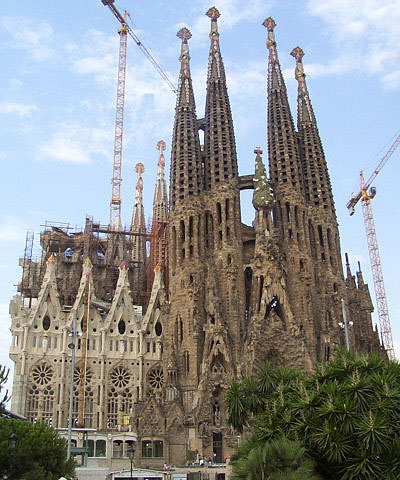
As  I write, His Holiness has just begun the Mass of Dedication of that still-unfinished masterpiece, Gaudí's "Expiatory Temple of the Holy Family" in Barcelona.  Indeed, he will name it a Basilica.  What a rebuke to all who say regnare Christum nolumus, "we don't want Christ to reign", to see this amazing work of art, raised in honour of God, now solemnly blessed: a temple of expiation, indeed, wherein the Lamb once slain will stand upon the altar, making present His Sacrifice in reparation for all sin.

(The Mass is in an interesting combination of Catalan, Spanish and Latin.)


To think that many self-styled intellectuals petitioned for the Sagrada Família to be left unfinished - for to complete it would be an affront to secular Spain.  Just as during the Civil War, Catholics are to have no rights.  The building has always been a privately-funded undertaking, so how dare they try to stop people freely doing as they please!  Better the turban than the mitre?

Antoni Gaudí is now styled Servant of God: may God deign to glorify His servant if it be to His honour and will help forward our salvation, that the Church bravely militant here below may recognize him as a hero of the Church triumphant above, an artist-saint like the Blessed Antony of Fiesole, a.k.a. Fra Angelico.  "Beauty will save the world."

Sunday, October 17, 2010

Did the Josephite Postulator Snub the Pope?

St Mary of the Cross is canonized: alleluia! and may she pray for us!

But did her spiritual daughter, the Josephite sister who has been the postulator for her cause, deliberately refrain from kissing the Pope's episcopal ring?  I have been watching the live coverage on ABC24, and while each of the other five postulators clearly did so, so far as I could see – and the video will confirm this – Sr Maria Casey did not, although she seemed otherwise so friendly, patting His Holiness's hand as she did.

(UPDATE: I see that Terra over at Australia Incognita confirms this independently.)

(And one of the deacons at the throne noticed the Holy Father was none too pleased with the scarf-wearer.)

In Rome, such things are noted.  Was this a quite deliberate refusal to follow expected protocol, and "send a message" both to Rome and back home to the sisters in Australia?

On a similar note, only a late intervention by the Australian Ambassador to the Holy See obtained tickets to the canonization ceremony for the Australian seminarians in Rome: it appears the Josephites ignored them.

In Rome, such things are noted.

******

Let the Holy Father have the last word, in the pointed remarks made in his homily relative to St Mary:
“Remember who your teachers were – from these you can learn the wisdom that leads to salvation through faith in Christ Jesus.” ... Despite many challenges, her prayers to Saint Joseph and her unflagging devotion to the Sacred Heart of Jesus, to whom she dedicated her new congregation, gave this holy woman the graces needed to remain faithful to God and to the Church. Through her intercession, may her followers today continue to serve God and the Church with faith and humility!
I think certain ladies wearing secular clothes and pale scarves in place of their spiritual mother's brown habit could do with the hint: rediscover your charism, and through persevering prayer, be faithful to God and the Church with humility.

A final note: a retired Dominican of my acquaintance said of those religious sisters, once habited and convent-dwelling, now semi-retired, in secular clothes, living in suburban bedsits, that they have simply reverted to type – as homemakers.  Ouch!

Saturday, September 18, 2010

Papal Mass at Westminster Cathedral (Votive of the Precious Blood)

This is live-blogged, more or less… I wrote this as it happened, and now post it.

I checkt the time in London, and then the Papal programme of events – the Pope would be saying Mass!  So I switched to the live webcast, and tuned in during the silent pause evidently after the homily.  The Pope at length arose from his throne, and intoned the Credo in plainchant, which all took up with a great roar.

That done, a lady read the prayers of the faithful – I mean, really! that’s a deacon’s job!  The English made their quaint response, “Lord, graciously hear us”.

At the Offertory, the famous Westminster Cathedral choir sang a moving motet: Christus factus est (Bruckner?), then the organ took over until the “Pray brethren” and the Prayer over the Gifts (in English).  Then it was time for the glorious age-old chant of the Sursum corda and Preface in Latin.  The choir sang a polyphonic Sanctus [the Mass setting is Byrd's, for five voices]: indescribably good.

Te igitur… aloud – beautiful! the Holy Father reads beautifully the Latin… one of the principal concelebrants (the Archbishop of Westminster?) read his part in a slightly faltering English accent, then an Italian bishop did the same.

I missed the expected “mysterium fidei” in the consecration of the chalice!  (I forget that this isn't the old Mass.)

No here it is – Mysterium fidei chanted by the Pope, and the great congregation responding with Mortem tuam in plainchant.

(The sound on my link dropt out for a bit alas, only returning for the full-throated chanted Amen at the end of the Canon.)

Now all are chanting the Lord’s Prayer… (sound dropt again)

The choir sings the Agnus Dei in polyphony…

The Pope invites the faithful forward to receive their Lord, and all respond, from Supreme Pontiff down to the humblest, “Lord, I am not worthy…”

The choir is chanting in Latin, and the Pope is giving Holy Communion on the tongue to those - choristers and lay faithful – coming up to kneel at a prie-dieu before him.  What piety and devotion!

Now the choir begins another polyphonic masterwork [Hassler's O sacrum convivium], ending with a multifold Alleluia.

Footage outside shews happy crowds in attendance outside; within, the Byzantinesque interior of the cathedral is ablaze with lamps, and a vast congregation now receiving their Eucharistic Saviour.

The organ sounds!  It is St Alphonsus Liguori’s beloved hymn, “O Bread of heaven, beneath this veil, thou dost my very God conceal: my Jesus, dearest Treasure, hail! I love Thee and, adoring, kneel” – so true, so true.

Silence… nothing but a few coughs, and the soft clicking of cameras throughout the basilica…

At length, all arise for the Prayer after Communion in English.  The blessing, though, is sung in Latin.  Can the blessing be received over the Internet?  I pray so. Certainly I united myself to the offering up of the Sacrifice and prayed in worship of Jesus at the Elevation after the Consecration – for, while I viewed a representation of the event, in spirit I prayed I was there; and of course God is always everywhere.

A Deacon sings the Ite missa est from the Missa de Angelis, to which a hearty Deo gratias is returned by all.

The organ and trumpets play, as the procession forms up before the altar.  The hymn I can’t quite catch, but it’s something very stirring about Our Lord… [it's "Love Divine, all loves excelling"]

The sea of concelebrant bishops and priests in bright red chasubles make a sight indeed, as if the Precious Blood were spilling forth and running down the aisle.

The Pope stops first to greet the ecumenical representatives – various Oriental ecclesiarchs all in black, some Byzantine in tall hats (I forget the name), some non-Chalcedonian in turbans, plus the silly old A.B. of C. (looking very motley in Parker’s rags).

The congregation applaud His Holiness as he now leaves the chancel and passes down the nave.  The organ thunders the while.

Glorious.

As he comes forth from the doors of the Cathedral, the crowds outside applaud and cry out in adulation.  Now, a chair is brought, and an address began (the sound just dropt out again) – I think this is when the Pope will bless the latest new mosaic to be installed at the Cathedral, representing St David of Wales.  Now is it the turn of the Welsh to acclaim Peter’s Successor?

No, he rather greeted the wildly enthusiastic crowds – lots of eager young people – and blessed them.  Reëntering the Cathedral, the choir sings Bruckner’s Ecce sacerdos magnus – Behold a great priest.

Now comes the blessing of the mosaic of St David, and of a beautiful statue of the Blessed Virgin, Our Lady of Cardigan.

The Pope is again seated, and receives the gracious greetings of the Catholics of Wales, and of Wales itself, from the Catholic Archbishop thereof, speaking in rich rolling English and Welsh.  No wonder Tolkien loved the sonorous Welsh tongue so much.

All good things come to an end: the Pope, after giving a miniature catechesis about St David, greets dignitaries and then returns to the sacristy while the organ plays.  In a nice last scene, the television coverage shews him shaking hands with all the choristers, thanking them for their soaring music.

******

(I suppose the Pope read several of the prayers in English because chanting them in an unfamiliar tongue would be difficult for him.  But why wasn’t the response to the petitions of the Bidding Prayers sung, as is commonly done at the Cathedral in Melbourne?)

Thursday, September 16, 2010

God Protect Pope Benedict

As I write, His Holiness ought have arrived in Scotland half-an-hour ago, and be being welcomed by Her Majesty at Holyroodhouse, Edinburgh.

The relentless anti-Catholic propaganda directed against him is a device of the enemy of mankind – who well knows, in his rage and frustration, that the Vicar of Christ is the emissary of an infinitely greater, and truly philanthropic Power: Benedict, blessed is he who comes in the name of the Lord.  

But it is God's will to test and try His servants; let us pray therefore for the Pope:

The Lord preserve him, and give him life, and make him blessed upon the earth, and deliver him not up to the will of his enemies.  (Ps 40(41):3)

St Ninian, pray for him.

Saturday, April 24, 2010

Shitten Shepherds

For if a preest be foul, on whom we truste,
No wonder is a lewed man to ruste;
And shame it is, if a prest take keep,
A shiten shepherde and a clene sheep.
Wel oghte a preest ensample for to yive,
By his clennesse, how that his sheep sholde lyve.
— The Canterbury Tales, The General Prologue, ll. 503-8


Chaucer indeed put it best: there is something wrong in the Church when there are "shitten shepherds and clean sheep".  I was very pleased, therefore, to read over at The Anglo Catholic, that Pope Benedict is, it seems, now making clear his intention to clear out the corrupt episcopate, riddled with mediocrity and malfeasance, with incompetence and bad will.  All power to him!

Allowing matters to slide, Popes since Paul VI have lamely presided over the most atrocious collapse in standards.  A bishop ought be an example of holiness and orthodoxy (the two being inseparable), and, moreover, possessed of a sure grasp of good order.  Where are the bishop-saints of old?  Too many bishops are a joke.  And guess what happens when fools are promoted above their station?  Now all the chickens have come home to roost: in many places gross maladministration, complicity even in crimes, has reached such a pitch as to be intolerable.

How comes it, by the way, that such a deviant as Rembert Weakland, emeritus Archbishop of Milwaukee, has not long since been degraded from the episcopate, ever since it became known that he paid off his male lover (catamite? or sodomite?) with diocesan funds?  He covered up for other evil priests who committed sexual abuse too.  Unblushingly, now he openly declares his perversion.  Quite rightly Pope Benedict has spoken about the need to purge out all such filth in the Church.

As the then Cardinal Ratzinger said when leading the Stations of the Cross on Good Friday 2005, just before his election, when reflecting upon the third Fall, at the 9th Station:

...Should we not also think of how much Christ suffers in his own Church? How often is the holy sacrament of his Presence abused, how often must he enter empty and evil hearts! How often do we celebrate only ourselves, without even realizing that he is there! How often is his Word twisted and misused! What little faith is present behind so many theories, so many empty words! How much filth there is in the Church, and even among those who, in the priesthood, ought to belong entirely to him! How much pride, how much self-complacency! What little respect we pay to the Sacrament of Reconciliation, where he waits for us, ready to raise us up whenever we fall!...

What a herculean task is before our agèd Supreme Pontiff: to wash the Augean stables clean... as he prayed then, leading us in prayer, let us all pray now:

Lord, your Church often seems like a boat about to sink, a boat taking in water on every side. In your field we see more weeds than wheat. The soiled garments and face of your Church throw us into confusion. Yet it is we ourselves who have soiled them! It is we who betray you time and time again, after all our lofty words and grand gestures. Have mercy on your Church; within her too, Adam continues to fall. When we fall, we drag you down to earth, and Satan laughs, for he hopes that you will not be able to rise from that fall; he hopes that being dragged down in the fall of your Church, you will remain prostrate and overpowered. But you will rise again. You stood up, you arose and you can also raise us up. Save and sanctify your Church. Save and sanctify us all.

Monday, April 19, 2010

Annuntio vobis

With gratitude to the Almighty, Who has given us such a Vicar of His Son in the person of Pope Benedict XVI, let us relive those joyful moments when, five years ago to-day, the election of Joseph Cardinal Ratzinger as Supreme Pontiff was announced... listen to the Habemus Papam remix!

I remember well how I resolved to awake in the middle of the night to check the radio news, perhaps for a week... and unexpectedly soon, the alarm woke me to the marvellous news about 3am Melbourne time.  As we'd arranged, I immediately rang friends of mine to share this great joy, then got up,  and watched CNN coverage until daybreak – and went to a nearby chapel to pray the Te Deum.

Ad multos annos, Pater sancte!

His Holiness may be reviled by the erring world (inside as well as outside the Church), but those who think with the Church know that in him we have a true Holy Father, one who squarely faces the manifold problems afflicting the Church, and who is striving to rid the Church of the filth that has polluted her in these dark times, putting his trust wholly in the Lord and His grace, Whose goodness will always triumph.

Let us pray for Benedict XVI, our Pope:
The Lord preserve him, and give him life, and make him blessed upon the earth, and deliver him not up to the will of his enemies. (Ps xl, 3)

Friday, April 16, 2010

When Good Men Do Nothing

Now is the time for all good men to... stand up for what is right, and oppose what is wrong, while all the crowd goes mad, baying for blood.

Whose blood?  That of "a leering old villain in a frock".

I never thought to see the day when on the radio I would hear that most respondents to a survey agreed that the Pope should be arrested!  I felt sick.

The servant is no better than his Master; the crowd will always choose Barabbas.

We are in the midst of a moral panic; while priests by percentages both relative and absolute are less likely than other categories to abuse children, they (being different than other men) are the ones always singled out.  We seem to forget that a like, or even a larger percentage, of non-Catholic ministers, despite notoriously being married (and therefore "normal"), abuse children also; and that if one wanted to stamp out child abuse, one would rigorously guard minors against de facto partners and the like, who are the commonest and likeliest practitioners of such evils.

Is the sexual abuse of children by priests and religious a horror?  Of course.  Is it the case that the Church is rotten to the core, and deserving of every punishment for colluding in such crimes?  Of course not.  These crimes, dreadful though they are, are the acts of a repellent minority, acting clean contrary to every teaching of God and His Church.  It would be ludicrous as well as offensive to claim that the Pope (or his predecessors) ordered priests to commit wicked acts, or laughed evilheartedly at their commission.

From the outside, the Church appears monolithic: but in reality, authority is quite decentralized; indeed, since 1968 and all that, most laity and many priests have been anything but obedient to the teachings of the Church, and for priests it is only their bishop to whom they are answerable in all practical matters.  Bishops are the ones who ought bear blame for negligence in applying due process to accusations against their errant priests.

It was the naivete and in some cases the outright negligence of bishops that permitted a tiny minority of priests to get away with pedophile crimes.  Yet I know of not one bishop who has come before any secular court, let alone been justly punished for complicity in such offences.  Bishops have resigned for comprehensively stuffing up the administration of their dioceses in these matters, yes; good riddance to such shitten shepherds (as Chaucer would say); but it was not the entire episcopate that failed, no more than did the vast majority of the presbyterate.

Even now, more priests and religious keep their vows than do married couples: check out the divorce statistics!  People would like to believe that spooky men in cassocks are all child abusers - when step-fathers and other relatives are far more dangerous.

Given the neglect of canon law, not to mention adhesion to the traditional moral and doctrinal teachings of the Church by so many since Vatican II, while societal morals have extraordinarily loosened, it is easy to appreciate how sinful men turned from praying to preying, and escaped for a time the punishment they deserved.  The centrifugal tendencies in the Church since the Council are to blame for this, not the centre, whose authority has crumbled, and is only slowly being restored.

Furthermore, the crimes of sinful priests that have been successively uncovered and finally punished occurred decades ago: if Supreme Pontiffs are to be tasked with why such wickedness was not stamped out, then Paul VI and, ahem, even John Paul II would be the ones whose decisions need examining by an unbiassed investigation (I strongly suspect that it would be found that the crimes and mixups occurred at a lower level).

There have been vile Popes down the ages, scandalous sinners completely unworthily of their most holy office (which they defiled): men such as Alexander VI, the Borgia Pope, or the horrendous tenth and eleventh century Popes, John XII and Benedict IX.  But no one but an ignorant fool - or a malicious one - would rank the current Pope with them.

Attempts to drag up cases that are somehow associated with Benedict XVI, and to misreport them so as to make him appear culpable, are repellent and have been comprehensively rebutted.  The truth is clean contrary: Benedict is part of the solution, not the problem!

The media conspicuously has not reported the unfolding scandal about Fr Marcial Maciel, disgraced founder of the Legionaries of Christ, who turns out to have been a drug abuser, an abuser of seminarians,  the father of many children, and an expert at bribery: what a conman!  (See the NCR's exposé, parts 1 and 2.)  He died unrepentant in a horrible scene reminiscent of the death of Judas.  Yet the then Cardinal Ratzinger was unable to purge out this filth until he assumed the Petrine Throne as Benedict XVI.  He could not effect the needed tightening of Church discipline that he advocated until he gained the plenary power.  Since then, the Legionaries have been under investigation - ought not they (at least their senior leadership, who must have known something of the Founder's mendacity) be suppressed?

Yet we have that notorious arch-atheist Dawkins (whose attacks on religion betray his utter inability to comprehend this topic - however great he may be in his own field of study, his embarrassingly mediocre antireligious writings demonstrate that he is out of his field and out of his depth, betraying his lack of any philosophical training: I write as a B.Sc.(Hons) and a B.Theol.) now crying out that the Pope ought be arrested - arrested! - when he comes to visit Scotland and England later this year.

(This press release from Catholic legal organizations explains how wrongheaded, how detrimental to public order and safety, is this ridiculous proposal, bereft of any foundation in law or reason.)

A creature named Ellis has written what I can only protest, complain about and condemn as a hate-filled diatribe and incitement to violence against the Church in general, and priests and above all the Pope.  What an utter disgrace that the ABC should permit such hate speech!

It is evident that the secular elite, such as it is, is milking the scandal and, most inexcusably, using it as a pretext to attack him whose teachings they hate: Pope Benedict himself.  God preserve him!

Thus say the wicked:

"But let our strength be the law of justice: for that which is feeble, is found to be nothing worth.  Let us therefore lie in wait for the just, because he is not for our turn, and he is contrary to our doings, and upbraideth us with transgressions of the law, and divulgeth against us the sins of our way of life.  He boasteth that he hath the knowledge of God, and calleth himself the [vicar of the] son of God.  He is become a censurer of our thoughts.  He is grievous unto us, even to behold: for his life is not like other men's, and his ways are very different.  
"We are esteemed by him as triflers, and he abstaineth from our ways as from filthiness, and he preferreth the latter end of the just, and glorieth that he hath God for his father.  Let us see then if his words be true, and let us prove what shall happen to him, and we shall know what his end shall be.  For if he be the true [vicar of the] son of God, he will defend him, and will deliver him from the hands of his enemies.  Let us examine him by outrages and tortures, that we may know his meekness and try his patience.  Let us condemn him to a most shameful death: for there shall be respect had unto him by his words."
These things they thought, and were deceived: for their own malice blinded them. 
(Wisdom iii, 12-21)


Who are our age's real criminals, I wonder?  In centuries to come the abortion of hundreds of millions will be considered the irreparable stain upon our dark age.  Who are our very own genocidaires, openly going unpunished, nay, lauded?  With Nietzsche our Western civilization declares, "Evil, be thou my good".

I do fear that the rising tide of irrational hatred against the Church, priests and His Holiness will issue soon enough in violence.  When will the first church be vandalized or burnt down, the first innocent priest attacked?

I suspect that if Pope Benedict is assaulted or worse - which God avert! - his enemies would be delighted.

Anti-Catholic persecution is growing.  When will we wake up to the danger we are in?  We've been asleep, dumb dogs that will not bark, not living as witnesses to truth; as is notorious (and unsayable), followers of a certain other religion are not backward about protesting in a violent, literally un-christian manner, when their beliefs are attacked...

No wonder anti-Catholicism is the new anti-Semitism.

But in all this, good, being ever stronger than evil, will have the triumph.  Napoleon imprisoned the Pope and dreamt he would destroy the Church; who won?  Diocletian had a similar plan; he but sent countless martyr-saints to heaven.  St Sixtus II was dragged from the altar to his execution, but reigns with Christ in heaven, while his pagan foes went down to hell; Rome became Christian, and the old gods were abandoned.

It is no coincidence that the Devil prompted attacks upon the Church, raging in furious malice at the most holy season of Easter: but Christ defeated death at Easter, and His is the Victory.  It is for us to put our house in order, for the time of reckoning is with us.

As a friend once said, Catholics would be more faithful if the enemies of Christ "were burning priests on Bourke Street" (central Melbourne, leading up to Parliament House).

Perhaps we shall soon find out.

Saturday, March 20, 2010

The Pope Writes to Ireland

His Holiness Benedict XVI has just issued a Pastoral Letter to the Catholics of Ireland, a letter whose contents are of interest worldwide, given the ongoing emergence of scandals deriving from vile incidents of sexual abuse of children by priests:


Dear Brothers and Sisters of the Church in Ireland, it is with great concern that I write to you as Pastor of the universal Church. Like yourselves, I have been deeply disturbed by the information which has come to light regarding the abuse of children and vulnerable young people by members of the Church in Ireland, particularly by priests and religious. I can only share in the dismay and the sense of betrayal that so many of you have experienced on learning of these sinful and criminal acts and the way Church authorities in Ireland dealt with them.

Note that last phrase: the Pope and all Catholics are dismayed by these acts, "and the way Church authorities in Ireland dealt with them".

He well details the causes (n.4):


In recent decades, however, the Church in your country has had to confront new and serious challenges to the faith arising from the rapid transformation and secularization of Irish society. Fast-paced social change has occurred, often adversely affecting people’s traditional adherence to Catholic teaching and values. All too often, the sacramental and devotional practices that sustain faith and enable it to grow, such as frequent confession, daily prayer and annual retreats, were neglected. Significant too was the tendency during this period, also on the part of priests and religious, to adopt ways of thinking and assessing secular realities without sufficient reference to the Gospel. The programme of renewal proposed by the Second Vatican Council was sometimes misinterpreted and indeed, in the light of the profound social changes that were taking place, it was far from easy to know how best to implement it. In particular, there was a well-intentioned but misguided tendency to avoid penal approaches to canonically irregular situations. It is in this overall context that we must try to understand the disturbing problem of child sexual abuse, which has contributed in no small measure to the weakening of faith and the loss of respect for the Church and her teachings.
Only by examining carefully the many elements that gave rise to the present crisis can a clear-sighted diagnosis of its causes be undertaken and effective remedies be found. Certainly, among the contributing factors we can include: inadequate procedures for determining the suitability of candidates for the priesthood and the religious life; insufficient human, moral, intellectual and spiritual formation in seminaries and novitiates; a tendency in society to favour the clergy and other authority figures; and a misplaced concern for the reputation of the Church and the avoidance of scandal, resulting in failure to apply existing canonical penalties and to safeguard the dignity of every person. Urgent action is needed to address these factors, which have had such tragic consequences in the lives of victims and their families, and have obscured the light of the Gospel to a degree that not even centuries of persecution succeeded in doing.

The Pope does not shrink from directly addressing those priests and religious who have abused children, laying before them the terrible truth (n.7):

You betrayed the trust that was placed in you by innocent young people and their parents, and you must answer for it before Almighty God and before properly constituted tribunals. You have forfeited the esteem of the people of Ireland and brought shame and dishonour upon your confreres. Those of you who are priests violated the sanctity of the sacrament of Holy Orders in which Christ makes himself present in us and in our actions. Together with the immense harm done to victims, great damage has been done to the Church and to the public perception of the priesthood and religious life.
I urge you to examine your conscience, take responsibility for the sins you have committed, and humbly express your sorrow. Sincere repentance opens the door to God’s forgiveness and the grace of true amendment. By offering prayers and penances for those you have wronged, you should seek to atone personally for your actions. Christ’s redeeming sacrifice has the power to forgive even the gravest of sins, and to bring forth good from even the most terrible evil. At the same time, God’s justice summons us to give an account of our actions and to conceal nothing. Openly acknowledge your guilt, submit yourselves to the demands of justice, but do not despair of God’s mercy.

He addresses stern words to the Irish hierarchy (n.11):

It cannot be denied that some of you and your predecessors failed, at times grievously, to apply the long-established norms of canon law to the crime of child abuse. Serious mistakes were made in responding to allegations. I recognize how difficult it was to grasp the extent and complexity of the problem, to obtain reliable information and to make the right decisions in the light of conflicting expert advice. Nevertheless, it must be admitted that grave errors of judgement were made and failures of leadership occurred. All this has seriously undermined your credibility and effectiveness. I appreciate the efforts you have made to remedy past mistakes and to guarantee that they do not happen again. Besides fully implementing the norms of canon law in addressing cases of child abuse, continue to cooperate with the civil authorities in their area of competence. Clearly, religious superiors should do likewise. They too have taken part in recent discussions here in Rome with a view to establishing a clear and consistent approach to these matters. It is imperative that the child safety norms of the Church in Ireland be continually revised and updated and that they be applied fully and impartially in conformity with canon law.
Only decisive action carried out with complete honesty and transparency will restore the respect and good will of the Irish people towards the Church to which we have consecrated our lives. This must arise, first and foremost, from your own self-examination, inner purification and spiritual renewal. The Irish people rightly expect you to be men of God, to be holy, to live simply, to pursue personal conversion daily. For them, in the words of Saint Augustine, you are a bishop; yet with them you are called to be a follower of Christ (cf. Sermon 340, 1). I therefore exhort you to renew your sense of accountability before God, to grow in solidarity with your people and to deepen your pastoral concern for all the members of your flock. In particular, I ask you to be attentive to the spiritual and moral lives of each one of your priests. Set them an example by your own lives, be close to them, listen to their concerns, offer them encouragement at this difficult time and stir up the flame of their love for Christ and their commitment to the service of their brothers and sisters.
The lay faithful, too, should be encouraged to play their proper part in the life of the Church. See that they are formed in such a way that they can offer an articulate and convincing account of the Gospel in the midst of modern society (cf. 1 Pet 3:15) and cooperate more fully in the Church’s life and mission. This in turn will help you once again become credible leaders and witnesses to the redeeming truth of Christ.

Benedict next recommends (n.14) that the Church do penance:

At the conclusion of my meeting with the Irish bishops, I asked that Lent this year be set aside as a time to pray for an outpouring of God’s mercy and the Holy Spirit’s gifts of holiness and strength upon the Church in your country. I now invite all of you to devote your Friday penances, for a period of one year, between now and Easter 2011, to this intention. I ask you to offer up your fasting, your prayer, your reading of Scripture and your works of mercy in order to obtain the grace of healing and renewal for the Church in Ireland. I encourage you to discover anew the sacrament of Reconciliation and to avail yourselves more frequently of the transforming power of its grace.
Particular attention should also be given to Eucharistic adoration, and in every diocese there should be churches or chapels specifically devoted to this purpose. I ask parishes, seminaries, religious houses and monasteries to organize periods of Eucharistic adoration, so that all have an opportunity to take part. Through intense prayer before the real presence of the Lord, you can make reparation for the sins of abuse that have done so much harm, at the same time imploring the grace of renewed strength and a deeper sense of mission on the part of all bishops, priests, religious and lay faithful.

(I am loath to criticise the Pope, but it ought not be the laity to do penance, but the clergy whom they trusted!  I can too clearly see that some will take scandal at this.)

Most importantly, I think, the Pope announces a forthcoming Apostolic Visitation of certain dioceses, seminaries and religious orders, to get to the bottom of all these murky goings-on:

Furthermore, having consulted and prayed about the matter, I intend to hold an Apostolic Visitation of certain dioceses in Ireland, as well as seminaries and religious congregations. Arrangements for the Visitation, which is intended to assist the local Church on her path of renewal, will be made in cooperation with the competent offices of the Roman Curia and the Irish Episcopal Conference. The details will be announced in due course.

Rather than here and now demanding wholesale resignations of prelates and religious superiors, he is to have a thorough investigation made, and no doubt will then decide exactly what ought be done with individuals, once the full responsibility of each is found out.

He ends by proposing the following prayer:


Prayer for the Church in Ireland


God of our fathers,
renew us in the faith which is our life and salvation,
the hope which promises forgiveness and interior renewal,
the charity which purifies and opens our hearts
to love you, and in you, each of our brothers and sisters.

Lord Jesus Christ,
may the Church in Ireland renew her age-old commitment
to the education of our young people
in the way of truth and goodness, holiness and generous service to society.

Holy Spirit, comforter, advocate and guide,
inspire a new springtime of holiness and apostolic zeal
for the Church in Ireland.

May our sorrow and our tears,
our sincere effort to redress past wrongs,
and our firm purpose of amendment
bear an abundant harvest of grace
for the deepening of the faith
in our families, parishes, schools and communities,
for the spiritual progress of Irish society,
and the growth of charity, justice, joy and peace
within the whole human family.

To you, Triune God,
confident in the loving protection of Mary,
Queen of Ireland, our Mother,
and of Saint Patrick, Saint Brigid and all the saints,
do we entrust ourselves, our children,
and the needs of the Church in Ireland.

Amen.

Opera Christi non deficiunt, sed proficiunt

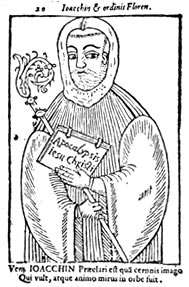
I recommend readers to attend to the inestimable Fr Z's reading of good Pope Benedict's third General Audience address about St Bonaventure, in which the Supreme Pontiff, referring to Bonaventure's theology of history, demonstrates how Joachimism is false, and how, just as Bonaventure's wisdom defeated the Franciscan spirituals of his day, so we should avoid the error of those who ceaselessly invoke the "spirit of the Council" while pretending that what we need is to sweep away all hierarchy and doctrine.

Joachimism, of course, is the belief that history is divided into three eras, and that, just as the era of the Father and of the Old Testament and of the Jewish Church is over and gone, so too the era of the Son and of the New Testament and of the Catholic Church is past, and (heralded by St Francis) what has now come is the third and final era, that of the Spirit and of the "Eternal Gospel" and of spiritual men, with no Church anymore.

The parallels between Joachimism and the nonsense dissenters promulgate about the "spirit" of Vatican II and even Vatican III (their hoped-for, fondly imagined future Council at which everything restrictive will be abolished and everything forbidden be allowed) are obvious.  Even the way that self-styled progressives have hijacked Bl John XXIII, who was no liberal, parallels the Joachimite belief in a Papa Angelicus who would drastically change the Church.

Consider the dismissive way that "progressives" consider everything in the Church from the age of Constantine (when allegedly she was corrupted by power - already a current debate in the time of Dante) till 1965 to be clericalist, obscurantist and corrupt... consider their hope for a future Utopia (indeed, a No-Place), when their project of mocking and rejecting all Catholic truth and practice will be complete.

But the Pope repeats forcefully what Bonaventure so rightly said: Opera Christi non deficiunt, sed proficiunt – the works of Christ fail not, but they prosper.  Indeed new good things arise, and old things are revitalized: the wise steward brings forth things both old and new from the garner.  Christ's work will never fail, but in every age flourish anew, just as St Francis and St Dominic were raised up in their day, revitalizing the Church, ancient but ever-new, with their own innovative charisms, yet in substantial continuity with the past.  

Here is the philosophical rejection of the hermeneutic of rupture, and the affirmation of the hermeneutic of continuity.  Here is one central message of this Papacy, guided by the thought of St Bonaventure that the young Ratzinger diligently studied long years before.  It would be mad and self-contradictory to imagine building a new Church, and condemning the old: in such a case, Christ's promises would have failed, and we'd be better off being Jews.

After all, the theology of history presented by Abbot Joachim of Fiore smacks of Tritheism not orthodox Trinitarianism: there are not three gods, each better than the next, but one God in three Persons, Whose final Word is Christ, and Whose Holy Spirit reveals to us the depths of Christ's message without changing it.  Similarly, all newfangled attempts to reject 1600 years of Church history as evil are frankly laughable, and evidently self-contradictory: and to work for a wholesale rejection of doctrine and practice is just to be another Protestant, five hundred years too late.

The Pope speaks:

We know, in fact, how after the Second Vatican Council, some were convinced that everything should be new, that there should be another Church, that the pre-conciliar Church was finished and that we would have another, totally "other" Church. An anarchic utopianism! And thanks be to God, the wise helmsmen of Peter’s Barque, Pope Paul VI and Pope John Paul II, on one hand defended the novelty of the council and on the other, at the same time, defended the uniqueness and continuity of the Church, which is always a Church of sinners and always a place of grace.

The Church is one and the same, always both ancient and new: as Hermas wrote in the subapostolic age, in The Shepherd, she appeared to him a beautiful woman, the spotless Spouse of the Lord, appearing both young and old, for such she is:

For she had appeared to me, brethren, in the first vision the previous year under the form of an exceedingly old woman, sitting in a chair. In the second vision her face was youthful, but her skin and hair betokened age, and she stood while she spoke to me. She was also more joyful than on the first occasion. But in the third vision she was entirely youthful and exquisitely beautiful, except only that she had the hair of an old woman; but her face beamed with joy, and she sat on a seat.   (3rd Vision, Chapter X)

He notes further that she appeared to him at first as old and frail, not because she was, but because he was mired in sin; then she appeared old but partly young as he gradually sloughed off his spiritual blindness and folly; only when he had regained righteousness did he perceive her truly.  Let fools attend!  It is our faults that make us spurn the Church of the Living God, to our peril.

Sancta Mater Ecclesia is beautiful, without spot or wrinkle, but she has the white hair of the old, betokening her age, which yet not makes her frail, but rather the Lord renews her youth as the eagle's.  The works of Christ do not fail, but prosper.

Friday, March 5, 2010

Ponte Benedetto


One of the most picturesque bridges over the Tiber is the Ponte Sisto, built at the behest of Pope Sixtus IV.  I certainly found it handy: crossing over it, one arrives at the lane leading up to Santissima Trinità dei Pellegrini, the Latin Mass parish in Rome, which was originally founded for the benefit of pilgrims by dear St Philip Neri.

In the spirit of ressourcement, now our Pope has astonished all, by squaring the circle, and establishing special means of access to Catholic unity for incoming Anglicans.  As Bp Peter Elliott put it, by doing so, the Supreme Pontiff, indeed the "Bridgebuilder General", has erected an elegant bridge for Anglicans to cross upon, so that for them the proverbial perils of "swimming the Tiber" are henceforth avoided.

I propose that this admirable structure, set up in the Apostolic Constitution Anglicanorum cœtibus, be intituled the Ponte Benedetto - Benedict's Bridge.

Viva il Papa!

Doesn't everyone love a German Shepherd?