Showing posts with label Books. Show all posts

Friday, January 18, 2013

Princely Gifts

A wise person of my acquaintance has very generously donated half a dozen very useful liturgical books to my ever-expanding private library (which visitors may peruse by appointment). She kindly sent:
  • The Missal. London: Burns, Oates & Washbourne, 1928.
  • Lefebvre, Gaspar. Saint Andrew Daily Missal. Bruge: Abbey of St-André, 1954.
  • Encalcat Abbey. Book of Hours. Dourgne: Editions d'Encalcat, 1956.
  • The Roman Breviary. An Approved English Translation complete in one volume... New York: Benzinger Brothers, 1964. [Approved for liturgical use.]
  • The New Small Missal... for all Sundays and the Principal Feasts. London: Burns & Oates, 1966.
  • Officium Divinum. [Sunday Day Hours, and Prime, Sext and Compline for the days of the week, with relevant chant notation] Kansas City: Angelus Press, 2001.
Quid retribuam?  I am very glad indeed to receive these gems, above all the complete 1962 Roman Breviary in English.

Retribuere, dignare, Domine, omnibus nobis bona facientibus, propter nomen tuum, vitam æternam. Amen.

Saturday, February 19, 2011

Book Recommendation

Pressure of work has decreased my blogging of late; but I have at least done some reading in the evenings and so forth.

Until I considered the matter yester-day and to-day when reading the newspapers, I hadn't realized how often I buy books online, and have them posted to me from far-flung corners of the globe...  The headlines I allude to refer to the bankruptcy of a large chain of bookshops, on the grounds that they are undercut by such sales.  Now, personally I buy online because the local bookshops are unlikely to stock remaindered copies of Dowden's The Scottish Communion Office of 1764 (Oxford: Clarendon Press, 1922), or even such a recent bestseller as Creation and Evolution: A Conference with Pope Benedict XVI in Castel Gandolfo (how remiss of them, I know), but it appears that my fellow Australians are doing the same when purchasing their own favourite reads; for the last remnants of protectionism here in free-trade Australia have maintained barriers to the commercial importation of cheap books, while not forbidding people buying in these cost-cutting items privately.  Adam Smith is proven right again.

May I recommend an example of such an overseas import?  Readers of this blog will perhaps enjoy Andrew Burnham's Heaven and Earth in Little Space: The Re-enchantment of Liturgy (Norwich: Canterbury Press, 2010).  This excellent summary of much restorationist liturgical thinking was completed in late 2009 and only published last year, and in the meanwhile its author, then still an Anglican bishop, has come into full communion with the Holy See and been ordained a Catholic priest in record time: long may he serve the new Ordinariate of Our Lady of Walsingham!

It is well-known that he is engaged on implementing the "re-enchantment" of which he wrote, by greatly assisting in the preparation of the forthcoming liturgical books for use by the incoming Anglicans of the nascent Ordinariates.  God willing, I may soon enough join my local T.A.C. friends at Mass, united in one communion at one altar, employing such a rite, once the Australian Ordinariate is established.

Wednesday, January 26, 2011

Read Old Books!

A passage in an essay by John Dunlap struck me:

Down in the stacks at the main library on campus [at Santa Clara University], I pulled a copy of Jacques Maritain's memoir The Peasant of the Garonne, a book I hadn't read in years. ... Paging through the book, I noticed that the due slip in the back recorded a steady stream of check-out dates until 1971. Apparently, no one in the university had looked at this famous book for 32 years.
On a hunch, I looked up a few other Maritain titles. Then I got into it, and spent the next hour combing the stacks and pawing through the library's huge collection of, to me, familiar Catholic writers: Knox, Guardini, Newman, Chesterton, Belloc, Gilson, Pieper, Benson, Dawson, Lunn, Dimnet. With few exceptions (often as not, a date when I myself had checked out the book), the due slips told the same story, again and again: a long series of check-out dates stopping, suddenly, in the late 1960s and early 1970s.

Isn't that appalling!  The treasures of piety unopened!  One could add to this list several notable Dominicans, such as Vann, or McNabb.  There were so many great writers in the cause of Catholicism in the first half of the twentieth century, whether clerical or lay: to think they now lie forgotten.

There has been too much forgetting in the Church of Christ: too much of that pernicious hermeneutic of rupture, too much of a tendency to work toward achieving what Pol Pot planned for Cambodia: Year Zero.  Too many Catholics reject everything in the Church between the first century and Vatican II.  They are too stupid to see that that invalidates all the claims of the Church; then again, they may not believe any such claims, and prefer a therapeutic, subjective religion making no great demands.

Now, I've always been the eccentric who borrows the books that no one else has for years... and my own books at home feature treasures old as well as new.  Certainly, I've read some Newman, some Belloc, though not as much as I should. 

Just to list a few older (let's be honest and say pre-Conciliar) authors I have to hand:
  • Knox (2 books);
  • Chesterton (5 books);
  • Bl Columba Marmion (5 books);
  • Abbot Anscar Vonier (9 books, incl. his Collected Works).
Other authors of importance in my reading, overlapping into the time after the Council, would include Louis Bouyer, Pius Parsch, Joseph Jungmann (though I have read them critically).

It reminds me that just about the first work on the Mass that I read was Daniel Rock's Hierurgia (1833), published in 1830; and the other was Fortescue's The Mass: A Study of the Roman Liturgy (1912).

I tend to trust older works of theology, published before about 1960, or better still, even earlier; whereas I do check the bona fides of modern writers.

Of course, I am very glad to read good solid reliable modern authors, such as Aidan Nichols, or Paul Haffner, or John Saward – indeed, I've just ordered several books by the two last-named theologians.

Quaintly, I even like Catholic books to bear both imprimatur and nihil obstat.

In my opinion, too many "Catholic" books to-day are full of psycho-babble.

Do readers have any thoughts to add?

Saturday, October 23, 2010

Catholic Books in Protestant Bookshop

Occasionally, I pop into Koorong books, which is some sort of Evangelical Protestant book outlet – sadly, since the sorry closure of Launceston's Catholic bookshop, the only resort for Christian books here bar the Internet (the same has happened in Hobart).  It is interesting for its large shelves of serious Biblical commentaries, including the series quoting from the Fathers, some of which I have purchased from time to time.  Now, as one may imagine, only modern Protestant tomes of a Reformed tone are there in the main (some very gauche, as for instance the "financial" section, which I imagine to contain motivational paperbacks expounding the prosperity gospel in gushing Yankee prose), but it is interesting to look over what can be found therein; I bought some good Chesterton there for example, of which more anon.

In any case, just to-day I turned up an inexpensive interlinear Bible there, which I hope (read with due awareness of its Protestant point of view) will stand as a helpful crib to my copies of the Greek New and Hebrew Old Testaments – though mindful of Trent, I do adhere to the Vulgate as a sure and trusty standard, with the Douay-Rheims as a painful translation thereof.

What again caught my attention was the small selection of Catholic classics that clearly hold an affectionate place among Christian classics, even for modern evangelical Protestants, maybe happy-clappy or otherwise, but from all I can see satisfyingly conservative on moral questions, unlike the self-murdering liberalism of Australian Anglicanism, the Uniting Church, and, sad to say, the run-of-the-mill deviations of Catholicism so commonplace in parishes.

Herewith, the authors and titles I spotted:
  • St Augustine's Confessions;
  • Chesterton's Heretics, Orthodoxy and The Everlasting Man (the latter particularly interesting, as written after his reception into the Church);
  • a small work of Archbishop Fenelon;
  • The Little Flowers of St Francis;
  • Thomas à Kempis' The Imitation of Christ;
  • Br Lawrence of the Resurrection's The Practice of the Presence of God;
  • St John of the Cross' The Dark Night of the Soul;
  • St Teresa of Avila's The Interior Castle.

It is interesting to see how three Carmelites feature very prominently in this list, as well as the ever-popular St Francis and followers.  Augustine, of course, has always been a favourite of Calvinists and Lutherans no less than of Catholics, and in this case for his pious introspection... and Fenelon, because of falling somewhat into bad odour during the Quietist controversy, though remaining quite a faithful Catholic, has perversely enough been ever since favoured by Protestants (and I suspect that the teaching of Br Lawrence has been welcomed among them for not dissimilar reasons, despite its impeccable orthodoxy, for just like de Caussade's writings, it is concerned with interior devotion); I once had a tiny nineteenth century American edition of Fenelon's works, but I can't find it and may have given it away.  The Imitatio, "that golden book" in Pius XII's lapidary phrase, has ever been popular among all manner of Christians for similar reasons, despite its robustly Catholic fourth book all about devotion to the Sacrament of the altar.  

The presence of Chesterton (alongside, it must be said, an overlong C.S. Lewis section – like Tolkien, his johnny-come-lately status as yester-day atheist, to-day theologian of "mere Christianity", horrid phrase, has never much appealed to me) is most intriguing, since in these works he writes more of dogma and doctrine, and especially as the prefaces of all three books, all of which I have bought therefrom, are perfectly open and honest about his eventual becoming a Catholic.

Pray all these saints and pious men (and Chesterton, too, whose cause is now being advanced at last) may by their words and prayers help bring souls to the Truth.

Sunday, February 14, 2010

Shrovetide Musings

I've been blogging less lately, because of work pressures and lack of motivation... it seems stupid to blather on when one has nothing of import to report.

But, lest the all-important sitemeter start recording a huge drop in visitors (quelle horreur), I thought I should at least type something.

******

As all men know, to-day is Shrove Sunday, and therefore yester-day was Shrove-Saturday, or rather Egg-Saturday!  To celebrate in the approved manner, I had pancakes for breakfast (with bananas and walnuts and maple syrup).  Maple syrup – must be one of the few native North American contributions to world food (just as the macadamia nut is Australia's one and only domesticated native crop).

On a more serious note, I also went to confession, as is my practice on Saturday morning, and as is peculiarly apposite in Shrovetide – for the term means "the time for shrift", "shrift" being the old term for being absolved in the Sacrament of Penance.  So, having been shriven yester-day, this morning at Mass I was houselled (given Holy Communion).  

Shrift and Housel: the two quotidian sacraments for all Christians!  St Philip staunchly counselled that all frequently confess their sins, that thus worthily prepared they might partake of the blessings of receiving their Saviour in the most comfortable Sacrament of the altar.  As fallen men – who frequently fail, and who (in these evil latter days) scarce live as Christians should, not having the heroic strength of those who formed the Early Church of the saints and martyrs – we ever need forgiveness, and ghostly strength: hence, shrift and housel.

These things I shall think over in my heart, therefore will I hope:
The mercies of the Lord that we are not consumed: because his commiserations have not failed.
They are new every morning, great is thy faithfulness.
The Lord is my portion, said my soul: therefore will I wait for him.
The Lord is good to them that hope in him, to the soul that seeketh him.

— Lamentations iii, 21-24

I should also note that "housel" is cognate with Gothic hunsl, a sacrifice – just as "host" implies the notion of Christ as the Divine Victim, mystically offered up on the altar in propitation for all offences, pleading for all our needs, because His Sacrifice on the Cross is made truly present in all its power and might.  For Mass is no mere Communion Service – whether we receive or not, the greatest Prayer is offered up, the most prevailing petition, the most potent to obtain the Divine assistance.

******

Is it perverse of me to prefer Mass with a wise, devout, understanding priest, albeit in a parish setting where the music and some of the liturgy is not ideal, to Mass at Carmel, where, although the music and the good sisters' care of the celebration is commendable, one may encounter priests whose sermons can be less than orthodox, whom frankly one doesn't like, and who, one fears, reciprocate the sentiment?

Enough said!

******

When the liturgy is less than ideal (as when appalling songs are sung), I tend to retreat into myself, and turn to my handy Diurnal, so as to read some of the day's Office.  I recall that Fortescue reprobates the clergy catching up on the Hours at Mass, but as a layman I can do as I please.  (It will appear eccentric, but, as they say, "If the cap fits, wear it!"  I've never worried what others may say.)

******

To return to yester-day: it was good to do as I am accustomed on Our Lady's day, that is, to have a wander round town, to read the newspapers, to have a coffee, and to buy some books at last!

(I have had severe cashflow problems until now – paying off the debts incurred on my recent European holiday, y'know.)

I've bought a nice thick guidebook for Italy – since I most definitely will holiday there again come December and January, and spend even more time in la città bellissima - Firenze.  (Every time I see pictures of Florence my heart expands with emotion; it must be Stendhal Syndrome.)  Tentatively the plan arises of persuading some of my family to join me this time, such as my sister, who would love it!  And why not hire a car and drive around Tuscany?  Hence my purchase of a road atlas of Europe.

But, nearer in time, I feel like visiting Russia!  I've bought a guidebook about the Trans-Siberian Railway, which sounds like a very interesting trip to take: I'd like to see Outer Manchuria and Siberia.  Perhaps a flight to Seoul, then up to Vladivostok, and thence by train to Moscow, with some stops along the way?  Why not...  I can read Cyrillic, so perhaps I should next try and learn some basic Russian.

******

I've also been engrossed in Warlord, Carlo D'Este's biography of Churchill as a soldier and military leader: Sir Winston is a great hero of mine, as he ought be for all decent people.  One shudders to think what would have happened to the world had he not been there to take the helm in 1940, when Britain teetered on the edge of disaster...

And, in order to catch up on my understanding of the Dark Continent (no racist wickedness intended, but one can hardly call it the Happy Continent), I've bought Meredith's The State of Africa: A History of Fifty Years of Independence.

I thoroughly concur with what was British thinking ere the U.S. and financial pressures caused independence to come to African possessions of The Queen and other European rulers: that Africa was not ready for independence – surely a thesis sadly proven true by subsequent events forming a miserable catalogue of coups, dictatorships, massacres and oppression.  Independence was granted too soon.  After all, the Australian colonies first had fifty-odd years of direct rule, then half a century of responsible government while still tied to the Imperial Government, before they gained their independence as States federated under the Crown, with a national Parliament.

A friend who'd been in the Colonial Police in Uganda told me that in his day, women could safely walk in the streets at night, "Because we hanged rapists".  Compare that to the genocidal atrocities of Idi Amin.  Uganda since independence has suffered terribly, and I daresay still has not returned to the good governance and modest prosperity brought by British rule.  Similarly, the income gap between North and South, between Europe and Africa, has widened, not lessened, since independence of the former came to the latter.  Without the rule of law, there is no security for anyone, and only the elite currently in power can prosper, and that at the expense of everyone else.

But perhaps I should now read the book, rather than just list my preconceptions!

Friday, December 11, 2009

Four Ends of Holy Communion

If the incoming Anglicans (Anglicani ingressuri) bring to the communion of all Catholics a legitimate and worthy Patrimony - as obviously they must, since whatsoever goods, truths and beauties which uphold them and impel them to Catholic unity must be of value to all - then it behooves us to estimate and appreciate these worthy gifts.

I have thought on this with reference to their liturgical forms, as a help to better appreciating the ineffable benefits of Holy Communion.

I find in classical Anglican liturgies, and especially in the already-approved Book of Divine Worship Anglican Use of the Roman Rite, these following extracts relative to the hoped-for blessings brought us by receiving Christ's Body and Blood:

1. From the Prayer of Oblation, in the 1662 tradition misplaced till after communion, but in the Scottish (which I quote from their 1929 B.C.P.) and American tradition returned to after the Prayer of Consecration:

…beseeching thee that all we who shall be partakers of this Holy Communion may worthily receive the most precious Body and Blood of thy Son Jesus Christ, and be fulfilled with thy grace and heavenly benediction, and made one body with him, that he may dwell in us and we in him.

This petition for communicants, while coming from prayers not included in the B.D.W., may - if an Anglican Canon or Eucharistic Prayer be allowed in future - be found acceptable. It is evident that this petition derives from the Supplices te rogamus of the Roman Canon, which the B.D.W. renders as: "...that all we who at this partaking of the altar shall receive the most sacred Body and Blood of thy Son, may be fulfilled with all heavenly benediction and grace." (Regarding mutual indwelling, see what is said of this next below, since the collect for humble access to the holy communion repeats this phrase.)


2. From the Prayer of Humble Access:

… Grant us therefore, gracious Lord, so to eat the flesh of thy dear Son Jesus Christ, and to drink his blood, [ that our sinful bodies may be made clean by his most sacred Body, and our souls washed through his most precious Blood, and ] that we may evermore dwell in him, and he in us. Amen.

(The portion in square brackets is not included in the Book of Divine Worship, but was in most older B.C.P.'s, indeed, is original; only the Scottish B.C.P. adds the words "most sacred", for symmetry with the words "most precious" that derive from I Peter i, 19.)

The petition concerning washing and cleansing of body and soul seems to allude to several passages of Holy Writ such as, relative to washing, "Jesus Christ... washed us from our sins in our own blood" (Apoc. i, 5b, d), yea, "Blessed are they that wash their robes in the blood of the Lamb" (Apoc. xxii, 14a) - "robes" seeming to refer to bodies - and relative to cleansing, "the blood of Christ... cleanse our conscience" - where conscience denotes a faculty of the mind or soul (Hebrews ix, 14; and cf. verse 22, recalling that under the Law, well-nigh everything was cleansed with blood), for "the blood of Jesus Christ His Son cleanseth us from all sin" (I John i, 7b).

The last portion of this prayer is manifestly derived from St John vi, 57 - "He that eateth my flesh, and drinketh my blood, abideth in me, and I in him" - as is borne out by the fact that in the original 1548 version of this prayer, the petitions were reversed, and it read "so to eat the Flesh of thy dear Son Jesus Christ, and to drink his Blood, in these holy Mysteries, that we may continually dwell in him, and he in us".


3. From the words of administration:

The Body /Blood of our Lord Jesus Christ, [ which was given / shed for thee, preserve thy body and soul unto ] everlasting life.

(Again, the portion in square brackets, though common, is not that in the B.D.W., which instead has "keep you in" - which seems equivalent.)

These formulæ are self-evidently derived from the Latin forms Corpus / Sanguis Domini nostri Jesu Christi custodiat animam tuam in vitam æternam, as the Roman Rite has it, or ...custodiat te in vitam æternam, as the Dominican Rite reads. Fairly obviously, it was thought good to refer back to the words of consecration by adding "given for thee", "shed for thee", and to add mention of the body to that of the soul, since we are each a complex unity of body and soul in a marvellous composite, the immortal soul being the form of the mortal body.


4. From the Prayer of Thanksgiving after Holy Communion:

Almighty and everliving God, we most heartily thank thee, for that thou dost feed us, in these holy mysteries, with the spiritual food of the most precious Body and Blood of thy Son our Saviour Jesus Christ; and dost assure us thereby of thy favour and goodness towards us; and that we are very members incorporate in the mystical body of thy Son, the blessed company of all faithful people; and are also heirs through hope of thy everlasting kingdom. …

(I give the B.D.W. version.)

From these four extracts, a simple enumeration of the gains prayed for from Holy Communion, our spiritual food and drink, our ghostly nourishment, may be made:

  1. to be filled with grace and heavenly blessing, to be assured of God’s favour and goodness towards us;
  2. to be made one body with Christ, that He continually dwell in us and we in Him, as true members of His mystical Body;
  3. for our sinful bodies to be made clean and our souls washed;
  4. for our bodies and souls to be preserved unto everlasting life, to be heirs of the everlasting Kingdom.

These are the glorious ends these Anglican liturgical forms propose for special mention and ardent petition.

The first desire is to be filled with grace and blessing, which is a logical consequence of God's complacent regard for us as well-pleasing to Him and therefore to be favoured by His goodness: thus we see that our reception (we beg it may be worthy) of Holy Communion is both the pledge and guarantee of God loving us with so puissant a love that He makes us to be good - for God does not passively love, but rather His active love makes His beloved good.

The second desire is for entire incorporation into Christ, that He live in us, "we living no longer for ourselves but for Him, Who died and rose again for us", so that "I live no longer, but rather, not I, it is Christ that lives in me": for as He lives being given life by the Father, so all who eat and drink Him live because of Him. May this be lasting, and be everlasting! This union with Christ has the corollary that in Him we are all united as "the blessed company of all faithful people": as the Church, in fact, in heaven above as on earth below (and in the Intermediate State of purification). Communion is so-called for this very reason: it is the sign and the efficacious producer of union with Christ, and, in Him, of union among all Christians in Holy Church united.

The third desire, consequent upon the first two, and subordinate to them - for the Sacrament of the Eucharist is for the living, not for those dead in mortal sin - is for all our sins and stains to be washed away in the Blood of the Lamb, for the flaming Coal of the Flesh of Christ to burn away every imperfection within us. The Eucharist, not principally but coherent with its essential power of uniting us with He Whom we receive, burns away all dross.

The fourth desire is for our bodies and our souls, made temples of God, of His Spirit, and of His Christ, to be preserved unto everlasting life, that we be heirs of the Kingdom. While our bodies will die and decay, we look forward in hope to the General Resurrection, when, rather than rising again only to be thrown into the lake of fire, we pray to rise to the life immortal, our bodies even now having received the medicine of immortality; and the same may be said of the soul, which, though unbreakable and deathless by nature, will either rejoice with the angels, or be tormented with the devils, once this short life is past - the soul, too, must be preserved a Christian, gracefilled soul, for in no other manner may it enter upon everlasting life. If our bodies and our souls, made Christ's in baptism, are not kept safe in everlasting life, they will indubitably perish in eternal death.

Indeed, to end on a positive note, if we abide in Christ as we worthily receive Him, even here and now we are already "in life", a life that, please God, will never cease, but prove everlasting.

(I have not here considered the doctrine of the Exhortations in the Anglican Communion Offices, as these need careful consideration and correction in some points.)

Saturday, September 26, 2009

Better

To-day the family got together for breakfast at the First Basin café, overlooking the again-flooded Gorge (the swirling waters are over the swimming pool and lower lawn) - will it ever stop raining? - and our get-together was for a happy occasion: my Mum's birthday. Many happy returns!

Afterwards, we all headed off on various errands; I did as I do, and went to church for confession. It was as I find it ever: confession, as well as an exercise in honesty, and above all a signal instance of God's merciful ever-faithfulness ("we may be unfaithful, but He is always faithful"), is refreshing to the soul.

Later on, I recalled that this is the 26th of the month, and therefore, happy thought, the monthly reminder of the feast of St Philip Neri, on the 26th of May: I do believe his intercession for me, a stumbling half-devotee, who tried to see something of him and his Rome, has helped me now as in the past. Good Philip, pray for us to Christ-God, that He save our souls!

I had a pleasant conversation with David Schütz this morning, also, and made some varied purchases, now I've my wallet back at last:

  • a new watch, with a proper Roman numeral clockface (my old one finally gave up the ghost in Rome);
  • Primeval - Series Three (an entertaining sci-fi DVD set);
  • John Hatcher, The Black Death: The Intimate Story of a Village in Crisis, 1345-1350;
  • Kunzig & Broecker, Fixing Climate: The Story of Climate Science - and How to Stop Global Warming (I just love can-do tech fixes: man is the master of this God-given earth, so if we have unwittingly altered the climate, it is for us to assume control - take that, backward hippies!);
  • Dante, Vita Nuova (his courtly love for Beatrice - for me, a memento of Florence the beautiful);
  • Edgar Allen Poe, Tales of Mystery and Imagination (having just read Lovecraft's essay on supernatural horror in literature, this seemed a good choice).

I also visited my travel agent, and had her investigate the price of a trip to New Zealand in late January 2010. Scott, a friend of mine, is interested in joining me, so I hope all will work out. It will definitely be cheaper than holidaying in Italy, and I afforded that alright!

The TV is already on in the background, for the Grand Final soon begins, in unseasonably wet and cold Melbourne, with conditions that may be the worst in memory (hail is predicted). Carn the Saints!

Thursday, September 10, 2009

In Trastevere

A funny thing happened on the way to Santissima Trinità dei Pellegrini...

I've just found the first Internet café I've seen in Rome, and am getting used to the slightly different keyboard (for instance, I had a devil of a time finding how to type the @ symbol essential for logging in).

Roma è citta bellissima. That's about the first Italian I ever learnt, many years ago; and I haven't learnt much more, unfortunately! Even when I've tried to speak Italian (as when ordering a cappuccino) the waitstaff have replied in English. (Perhaps I look very northern European - this winter I've lost most of what tan I had, whereas some of the Italians are incredibly tanned after a long hot summer.) I must say, not being able to speak the language makes me feel rather dis-abled - and having explored many bookshops this afternoon, the sight of so many volumes I can't read filled me with sadness.

(I have bought three books in particular I've wanted for ages: the latest Fortescue-O'Connell-Reid; the 1962 Martyrology; and the Offertoriale Triplex. I also bought some smaller, cheaper items, like the latest Textus Inserendi for the modern Liturgy of the Hours.)

However: to-day has been blessed - for, despite the lack of a ticket, I managed to attend the Pope's general audience, which was great, most of all for the sight of Peter in his successor, Christ's Vicar, and for his Apostolic blessing. Viva il Papa!

Yester-day, after arriving in Rome and making my way to San Gregorio al Celio, at which monastery I'm staying, I freshened up, then went for a long leisurely walk through the historic centre of the City. I was saddened to see so many churches closed, and apparently only opened for the odd Mass. But what a joy it was for me, to come to the first church open I found, and to find it to be San Giovanni dei Fiorentini - the very church of which St Philip Neri was the rector for ten years - and there to kneel before a cross he venerated, and a bronze bust of him, at the altar of his chapel, surmounted by the original of that picture of him recommending his clients to the Virgin and Child! I read my Matins there (having not had the strength to read them earlier, so fatigued by travel had I been).

Yester-day, on further yet to St Peter's! I had had a small snack for lunch (a slice of pizza, a drink, for I had a very dry throat) and finally, having reached Hadrian's mausoleum (Castel Sant' Angelo), I sighted the Vatican Basilica: how huge a church even at that distance! One could clearly read the huge letters across the façade recording its dedication to the honour of the Prince of the Apostles... I stopt for some gelati, then advanced into the piazza, and lined up with the crowds...

St Peter's: everything is far larger than life-size, and the pilgrims and tourists within were as ants. It was good to find three areas roped off; one transept for confessions, and two chapels for prayer - in the first of which the Blessed Sacrament was exposed. There I read Lauds in thanksgiving. Having made my way round, venerating the sacred relics of Bl John XXIII (far smaller in death than in life), St Gregory Nazianzen, St Gregory the Great, St Pius X et al., I prayed Prime in the other chapel set aside, and then - after doing the rounds of that great church, and finally kissing Peter's foot (praying as did Baronius, Oboedientia et pax) and praying at the confessio, looking down to where, far below, the Prince of the Apostles rests until he rise again, I made my way back to the Adoration chapel, for the Little Hours. Thus I marked time...

At a quarter past three, I met my mates Brennan and Michael, two Australian seminarians at the North American College whom I know. They very kindly gave me a tour of the N.A.C., and shewed me the best prospect of all Rome from the roof thereof. Then I made my way back over the Tiber (a most horrid stinking little low river, almost as scandalous as the graffiti and tattiness of some parts of Rome)...

Soon enough, I found my goal, the Chiesa Nuova - and St Philip Neri, his sacred body awaiting the resurrection like some wonderful chrysalis in a shining chapel just off the main sanctuary: it was so moving, I really cannot say more. Very appropriately, and I believe providentially, I then prayed Vespers of Our Lady's Birthday in the very church dedicated to her on this feast, the titular feast of Santa Maria in Vallicella. (Another link to St Gregory the Great - he is secondary patron of the church.)

I then heard Low Mass at SSma Trinità - there were two clerics in choir, and a small congregation of maybe twenty; it was a dialogue Mass, and strangely the Creed was prayed. Did I say dialogue Mass? Some even joined in the Gloria, Sanctus, and Agnus Dei - most oddly, by reciting miserere nobis and dona nobis pacem as if it were a versicle and response. Though we'd all joined in the second Confiteor, we said a third as well at communion time! At the end, we all sang the Salve Regina, and what acoustics! St Philip, too, was present - he has a chapel and altar there, for he helped establish the Confraternity of the Most Holy Trinity for the aid of pilgrims.

I went to bed by about eight and slept for eleven hours.

Holy Mass is at 6:30pm at SSma Trinità, so I'd best hurry along: I hope I can make it in twenty minutes. Arrivederci!

Thursday, August 6, 2009

Late-night Reading

Cyberspace provides many useful resources; I've just skimmed through one of them, a quite excellent work:


(An advertisement in my 1904 copy of Dale alerted me to this, and sure enough a quick google turned this up.)

Wednesday, July 29, 2009

43,73€

Just arrived from an antiquarian bookstore in Germany: a 1939 edition (with binding a bit loose at the front and back) of the Officium parvum Beatæ Mariæ Virginis et Officium Defunctorum, cum Psalmis Gradualibus et Pœnitentialibus ac Litaniis Sanctorum e Breviario Romano excerpta - Latin only, printed at Ratisbon. It gives all these services in full, and, for Our Lady's Hours, prints them all out for the three 'seasons' - during the year, at Advent, and after Christmas. As an added bonus, it contains the special Office for All Souls Day.

This slim little volume (16 by 10 by 1 cm) I've acquired to have the Little Office and so forth in a neat hardback pocketbook - I currently keep the 1997 Carmel Books edition (paperback, slightly thicker and less tall) in my jacket pocket, but thought I should upgrade it. What would be nice would be a Vademecum Christianum, with Little Office, divers prayers, New Testament and Imitation of Christ all-in-one, but they're rare as hens' teeth, and very expensive.

I'll look at getting this otherwise very useful volume rebound... since I paid, ummm, oh dear, AU$85.13 for it, I think I ought treat it very carefully! But for to-night I'll use it to read Vespers.

Now, to acquire a real Book of Hours - that would really cost serious money...

Wednesday, July 1, 2009

Varia: Mass and Readings

I was pleased, upon coming to hear Mass early this evening, to learn that two local doctors, a married couple, had come to give thanks for twenty years of their medicine practice in Launceston on this the anniversary of its establishment: Deo gratias.  Father Allan (our local Franciscan priest) was the celebrant, and he prays Mass devoutly.  Fittingly, he chose to use the votive orations for the sick.

Amusingly, given to-day is in the old calendar the feast of the Precious Blood, we were reminded of Archbishop Doyle's latest ruling, to the effect that, owing to the swine flu (Tasmanian casualties: hardly any), communion from the chalice was to be discontinued for the moment... I must say, I am not doctrinaire about this matter, and will communicate under both kinds if it is offered, despite being a Traddie (since after all, in and of itself Our Lord's Blood is much to be desired as our soul's true drink), of course fully believing in concomitance and holding the need to drive irreverence and folly out of the sacred liturgy.  If, say, a deacon is administering the chalice, I see no reason not to kneel down and partake of it.

In other news, I've just now finished reading James Belich's masterly history of New Zealand (Making Peoples and Paradise Reforged); despite some reservations concerning a page or two about some few modern moral issues which he attempts to report on dispassionately, overall I would most heartily recommend it as a fascinating and well-written magnum opus, running to nearly a thousand pages all told.  Whoever would have thought New Zealand history could be so interesting?  (As a typical Australian would think!)

To-morrow, for the fifth day in a row, I will be reading the Sunday festal psalms at Lauds - after the Lord's Day came SS Peter and Paul on Monday, the Commemoration of St Paul on Tuesday, to-day (Wednesday) the Precious Blood, and in some several hours, Thursday and Our Lady's Visitation; and of these days, three (Sunday, Monday and to-day) have had the traditional Sunday Psalms (53 and 118) at the Little Hours too.  Every night from Sunday to Thursday will have featured the original Compline Psalms: 4, 90 and 133.  I like feasts.

Wednesday, June 17, 2009

Callista

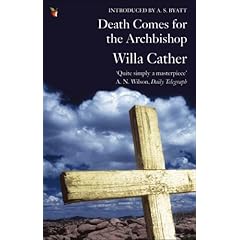
The last few evenings - as my bedtime reading! - I've gone back to Newman's novel Callista, which sits beside Wiseman's Fabiola in the "Catholic novel" section of my bookshelf (alongside Cather's Death Comes to the Archbishop - no, not a wish-fulfilment fantasy, but a lovely lyric work, well-able to be dipped into as a soothing tonic - Robinson's melodramatic The Cardinal, and Marshall's comic but moving All Glorious Within).

Wiseman and Newman, writing in the mid-1850's, have the quaint old-time habit of interjecting as the omniscient author throughout their works, but that is part of the charm of both books, which deal with Christianity during the great persecutions - Newman's, that of Decius, as it struck North Africa; and Wiseman's, the greatest and last of all, that of terrible Diocletian, in Rome itself, then truly the seat of Antichrist, drunk with the blood of the saints (many of whom have cameo roles in the novel).

Both romances, for their true Christian message, their loving portrayal of the sanctity of the primitive Church, and their old-fashioned style are well-worth reading.  I turn now to a work of non-fiction: Frend's Martyrdom and Persecution in the Early Church.

Pray for us, all ye holy Martyrs, - That we may be made worthy of the promises of Christ.

By the triumph of Thy grace in all Thy holy Martyrs, – Lord, deliver us.

Sunday, June 14, 2009

Varia

Various goings-on this week: for a change, there will be Benediction at Carmel this afternoon at 5.45 pm, it being the transferred solemnity of Corpus Christi, and on Friday, the feast of the Sacred Heart, there will be Exposition at Church of Apostles from after the noon Mass until 6 pm (presumably concluding with Benediction, though who knows these days).

On the domestic front, I've just bought a new bookcase, to deal with the ever-growing overflow and inflow of books that I purchase... at the moment, I actually have four empty shelves, but that won't last long!  (A friend of mine and fellow bibliophile, Jennifer - one of the members of Psallamus, the choir at St Aloysius, the Latin Mass parish in Melbourne - tells me that she's had to give away twelve boxes of books in order to free up the spare room: I was tempted to say, Why didn't you send them here? but realize that was my biblio-avarice talking.)

In other news, two seminarians I know are off to Rome in due course for studies, and another seminarian (currently at Wagga) is doing well, Deo gratias

******

Litanies - which to say when?  I came up with a scheme for this years back, which I may resurrect pro opportunitate:
  • Sunday - Litanies of the Most Holy Name of Jesus;
  • Monday- Litanies of the Most Precious Blood;
  • Tuesday - not litanies, but the Veni Creator or Veni Sancte in honour of the Holy Ghost;
  • Wednesday - Litanies of St Joseph;
  • Thursday - Litanies of the Most Blessed Sacrament;
  • Friday - Litanies of the Sacred Heart;
  • Saturday - Litanies of Loreto, that is, of Our Lady.
There are various systems by which certain days are considered as set aside for sundry devotions - this scheme is a composition of these.  Of course, Saturdays are devoted to Our Lady, as all men know; and so likewise Wednesdays for St Joseph, her most chaste spouse.  The Litanies of the Holy Name mention the Resurrection, to which mystery Sunday is dedicated; Mondays traditionally are days to pray for the Holy Souls in Purgatory, and the Litanies of the Precious Blood contain the words "Precious Blood of Jesus, delivering souls from the lake of purgatory"; God the Holy Ghost is customarily specially adored on Tuesdays; and of course Thursday is the weekly commemoration of the institution of the Eucharist, while Friday is devoted to the Passion, which is mentioned in the Litanies of the Sacred Heart.

It ought be observed that the full Litanies of the Saints are suitable for every day, but given their length may be used on penitential days especially.

Saturday, April 18, 2009

Return to the North

This week has been noteworthy for my resumed attendance at weekday Mass - something I didn't achieve during Lent!  I've been off-blog; the past few days have been pleasantly spent in Hobart, with some dear friends of mine.  One thing that has been on my mind (having sung along with it, in the vernacular, at Mass at Carmel) is the Easter Sequence, the Victimæ paschali laudes:

Victimae Paschali laudes immolent Christiani.
Agnus redemit oves: 
Christus innocens Patri 
reconciliavit peccatores.
Mors et vita duello 
conflixere mirando: 
dux vitæ mortuus 
regnat vivus.
Dic nobis, Maria, 
quid vidisti in via?
Sepulcrum Christi viventis 
et gloriam vidi resurgentis.
Angelicos testes, 
sudarium et vestes.
Surrexit Christus spes mea: 
præcedet vos in Galilæam.
[Credendum est magis soli 
Mariæ veraci 
quam Judaeorum turbæ fallaci.]*
Scimus Christum surrexisse
 a mortuis vere: 
tu nobis, victor Rex, miserere.
Amen. Alleluia.

Christians, to the Paschal Victim offer sacrifice and praise.
The sheep are ransomed by the Lamb;
and Christ, the undefiled,
hath sinners to his Father reconciled.
Death with life contended: 
combat strangely ended!
Life's own Champion, slain, 
yet lives to reign.
Tell us, Mary: say 
what thou didst see upon the way.
The tomb the Living did enclose;
I saw Christ's glory as he rose!
The angels there attesting; 
shroud with grave-clothes resting.
Christ my hope has risen: he goes before you into Galilee.
That Christ is truly risen from the dead we know.
Victorious king, thy mercy show!  
Amen.  Alleluia!

* Omitted since 1570.

What an extraordinary line: dux vitæ mortuus regnat vivus - "the leader of life, dead, reigns alive"! But better far than any commentary of mine is that given by the late John Paul II of happy memory, in his 1997 Urbi et Orbi address.

******

On my trip to and from Hobart, I had the chance to pass by Colebrook, though I was unable to obtain the key to open up Pugin's little masterpiece church (now being restored) of St Patrick.  However, this afternoon St Matthew's, Pontville, was unlocked, so I said some Office there, and a prayer for my godmother buried in the adjoining cemetery, plus one for "the Venerable Archdeacon Marum" whose remains lie interred before the high altar, as his memorial in the church porch proclaims.

******

In the State capital, I did some CD and secondhand book buying: Mexican Baroque: Music from New Spain, being recordings of sacred choral music, including a Mass, by Ignacio de Jerusalem and Manuel de Zumaya, as sung by Chanticleer (to go with a favourite CD of theirs I already have); two books about life in pioneer New Zealand, A First Year in Canterbury Settlement (first issued 1864; new edition, 1964) and Erewhon (first 1872; my copy, 1936 - a Penguin Books paperback, still with its original wrapper), both by Samuel Butler; Barbara Celarent: A Description of Scholastic Dialectic (1949) by the late great Thomas Gilby, O.P., he of Gilby-edition-of-the-Summa fame; and a rather racy biography of a notorious Nazi sympathizer, Unity Mitford: A Quest (1976; reprint, 1981), by David Pryce-Jones - something light for a change.  

(I ought mention I've also recently read a rather racier double biography, one of Gertrude Stein and Alice B. Toklas - Janet Malcolm's Two Lives: Gertrude and Alice; long ago I read, as the authoress reveals herself to have done, The Alice B. Toklas Cookbook, all unawares of who either lady was, or of their, ahem, closeness... It was pleasing to read that years after Gertrude's death, Alice was baptized a Catholic in old age; she spent the last decade of her life enduring poverty, but praying and suffering, hoping that perhaps by God's secret grace her erstwhile fellow Jewess would be found to have been saved.  Ms Malcolm is rather ignorantly flippant about this, I was sorry to note.)

Monday, March 16, 2009

Recent Arrivals

It's always nice to have some literature at hand; over the weekend I dipped into popular culture by reading the graphic novel Watchmen (thinking it wise to see the original before perhaps steeling myself for the reputedly gory and graphic film version now showing); and to-day, having bought a travel guide to New Zealand (waiting for me, together with a large map, on the dining room table), I returned home to find my mail had turned up trumps: László Dobszay's The Bugnini Liturgy and the Reform of the Reform, plus two publications of the F.Ss.R.: an English translation of the traditional Roman Martyrology (excellent!) and the latest edition of their newspaper The Catholic

I'm also hoping for some items to turn up eventually:  Remote People, by Evelyn Waugh (famous for his hilarious account of the barbaric pomp and cryptic rites accompanying Haile Selassie's coronation as Emperor of Ethiopia); and after years of consulting it, my own copy at last of Jungmann's magisterial Missarum Solemnia in two volumes.

Saturday, January 31, 2009

Sinister Street re the Little Office

Sir Compton Mackenzie brought out his novel Sinister Street in 1913-14, being an account of the boyhood and  youth of a young man, Michael Fane, in the late Victorian and Edwardian periods - it's a good read.  (The author, by the way, became a Catholic in 1914.)  Here, in the chapter entitled "Incense", Michael discovers religion, of the Anglo-Catholic variety, and at the moment is visiting his friend Bernard Prout: 
'Shall we say Vespers?' suggested Mr Prout. 'You know - the Small Office of the Blessed Virgin.  It won't take long.  We can say Compline, too, if you like.'
'Just as you like,' said Michael.
...
Michael was handed a thin sky-blue book labelled Office of the B.V.M.
'Latin or English?' queried Mr Prout.
'Whichever you like,' said Michael.
'Well, Latin, if you don't mind.  I'm anxious to learn Latin, and I find this is good practice.'
'It doesn't look very good Latin,' said Michael doubtfully.
'Doesn't it?' said Mr Prout.  'It ought to.  It's the right version.'
'I expect this is Hellenistic - I mean Romanistic - Latin,' said Michael, who was proud of his momentary superiority in knowledge.  'Greek Test* is Hellenistic Greek.'
'Do you know Greek?' asked Mr Prout.
'A little.'
Mr Prout sighed.
[* In those days, schoolboys at public (that is, private) schools studied Latin and Greek, including the New Testament in the original.  O tempora, O mores!]

Thursday, January 29, 2009

Death Comes for the Archbishop

No, this isn't a news flash, or a devout prayer that Such-and-such receive his reward very soon...  (For such, BTW, one sings the Media vita, or has a Requiem sung.)

Rather, I've just taken delivery of a favourite book of mine, which I've read over and again, but one of which I've never actually owned a copy: Death Comes for the Archbishop, by Willa Cather (originally published 1927).  It's an evocative, elegaic work about two French priests come to the South-West of the United States to reawaken its slumbering Catholicism and erect new dioceses among the Indians, Spanish/Mexicans and Americans there.  I thoroughly recommend it to all.

While I'm not so interested in reading most of her œuvre, I think I may buy a copy of Shadows on the Rock, set in 17th century Quebec...

Wednesday, January 28, 2009

Books, Books, Books

I'm sitting looking out over the city, with two piles of books in front of me, books that I acquired in Melbourne.  It worries me to think how much I've spent, but I think I ought tote it up:
  • Compton Mackenzie, Sinister Street [a good novel that a certain bishop first lent me a copy of many years ago] - $7;
  • Ordo 2009 [Australian, for the Ordinary Form] - $10;
  • The Little Office of the Blessed Virgin Mary [Baronius Press, with lots of misprints about which I'll blog!] - $42.95;
  • Stephen Wang, A Way of Life for Young Catholics - $6.95;
  • The Coronation Service Westminster Abbey 12 May 1937 - a gift;
  • Christopher Knetes, Service for the Consecration of an Eastern Orthodox Church (Sydney, 1927) - $14;
  • The Essential Erasmus - $7.50;
  • W.H.C. Frend, Martyrdom and Persecution in the Early Church - $6;
  • Butler's Lives of the Saints, Volume XII (December) [handsomely bound, with an inscription dated 1894] - $30;
  • Irma Zaleski, The Way of Repentance - $8 (plus another copy given to a friend);
  • Richard Harries, Art and the Beauty of God - $12;
  • George Maloney, Mary: The Womb of God - $7;
  • Frederick Faber, The Blessed Sacrament or the Works and Ways of God (London, 1856) [I'll have to get this book seen to: the front cover is loose; the inside page, also loose, has the inscription "Presented to his Grace the Archbishop by his grateful and dutiful Daughters of Subiaco Feast of the Dolours of the Bd Virgin April 15th 1859" - and there is also a stamp in the book "Library Sydney Society of Jesus", which makes me surmise that this book was presented to Archbishop by the religious sisters he founded, and later was given to the Jesuit Fathers] - 50¢;
  • Adam Cooper, Life in the Flesh: An Anti-Gnostic Spiritual Philosophy - $99 [I had to buy it, especially as this was its sale price at the booklaunch, a substantial discount!];
  • St Thomas Aquinas, Summa Theologiæ, Volume 40 (2æ2æ. 92-100): Superstition and Irreverence [part of the prized Gilby Summa] - $14;
  • Lancelot Sheppard, Barbe Acarie: Wife and Mystic [about Bl Mary of the Incarnation, O.C.D.] - $10;
  • Denis Murphy, The Sacristan's Manual (London, 1950) - a gift;
  • St Thomas Aquinas, Summa Theologiæ, Volume 9 (1a. 50-64): Angels [another part of the prized Gilby Summa*] - $20;
  • St Alphonsus Liguori, The History of Heresies and Their Refutation (Dublin, 1847) - $7;
  • Stainer, The Crucifixion [full music edition of this sacred oratorio, the CD of which I already have] - $20;
  • The National Eucharistic Congress, Melbourne 1934 [includes photograph of the final Eucharistic Benediction given outdoors to a crowd of over half a million] - $20;
  • The Spectator, 17 January 2009 [Australian edition; I read this at the airport and while flying home] - $6.95.
[* The same bookshop had volumes VIII and X also, but I'm not so interested at present in the niceties of Creation ex nihilo nor in Cosmogony according to the classic schema of the Hexaëmeron, the work of the Six Days, plus I had a feeling that I was getting low on money.]
Well, there's $347.85 spent! - but on 22 books and suchlike; none of which, barring Dr Cooper's learned work, and to a lesser extent that Baronius Press Little Office, was as dear as a new book ordinarily is these days; so the average cost was only about $16 each.  Now, to reading...

It's a worry, being a bibliophile - and to think that Camberwell Books were closed, and I didn't manage to find my way back to a good bookshop in Nicholson Street late yesterday, nor did I visit the John XXIII Fellowship Co-op (if it still exists).

Of making many books there is no end - Ecclesiastes xii, 12.

******

I must also record special thanks to my friend, and sometime lecturer and employer, Dr Rowland at the J.P. II Institute, who kindly gave me some photocopies of recent articles she's written:  "A Catholic Appropriation of Romantic Themes" in How Balthasar Changed My Mind (pp. 191-208); "Variations on the Theme of Christian Hope in the Work of Joseph Ratzinger/Benedict XVI" in Communio 35 (Summer 2008), pp. 200-220; and "Una Fragile Icona: L'Amore tra Uomo e Donna" in Il Logos dell'Agape (pp. 89-98) - Tracey very flatteringly said, Well, you can read Latin, so ditto for Italian!  Gulp.

******

On an allied note, I've also been looking about in antique shops here and just recently in Melbourne for a nice standing metal crucifix, of the sort one used to find on sacristy benches, scholars' desks, and altars - but where now to find one?

Tuesday, December 23, 2008

Seek and Ye Shall Find

It will come as no surprise that I enjoy secondhand-bookhunting; in Adelaide for example, in between my church-frequenting, I obtained a number of pleasing items, such as Strong's Search the Solar System, which I have been curious to read for decades.

But having come back to Launceston, to-day I hit the jackpot: not just a book I've been toying with buying for ages (Homo Ludens by Huizinga), but above all three real finds - 
  • firstly, a small (13.5 by 8.5 cm) edition of the August volume of Butler's Lives of the Saints, but a real edition thereof, complete with lengthy footnotes and latin quotations, not some modern mutilation, for only $10; 
  • secondly, still better, a 1904 edition of Hilarius Dale's Ceremonial according to the Roman Rite (so wonderfully mocked by Fortescue for its mistakes, such as the following instruction for the entry into church on Palm Sunday: "the Subdeacon turns the face of the Cross towards the door, which he strikes with his foot" - of course, the foot of the processional cross is what Baldeschi, his source, meant), which was for sale at $10 but was so obviously worth more I gave the man $20 instead; 
  • and last and best, for an absurdly low $65, a book I never thought to see in the original, Ward's controversial Ideal of a Christian Church, second edition of December 1844, published as its Preface relates "because the recent proceedings at Oxford necessitate the immediate appearance of a Second Edition", alluding to what had then been set in motion and soon came to pass - the University condemning the book in early 1845, and stripping Ward of his degrees; famously, he had the last laugh, by announcing, in The Times, his conversion to Catholicism and his engagement on the same day!  (From him descended Maisie Ward, who married Frank Sheed and together with him ran the Catholic publishers Sheed & Ward.)

Saturday, April 19, 2008

Books I've Bought

As I have the bag to hand, here is the list of what I've acquired in Melbourne, omitting one or two secular items; it should keep me busy:

Tracey Rowland, Ratzinger's Faith: The Theology of Pope Benedict XVI.
[Finished already!]

Andrew Pradel, St Vincent Ferrer: The Angel of the Judgment [sic].
[I have been reading this in bed, after I finally finished the Cordwainer Smith I brought with me.]

Michael Sternbeck, ed., The Order of Mass, According to the Extraordinary Form of the Roman Rite: The Missal of Blessed John XXIII.
[This has some valuable notes in it, plus interesting points such as a selection of Prefaces from the new Missal in the spirit of what Pope Benedict suggests in his Motu Proprio.]

Holy Transfiguration Monastery, The Psalter according to the Seventy.
[I've always wanted an English version of the Septuagint Psalms, so as to compare them with the Vulgate.]

Avery Dulles, The Assurance of Things Hoped For: A Theology of Christian Faith.

Eugene Rogers, After the Spirit: A Constructive Pneumatology from Resources outside the Modern West.
[I hope this will answer some of my questions about God the Holy Ghost, the too-often neglected Third Person of the Trinity, Whom we should worship and glorify a good deal more than we do in our modern lip-service of Him.]

Alexander Schmemann, Introduction to Liturgical Theology.
[I have wanted to read this for ages, to get a grasp of the Byzantine Rite and its distinctive insights.]

St Bernard of Clairvaux, Sermons for Advent and the Christmas Season.
[Bernard is beaut, and even Lutherans like him! I thoroughly enjoyed reading his sermons super Missus est some years back, but haven't yet tracked them down again...]

St Bernard of Clairvaux (tr. Michael Casey, monk of Tarrawarra), How the Word Visits the Soul: The 74th Sermon on the Song of Songs.

StAR (the St Austin Review) for Jan.-Feb. and Mar.-Apr. 2008.
["Reclaiming Catholic culture" - topics such as "the Counter-Reformation", and "The Classical Muse", in each issue respectively.]

Oriens, Jan.-Mar. 2008.
[The Australian Trad. liturgical journal.]

Tarrawarra: Newsletter of the Cistercian Monks, Dec. 2007.
[The next issue will feature Br Luke's profession; this issue has a rare photo of the Abbey Church before its wreckovation.]

St Patrick's Cathedral Melbourne Images.
[A gift from my father.]

William O'Brien, How to Serve Low Mass and Benediction.
[A small pamphlet, which I bought to check whether I serve correctly or not; irritatingly, it spells out the Latin in 'phonetics', some of which only work if one had a really broad American accent: no Aussie would say "Ohd" for "Ad"!]

Robert Taylerson, A Guide to Morning, Evening and Night Prayer.
[Another pamphlet - I once owned a copy, but leant it out and never got it back, so I've bought a replacement, even tho' I don't need it really!]

******

Oh, and I did buy just one CD, a real bargain at half price:

Biber's Missa Alleluja, & Schmelzer's Vesperae sollennes [sic] - paired with the Gregorian Propers for the Dedication of a Church, plus Palestrina's setting of the Coelestis urbs Jerusalem (DHM 05472 77856 2). Mmmm, Baroque spendour - it's great!

******

P.S. Waiting for me was my order from aLibris: I now have a complete set of Abbot Vonier's three-volume collected works, which I greatly enjoyed reading last year and in previous years, after discovering him while on retreat at the Redemptorist Monastery at Galong, N.S.W. It will be good to have him to hand.

P.P.S. Also at home, but not paid for yet (must send money!) is:

Didier Bonneterre, The Liturgical Movement.