Showing posts with label Spain. Show all posts

Friday, December 30, 2016

The Translation of Saint James

Both in the Mozarabic Rite, and in the proper calendar for Spain according to the Extraordinary Form of the Roman Rite, the 30th of December is not an unadorned day of the Christmas Octave, but rather the Feast of the Translation of St James, according to the ancient tradition whereby his sacred body was transported from Jerusalem to Santiago de Compostela. 

How delightful, that the days after Our Lord's Nativity should honour, first St Stephen, first Christian Martyr, next St John the beloved disciple, Apostle and Evangelist, thirdly the Holy Innocents, the first to die for Christ, fourthly the great Archbishop-Martyr Thomas à Becket, and fifthly the Translation of the Apostle St James, before lastly, on the last day of December, honouring St Sylvester, Pope of Christian freedom and peace.

I append the texts of the Mass of the Translation of St James, first in Latin, then in an English version:


Die xxx Decembris.
IN FESTO TRANSLATIONIS
S. Jacobi Apostoli, et Hispaniarum Patroni.

Introitus. Tob. 13, 13 & 14.
Luce splendida fulgebit justus. Nationes ex longinquo venient ad eum, et adorabunt Dominum in conspectu ejus, et terram suam in sanctificationem habebunt.
Psalm. 150, 1. Laudate Dominum in Sanctis ejus: Laudate eum in firmamento virtutis ejus.
Gloria Patri.

Oratio
Deus, qui dispositione mirabili Corpus beati Jacobi Apostoli tui de Hierosolymis ad Hispaniam transferri, et in Compostella gloriosè sepeliri voluisti: concede quæsumus, ut ejus meritis, et precibus in cælesti Jérusalem collocari mereamur. Per Dominum.

Si hoc Fest. venerit in Domin. aut die, in quo fit de ea, fit commemorat. Domin. postea Oct. in fine dicitur Evang. ejusdem Dominicæ.

Lectio Epistolæ beati Pauli Apostoli ad Corinthios. 1 Cor. 15, 39-50.

Fratres, non omnis caro eadem caro, sed alia quidem hominum, alia vero pecorum, alia volucrum, alia autem piscium. Et corpora cælestia, et corpora terrestria: sed alia quidem cælestium gloria, alia autem terrestrium. Alia claritas solis, alia claritas lunæ, et alia claritas stellarum. Stella enim à Stella differt in claritate: sic et resurrectio mortuorum. Seminatur in corruptione, surget in incorruptione. Seminatur in ignobilitate, surget in gloria. Seminatur in infirmitate, surget in virtute. Seminatur corpus animale, surget corpus spiritale. Si est corpus animale, est et spiritale, sicut scriptum est: Factus est primus homo Adam in animam viventem, novissimus Adam in spiritum vivificantem. Sed non priús quod spiritale est, sed quod animale: deinde quod spiritale. Primus homo de terra terrenus: secundus homo de cælo cælestis. Qualis terrenus, tales et terreni: qualis cælestis, tales et cælestes. Igitur, sicut portavimus imaginem terreni, portemus et imaginem cælestis. Hoc autem dico, fratres, quia caro, et sanguis regnum Dei possidere non possunt: neque corruptio incorruptelam possidebit.

Graduale. Ps. 33, 7 & 21.
Iste Sanctus clamavit ad Dominum, et exaudivit eum: et de omnibus tribulationibus ejus salvavit eum.
V. Custodit Dominus omnia ossa ejus: unum ex his non conteretur.

Alleluja, alleluja.
Isai. 2, 2 & 11, 10. V. Fluent ad eum omnes gentes, et erit sepulchrum ejus gloriosum.
Alleluja.

Sequentia sancti Evangelii secundùm Matthæum. 20, 20-23.

In illo tempore: Accessit ad Jesum mater filiorum Zebedæi cum filiis suis, adorans, et petens aliquid ab eo. Qui dixit ei: Quid vis? Ait illi: Dic ut sedeant hi duo filii mei, unus ad dexteram tuam, et unus ad sinistram in regno tuo. Respondens autem Jesus, dixit: Nescitis quid petatis. Potestis bibere calicem, quem ego bibiturus sum? Dicunt ei: Possumus. Ait illis: Calicem quidem meum bibetis: sedere autem ad dexteram meam, vel sinistram, non est meum dare vobis, sed quibus paratum est à Patre meo.

Credo.

Offertorium. Eccli. 44, 14.
Corpora Sanctorum in pace sepulta sunt, et nomen eorum vivit in generationem, et generationem. Alleluja.

Secreta.
Præsta, quæsumus omnipotens Deus; ut beati Jacobi Apostoli tui intercessione, quem ad laudem tui nominis, dicatis muneribus honoramus, piæ in nobis fructus devotionis accrescat. Per Dominum.

Præfatio, et Communic. de Nat.

Communio. Isai. 55, 5.
Gentes, quæ te non cognoverunt, ad te current, et adorabunt, propter Dominum Deum tuum, et sanctum Israël; quia glorificavit te.

Posteommunio.
Deus, qui beatum Jacobum Apostolum tuum gloriosum fecisti in cælis, et ejus Corpus singulari cultu venerari voluisti in terris: concede propitius; ut, qui mirabilem ejus translationem festivo celebramus obsequio, ad æternam gloriam ejus intercessione transferri mereamur. Per Dominum.

******

30th December.
THE FEAST of the TRANSLATION
of St James the Apostle, and Patron of Spain.

Introit. (Tob. 13, 13 et 14; Ps. 150, 1)
With a glorious light the just shall shine. Nations from afar shall come to him, and shall adore the Lord in his presence, and shall esteem his land as holy.
Ps. Praise ye the Lord in his Saints: praise ye him in the firmament of his power.
Glory be.

Collect.
O God, who by marvellous management didst will the body of blessed James thine apostle to be transferred from Jerusalem to Spain and in Compostela to be buried magnificently: grant, we beseech thee; that by his merits and prayers we may deserve to be assembled together in the heavenly Jerusalem. Through...

If this Feast should occur on Sunday, or the day on which the Sunday is kept, a commemoration of the Sunday is made after that of the Octave, and at the end is said the Gospel of the same Sunday. [According to the liturgical books of 1962, this rubric would not apply.]

Lesson from the Epistle of blessed Paul the Apostle to the Corinthians.
(1 Cor. 15, 39-50)
Brethren: All flesh is not the same flesh: but one is the flesh of men, another of beasts, another of birds, another of fishes. And there are bodies celestial, and bodies terrestrial: but, one is the glory of the celestial, and another of the terrestrial. One is the glory of the sun, another the glory of the moon, and another the glory of the stars. For star differeth from star in glory. So also is the resurrection of the dead. It is sown in corruption, it shall rise in incorruption. It is sown in dishonour, it shall rise in glory. It is sown in weakness, it shall rise in power. It is sown a natural body, it shall rise a spiritual body. If there be a natural body, there is also a spiritual body, as it is written: The first man Adam was made into a living soul; the last Adam into a quickening spirit. Yet that was not first which is spiritual, but that which is natural; afterwards that which is spiritual. The first man was of the earth, earthly: the second man, from heaven, heavenly. Such as is the earthly, such also are the earthly: and such as is the heavenly, such also are they that are heavenly. Therefore as we have borne the image of the earthly, let us bear also the image of the heavenly. Now this I say, brethren, that flesh and blood cannot possess the kingdom of God: neither shall corruption possess incorruption.

Gradual (Ps. 33, 7 et 21)
This Saint cried to the Lord, and he heard him: and out of all his troubles he saved him.
V. The Lord keepeth all their bones, not one of them shall be broken.

Alleluia, alleluia. (Is. 2, 2 et 11, 10)
V. All nations shall flow unto him, and his sepulchre shall be glorious.
Alleluia.

The continuation of the holy Gospel according to Matthew (20, 20-23)

At that time: There came to Jesus the mother of the sons of Zebedee with her sons, adoring and asking something of him. Who said to her: What wilt thou? She saith to him: Say that these my two sons may sit, the one on thy right hand, and the other on thy left, in thy kingdom. And Jesus answering, said: You know not what you ask. Can you drink the chalice that I shall drink? They say to him: We can. He saith to them: My chalice indeed you shall drink; but to sit on my right or left hand, is not mine to give to you, but to them for whom it is prepared by my Father.

Creed.

Offertory (Ecclus 44, 14.)
The bodies of the Saints are buried in peace, and their name liveth unto generation, and generation.

Secret
Grant, we beg, almighty God, that, by the intercession of blessed James thine Apostle, whom, to the praise of thy name, we honour by dedicated gifts, the fruit of pious devotion may grow in us. Through…

Preface and Communicantes of Christmas.

Communion (Is. 55, 5)
Nations, that knew not thee, shall run to thee, and shall adore, because of the Lord thy God, and the Holy One of Israel; for he hath glorified thee.

Postcommunion
O God, who didst make blessed James thine Apostle glorious in heaven, and didst will his body to be venerated with singular care on earth: grant propitiously; that, we who celebrate his marvellous translation with festive worship, may deserve, at his intercession, to be transferred to everlasting glory. Through…

Saturday, January 3, 2015

Belated Christmas Present: a Postcommunion addressed to the Holy Spirit

While looking for the various Office and Masses in honour of St James conceded to Spain (the feast of the Translation of his body to Compostela, on the 30th of December; the feast of his Apparition as Santiago Matamoros on the 23rd of May; the Vigil, on the 24th of July, of his feast; and his feast itself, on the 25th of July, with an Octave ending on the 1st of August) – as I am planning to walk the Camino in four years' time, and am beginning to make remote preparations, spiritual and temporal – I made a most amazing discovery: amongst those Masses for use in the Spanish realms, in a special Votive Mass for pregnant women and those undergoing the pangs of childbirth, the Collect, Secret and Postcommunion are addressed to the Father, the Son and the Holy Spirit respectively.

Now, there are plenty of orations addressed to God the Son (though of course most are addressed to God the Father), but this was the first I have ever come across, appointed for use in a Roman Rite liturgical book, addressed to God the Holy Ghost. Fellow students of the sacred liturgy, this is a belated Christmas gift to you.

Years ago, I read Jungmann's The Place of Christ in Liturgical Prayer, which confirmed that liturgical prayers, apart from some in the Armenian Rite, are hardly ever addressed to God the Holy Spirit. Now, the Third Person of the Trinity is certainly invoked in hymns and antiphons (such as the Veni Creator Spiritus and the Veni Sancte Spiritus of the Roman West, or the troparion O heavenly King of the Byzantine East), but prayers in the strict sense are nearly always addressed to either the First or, less often, the Second Person of the eternal Triune Godhead.

The Postcommunion that I came across is found in a book available online, entitled Missæ quæ in Hispania specialiter celebrantur, pro celebrantium commoditate congestæ (Barcinone [Barcelona], 1833), on page 83, where it is part of Alia Missa ad honorem gloriosæ Virginis pro Mulieribus prægnantibus, aut alias in partu laborantibus (Another [Votive] Mass in honour of the glorious Virgin for pregnant women, or for other women labouring in childbirth):
Beatissime Spiritus, per quem condita sunt universa: suppliciter tuas exaudire digneris famulas, pro quibus has tuæ porrigimus pietati preces: ut quemadmodum tuo felici, et sancto juvamine optant liberari; ita suffragiis beatissimæ Matris Dei, lumen gratiæ tuæ, in earum celeri expeditione infundere digneris. Qui cum Deo Patre, et eodem Filio vivis, et regnas Deus per omnia sæcula sæculorum. 
(Most blessed Spirit, through whom all was created: deign graciously to hear thy handmaids, for whom we suppliantly offer these prayers to thy piety: that in whatsoever way they hope to be delivered by thy happy and holy aid, even so, at the suffrages of the most blessed Mother of God, deign to pour forth with speedy expedition the light of thy grace into them. Who with God the Father, and the same Son, livest and reignest God, through all ages of ages.)
This prayer is rather too prolix and complex compared to the classic prayers of the Roman liturgy, but it is still most worthy of note.

In particular, I had often wondered (in that artless way of mine) as to how the closing doxology of a prayer to the Holy Ghost would be phrased – would it end "In whose unity the Father and the Son live and reign, God, world without end", or how? In the event, it appears that the ending used is all but identical to that used for prayers ad Filium, simply adding et (eodem) Filio and removing in unitate Spiritus Sancti.

In any case, I had best reiterate my long-term plan to walk from Roncesvalles to Santiago de Compostela in 2019 (hopefully, during Eastertide). Why then? Because I ought have amassed enough leave from work by then, and when three friends of mine walked that same pilgrim path in 1997, they set off in Easter Week and arrived in time for Pentecost, which seems a good plan to me also.

Sunday, November 7, 2010

The Pope Dedicates La Sagrada Família

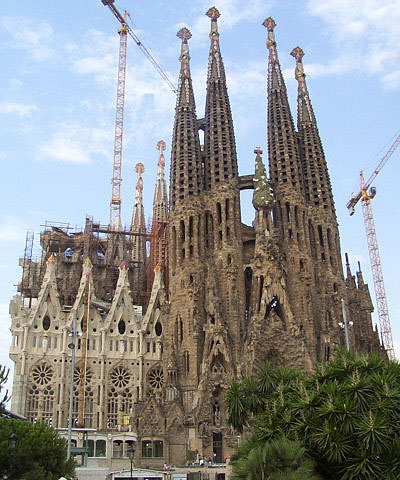
As  I write, His Holiness has just begun the Mass of Dedication of that still-unfinished masterpiece, Gaudí's "Expiatory Temple of the Holy Family" in Barcelona.  Indeed, he will name it a Basilica.  What a rebuke to all who say regnare Christum nolumus, "we don't want Christ to reign", to see this amazing work of art, raised in honour of God, now solemnly blessed: a temple of expiation, indeed, wherein the Lamb once slain will stand upon the altar, making present His Sacrifice in reparation for all sin.

(The Mass is in an interesting combination of Catalan, Spanish and Latin.)


To think that many self-styled intellectuals petitioned for the Sagrada Família to be left unfinished - for to complete it would be an affront to secular Spain.  Just as during the Civil War, Catholics are to have no rights.  The building has always been a privately-funded undertaking, so how dare they try to stop people freely doing as they please!  Better the turban than the mitre?

Antoni Gaudí is now styled Servant of God: may God deign to glorify His servant if it be to His honour and will help forward our salvation, that the Church bravely militant here below may recognize him as a hero of the Church triumphant above, an artist-saint like the Blessed Antony of Fiesole, a.k.a. Fra Angelico.  "Beauty will save the world."

Monday, April 13, 2009

Easter Martyr: St Hermenegild

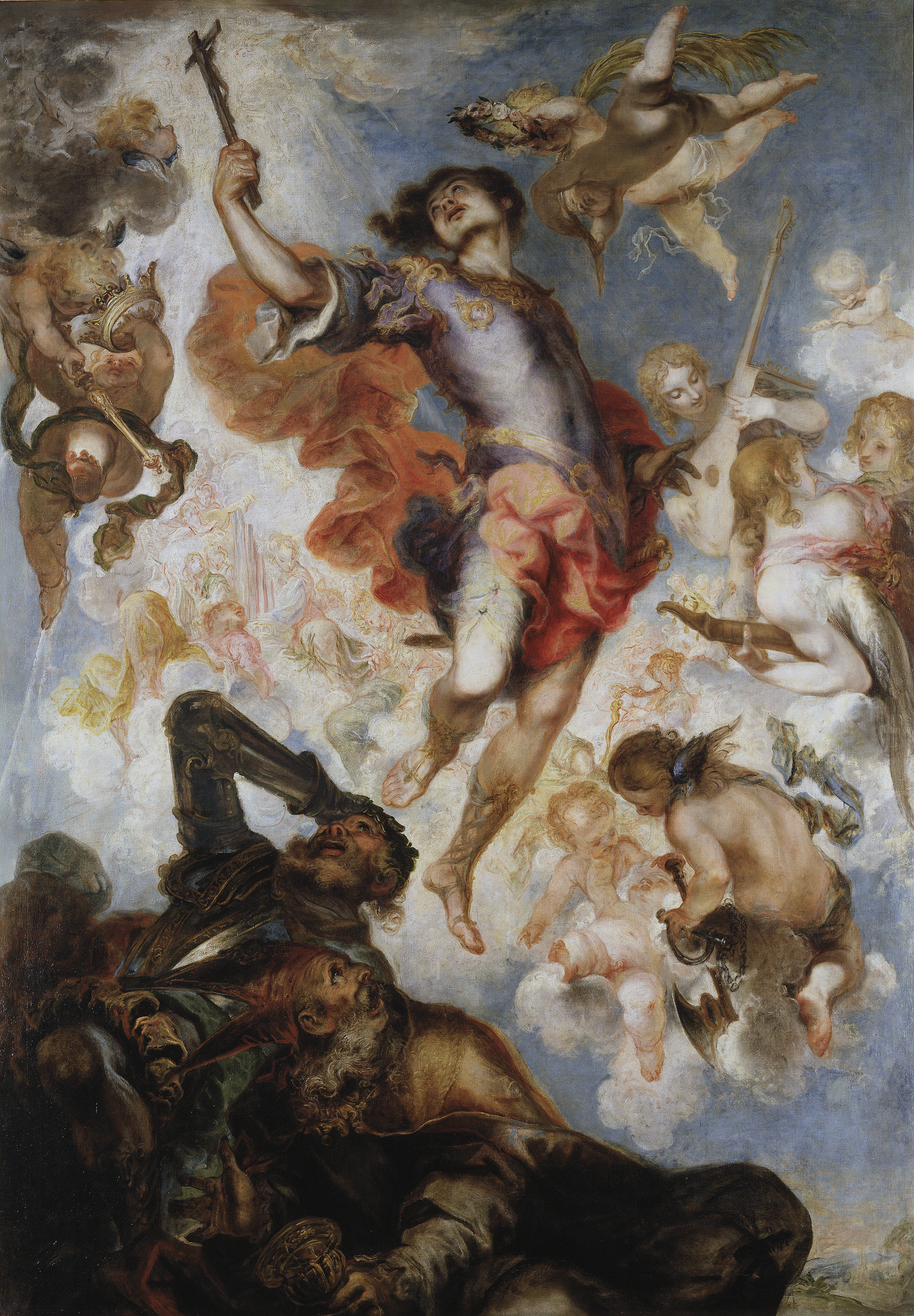
On the 13th of April 585, after refusing to receive the Easter Communion at the hands of an Arian bishop, the heir to the throne of Spain was murdered on the orders of his father, the King.

It is a classic tale of family feuding, and as in any whodunnit, cherchez la femme!  In this case, there were two ladies involved: the prince's evil step-mother, the unlovely Goiswintha, fomented King Leovigild's anger; the prince's saintly wife, Ingund (or Ingunthis) - daughter of the Frankish King Sisebert I of Austrasia - was a stedfast Catholic despite the attempted suasions of her step-mother-in-law: and she, together with St Leander, Bishop of Seville (whose brother, St Isidore, later succeeded to that same see), had wrought her husband's conversion from the Arian heresy.  For these were the days of Visigothic Spain, when a Teutonic military aristocracy ruled the Romanized Spanish; and the Visigoths, prior to their irruption into the rich provinces of the Roman Empire, had been converted by Arian missionaries, not Catholics.

St Hermenegild's younger brother, Reccared (like him, a child of the King's first wife, Theodosia, who had died), had attempted to reconcile father and son during their previous feuds; but now it was too late.  Hermenegild, reconciled instead to thoughts of winning through to heaven, bowed his neck to the sword. Being slain rather than deny the Faith by sacrilegiously communing with a heretic, he won the crown of the everlasting kingdom, and reigns with Christ evermore.


(Hermenegild, spurning the promise of an earthly crown, triumphantly wins the crown of martyrdom, to the joy of the angels; his father laments, and the Arian bishop cowers away.)

From the truth thy soul to turn,
Pleads a father's voice in vain;
Naught to thee were jewelled crown, 
Earthly pleasure, earthly gain. 

Angry threat and naked sword 
Daunted not thy courage high; 
Choosing glory with the Lord, 
Rather than a present joy. 

Now amidst the Saints in light,
Throned in bliss forevermore; — 
Oh! from thy exalted height, 
Hear the solemn prayer we pour. 

Honor, glory, majesty, 
To the Father and the Son, 
With the Holy Spirit be, 
While eternal ages run. Amen.

(Hymn at Lauds, Nullis te genitor, by Pope Urban VIII.)

King Leovigild died the next year; Hermenegild's younger brother, Reccared, who succeeded as King of Spain, himself became a Catholic in 587, and by May of 589, at the Fourth Council of Toledo, the whole Visigothic nation abjured Arianism, and the great St Leander of Seville preached a famous sermon on "the triumph of the Church at the Conversion of the Goths".  Amazingly, even the Arian clergy converted, and were confirmed in their ministries!  All this, it is piously believed, was obtained by the celestial intercession of the royal martyr, whose glorious merits and suffrages won sweet grace from God.  Truly, Hermenegild was an immense treasure (Ermen Gild), for whose life the Lord paid a rich wergild: the gift of Faith to a whole people.

Pope St Gregory the Great, who was a friend of St Leander, having known him during his exile from Spain prior to his return in triumph, sings the praises of St Hermenegild in his Dialogues (III, 31).  It has been argued that the prince, having rebelled against his father, was no worthy martyr; but as St Gregory of Tours states, whatever his sins, they were blotted out by his suffering and martyrdom, whereas, if he had but accepted the Arian bishop's offer of Holy Communion, he would have been restored to his princely estate and reconciled to the King, yet at the price of abandoning the Catholic Faith: this he would not abandon, as the pearl of great price, and it was for this that he died a true martyr.

As for the martyr's widow and infant son, they had taken refuge in the Byzantine Empire, where they prospered; and his great-grandson returned to Spain to reign as King Erwig (680-687).

Deus, qui beatum Hermenegildum Martyrem tuum, cælesti regno terrenum postponere docuisti: da, quæsumus, nobis; ejus exemplo caduca despicere, atque æterna sectari.  Per...

(God, Who didst teach blessed Hermenegild Thy Martyr to esteem earthly things less than the heavenly kingdom: grant, we beg, unto us, that by his example we may despise things perishable and rather seek after things eternal.  Through...)

[BTW, caducus is a great word: tottering, falling, fallen, frail, vain, perishable...]

Friday, July 25, 2008

Santiago Matamoros

I'm feeling better, and was able to get to Confession and evening Mass today, and had the privilege of serving. Matins and Lauds of the Apostle are done, now for the rest of it!

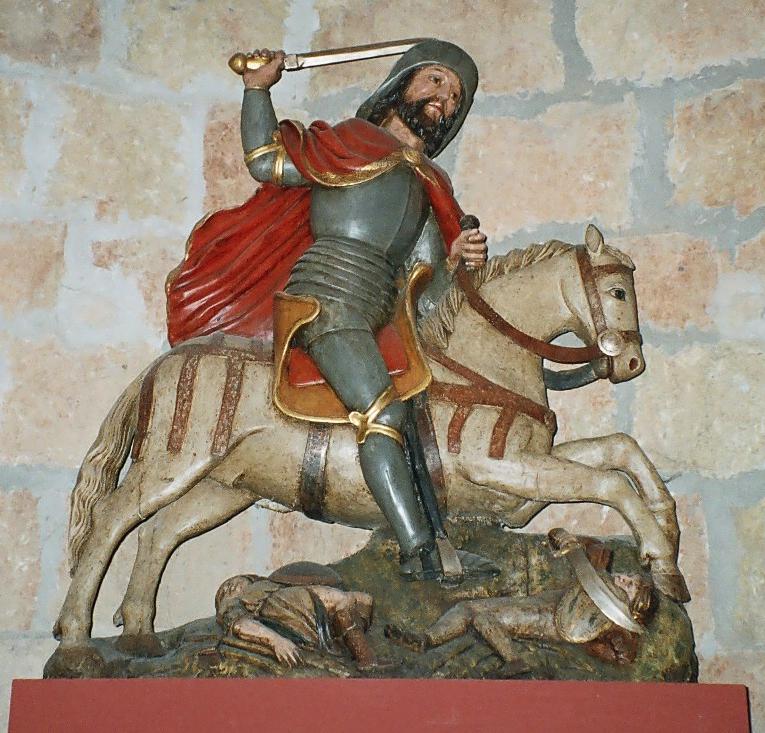
Today we feast St James the Greater, Apostle & Martyr, Patron of Spain - Santiago Matamoros (St James the Moor-Slayer), so named from his apparition from heaven to aid the Christians in several battles against the Moors wickedly occupying Spain. Some may think his help is needed again...


(Fr Rowe rather likes the idea of a mechanical statue of St James Matamoros: pop a dollar in the slot, and it chops off the head of a cowering infidel... LOL)

Since the next WYD is slated for Madrid, I think a prayer or two to St James against the enemies, political and religious, of our Most Holy Faith wouldn't go astray.

St James was a son of Zebedee and brother of St John, from Bethsaida in Galilee; a fisherman, who was called away by the Lord to follow Him. Together with St Peter and St John, he came to the cure of St Peter’s mother-in-law, to the raising of the daughter of Jairus, to Christ’s Transfiguration and to Christ's Agony in the Garden. St James' (rather pushy) mother asked for him and his brother to have a high place in the kingdom, but having been gently turned toward the right path by the Divine response, St James accepted the chalice of martyrdom from the Lord, becoming the first of the apostolic band to die a martyr, being beheaded at Jerusalem in AD 42 (or 44) - see Acts 12:1-2. His relics are kept, according to tradition, at Santiago de Compostella: "St James of the field of stars" (since in a vision of such his presence was revealed).

Several friends of mine have made the pilgrimage along the camino de Santiago to the great shrine of St James at Compostella, walking all the way from Roncesvalles on the French border; one day I hope to make that pilgrimage too: maybe in 2011?

The Mozarabic Rite had a prayer said before Mass, petitioning Christ our Lord for aid, at the intercession of Our Lady, St James, and all saints:

Per gloriam nominis tui Christe Fili Dei vivi et per intercessionem sancte Marie Virginis et beati Jacobi et omnium sanctorum tuorum auxiliare et miserere indignis servis tuis et esto in medio nostri Deus noster qui vivis et regnas in secula seculorum. Deo gratias.

By the glory of Thy Name, O Christ, Son of the living God, and through the intercession of saint Mary the Virgin and of blessed James and of all Thy saints, help and have mercy on thine unworthy servants, and be in the midst of us, our God, who livest and reignest world without end. Thanks be to God.


This is a commemoration of St James, invoking him as patron of Spain:

Aña. Lux et decus Hispaniae, O Jacobe sanctissime, sublevator oppressorum, suffragium viatorum, qui inter apostles primus martyr laureatus obtines primatum, O singulare praesidium, tuorum benignus exaudi vota servorum, et intercedas pro nostra omniumque salute.
V/. Ora pro nobis, beate Jacobe.
R/. Ut digni efficiamur promissionibus Christi.
Oremus.
Esto, Domine, plebis tuae sanctificator et custos, ut, apostoli tui Jacobi munita praesidiis, et conversatione tibi placeat et secura deserviat. Per dominum nostrum Iesum Christum filium tuum, qui tecum vivit et regnat in unitate Spiritus Sancti, Deus, per omnia secula seculorum. R/. Amen.


Ant. Light and adornment of Spain, O most holy James, supporter of the oppressed, succour of travellers, crowned with laurel, who obtainest the first place of martyrdom among the apostles: O unique protection, kindly one, hear the prayers of thy servants, and mayest thou intercede for our salvation and the salvation of all.
V/. Pray for us, blessed James.
R/. That we be made worthy of the promises of Christ.
Let us pray.
Be, O Lord, the sanctifier and guardian of Thy people, so that, fortified by the protection of Thine apostle James, they may be pleasing to Thee by their way of life and securely serve Thee. Through our Lord Jesus Christ Thy Son, Who liveth and reigneth with Thee in the unity of the Holy Ghost, God, world without end.
R/. Amen.