זמרו משכיל • zammerû maśkîl • ψάλατε συνετως • psallite intellegenter • canite erudite • sing ye wisely • chantez vous avec intelligence • lobsinget ihm klüglich • sing ye praises with understanding
My favourite Baroque composer, Marc-Antoine Charpentier, set all the O Antiphons to music – beautiful texts containing "the very marrow of Advent" to quote Dom Guéranger – together with the O salutaris hostia (one imagines this was sung at Benediction after Vespers on each of the last days of Advent).
Here is part of a recording thereof; the first of these Greater Antiphons, O Sapientia, begins at 2:37.
Ssma Trinità dei Pellegrini is a lovely church, and, being a pilgrim and a Traddie, I feel it is my church in Rome: it owes its foundation to St Philip Neri too.
Last night, I found the Mass was a Requiem, marking the anniversary of some deceased fellow: Requiescat in pace. But there was music, and such music! An organist was playing some great music before Mass, and continued during the prayers at the foot of the altar. Come the Sequence, a strong and talented tenor sang out the thrilling chant of Dies Irae; and at the Offertory, he sang a rather Baroque motet accompanied by the organ. The organ played again - after the Elevation of the chalice! During communion, there was another accompanied solo motet, and after Mass ended, to my utter stupefaction, the soloist sang the Salve Regina, accompanied by organ, in what I recognized was a setting by Marc-Antoine Charpentier.
This was a very grand Roman affair, a Low Mass accompanied by sacred music, the organ being more shall we say Counter-Reformation in style, while the motets were Baroque. I don't wish to appear unkind, but it was, however, quite contra rubricas, since at a Requiem the organ may at most play only to help sustain the chant.
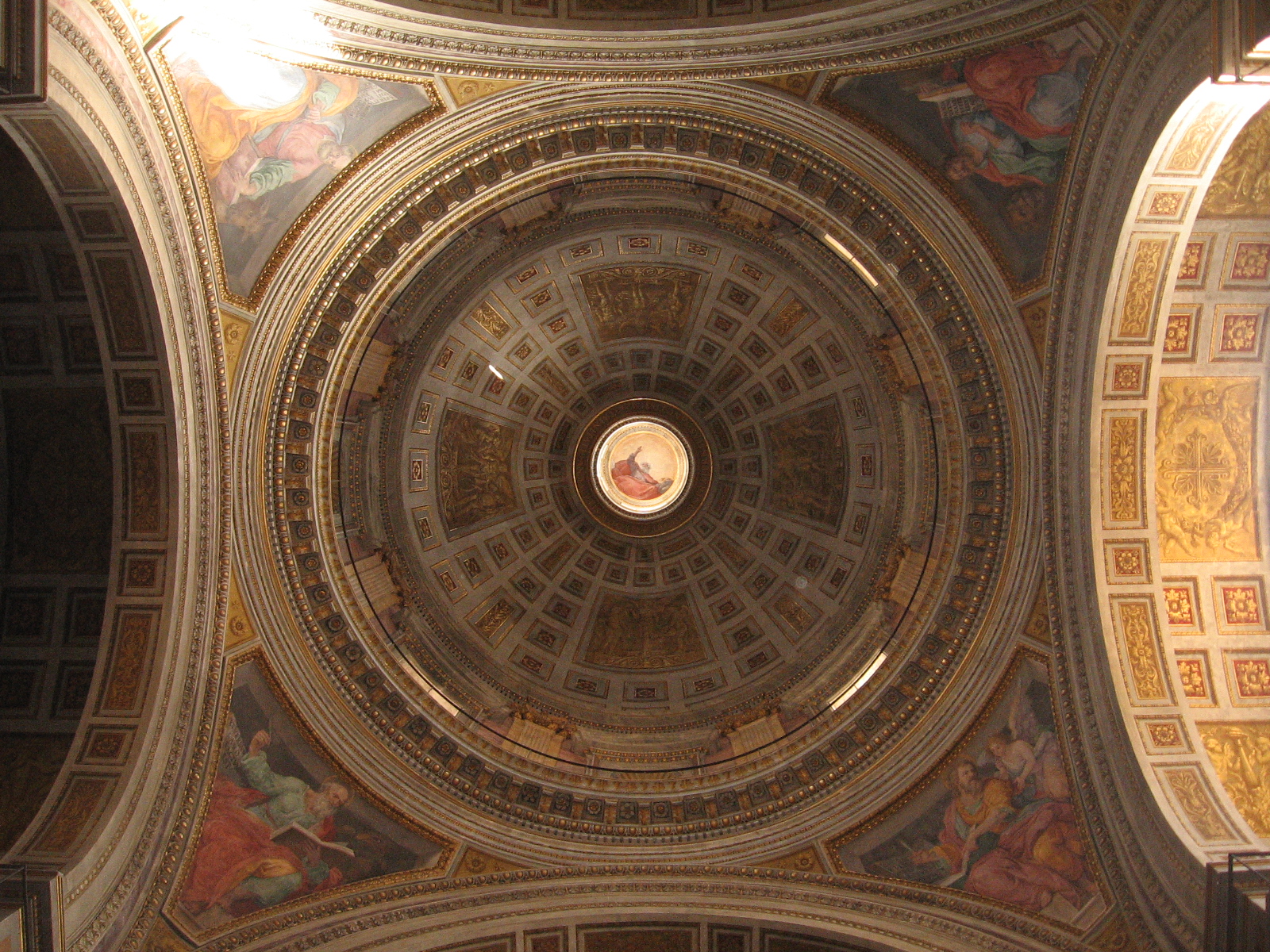
Gazing toward the high altar, one is captivated by the altarpiece, the original needless to say, a huge painting of the Holy Trinity by Guido Reni. High above is written Deo Trino Uni (To God the Three and One), and high, high, exceedingly high up, in the lantern of the dome, is a painting of God the Father Almighty blessing us from on high. You have to crane your neck back till it hurts to see it. What a sight - Pater noster, qui es in caelis...
Benedictione perpetua benedicat nos Pater aeternus.Amen.
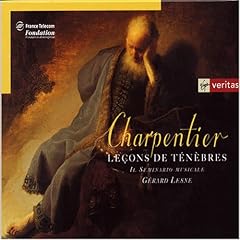
I've just bought a CD of yet another recording of Charpentier's Te Deum, but partnered with his rarer Messe pour plusieurs instruments au lieu des orgues: it even has a nice picture of Pope Benedict XIV* on the front. This music has been accompanying my tripping around Hobart and environs...
[* Wishful thinking on my part: it's actually Clement XIII!]
And how appropriate to have a Te Deum to hand: since I learn from Herr Schutz that Dr Adam Cooper, until now a Lutheran Pastor, together with his family, has just been received into the Church on the 28th of December, feast of the Holy Family. I have been hoping to have a chance to study under him for some time, since learning of his recent appointment as lecturer at the John Paul II Institute in Melbourne, and am delighted to sincerely congratulate him and his on this great step. Ut unum sint!
I think this makes at least four Aussie Lutheran pastors to have Poped in recent years, and I know two Canadian pastors who've done the same. Watch out world: these men are all Christ-loving, zealous and learned, and they play important roles in the New Evangelization.
Te, Deum, laudamus: te, Dominum, confitemur. Te, aeternum Patrem, omnis terra veneratur.
Tibi omnes Angeli; tibi caeli et universae Potestates; Tibi Cherubim et Seraphim incessabili voce proclamant:
Sanctus, Sanctus, Sanctus, Dominus Deus Sabaoth. Pleni sunt caeli et terra majestatis gloriae tuae.
Te gloriosus Apostolorum chorus, Te Prophetarum laudabilis numerus, Te Martyrum candidatus laudat exercitus.
Te per orbem terrarum sancta confitetur Ecclesia, Patrem immensae maiestatis: Venerandum tuum verum et unicum Filium; Sanctum quoque Paraclitum Spiritum.
Tu Rex gloriae, Christe. Tu Patris sempiternus es Filius. Tu ad liberandum suscepturus hominem, non horruisti Virginis uterum. Tu, devicto mortis aculeo, aperuisti credentibus regna caelorum. Tu ad dexteram Dei sedes, in gloria Patris. Judex crederis esse venturus. Te ergo quaesumus, tuis famulis subveni: quos pretioso sanguine redemisti. Aeterna fac cum sanctis tuis in gloria numerari.
Salvum fac populum tuum, Domine, et benedic hereditati tuae. Et rege eos, et extolle illos usque in aeternum. Per singulos dies benedicimus te; Et laudamus Nomen tuum in saeculum, et in saeculum saeculi. Dignare, Domine, die isto sine peccato nos custodire. Miserere nostri domine, miserere nostri. Fiat misericordia tua, Domine, super nos, quemadmodum speravimus in te. In te, Domine, speravi: non confundar in aeternum.
On December the 20th, Holy Mother Church with joys sings at Vespers:
O clavis David, et sceptrum domus Israel, qui aperis et nemo claudit, claudis, et nemo aperit: veni, et educ vinctum de domo carceris, sedentem in tenebris et umbrâ mortis.
O Key of David, and Sceptre of the house of Israel, Who openest and none closeth, closest, and none openeth: come, and lead out the captive from the house of incarceration, the one sitting in darkness and the shade of death.
My researches turned up these sources in Holy Writ:
Non sicut hæc, pars Jacob, quia qui fecit omnia ipse est: et Israël sceptrum hæreditatis ejus: Dominus exercituum nomen ejus. (Jer 51:19)
Non auferetur sceptrum de Juda, et dux de femore ejus… (Gen 49:10a)
…domus Israël… (used 87 times in Vulg.)
Et dabo clavem domus David… et aperiet, et non erit qui claudat; et claudet, et non erit qui aperiat. (Is 22:22a,c-d)
…Hæc dicit Sanctus et Verus, qui habet clavem David: qui aperit, et nemo claudit: claudit, et nemo aperit... (Apoc 3:7b)
…et educeres de conclusione vinctum, de domo carceris sedentes in tenebris. (Is 42:7b-c)
Sedentes in tenebris et umbra mortis; vinctos in mendicitate et ferro. (Ps 106(107):10)
Et eduxit eos de tenebris et umbra mortis, et vincula eorum dirupit. (Ps 106(107):14)
...illuminare his qui in tenebris et in umbra mortis sedent… (Lc 1:79a)
Why not pair this with another Baroque setting of the Magnificat, this time for four voices, by the great Charpentier?
At the moment, the car CD player bears a recording of M.-A. Charpentier's Messe pour le Port Royal; I particularly like his tune for the Veni Creator Spiritus, which is what I use when singing my hymn to St Cecilia...
Apart from this, I usually listen to ABC News Radio.
(Until recently, I'd had a CD of Telemann in the CD player, but it's just been superseded by this item of Charpentier, who's my favourite composer given my liking for sacred music.)
This time of year I always turn to Marc-Antoine Charpentier, my favourite composer, and play some CD's of his settings of the Lamentations, and some of the Responsories, for Tenebræ, along with psalms therefor in faux-bourdon.
The embedded music is a setting by Charpentier of the 3rd Lesson for Matins of Maundy Thursday (Lam. i, 10-14):
Jod. Manum suam misit hostis ad omnia desiderabilia ejus, quia vidit gentes ingressas sanctuarium suum, de quibus præceperas ne intrarent in ecclesiam tuam. Caph. Omnis populus ejus gemens, et quærens panem; dederunt pretiosa quæque pro cibo ad refocillandam animam. Vide, Domine, et considera quoniam facta sum vilis! Lamed. O vos omnes qui transitis per viam, attendite, et videte si est dolor sicut dolor meus! quoniam vindemiavit me, ut locutus est Dominus, in die iræ furoris sui. Mem. De excelso misit ignem in ossibus meis, et erudivit me: expandit rete pedibus meis, convertit me retrorsum; posuit me desolatam, tota die mœrore confectam. Nun. Vigilavit jugum iniquitatum mearum; in manu ejus convolutæ sunt, et impositæ collo meo. Infirmata est virtus mea: dedit me Dominus in manu de qua non potero surgere. Jerusalem, Jerusalem, convertere ad Dominum, Deum tuum.
Jod. The enemy hath put out his hand to all her desirable things: for she hath seen the Gentiles enter into her sanctuary, of whom thou gavest commandment that they should not enter into thy church. Caph. All her people sigh, they seek bread: they have given all their precious things for food to relieve the soul: see, O Lord, and consider, for I am become vile. Lamed. O all ye that pass by the way, attend, and see if there be any sorrow like to my sorrow: for he hath made a vintage of me, as the Lord spoke in the day of his fierce anger. Mem. From above he hath sent fire into my bones, and hath chastised me: he hath spread a net for my feet, he hath turned me back: he hath made me desolate, wasted with sorrow all the day long. Nun. The yoke of my iniquities hath watched: they are folded together in his hand, and put upon my neck: my strength is weakened: the Lord hath delivered me into a hand out of which I am not able to rise. Jerusalem, Jerusalem, turn to the Lord, thy God.
What wonders, the Lamentations, how moving unto tears; the plaints over the ruined city that once sat so proud, and now for her idolatry, her spiritual fornication - one the image of the other, both profound degradations of all that is good in man - cast down to the dust. We sing them, recalling that the Synagogue was abandoned when she tragically rejected the long-promised Christ; we sing them, recalling that for our sins we deserve to be forsaken not less, but more; we sing them, recalling all the sufferings of Christ's Church, casta meretrix; we sing them, knowing Him Who has taken all sin onto Himself, that from sin we might be set free.
The Second Book of Paralipomenon (xxxvi, 11-19) provides a preface, as it were, to the Lamentations, to be taken in both its literal and mystical senses:
Sedecias was one and twenty years old when he began to reign: and he reigned eleven years in Jerusalem. And he did evil in the eyes of the Lord his God, and did not reverence the face of Jeremias the prophet speaking to him from the mouth of the Lord. He also revolted from king Nabuchodonosor, who had made him swear by God: and he hardened his neck and his heart, from returning to the Lord the God of Israel. Moreover all the chief of the priests, and the people wickedly transgressed according to all the abominations of the Gentiles: and they defiled the house of the Lord, which he had sanctified to himself in Jerusalem. And the Lord the God of their fathers sent to them, by the hand of his messengers, rising early, and daily admonishing them: because he spared his people and his dwelling place. But they mocked the messengers of God, and despised his words, and misused the prophets, until the wrath of the Lord arose against his people, and there was no remedy. For he brought upon them the king of the Chaldeans, and he slew their young men with the sword in the house of his sanctuary, he had no compassion on young man, or maiden, old man or even him that stooped for age, but he delivered them all into his hands. And all the vessels of the house of the Lord, great and small, and the treasures of the temple and of the king, and of the princes he carried away to Babylon. And the enemies set fire to the house of God, and broke down the wall of Jerusalem, burnt all the towers, and whatsoever was precious they destroyed.
May God have mercy on us, that we not perish as did Jerusalem of old!
Précibus Sancti Patrícii, Epíscopi et Confessóris tui, Divínam tuam obsecrámus Majestátem: ut nos te cólere, te adoráre permíttas secúndum ritum Latínum Sanctæ Románæ Ecclésiæ tráditum, cunctis saltem diébus Domínicis et festis:
Acceptábilis tibi sit, Dómine exercítuum, hæc oblátio munda; quam per beáti Patrícii labóres ab ortu solis usque ad occásum magno nómini tuo in géntibus offérri voluísti. Per Christum Dóminum nostrum. Amen.
******
Through the prayers of St Patrick, Thy Bishop and Confessor, we entreat Thy Divine Majesty, that Thou permit us to worship and adore Thee according to the Traditional Latin Rite of the Holy Roman Church, at least on all Sundays and Holy Days:
May this clean oblation be acceptable unto Thee, O Lord of hosts, which, through the labours of blessed Patrick, from the rising to the setting of the sun, shall be offered unto Thy great Name among the nations, as Thou hast willed. Through Christ our Lord. Amen.
PRAYERS FOR THE POPE & ARCHBISHOP ANTHONY
Orémus pro Pontífice nostro Leóne. R/. Dóminus consérvet eum, et vivíficet eum, et beátum fáciat eum in terra, et non tradat eum in ánimam inimicórum ejus.
Orémus pro Antístite nostro Juliáno. R/. Stet et pascat in fortitúdine tua, Dómine, in sublimitáte nóminis tui.
******
(Let us pray for Leo our Pope. R/. The Lord preserve him, and give him life, and make him blessed upon the earth, and deliver him not up to the will of his enemies.
(Let us pray for Anthony our Bishop. R/. May he stand and shepherd in Thy strength, O Lord, in the sublimity of Thy name.)
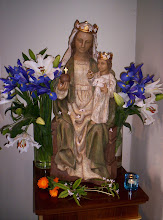
OUR LADY OF COLEBROOK
We fly to thy patronage, O Holy Mother of God: despise not our petitions in our necessities, but ever deliver us from all dangers, O glorious and blessed Virgin.
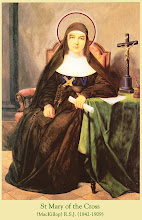
St Mary of the Cross
St Mary, pray for Australia and Australian Catholics; obtain for us deliverance from the unjust actions of bishops and priests; intercede for us that we may for now bear these trials as our apportioned cross, and at length overcome by patience and fidelity, as you did while on earth; now in heaven, be our advocate by your holy merits and glorious suffrages.
To hand over to others what I've contemplated...
Sicut enim majus est illuminare quam lucere solum, ita majus est contemplata aliis tradere quam solum contemplari.
(S. Thomas Aquinatis, S. T., II-II, clxxxviii, 6, resp.)
As for the use of the 1962 Missal as a Formaextraordinaria of the liturgy of the Mass, I would like to draw attention to the fact that this Missal was never juridically abrogated and, consequently, in principle, was always permitted.
… it has clearly been demonstrated that young persons too have discovered this liturgical form, felt its attraction and found in it a form of encounter with the Mystery of the Most Holy Eucharist, particularly suited to them.
What earlier generations held as sacred, remains sacred and great for us too, and it cannot be all of a sudden entirely forbidden or even considered harmful.
— Benedict XVI, Letter to Bishops concerning his Motu Proprio «SummorumPontificum» (7/7/2007)
PRAYER FOR THE BEATIFICATION OF MATTEO RICCI, S.J. (1552-1610)
Eternal Father, Who didst send Thine Only-begotten Son into this world to redeem mankind, kindly hear our humble prayer, and grant the favour we ask at the intercession of the Servant of God Father Matteo Ricci, an outstanding preacher of the Gospel by Thy providential plan, one of the first to harvest the field made sacred by Saint Francis Xavier; who, as soon as he became a missionary in China, spread far and wide the teaching of Christ, and wisely guided countless souls along the road to salvation and sanctity; may it please Thee, therefore, to glorify him on earth, as we believe he is glorified in heaven, and to add his name to the list of the Blesseds and Saints; for his elevation to the honours of the altar would give greater glory to Thee and to Thy Church, and greater edification to the Chinese Christians who so courageously live their faith and their charity. Through the same Christ our Lord. Amen.
Prayer for the Intercession of G. K. Chesterton
God our Father, Thou didst fill the life of Thy servant Gilbert Keith Chesterton with a sense of wonder and joy, and gave him a faith which was the foundation of his ceaseless work, a hope which sprang from his enduring gratitude for the gift of human life, and a charity towards all men, particularly his opponents. May his innocence and his laughter, his constancy in fighting for the Christian faith in a world losing belief, his lifelong devotion to the Blessed Virgin Mary, and his love for all men, especially for the poor, bring cheerfulness to those in despair, conviction and warmth to lukewarm believers, and the knowledge of Thee to those without faith. We beg Thee to grant the favours we ask through his intercession, [and especially for …,] so that his holiness may be recognized by all, and the Church may proclaim him Blessed. Through Christ our Lord. Amen.
Pater, Ave, Gloria, Credo.
Pastore Tedesco - Santo Subito!
Eternal and Almighty God, who didst inspire in the heart of thy servant Pope Benedict XVI the sincere desire to encounter thee and announce thee, becoming a humble “co-operator with the truth” (cf. 3 John 1:8) and offering himself as a servant, for Christ and for the Church, make me also know how to love the Church of Christ and to be able to follow in my life the eternal truths that she proclaims. Deign, Lord, to glorify thy servant, Pope Benedict XVI, and grant, through his intercession, the favour I now ask of thee (mention your petition). Through the same Christ our Lord. Amen.
[Today,] we honor your prophet, Joshua, O Lord: * By his prayers save our souls.
Chosen by Moses to lead the people of God into the promised land, * you led them through the waters of the Jordan. * Thus, by your actions as well as by your name * you foreshadow the saviour, who leads us through the waters of baptism. * O holy prophet, Joshua, * beg him now to save our souls.
PRAY FOR THE REUNION OF ANGLICANS WITH THE SEE OF ROME
V/. Pray for them, O Holy Mother of God.
R/. That they may be one in the Church of thy Son.
The Collect for the Anglican Use
O HOLY Ghost the Lord, who on Pentecost gavest the Church the gift of tongues that Christ might be known, loved and served by peoples of divers nations and customs: watch over the Anglican heritage within thy Church, we pray thee, that, led by thy guidance and strengthened by thy grace, that Use may find such favor in thy sight that its people may increase both in holiness and number, and so show forth thy glory; who livest and reignest with the Father and the Son, one God world without end. Amen.
the extraordinary form of the roman rite in perth, western australia
The Traditional Latin Mass is celebrated daily at St Anne's, Perth, Western Australia, which is the official Latin Mass Chaplaincy of the Archdiocese of Perth. The following details may, however, be out of date: Sunday Masses are at 7.30am (Low), 9.15am (Missa Cantata) and 11.15am (Low). Confessions are heard before all Sunday and weekday Masses, and afterwards if need be. Weekly programme includes sung Mass on feast days, Holy Hours with Benediction of the Most Blessed Sacrament, and the Holy Rosary before all Masses.
Sites I Refer To (not that I endorse all they contain...)