Showing posts with label Dominican Breviary. Show all posts

Thursday, July 2, 2020

Visitation, Dominican Rite

Today the Dominican Breviary and Missal supply excellent proper prayers, different to the Roman orations, for the feast of the Visitation of Our Lady. (I take the translations, with alterations, from The Saint Dominic Missal, published in 1959.)

The Collect:

Omnipotens et misericors Deus, majestatem tuam suppliciter exoramus, ut sicut Unigenitum tuum per visitationem et salutationem Genitricis ejus puero clauso in utero revelasti; ita meritis ejusdem Genitricis, et precibus, ipsum nos facias revelata facie perpetuo contemplari. Qui tecum vivit et regnat...

(Almighty and merciful God, we humbly beseech thy majesty, that as thou didst make known thine Only-begotten Son through the visit and greeting of his mother to* the child as yet unborn; so likewise thou wouldst grant to us, by the merits and prayers of the same mother, to see him with unveiled face unto all eternity: who liveth and reigneth with thee...)

[* TSDM has "to", reading puero clauso as dative, which I initially misread as signifying "by", thinking of puero clauso as ablative: but of course the former is correct, as it refers to the reaction to the greeting of Our Lady on the part of the unborn Baptist as yet in his mother's womb.]

The Secret:

Omnipotens sempiteme Deus, qui de omnibus in te confidentibus curam semper habes, præsta quæsumus, ut per oblationem, quam tibi offerimus, visitationem spiritualem beatæ Mariæ Virginis in nostris necessitatibus semper sentiamus. Per Dominum...

(Almighty and eternal God, who carest for all such as trust in thee, grant, we beseech thee, that through this offering we make to thee, we may always feel the spiritual visitation of the blessed Virgin Mary in all our needs: through our Lord...)

The Postcommunion:

Omnipotens sempiterne Deus, qui commemorationem visitationis beatissimæ Mariæ Matris Dei fieri voluisti; præsta quæsumus, ut per hoc sacrificium, quod sumpsimus, ab ejus visitationis gratia nullatenus excidamus. Per eumdem Dominum...

(Almighty and eternal God, who didst will us to make a commemoration of the visitation of the most blessed Mary, Mother of God; grant, we beseech thee, that through this sacrifice, which we have received, we may never fall from the grace of her visitation: through the same our Lord...)

Monday, July 25, 2016

Santiago Matamoros, ruega por nosotros

The Dominican Breviary contains the following anthems at 1st Vespers of St James the Greater, Patron of Spain - the lesser for the psalms, and the greater for the Magnificat:


(O blessed James, deserving of praise by the heart and lips of all, O singular and amiable patron, intercede for us with the Lord.)


(O light and beauty of Spain, most holy James, who holdest the first place among the Apostles, first-crowned with martyrdom of them! O singular guard, who didst deserve to behold our Redeemer, while still a mortal, transformed into the Deity! Graciously hear the prayers of thy servants, and intercede for our salvation and that of all peoples.)

Spanish editions of the Roman Breviary also contain the following responsory; I am still hunting for the music thereof:

R. viii. Iste est, qui ante alios Apostolos primus plantavit Ecclesiam sanguine suo: * Cujus corpus in Gallæciam delatum, per totum orbem gloria illustratur. V. O sidus, o decus Hispaniæ, sancte Jacobe Apostole, intercede pro nobis ad Deum, qui te elegit. * Cujus corpus in Gallæciam delatum, per totum orbem gloria illustratur. Gloria Patri. * Cujus corpus in Gallæciam delatum, per totum orbem gloria illustratur. 
(This is him, who before the other Apostles first planted the Church with his blood: * Whose body carried to Galicia, through the whole world was made famous in glory. V. O star, O beauty of Spain, Saint James the Apostle, intercede for us with God, who chose thee. * Whose body carried to Galicia, through the whole world was made famous in glory. Glory be to the Father and to the Son and to the Holy Ghost. * Whose body carried to Galicia, through the whole world was made famous in glory.)

As I hope in a few years to walk the Camino to Santiago de Compostela, for the moment I pray to this great Saint for strength and aid, not least invoking him under his more militant and apposite title: Santiago Matamoros, ruega por nosotros.

Friday, July 22, 2016

Dominican Sequence for St Mary Magdalen

The Dominican Missal of 1603 is online, and it contains (on pages 308 to 309) the following delightful Sequence for the feast of St Mary Magdalen (herself referred to as Apostolorum Apostola in the Benedictus Antiphon of the feast according to the Dominican Breviary):

1. Monti Sion dat virorem, 
Ros Hermon, et viror florem,
Fecundum in gratia.
2. Ad honorem Magdalenæ,
Roris hujus imbre plenæ,
Cuncta spirent gaudia.

3. Rigans montes gratiarum,
Ad convallem lacrymarum,
Ros cælestis effluit.
4. Ibi jacens Magdalena,
Lacrymarum imbre plena,
Christi pedes abluit.

5. Abluentis cor fecundat,
Et tergentis corpus mundat,
A culparum sordibus.
6. Mandat pacem osculanti,
Et unguentis abundanti,
Largus est muneribus.

7. Auster fugans aquilonem,
Lux illustrans rationem,
In amorem perfecit.
8. Grande signum pietatis,
Mox purgatam a peccatis,
Sibi sponsam efficit.

9. Dulcis luctus, dulcis clamor,
Dulcis magis ardens amor,
In tali connubio.
10. A dilecti nulla forte, 
Nec in vita, nec in morte,
Lassatur obsequio.

11. Lugens astat morienti,
Sed congaudet resurgenti,
Ejus narrans gloriam.
12. Et regnantem confitetur,
Dum in rupe profitetur,
Vitam solitariam.

13. Novis modis ibi rapta,
Novis demum donis aucta,
Sponsi gaudet præmiis.
14. Ad hanc partem quam elegit,
Ducat nos qui mundum regit,
Ejus patrociniis. Amen.


Thursday, March 1, 2012

Long Responsories at the Little Hours

On Septuagesima, Sexagesima and Quinquagesima Sundays – and above all on all the days of Lent from the first Sunday onwards until the eve of the Paschal Triduum – the Little Hours according to the Use of the Friars Preachers feature not the usual short responsories, but long responsories of the type normally reserved to Matins.

(Likewise, the Dominican Office also inserts a long responsory after the chapter of First Vespers of many Sundays and greater feasts, which was a common mediæval practice aiming at lending greater solemnity to the Hour.  However, at the Little Hours during Lent, the accent is rather on penitential solemnity rather than such festal solemnity.)

While I do not have a book of Dominican chant to hand, other than a Libellus Completorii (Compline booklet), it would be my understanding, based on the chant for the responsory therein (number 5 below), that all these responsories would have the sort of melismatic chant that Matins responsories do, rather than the far simpler syllabic chant usually found in the normal short responsories of the Little Hours at all the other seasons of the year.


(1) For Septuagesima, Sexagesima and Quinquagesima Sundays —


at Terce (Ps 70:5b-6a):

R/. Spes mea, Domine, * A juventute mea.
[This R/. is not repeated, but rather the versicle follows at once:]
V/. In te confirmatus sum ex utero: de ventre matris meæ tu es meus protector. * A juventute mea.
Gloria Patri et Filio et Spiritui Sancto.
R/. Spes mea, Domine, * A juventute mea.

(My hope, O Lord, * From my youth.
(By thee have I been confirmed from the womb: from my mother's womb thou art my protector. * From my youth.
(Glory be to the Father and to the Son and to the Holy Ghost.
(My hope, O Lord, * From my youth.)


at Sext (cf. Ps 60:4b):

R/. Esto nobis, Domine, * Turris fortitudinis.
V/. A facie inimici. * Turris fortitudinis.
Gloria Patri et Filio et Spiritui Sancto.
R/. Esto nobis, Domine, * Turris fortitudinis.

(Be to us, Lord, * A tower of strength.
(Against the face of the enemy. * A tower of strength.
(Glory be to the Father and to the Son and to the Holy Ghost.
(Be to us, Lord, * A tower of strength.)


at None (Ps 141:8a (Roman Psalter); Ps 141:5b):

R/. Educ de carcere animam meam, * Ut confiteatur nomini tuo, Domine.
V/. Periit fuga a me, et non est qui requirat animam meam. * Ut confiteatur nomini tuo, Domine.
Gloria Patri et Filio et Spiritui Sancto.
R/. Educ de carcere animam meam, * Ut confiteatur nomini tuo, Domine.

(Bring my soul out of prison, * That I may praise thy name, O Lord.
(Flight hath failed me: and there is no one that hath regard to my soul. * That I may praise thy name, O Lord.
(Glory be to the Father and to the Son and to the Holy Ghost.
(Bring my soul out of prison, * That I may praise thy name, O Lord.)


(2) Sundays and ferias of the first and second weeks of Lent (drawn from Psalm 118) —


at Terce (Ps 118:63,132):

R/. Participem me fac, Deus, omnium timentium te * Et custodientium mandata tua. 
V/. Aspice in me et miserere mei secundum judicium diligentium nomen tuum * Et custodientium mandata tua.
Gloria Patri et Filio et Spiritui Sancto.
R/. Participem me fac, Deus, omnium timentium te * Et custodientium mandata tua. 

(Make me, O God, a partaker with all them that fear thee, * And that keep thy commandments.
(Look thou upon me, and have mercy on me, according to the judgment of them that love thy name. * And that keep thy commandments.
(Glory be to the Father and to the Son and to the Holy Ghost.
(Make me, O God, a partaker with all them that fear thee, * And that keep thy commandments.)


at Sext (Ps 118:101-102):

R/. Ab omni via mala prohibui pedes meos, * Ut custodiam mandata tua, Domine.
V/. A judiciis tuis non declinavi, quia tu legem posuisti mihi, * Ut custodiam mandata tua, Domine.
Gloria Patri et Filio et Spiritui Sancto.
R/. Ab omni via mala prohibui pedes meos, * Ut custodiam mandata tua, Domine.

(I have restrained my feet from every evil way: * That I may keep thy words, O Lord.
(I have not declined from thy judgments, because thou hast set me a law. * That I may keep thy words, O Lord.
(Glory be to the Father and to the Son and to the Holy Ghost.
(I have restrained my feet from every evil way: * That I may keep thy words, O Lord.)


at None (Pss 118:164a; 27:3a; 118:176):

R/. Septies in die laudem dixi tibi, Domine Deus meus: * Ne perdas me.
V/. Erravi sicut ovis quæ perierat: require servum tuum, Domine, quia mandata tua non sum oblitus. * Ne perdas me.
Gloria Patri et Filio et Spiritui Sancto.
R/. Septies in die laudem dixi tibi, Domine Deus meus: * Ne perdas me.

(Seven times a day I have given praise to thee, Lord my God: * Destroy me not.
(I have gone astray like a sheep that is lost: seek thy servant, Lord, because I have not forgotten thy commandments. * Destroy me not.
(Glory be to the Father and to the Son and to the Holy Ghost.
(Seven times a day I have given praise to thee, Lord my God: * Destroy me not.)


(3) Sundays and ferias of the third and fourth weeks of Lent (drawn from Psalm 118) —


at Terce (Ps 118:71a,72,73):

R/. Bonum mihi, Domine, quod humiliasti me: * Bonum mihi lex oris tui super millia auri et argenti. 
V/. Manus tuæ fecerunt me et plasmaverunt me: da mihi intellectum, ut discam mandata tua. * Bonum mihi lex oris tui super millia auri et argenti. 
Gloria Patri et Filio et Spiritui Sancto.
R/. Bonum mihi, Domine, quod humiliasti me: * Bonum mihi lex oris tui super millia auri et argenti. 

(It is good for me, Lord, that thou hast humbled me: * The law of thy mouth is good to me, above thousands of gold and silver.
(Thy hands have made me and formed me: give me understanding, and I will learn thy commandments. * The law of thy mouth is good to me, above thousands of gold and silver.
(Glory be to the Father and to the Son and to the Holy Ghost.
(It is good for me, Lord, that thou hast humbled me: * The law of thy mouth is good to me, above thousands of gold and silver.)


at Sext (Ps 118:125a,73b):

R/. Servus tuus ego sum: * Da mihi intellectum, Domine.
V/. Ut discam mandata tua: * Da mihi intellectum, Domine.
Gloria Patri et Filio et Spiritui Sancto.
R/. Servus tuus ego sum: * Da mihi intellectum, Domine.

(I am thy servant: * Give me understanding, Lord. 
(That I will learn thy commandments. * Give me understanding, Lord. 
(Glory be to the Father and to the Son and to the Holy Ghost.
(I am thy servant: * Give me understanding, Lord.)


at None (cf. Ps 118:41,130):

R/. Declara super nos, Deus, * Tuam misericordiam.
V/. Declaratio sermonum tuorum dat intellectum, Domine, * Tuam misericordiam.
Gloria Patri et Filio et Spiritui Sancto.
R/. Declara super nos, Deus, * Tuam misericordiam.

(Declare upon us, O God, * Thy mercy.
(The declaration of thy words giveth understanding, Lord. * Thy mercy.
(Glory be to the Father and to the Son and to the Holy Ghost.
(Declare upon us, O God, * Thy mercy.)


(4) Sundays and ferias of Passiontide, until Holy Thursday exclusive (without "Glory be" on account of the season) —


at Terce (Ps 21:21-22):

R/. Erue a framea, Deus, animam meam: * Et de manu canis unicam meam. 
V/. Salva me ex ore leonis: et a cornibus unicornium humilitatem meam, * Et de manu canis unicam meam. 
R/. Erue a framea, Deus, animam meam: * Et de manu canis unicam meam. 

(Deliver, O God, my soul from the sword: * And my only one from the hand of the dog.
(Save me from the lion's mouth; and my lowness from the horns of the unicorns. * And my only one from the hand of the dog.
(Deliver, O God, my soul from the sword: * And my only one from the hand of the dog.)


at Sext (Ps 21:22,21):

R/. De ore leonis libera me, Domine: * Et a cornibus unicornium humilitatem meam.
V/. Erue a framea, Deus, animam meam, et de manu canis unicam meam.  * Et a cornibus unicornium humilitatem meam.
R/. De ore leonis libera me, Domine: * Et a cornibus unicornium humilitatem meam.

(From the lion's mouth save me, Lord: * And from the horns of the unicorns my lowness. 
(Deliver from the sword, O God, my soul, and from the hand of the dog my only one. * And from the horns of the unicorns my lowness. 
(From the lion's mouth save me, Lord: * And from the horns of the unicorns my lowness.)


at None (Ps 118:161-162a,162b):

R/. Principes persecuti sunt me gratis, et a verbis tuis formidavit cor meum. * Lætabor ego super eloquia tua.
V/. Quasi qui invenit spolia multa. * Lætabor ego super eloquia tua.
R/. Principes persecuti sunt me gratis, et a verbis tuis formidavit cor meum. * Lætabor ego super eloquia tua.

(Princes have persecuted me without cause: and my heart hath been in awe of thy words. * I will rejoice at thy words.
(As one that hath found great spoil. * I will rejoice at thy words.
(Princes have persecuted me without cause: and my heart hath been in awe of thy words. * I will rejoice at thy words.)


(5) At Compline, on Sundays and feasts from the first Sunday of Lent until the first Passion Sunday (Pss 4:9; 131:4):


R/. In pace in idipsum * Dormiam et requiescam.
V/. Si dedero somnum oculis meis et palpebris meis dormitationem. * Dormiam et requiescam.
Gloria Patri et Filio et Spiritui Sancto.
R/. In pace in idipsum * Dormiam et requiescam.


(In peace in the selfsame * I will sleep, and I will rest.
(If I shall give sleep to my eyes, or slumber to my eyelids, * I will sleep, and I will rest.

(Glory be to the Father and to the Son and to the Holy Ghost.

(In peace in the selfsame * I will sleep, and I will rest.)

Tuesday, November 1, 2011

Pilgrimage and All Saints

Salvator mundi, salva nos omnes: sancta Dei Genitrix, Virgo semper Maria, ora pro nobis: precibus quoque sanctorum Apostolorum, Martyrum et Confessorum atque sanctarum Virginum suppliciter petimus, ut a malis omnibus eruamur bonisque omnibus nunc et semper perfrui mereamur.

(Saviour of the world, save us all: Holy Mother of God, ever-Virgin Mary, pray for us: and by the prayers of the holy Apostles, Martyrs and Confessors, and of the holy Virgins, bowing down we beg, that we may be delivered from all evils and now and ever may deserve to enjoy all goods.)

—Dominican Magnificat Antiphon for 2nd Vespers of All Saints

Some of my last memories of this year's Christus Rex pilgrimage are from Monday morning, the day after its conclusion – High Mass of the Vigil of All Saints was sung in the Cathedral, and then, while the choir sang on with choice motets, Fr Mannes offered a Dominican Rite Low Mass (also of the Vigil) at the Blessed Sacrament altar.

I do prefer the Dominican Rite to the Roman for Low Mass – though I would not for one minute subtract from the greater external glory and inspiring majesty of Solemn High Mass.  It is a good day when one can hear several Masses.

Mass, foretaste of the glory of heaven!  Fr Mannes ably preached to us pilgrims on the Sunday morning, reminding us that if pilgrimage not progress us in the spiritual life, it is worthless and to be shunned.  Our advance toward the Cathedral, symbol of the heavenly Jerusalem, the goal of our life's pilgrimage, reminds us that we are called to be saints, for nothing impure shall enter heaven.  Well then was the Monday Mass that of the Vigil of All Saints, reminding us that we are not yet made perfect, not yet rejoicing in the consummation of all things in Christ – just as even this morning's Mass, back in my home town, back at Carmel, being of All Saints, yet reminded us that we have a real communion with heaven, but are still on earth, still on our pilgrimage.

All ye holy men and women, intercede for us!

Monday, December 6, 2010

Dominican Propers for St Nicholas

Delightfully, the Dominican Breviary – even the '62 – provides special propers for the Office of St Nicholas, with special antiphons for Lauds to be sung with the Sunday psalms, and likewise festal psalms to be used (under one antiphon, the first from Lauds) at Vespers.  At Matins, too, proper antiphons are to be recited with the psalms from the Common of Confessors, and the three lessons and responsories (doubtless edited down from nine in older editions) are also proper.

FIRST VESPERS (where the feast is of the first class)

Super Psalmos Aña.  Amicus Dei Nicolaus, pontificali decoratus infula, omnibus se amabilem exhibuit.

R/.  Ex ejus tumba marmorea sacrum resudat oleum, quo liniti sanantur cæci, * Surdis auditus redditur, Et debilis quisque sospes regreditur.  V/.  Catervatim ruunt populi, cernere cupientes quæ per eum fiunt mirabilia. * Surdis auditus redditur, Et debilis quisque sospes regreditur.  Gloria Patri... * Et debilis quisque sospes regreditur. 

Ad Magnif. Aña.  O Pastor æterne, o clemens et bone custos, qui, dum devoti gregis preces attenderes, voce lapsa de cælo, præsuli sanctissimo dignum episcopatu Nicolaum ostendisti tuum famulum!

MATINS

Invit.  Adoremus Regem sæculorum, * In quo vivit Nicolaus honor sacerdotum.

Aña 1.  Nobilissimis siquidem natalibus ortus, velut lucifer Nicolaus emicuit.
Aña 2.  Postquam domi puerilem decurrit ætatem, cunctis mundi hujus spretis oblectationibus, Christi se jugo subjiciens, documentis sanctis suum præbuit auditum.
Aña 3.  Pudore bono repletus Dei famulus, sumptibus datis, stupri nefas prohibuit.
Aña 4.  Auro virginum incestus, auro patris earum inopiam, auro prorsus utrorumque detestabilem infamiam Dei servus ademit Nicolaus.
Aña 5.  Innocenter jura puerilia transcendens, evangelicæ institutionis discipulus effectus est.
Aña 6.  Gloriam mundi sprevit cum suis oblectationibus: et ideo meruit provehi ad summum sacerdotii gradum.
Aña 7.  Pontifices almi divina revelatione lætificati, Nicolaum Præsulem devotissime consecraverunt.
Aña 8.  Sanctus quidem triticum, quod a nautis acceptum, et sagacitate distribuere et augeri precibus impetravit.
Aña 9.  Muneribus datis, neci sunt juvenes innocentes addicti: quibus Domini servus fuit vitæ præsidio festinanter.

Lesson i – Proverbs iii, 1-5

R/. i.  Confessor Dei Nicolaus, nobilis progenie, sed nobilior moribus, ab ipso puerili ævo secutus Dominum, * Meruit divina revelatione ad summum provehi sacerdotium.  V/.  Erat enim valde compatiens, et super afflictos pia gestans viscera. * Meruit divina revelatione ad summum provehi sacerdotium.

Lesson ii – Proverbs iii, 11-15, 19-24

R/. ii.  Quadam die, tempestate sævissima quassati nautæ, cœperunt sanctum invocare Nicolaum: * Et statim cessavit tempestas.  V/.  Mox illis clamantibus apparuit quidam, dicens eis: Ecce adsum, quid vocastis me? * Et statim cessavit tempestas.

Lesson iii – hagiographical

R/. iii.  Ex ejus tumba marmorea sacrum resudat oleum, quo liniti sanantur cæci, * Surdis auditus redditur, Et debilis quisque sospes regreditur.  V/.  Catervatim ruunt populi, cernere cupientes quæ per eum fiunt mirabilia. * Surdis auditus redditur, Et debilis quisque sospes regreditur.  Gloria Patri... * Et debilis quisque sospes regreditur.

LAUDS

Aña 1.  Beatus Nicolaus adhuc puerulus multo jejunio macerabat corpus.
Aña 2.  Ecclesiæ sanctæ frequentans limina, sacra pectore condebat mandata.
Aña 3.  Juste et sancte vivendo, ad honorem sacerdotii meruit promoveri digneris.
Aña 4.  Amicus Dei Nicolaus, pontificali decoratus infula, omnibus se amabilem exhibuit.
Aña 5.  O per omnia laudabilem virum, cujus meritis ab omni clade liberantur qui ex toto corde quærunt illum!

Ad Bened. Aña.  Copiosæ caritatis Nicolaë Pontifex, qui cum Deo gloriaris in cæli palatio: condescende, supplicamus, ad te suspirantibus, ut exutos gravi carne pertrahas ad superos.

VESPERS

Super Psalmos Aña.  Beatus Nicolaus adhuc puerulus multo jejunio macerabat corpus.

Ad Magnif. Aña.  O Christi pietas omni prosequenda laude, quæ sui famuli Nicolai merita longe lateque declarat!  Nam ex tumba ejus oleum manat, cunctosque languidos sanat.

Thursday, November 25, 2010

1956 and earlier Dominican Office of St Catherine

St Catherine of Alexandria, Virgin and Martyr, is ranked as the Protectress of the Order of Preachers, doubtless for her famed philosophical and theological prowess, whereby she confuted and converted pagan philosophers ere she was put to death for the Faith – first inventing the catherine wheel when a revolving wheel of fire, to which she was strapped, burst apart at her prayer and slew the impious spectators in its explosion (see the traditional hymn at first Vespers, given below).  Fireworks are dangerous.  After her pious death as a witness to Christ, her body was wonderfully translated to Mount Sinai (as the old hymn at Lauds mentions), where the piety of all succeeding ages has maintained a most notable monastery of monks aspiring to the angelic life, enclosing not only her sacred remains, but the formerly Burning Bush (or rather a scion sprung from its roots).  Mirabile dictu!

I was struck by the difference in the Office between my 1962 Dominican Breviary, and my 1956 Dominican Diurnal.  The '62 has St Catherine's feast to-day as of the 3rd class, with proper 3rd lesson and collect alone.  Yet the '56 gives it as a Totum Duplex, with proper psalm antiphon (only one, as is normal for festal Vespers), long responsory, hymn and Magnificat antiphon at first Vespers, five proper psalm antiphons, plus hymn and Benedictus antiphon at Lauds, and at second Vespers, a proper psalm antiphon (the first used at Lauds), the proper hymn repeated from first Vespers, and a proper Magnificat antiphon.  At first Vespers, as is normal, the Laudate psalms – Pss 112, 116, 145, 146, 147 – were appointed for use, with the Sunday psalms to be used at Lauds and the Vesper psalms to be taken from the Common of a Virgin.

It appears that worries about the entire historicity of St Catherine's life and death had whittled away this liturgical devotion.  The deletion of her proper liturgical texts is particularly savage given that they say nothing that piety and the general idea of her acknowledged martyrdom would contradict.  Matters reached such a pass after the Council that for a time she was even removed from the Missal, until the late John Paul II restored her feast as an optional memorial.  

How sadly prophetic the Magnificat antiphon the Dominicans sang at her first Vespers formerly: Inclita sanctæ Virginis Catharinæ solemnia suscipiat alacriter pia mater Ecclesia – "May our holy mother the Church uphold with alacrity the glorious solemnity of the holy Virgin Catherine."  Bare ruined choirs!

Herewith, the former Dominican Propers for the Office of St Catherine (I haven't translated the hymns, as they are rather lengthy):

Ad I Vesperas


Super Psalmos Aña.  Virginis eximiæ Catharinæ Martyris almæ festa celebrare da nobis, Rex pie, Christe.


(Grant us to celebrate the feast of the kind, wonderful Virgin Martyr Catherine, O merciful King, Christ.)

R/. Virgo flagellatur, crucianda fame religatur, carcere clausa manet, lux cælica fusa refulget: * Fragrat odor dulcis, cantant cæli agmina laudes. V/. Sponsus amat sponsam, Salvator visitat illam. * Fragrat odor dulcis, cantant cæli agmina laudes. Gloria Patri, et Filio, et Spiritui Sancto. * Fragrat odor dulcis, cantant cæli agmina laudes.

(R/. The virgin is scourged, loaded with chains, tormented with hunger: but while she remains shut up in prison a heavenly light shines round. * A sweet fragrance fills the air and the hosts of heaven are there singing praises. V/. The Spouse loves his bride and visits her as a Saviour. * A sweet fragrance fills the air and the hosts of heaven are there singing praises. Glory be to the Father, and to the Son, and to the Holy Ghost. * A sweet fragrance fills the air and the hosts of heaven are there singing praises.)


Hymnus


Catharinæ collaudemus
Virtutum insignia,
Cordis ei præsentemus
Et oris obsequia:
Ut ab ipsa reportemus
Æqua laudis præmia.

Fulta fide Catharina
Judicem Maximinum
Non formidat: lex divina
Sic firmat eloquium,
Quod confutat ex doctrina
Errores gentilium.

Victi Christum confitentur,
Relictis erroribus:
Judex jubet et crementur,
Nec pilis aut vestibus
Ignis nocet, sed torrentur
Inustis corporibus.

Gloria et honor Deo
Usquequaque altissimo,
Una Patri, Filioque,
Inclito Paraclito,
Cui laus est et potestas
Per æterna sæcula. Amen.
 
Ad Magnif. Aña.  Inclita sanctæ Virginis Catharinæ solemnia suscipiat alacriter pia mater Ecclesia.  Ave, Virgo Deo digna, ave, dulcis e benigna!  Obtine nobis gaudia quæ possides cum gloria.


(May our holy mother the Church uphold with alacrity the glorious solemnity of the holy Virgin Catherine.  Hail, Virgin worthy of God, hail, sweet and benign!  Obtain for us the joys which thou dost possess with glory.)


Ad Laudes


Aña 1.  Passionem gloriosæ Virginis Catharinæ devote plebs celebret fidelis, quæ sui memores Deo commendet meritis et juvet beneficiis.
Aña 2.  Post plurima supplicia Martyr alma ad decollandum est ducta: ad cælum tendens oculos, collum submittit gladio, orans dat gloriam Deo.
Aña 3.  Expecto pro te gladium, Jesu, Rex bone: tu meum colloca in paradiso spiritum, et fac misericordiam meam agentibus memoriam.
Aña 4.  Vox de cælis insonuit: Veni, electa mea, veni intra thalamum Sponsi tui.  Quæ postulas impetrasti: qui te laudant, salvi fient.
Aña 5.  Quia devota laudibus tui memoriam, Virgo, recolimus, o beata Catharina, ora pro nobis, quæsumus.


(May the faithful people devoutly celebrate the passion of the glorious Virgin Catherine, who commends by her merits and aids by her benefits those who remember her to God.


(After many sufferings the sweet Martyr was led to be beheaded: turning her eyes to heaven, bowing her neck to the sword, praying she gave glory to God.
(I await the sword for Thee, Jesus, good King: do Thou emplace my spirit in paradise, and grant mercy to those keeping my memory.
(A voice sounded forth from heaven: Come, my chosen, come within the bridal chamber of thy Spouse.  What thou askest thou hast obtained: they who praise thee, shall be saved.
(Since we devoutly recall thy memory, O Virgin, with praises, O blessed Catherine, pray for us, we beseech thee.)


Hymnus


Præsens dies expandatur
In ejus præconium,
Cujus virtus dilatatur
In ore laudantium,
Si gestorum teneatur
Finis et initium.

Imminente passione
Virgo hæc interserit:
Assequatur, Jesu bone,
Quod a te petierit,
Suo quisquis in agone
Memor mei fuerit.

In hoc caput amputatur,
Fluit lac pro sanguine:
Angelorum sublevatur
Corpus multitudine,
Et Sinai collocatur
In supremo culmine.

Gloria et honor Deo
Usquequaque altissimo,
Una Patri, Filioque,
Inclito Paraclito,
Cui laus est et potestas
Per æterna sæcula. Amen.


Ad Bened. Aña.  Prudens et vigilans Virgo, qualis es cum Sponso illo, qui te elegit de mundo, quam pulchra, quam mirabilis, quanta luce spectabilis inter Sion juvenculas et Jerusalem filias!  Thalamo gaudes regio, conjuncta Dei Filio.


(Prudent and watchful Virgin, of what kind art thou with that Spouse, Who chose thee from the world, how beautiful, how wonderful, with what light remarkable amongst the maidens of Sion and the daughters of Jerusalem!  Thou dost rejoice in the royal wedding chamber, united to the Son of God.)


Ad II Vesperas


Super Psalmos Aña.  Passionem gloriosæ Virginis Catharinæ devote plebs celebret fidelis, quæ sui memores Deo commendet meritis et juvet beneficiis.


(May the faithful people devoutly celebrate the passion of the glorious Virgin Catherine, who commends by her merits and aids by her benefits those who remember her to God.)


(The hymn is the same as that for first Vespers.)


Ad Magnif. Aña.  Ave, virginum gemma, Catherina: ave, sponsa Regis regum gloriosa: ave, viva Christi hostia!  Tua venerantibus patrocinia, impetrata non deneges suffragia.


(Hail, gem of Virgins, Catherine: hail, glorious spouse of the King of kings: hail, living victim for Christ!  Deny not thy impetrated suffrages to those revering thy patronage.)

Saturday, November 6, 2010

Breviary Homily for 4th Sunday after Epiphany

Talk about the Breviary being, as its name implies, an abbreviated Office... while its prayers, hymns and psalms may not be, the Matins readings certainly are.  The dangerous practice of clipping away at the lessons used of old has had bad effects over the ages; how far the liturgy has fallen from the great lengthy extracts used during Advent at Cluny, where all of Isaias was read through within a week or so.  It was particularly foolish of the last pre-Conciliar liturgical reform to slice away the remaining Patristic texts almost to nothing on Sundays – no wonder the Council Fathers called for longer readings (and less psalms) at Matins!

Herewith, the third lesson for the 4th Sunday after Epiphany in the 1962 Roman and Dominican Breviaries:

Homily of St Jerome the Priest
The fifth sign He wrought, when going up into the boat from Capharnaum, He commanded the wind and sea.  The sixth, when in the region of the Gerasenes he gave power to the demons in the pigs.  The seventh, when entering into His city, he cured the second paralytic on a bed.  For the first paralytic is the son of the centurion.

And that's it.

For somewhat more than this barest of outlines, I turn to a 1953 Monastic Breviary and translate the rest of the extract from St Jerome's commentary:

For He Himself had slept: and they approached unto Him, and woke Him, saying: Lord, save us.  A type of this sign we read in Jonas, when amongst other perils, he himself was secure, and slept, and was awoken; and by the authority (imperio) and sacrament of His passion He freed those awaking Him.
Then arising He commanded the wind and sea.  From this place we understand, that all creatures know the Creator.  For what he rebuked, and what He commanded, knew the Commander: not according to the error of heretics, who believe that all things are ensouled, but according to the majesty of the Maker, of which amongst us we are insensible, of which they were aware.
Moreover, the men were amazed, saying: Of what sort is this man, for the wind and sea obey Him?  It was not the disciples, but the sailors, and others, who were in the boat, who marvelled.  If however some contentious man should wish that those, who were surprised, to have been the disciples: we will respond, rightly they are yclept men, who as yet knew not the power of the Saviour.

Now, this at least supplies some meat.

How stupid of the revisers not to take up the second passage as the most pregnant with meaning...

Rubrical Query – II: An Answer

Eureka!  I have found it: in a pre-Pius X Dominican Breviary, it is noted that the Little Office of the Blessed Virgin Mary is said before all the Hours of the Daily Office (whereas in the Roman Breviary, it is said after the Little Hours, and before the Martyrology at Prime), except that Compline of the Blessed Virgin is said after the blessing at the end of Compline of the Day, immediately before the Salve Regina, omitting therefore its usual final Ave.  (The Cistercian practice was the same.)

As I prefer to use the Dominican Breviary for sundry reasons, I can, if I wish, thus combine Compline of the Day with Compline of Our Lady, without having to repeat the Marian anthem &c.  Much better.

I must also thank Rubricarius for his help.

Friday, November 5, 2010

St Martin de Porres

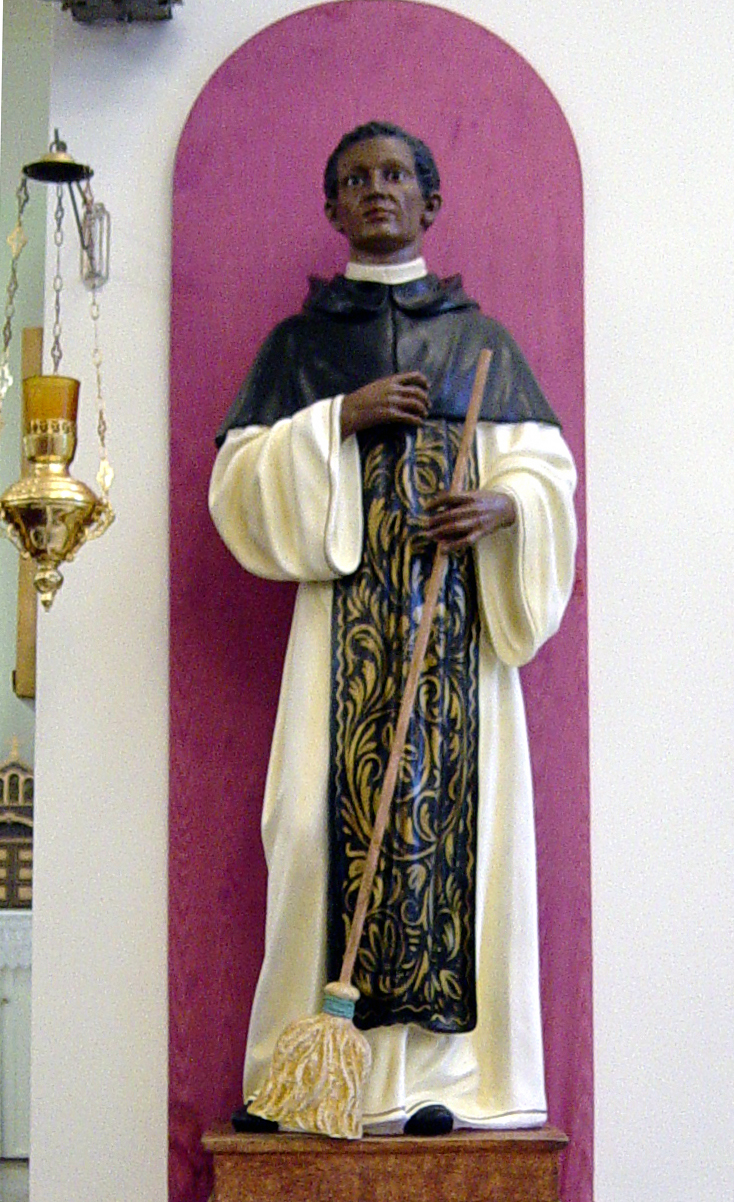
Martinus, filius Joannis de Porres, equitis Hispaniæ, et Annæ Velasquez, suffuscæ libertæ, Limæ in America meridionali anno millesimo quingentesimo [septuagesimo*] nono lucem aspexit  – "Martin, son of Juan de Porres, knight of Spain, and Anna Velasquez, mulatto freedwoman, at Lima in south America in the year 1579 [first] beheld the light": thus begins the third lesson at Matins for to-day in the Dominican Breviary, marking this fifth of November as the feast of St Martin de Porres proper to the Friars Preachers.  (In the modern liturgy, his feast has been moved to the third, the day of his death or rather of his birth into eternal light and life; but I do hope that, in Adelaide, Fr Mannes has offered Mass in his honour to-day.)

[* A strange oversight omits the word "seventy" from his date of birth, implying that he was born in Lima during the Inca Empire!]

Adopting for the moment my latest system of praying the Hours (reading only three psalms at Matins, as is done in the Dominican Breviary throughout Eastertide), which enables me, a reasonably busy layman, to gain most of the benefits of the Office, has indeed brought blessings, such as this holy memorial.  I was minded to reach for my second- and third-class relics, among which I have a holy card of St Martin complete with a piece of linen touched to his body: I paid due veneration to him through this.  How apt, given that in many places to-day is also the feast of All Relics...

St Martin famously wears a now-suppressed variant of the habit of the Blackfriars; pray for Dominican lay-brothers, that their vocation prosper and not perish, and that they get back their proper habit of the black scapular, taken from them on the pretext of equality...

St Martin, son of Spain and son of Africa, son of a gentleman and son of a slave, born and bred in the new conquests of Spain in South America, trained as a surgeon, but aspiring after holiness as a Dominican Tertiary, was in course of time admitted as a lay brother to the convent of the Friars Preachers in Lima, where he exercised a humble and holy ministry as a true servant to all, both within and outwith, to the fathers and to the slaves, to orphans and dumb animals, filled with prayer and working wonders on all sides.  All Lima lamented his passing: but with miracles he continues to coruscate and shine.  

I know a Dominican who owes his parents' meeting, his birth and that of his siblings, and his vocation, to an apparition of St Martin in Melbourne in the last fifty years: an event implicitly commemorated in the Wallace window at St Carthage's Cathedral, Lismore.

Herewith, the Dominican Rite Proper for St Martin de Porres:


Officium (Ps. 91, 13-14)

Justus ut palma florebit: sicut cedrus Libani multiplicabitur: plantatus in domo Domini, in atriis domus Dei nostri.  Ps. 91, 2.  Bonum est confiteri Domino: et psallere nomini tuo, Altissime.  Gloria Patri…  Justus…

Oratio

Deus humilium celsitudo, qui beatum Martinum confessorem tuum ad cælestia regna transire fecisti; ejus meritis et intercessione concede, nos ejus humilitatem ita imitari in terris, ut cum ipso exaltari mereamur in cælis.  Per…

Epistola (Phil. iii, 7-12)

Fratres: 
Quæ mihi fuerunt lucra, hæc arbitratus sum propter Christum detrimenta.  Verumtamen existimo omnia detrimentum esse propter eminentem scientiam Jesu Christi Domini mei: propter quem omnia detrimentum feci, et arbitror ut stercora, ut Christum lucrifaciam: et inveniar in illo non habens meam justitiam, quæ ex lege est, sed illam, quæ ex fide est Christi Jesu: quæ ex Deo est, justitia in fide: ad cognoscendum illum, et virtutem resurrectionis ejus, et societatem passionum illius, configuratus morti ejus, si quo modo occurram ad resurrectionem, quæ est ex mortuis.  Non quod jam acceperim, aut jam perfectus sim: sequor autem, si quomodo comprehendam, in quo et comprehensus sum a Christo Jesu.

Responsorium (Ps. 20, 4-5)

Domine, prævenisti eum in benedictionibus dulcedinis: posuisti in capite ejus coronam de lapide pretioso.  V/.  Vitam petiit a te: et tribuisti ei longitudinem direum in sæculum sæculi.

Alleluia (Ps. 63, 11)

Alleluja, alleluja.  V/.  Lætabitur justus in Domino, et sperabit in eo: et laudabuntur omnes recti corde.  Alleluja.

Evangelium (S. Matt. xi, 25-30)

In illo tempore: Respondens Jesus dixit: Confiteor tibi, Pater, Domine cæli et terræ, quia abscondisti hæc a sapientibus, et prudentibus, et revelasti ea parvulis.  Ita Pater; quoniam sic fuit placitum ante te.  Omnia mihi tradita sunt a Patre meo.  Et nemo novit Filium, nisi Pater: neque Patrem quis novit, nisi Filius, et cui voluerit Filius revelare.  Venite ad me omnes qui laboratis, et onerati estis, et ego reficiam vos.  Tollite jugum meum super vos, et discite a me, quia mitis sum, et humilis corde: et invenietis requiem animabus vestris.  Jugum enim meum suave est, et onus meum leve.

Offertorium (Ps. 91, 13)

Justus, ut palma florebit: sicut cedrus, quæ in Libano est, multiplicabitur.

Secreta

Hanc hostiam, Domine, quam tibi in honorem beati Martini confessoris sacrandam offerimus, benignus suscipe; et præsta ut ejus pia intercessione, nobis effectum tuæ salvationis impendat.  Per…

Communio (S. Matt. xix, 28-29)

Amen dico vobis, quod vos, qui reliquistis omnia, et secuti estis me, centuplum accipietis, et vitam æternam possidebitis.

Postcommunio

Cælestibus alimentis enutriti, supplices te rogamus, Domine Deus noster, ut beato Martino confessore pro nobis intercedente, tuis semper valeamus obedire mandatis.  Per…

Tuesday, November 2, 2010

Little Hours of All Souls in the Dominican Rite

Unlike in the Roman Breviary, in the Dominican the Little Hours for All Souls consist of the following: a silent sign of the Cross, then the festal psalms, that is, spread over Prime, Terce, Sext, and None, Psalms 53 and 118, the latter broken up into eleven parts, none with any doxology or Requiem, but with the antiphon Requiem æternam instead.  In contrast, the Roman Breviary, since the time of Pope St Pius X, appoints proper psalms for all these Hours, with no antiphon but the Requiem at the end of each psalm.  It may be seen that the Dominican practice more closely imitates the Office for the Easter Triduum.

At Prime alone, the Confiteor and Misereatur follow; at all the Little Hours, next is recited the versicles A porta inferi and Dominus vobiscum, with the Collect Fidelium and the concluding versicle Requiescant in pace.

At Pretiosa (answering to the second half, the so-called Chapter Office, of Roman Prime, after the Benedicamus Domino, and beginning with the Martyrology if in choir), to the contrary, all is done as on ordinary days, with even the Gloria Patri being used; while the proper Gospel passage appointed is taken from the Requiem Mass.  In the Roman Office, the corresponding part is drastically modified.

Finally, Compline is sung in its Sunday form, with no observation of All Souls whatsoever - whereas the Roman Compline for All Souls is conformed to the pattern of the day's other Hours, with proper psalms, entirely devoted to prayer for the dead.

It may be noted parenthetically that Dominican Matins, Lauds and Vespers for All Souls are utterly the same as their usual form – but for that the nine lessons at Matins are for this day wholly taken from St Augustine, and the final responsory, the fearful Libera me, is augmented with no less than five versicles, in true mediæval style.

Sunday, August 15, 2010

First Vespers of the Assumption

The Dominican Breviary features magnificent treasures at 1st Vespers - and the rest of their Assumption Office includes the very valuable ancient Collect Veneranda, which teaches - against the immortalists - that Our Lady truly died and yet could not be held in the bonds of death, as she had brought forth the Incarnate Son:

* Only one, extremely long and elaborate antiphon for the five psalms (which are the Laudate Psalms used for all first Vespers: Pss 112, 116, 145, 146, 147):

Tota pulchra es, amica mea, et macula non est in te: favus distillans labia tua, mel et lac sub lingua tua: odor unguentorum tuorum super omnia aromata: jam enim hiems transiit, imber abiit, et recessit: flores apparuerunt, vineæ florentes odorem dederunt, et vox turturis audita est in terra nostra. Surge, propera, amica mea: veni de Libano, veni, coronaberis.
(Cant. 4:7,11,10;2:11,12,13,12,10;4:8)


* Little chapter: either (1956) In omnibus requiem (Ecclus 24:11b-12), from the Common, but actually highly appropriate, what with Our Lady being granted rest in the Lord's tabernacle; or (1962) Benedixit te (Judith 13:22b,23b), since the Dominicans adopted the new proper readings from Pius XII's new Office for the Assumption - which frankly are a distinct loss.

* Long responsory, its opening based on St Luke 1:45:


R/. Beata es, Virgo Maria, Dei Genetrix, quæ credidisti Domino: perfecta sunt in te quæ dicta sunt tibi: ecce exaltata es super choros Angelorum. * Intercede pro nobis ad Dominum Jesum Christum.  V/. Benedicta et venerabilis es, Virgo Maria, quæ sine tactu pudoris inventa es Mater Salvatoris. * Intercede... Gloria Patri... * Intercede...


* Hymn - the traditional Ave, maris stella;

* Versicle Exaltata es;

* Magnificat antiphon most lengthy and ornate, which seems to betray a Byzantine original:

Ascendit Christus super cælos, et præparavit suæ castissimæ Matri immortalitatis locum: et hæc est illa præclara festivitas, omnium Sanctorum festivitatibus incomparabilis, in qua gloriosa et felix, mirantibus cælestis curiæ ordinibus, ad æthereum pervenit thalamum: quo pia sui memorum immemor nequaquam exsistat.
(Christ ascended above the heavens, and prepared a place of immortality for his most chaste Mother: and this is that goodly festival, incomparable to the feasts of all the Saints, on which the Glorious and Happy, all the orders of the heavenly court a-wondering, came to the ethereal nuptial chamber: so that no one should be unmindful of the pious memory of it.)

* Collect (for the Vigil; the Dominicans read the Sunday Collect on the Vigil itself):

Deus, qui virginalem aulam beatæ Mariæ, in qua habitares, eligere dignatus es: da, quæsumus, ut, sua nos defensione munitos, jucundos facias suæ interesse consortes: Qui vivis...
(O God, Who didst deign to choose the virginal chamber of blessed Mary wherein Thou wouldest dwell: grant, we beg, that, we strengthened by her defence, Thou make us to be sharers of her joy: Who livest...)

All this was a most welcome blessing, which I read privately just before attending the Vigil Mass.  For some idiot reason I'd thought that in the modern Rite Mass would be of the Sunday, so I was very glad to find that the Assumption still takes precedence: we had a very devout Lady Mass therefore.

Mass, as celebrated with devotion by Fr Allan, is Mass indeed: Robert (who's visiting me this week-end) and I were very glad to have attended and made our communion.  It was Catholic in the best sense.

The rest of the day, having been the Vigil of the Assumption, I'd read the Little Office (Dominican Rite), and after Communion and Mass I ended with Compline of the Blessed Virgin, as was fitting.

Wednesday, August 4, 2010

Carnis liber ergastulo

"Free from the prison of the body...": that's what carnis liber ergastulo means in the Vesper hymn for St Dominic's feast day – much to the embarrassment of the Dominicans I knew, who were so insistent that their holy founder preached against the dualist heresy of the Albigensians which regarded matter as evil!

An ergastulum was apparently a rather nasty roofed-in pit in which dangerous slaves, or those undergoing punishment, were kept enchained; they were common, alas, on the great Roman landed estates worked by slaves, until the Emperor Hadrian outlawed such prisons as overcruel.  I suppose we are to see this miserable and naughty world as such a prison, or, rather, the body itself as such a pestilent prison in which doth languish the soul.

Ever since the Fall, the complex unity of body and soul has been in disarray, the soul grievously lacerated, the body no longer perfectly subject to the soul's sway; perhaps thus the body would be viewed as a house ruinous, from which the soul is set "free among the dead" (Ps 87), especially as the soul of a saint such as Dominic is necessarily perfected by grace and therefore raised to heaven.

Apart from what does appear a somewhat pessimistic thought, the Office of St Dominic, read this day, the 4th of August, in the traditional calendar, is quite beautiful.  It is a rhyming or rhythmic office, in that the antiphons and long responsories are composed in rhyming verse.  

At first Vespers, the great responsory O spem miram is sung (otherwise used monthly at Compline in choir, as a special devotion to St Dominic); at second Vespers, the magnificent O lumen Ecclesiæ (repeated every night at Compline in his honour) is the Magnificat anthem – it shares a common chant melody with the O quam suavis est of Corpus Christi, and the Sanctus of Mass VIII (de Angelis), though I think the music dates back to yet another original.

During the former Octave of this feast, daily at Lauds the Benedictus anthem was the following, which deserves rescue from oblivion:
Benedictus Redemptor omnium, qui saluti providens hominum, mundo dedit sanctum Dominicum.
(Blessed be the Redeemer of all, Who providing for the salvation of men, gave to the world holy Dominic.)
Much if not most of this Office deserves careful consideration and meditation; here is part of the hymn at Lauds:

Doctrinam evangelicam
Spargens per orbis cardinem,
Pestem fugat hæreticam,
Novum producens Ordinem.

(Scattering the evangelical doctrine throughout the ends* of the world, he drove away the heretical pest, producing a new Order.)

[*More literally, the "cardinal points".]

I particularly like the passage chosen from Ecclesiasticus chapter 50 for the little chapter at both Vespers, Lauds and Terce (after which High Mass would be sung):
Quasi stella matutina in medio nebulæ, et quasi luna plena in diebus suis, et quasi sol refulgens, sic iste effulsit in templo Dei.
As the morning star in the midst of a cloud, and as the full moon in its days, and as the shining sun, so did he shine forth in the temple of God.

Saturday, July 24, 2010

Confiteor, Misereatur and Indulgentiam

"I confess to Almighty God..." – comforting words indeed, because He Who hears them, having Himself turned the speaker's heart to true penitence, is merciful and gracious.

Since I attend the Traditional Mass when I can, as well as the modern Mass when I must, and moreover use the Day Hours according to the Dominican Breviary as my private devotion, I know and use three different forms of the Confiteor.  This has occasioned strange mix-ups when I've been serving Mass!

I wish to focus here, in the spirit of Anglicanorum cœtibus, on some Anglican versions of the Confiteor and its appended prayers the Misereatur and Indulgentiam (or as the Dominican version begins, the Absolutionem).

The most telling difference between the Roman and the Anglican versions of the Confiteor is that the latter, for the usual reasons, shy away from direct invocation of the saints.  That said, the earliest versions of the Confiteor, while all beginning with the one praying confessing before or rather to Almighty God and to (or, one may say, in "the sight of" or rather "before") His saints that he has sinned, do not go on invoke those saints: the Dominican Confiteor only does so when recited by one alone –

Confiteor Deo omnipotenti, et beatæ Mariæ semper Virgini, et beato Dominico Patri nostro, et omnibus Sanctis: quia peccavi nimis cogitatione, locutione, opere et omissione, mea culpa: precor beatam Mariam semper Virginem, et beatum Dominicum Patrem nostrum, et omnes Sanctos orare pro me.
(I confess to God almighty, and to blessed Mary ever Virgin, and to blessed Dominic our Father, and to all the Saints: for I have sinned exceedingly by thought, speech, deed and omission, through my fault: I pray blessed Mary ever Virgin, and blessed Dominic our Father, and all the Saints to pray for me.)

In order to rather subtly put this, some Anglican versions of the Confiteor say "I confess to Almighty God, before the whole company of heaven..." – just as St Paul adjured Timothy: "I charge thee before God, and Christ Jesus, and the elect angels..." (I, v, 21).  As the Apostle reminded us, the saints shall judge the world (as Our Lord Himself told us – St Matthew xix, 28), and indeed it were better we be judged before the saints (I Cor. vi, 1-2): those already living and reigning with God are witnesses of His mighty acts, most particularly His loving grant of forgiveness to the repentant.

There are mediæval versions of the Confiteor that instead have a Trinitarian cast: Confiteor tibi, Domine, Pater cœli et terræ, tibique benignissime Jesu una cum Spiritu Sancto, coram sanctis angelis... and Confiteor Deo omnipotenti Patri et Filio et Spiritui Sancto et omnibus angelis... – by a parallel or like develpment, some other Anglican versions of the Confiteor preferred to address the confession direct to the Three Persons.

What to do about the second half of the Confiteor, praying saints to intercede for us?  This being a later development, not found in full in earlier versions such as the Dominican or the Sarum, it were easy to regress and omit it: instead, the Misereatur could be made, not a response, but a continuation of the prayer.  The Indulgentiam would then be for the priest presiding to pronounce as a fitting conclusion – not a sacramental absolution, of course, but a fervent prayer for mercy made by one of Christ's own ministers.

I am very familiar with the longer Dominican form of the Misereatur, which one reads in the first person singular when praying Prime and Compline alone:

Misereatur mei omnipotens Deus, et dimittat mihi omnia peccata mea: liberet me ab omni malo, salvet et confirmet in omni opere bono, et perducat me ad vitam æternam.  Amen.
(May Almighty God have mercy upon me, and remit unto me all my sins: may he deliver me from all evil, save and confirm me in every good work, and lead me unto life eternal.  Amen.)

The Roman Misereatur is shorter than this, in almost inverse proportion to its longer Confiteor.  There is likewise evidence that the Indulgentiam in some mediæval forms is longer, and indeed contains much of what is now present in the conclusion of the set prayer that is the Formula of Intention before Mass, in the words:

Gaudium cum pace, emendationem vitæ, spatium veræ pænitentiæ, gratiam et consolationem Sancti Spiritus, perseverantiam in bonis operibus, tribuat nobis omnipotens et misericors Dominus.  Amen.

(May the almighty and merciful Lord God grant unto us all joy and peace, amendment of our lives, time for true penance, the grace and the comfort of the Holy Ghost, and perseverance in every good work. Amen.)

So, what are these Anglican forms of these three prayers, the Confiteor, Misereatur and Indulgentiam?  Here they are, as found in the forms of Compline appointed in the 1928 Proposed B.C.P., the 1929 Scottish B.C.P., the 1962 Canadian B.C.P., and a representative work of Anglo-Catholic piety, The Priest's Book of Private Devotion:

WE confess to God Almighty, the Father, the Son, and the Holy Ghost, that we have sinned in thought, word, and deed, through our own grievous fault. Wherefore we pray God to have mercy upon us.

ALMIGHTY God, have mercy upon us, forgive us all our sins and deliver us from all {Scot. omits} evil, confirm and strengthen us in all goodness, and bring us to life everlasting {PBPD & Canad. add: through Jesus Christ our Lord}. Amen.

MAY {PBPD omits} the almighty and merciful Lord grant unto {PBPD omits} you pardon and remission of all your sins, time for {PBPD & Scot. add: true repentance,} {PBPD adds: and} amendment of life, and the grace and comfort of the Holy Spirit. Amen.

It is at once apparent that these prayers have been put into the plural throughout; the congregation are together to recite the first two prayers, and a priest, if present, should then pray the last prayer.

To back-translate this into Latin is quite straightforward, and yields the following results:

Confitemur Deo omnipotenti, Patri, (et) Filio, et Spiritui Sancto: quia peccavimus cogitatione, verbo, et opere, nostra maxima culpa.  Ideo precor Deum omnipotentem misereri nostri.

Misereatur nostri omnipotens Deus, dimittat nobis omnia peccata nostra, et liberet nos a (ab omni) malo, confirmet et roboret nos in omni bono, et perducat nos ad vitam æternam (per Jesum Christum Dominum nostrum).  Amen.

Absolutionem et remissionem omnium peccatorum vestrorum, spatium (veræ pænitentiæ, et) emendationis vitæ, gratiam et consolationem Sancti Spiritus, tribuat vobis omnipotens et misericors Dominus.  Amen.

Here is a second form, in the singular, again from The Priest's Book of Private Devotion:

I confess to God Almighty, before all the company of heaven, and thee, that I have sinned exceedingly in thought, word, and deed, of my own grievous fault; wherefore I pray God to have mercy upon me.
ALMIGHTY God, have mercy upon you, and forgive you all your sins, deliver you from all evil, confirm and strengthen you in all goodness, and bring you to everlasting life. Amen.
THE almighty and merciful Lord grant you pardon and remission of all your sins, time for true repentance and amendment of life, and the grace and comfort of the Holy Spirit. Amen.

This is even closer to the older, simpler, mediæval Catholic versions.

Already, in the Anglican Use Book of Divine Worship, we have such prayers as the following – the longer Anglican version of the Indulgentiam – in regular use:

May the Almighty and merciful Lord grant us absolution and remission of all our sins, true repentance, amendment of life, and the grace and consolation of his Holy Spirit. Amen. 

Why focus on all this?  Because these are good prayers, containing much of substance deserving careful consideration and attention.

For instance, the longer, "Dominican" Misereatur well sums up the succession of stages of the spiritual life that we and all Christians need Divine grace to attain:

  1. We beg Almighty God to have mercy upon us;
  2. May He remit all our sins;
  3. May He deliver us from all evil;
  4. May He save and confirm us in every good work;
  5. And may He bring us to life everlasting.
God grant it: Amen.