Showing posts with label orations. Show all posts

Thursday, July 2, 2020

Visitation, Dominican Rite

Today the Dominican Breviary and Missal supply excellent proper prayers, different to the Roman orations, for the feast of the Visitation of Our Lady. (I take the translations, with alterations, from The Saint Dominic Missal, published in 1959.)

The Collect:

Omnipotens et misericors Deus, majestatem tuam suppliciter exoramus, ut sicut Unigenitum tuum per visitationem et salutationem Genitricis ejus puero clauso in utero revelasti; ita meritis ejusdem Genitricis, et precibus, ipsum nos facias revelata facie perpetuo contemplari. Qui tecum vivit et regnat...

(Almighty and merciful God, we humbly beseech thy majesty, that as thou didst make known thine Only-begotten Son through the visit and greeting of his mother to* the child as yet unborn; so likewise thou wouldst grant to us, by the merits and prayers of the same mother, to see him with unveiled face unto all eternity: who liveth and reigneth with thee...)

[* TSDM has "to", reading puero clauso as dative, which I initially misread as signifying "by", thinking of puero clauso as ablative: but of course the former is correct, as it refers to the reaction to the greeting of Our Lady on the part of the unborn Baptist as yet in his mother's womb.]

The Secret:

Omnipotens sempiteme Deus, qui de omnibus in te confidentibus curam semper habes, præsta quæsumus, ut per oblationem, quam tibi offerimus, visitationem spiritualem beatæ Mariæ Virginis in nostris necessitatibus semper sentiamus. Per Dominum...

(Almighty and eternal God, who carest for all such as trust in thee, grant, we beseech thee, that through this offering we make to thee, we may always feel the spiritual visitation of the blessed Virgin Mary in all our needs: through our Lord...)

The Postcommunion:

Omnipotens sempiterne Deus, qui commemorationem visitationis beatissimæ Mariæ Matris Dei fieri voluisti; præsta quæsumus, ut per hoc sacrificium, quod sumpsimus, ab ejus visitationis gratia nullatenus excidamus. Per eumdem Dominum...

(Almighty and eternal God, who didst will us to make a commemoration of the visitation of the most blessed Mary, Mother of God; grant, we beseech thee, that through this sacrifice, which we have received, we may never fall from the grace of her visitation: through the same our Lord...)

Wednesday, January 11, 2012

Mass for the Church (White)

Deo gratias, white vestments!  My parish priest, being a wise pastor, celebrated a Mass to-day "For the Church", using the first of the formularies in the section of the Missal rather clumsily referred to as "Masses and Prayers for Various Needs and Occasions" – I give the orations below, and note for the moment (do not fear, gentle reader) that he used, as seemed appropriate, the Eucharistic Prayer for Use in Masses for Various Needs IV (to quibble, the rubrics suggest that perhaps variant I or II would have been more apposite) – this Prayer, as all men know, was originally drawn up in Switzerland, but was revised to make it more explicitly orthodox when done into Latin, and the new translation reflects this; and its peculiarity is that it exists in four variants, the variants being the four Prefaces alone appointed for use with it, matched with four intercessory passages that slot into the body of the Prayer.

1. For the Church

Collect

O God, who in your wonderful providence decreed that Christ's Kingdom should be extended throughout the earth and that all should become partakers of his saving redemption, grant, we pray, that your Church may be the universal sacrament of salvation and that Christ may be revealed to all as the hope of the nations and their Saviour. Who lives and reigns with you in the unity of the Holy Spirit, one God, for ever and ever.

Prayer over the Offerings

Look upon the offerings of the people consecrated to you, O merciful God, and, through the power of this Sacrament, grant that the multitude of those who believe in you may constantly be made a chosen race, a royal priesthood, a holy nation, a people of your own. Through Christ our Lord.

Prayer after Communion

O God, who constantly feed and strengthen the Church with your Sacraments, grant to us, who have been nourished at the heavenly table, that, by obeying your teachings of love, we may become for the human family a life-giving leaven and a means to salvation. Through Christ our Lord.

"Universal sacrament of salvation" - that is what Christ's Body, the Church, is: for it is His living instrument for applying the merits of His Passion to men, empowered by His grace, being the vehicle for the celebration of the sacraments that save and the preaching of His Gospel, moving all to believe and be saved. "[A] chosen race, a royal priesthood, a holy nation, a people of your own" – marvellous are the words of I Peter ii, 9! I particularly like the reference in the Prayer after Communion to the faithful acting as leaven in the lump, acting as God's instruments for translating men from the massa damnata into the company of the elect.

Friday, November 25, 2011

Australia Day: New Mass Texts

Having had a chance to examine the Australian edition of the new Missal, I note that the prayers for Australia Day, the 26th of January, have been changed, and in particular the proper Preface.  Herewith, a short comparison of the old and the new orations – the latter from the new Missal itself, the former from a hand-missal published in 1998:

1. Collect

Previous:
Father ever generous, enlighten us with new vision to see your shaping hand at work in all the gifts to our country with which your providence frames our lives.  

2011:
Grant, we pray, O Lord our God, that as the Cross shines in our southern skies, so may Christ bring light to our nation, to its peoples old and new, and by saving grace, transform our lives.  Through our Lord...

It may be seen that the old prayer is almost Deist, addressed to the Father indeed, but with an emphasis on Providence sounding rather eighteenth century, whereas the new prayer is splendidly Christocentric, alluding to the all the varied peoples who dwell in Australia, and asking that the one Saviour grace and transform all.

2. Prayer over the Offerings

Previous:
God of all power, accept the gifts we offer with ourselves to become the pure bread of Christ and the new wine of the kingdom.

2011:
As we come before you with the fruits of the earth, tended by our hands, O Lord, we pray that these offerings may bring a blessing on our land and peace to all who dwell here.  Through Christ our Lord.

Unfortunately, while Jesuit hands (or those of their wage slaves) tended the vines at Sevenhill in South Australia from which our altar wine comes, so far as I know the hosts used in parishes throughout this Great South Land are imported from a factory in the U.S. before being sold on by the good monks at Tarrawarra Abbey, so it is not exactly true that we present unto the Divine Majesty the fruits of the earth tended by "our", that is, Australian, hands; the wheat is North American.

I must say, I actually prefer the former prayer!  That said, the latter prayer does have a more sacrificial orientation, given that it prays "that these offerings may bring a blessing".

3. Preface

Previous:
Father, all-powerful and ever-living God, we do well always and everywhere to give you thanks.
Out of your infinite glory you have given us the power through your Spirit for our hidden self to grow strong, so that Christ may live in our hearts through faith. [Cf. Eph. iii, 16f.]
Through him you have blessed our land.  The fierce flood of your grace sweeps away all barriers, and soaks deep into our being, so that the desert blooms with the life that lies in wait.
You will give us the strength to grasp the breadth and the length and the height and the depth of the utter fulness of your love which surpasses all knowledge. [Cf. Eph. iii, 18f]
With all the hosts of heaven, we give you glory from generation to generation in our song of praise:

2011:
It is truly right and just, our duty and our salvation, always and everywhere to give you thanks, Lord, holy Father, almighty and eternal God, and to praise, bless and glorify your name through Christ our Lord.
For from ancient times you made this land a home for many peoples, and became their rock of strength; when they were hungry, you gave them food, and when thirsty, water even in the desert. To all, your providence has proclaimed the Good News of Jesus Christ, your Son, sent by you to be the Saviour of all the world, who has brought peace by his sacrifice on the Cross.
And so, we lift our voices to you this day and with the people you have made your own, from every race and tongue, every place and time, we join in the song of the Angels in heaven, as in exultant praise we acclaim:

The somewhat embarrassingly "Aussie" faux-bush-poet tenor of part of the old Preface, sounding like a clumsy rehash of "I love a sunburnt country" with its reference to deserts blooming after flooding rains, has mercifully been replaced with more appropriately Scriptural allusions, while the rest of the old Preface, being but a nice but not immediately relevant quotation from Ephesians iii, 16-19, has been cut out, in favour of another robust reference to Christ our Sacrifice and Saviour, Whose Holy Gospel has been preached even here, at the very end of the earth.

4. Prayer after Communion

Previous:
All-provident God, through these sacraments of your love grant us always to live in this land united in purpose and freed in the Spirit until the final feast at heaven's table.

2011:
May our partaking of this sacrificial meal, O Lord, grant us strength to walk together in the ways of justice, and behold one day the new heavens and new earth you prepare for us in Christ your Son. Who lives and reigns for ever and ever.

Both prayers, to be fair, are quite decent; both have a good eschatological focus.  Having had far too much social justice guff rammed down my throat as a lad, I get instantly offput when I see any reference to justice in prayers, but I try not to react too much.

Overall, the new prayers are an improvement.

Monday, August 8, 2011

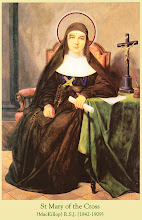
St Mary of the Cross: New Improved Proper Mass

Back in 1995, the Australian Catholic Bishops' Conference issued the first edition of texts for Mass (and the Liturgy of the Hours) for Bl Mary MacKillop, prepared by the National Liturgical Commission; and in 1996, a revised second edition followed, this time with approval of the Congregation for Divine Worship.  Last year, ready for use on her feast to-day, the ACBC and CDW issued a third edition, raising her feast to a solemnity in recognition of her canonization as St Mary of the Cross.  

The changes in the three prayers of the Mass are most instructive, illustrating a notable shift in what our betters intend us to pray for.  But to begin with, she is no longer styled "religious", but "virgin", a rightful change back to her proper title.  Similarly, her secular surname "MacKillop" is deleted and she is referred to as St Mary of the Cross only.  

In 1995, not one but two opening prayers were supplied – the first disappeared the next year and has never been seen again, while the second survived without change until it was redrafted in 2010, and properly retitled a collect:

1995, alternative: 
In your loving providence, O God, you raised up in our midst Mary MacKillop as a blessing for those in need.  May her tireless dedication to the poor inspire in us fresh energies for all the works of love.  We ask this… [suppressed 1996]
1995 & 1996:
Holy God, source of all goodness, you show us in Mary MacKillop a woman of faith who lived by the power of the cross.  Help us to embrace what she pioneered: new ways of living the gospel that respect and defend the human dignity of all in our land.  We ask this…
2011:
O God, source of all goodness, who have shown us in Saint Mary a woman of faith living by the power of the Cross, teach us, we pray, by her example to live the Gospel in changing times and to respect and defend the human dignity of all in our land.  Through our Lord...

There is no more of a dubious liberal hijacking of Mother Mary to talk of "new ways of living the gospel", but instead to rightly pray for the grace "to live the gospel", one and unchanging, "in changing times".  Stat Crux dum volvitur orbis.  Note too the deletion of "Holy" here, and "Bountiful" below, suppressing a modern nostrum about always adding some odd epithet to the Deity, some quite risible, in place of the traditional words, such as "Lord" or "almighty" or "eternal".

The "Prayer over the Gifts", now relabelled "Prayer over the Offerings", to more explicitly recognize that what is brought to the altar as gift is then offered to the Lord, has undergone the most astonishing metamorphosis, transformed from an embarrassing effusion prating of a "table" laid with "simple gifts of bread and wine" (which a priest friend suggested was due to some dilly nun) into a much better prayer:

1995:
One in faith with Mary MacKillop, we come to your table, O Lord, with simple gifts of bread and wine.  Hear the praise and thanksgiving of your Church.  We ask this…
1996:
In your loving providence, O God, you gather us at your holy altar on this feast of Mary MacKillop.  May the praise and thanksgiving we offer with her and all your Church strengthen our bonds of charity and faith.  We ask this in the name of Jesus the Lord.
2010:
As you gather us, O God, at your holy altar on this Feast of Saint Mary of the Cross, grant, we pray, through her intercession, that what we offer with praise and petition may strengthen us all in charity and faith. Through Christ our Lord. 

By 2010, prayer for the intercession of the saints has reëmerged!

A curious change has also taken place in the prayer after communion, from mention of celebrating the sacrifice to receiving communion – both being entirely true statements of course:

1995:
Bountiful God, may the sacrifice we celebrate on this feast of Mary MacKillop lead us to imitate her generosity and strengthen us to walk the way of the cross.  We ask this…
1996:
Bountiful God, may the sacrifice we celebrate on this feast of Mary MacKillop strengthen us to walk the way of the cross and bring us to the glory of the resurrection.  We ask this through Christ our Lord.
2011:
May the Sacrament we receive, Lord God, on this Feast of Saint Mary strengthen us to walk the way of the Cross and bring us to the glory of the Resurrection. Through Christ our Lord. 

Sunday, May 16, 2010

Sarum Rite Sunday after the Ascension

To-day I attended Solemn High Mass according to the Use of Sarum... I wish!

(Instead, to-night I'll perforce attend the usual Novus Ordo Mass for Ascension-on-Sunday.)

Whatever of my liturgical fantasies, I did have cause to consult an online translation of the Sarum Missal of 1526, and for interest's sake looked up the Mass Proper for Sunday after the Ascension.  As I surmised, the texts provided are almost identical to the Traditional Roman (and likewise to the Dominican) – but for the Offertory, Secret and Postcommunion, of which the last two are quite noteworthy for their expressing the doctrine of the Session of Christ our King and Head and Priest and Intercessor at the Father's Right:

Offertory (Ps 146:1 (PBV) = 145:2 (Vulg.))
Praise the Lord, O my soul; while I live will I praise the Lord; yea, as long as I have any being, I will sing praises unto my God, alleluya.
Secret
Grant, we beseech thee, almighty God, that we may acceptably offer this sacrifice, to become the body and blood of him, whom sitting at the right hand of thy power we assuredly believe to be interceding for us, our Lord Jesus Christ, thy Son.  Who with thee...
Postcommunion
Grant, we beseech thee, almighty God, that through this most holy communion we may confidently believe that to be accomplished in the body of the whole Church, which has already been accomplished in her head.  Through [the same]...

Though I have only this English version of the Sarum to hand, I am intrigued to see that the Sarum postcommunion seems to be almost the same as the Modern Roman prayer after communion for the Sunday after the Ascension (when that Mass gets used at all):

Exaudi nos, Deus, salutaris noster, ut per haec sacrosancta mysteria in totius Ecclesiae confidamus corpore faciendum, quod eius praecessit in capite.  Per...
(Graciously hear us, God our Saviour, that by these most holy-and-sacred mysteries we may have confidence [that] may be accomplished in the body of the whole Church, which has preceded in her Head.  Through...)

By reason of the Lord's Resurrection and Ascension, all things now tend upwards...

God grant it!

Monday, April 26, 2010

The Lord's Most Holy Crown of Thorns – III

Sure enough, the 1738 Paris Missal has a proper Mass for the Feast of the Reception of the Holy Crown of Thorns, but kept on the 11th of August.  As with most of the Neo-Gallican formularies of that Missal, the chants are selected entirely from Scripture (whereas the Dominican Mass thereof begins with the Introit Gaudeamus omnes).  Only the Gospel and the Collect of the two Masses are the same.

What particularly interested me were the Parisian Secret (which alludes to Ps 118:120a, Confige timore tuo carnes meas – "nail down my flesh with the fear of Thee") and Postcommunion (with its pleasing contrast of Christ's humiliation with His exaltation), which I now subjoin:

Deus, qui, ut peccatorum nostrorum spinas evelleres, Filii tui caput spinis transfigi voluisti: carnem nostram et corda nostra casto tuo timore confige; ut in mentibus nostris Spiritus tui gratia renovatis, et cupiditas extirpata deficiat, et caritas plantata proficiat; Per eumdem... in unitate ejusdem...
(God, Who, that Thou mightest pluck out the thorns of our sins, didst will the thorns to transfix the head of Thy Son: nail our flesh and heart with Thy chaste fear; that in our minds renewed by the grace of Thy Spirit, both extirpated cupidity may fail, and implanted charity make progress; Through the same... in the unity of the same...)
Deus, qui passionis Filii tui instrumenta fecisti ejus ornamenta triumphi; præsta per hæc mysteria, quæ sumpsimus, ut non erubescamus illius improperium portare, cujus ignominiæ insignia veneramur: Per eumdem...
(God, Who didst make the instruments of Thy Son's Passion the ornaments of His triumph: grant by these mysteries which we have received, that we may not blush to bear His shame, Whose insignia of ignominy we venerate.  Through the same...)

By contrast, the traditional Roman Missal, at least in older editions (such as the 1958 altar missal I have before me, whose flyleaf reveals it cost £13/6/-), provides a Mass of the Sacred Crown of Thorns to be said in some places (pro aliquibus locis) on the Friday after Ash Wednesday.  This Mass stands closer in its texts to the Dominican – it has the same Lesson and Gospel, and the same orations – but the Introit is the same as that in the Paris Missal (excepting the Psalm verse), and likewise they share the same first part of the Gradual.

The Roman and Dominican secret is as follows:

Tuorum militum, Rex omnipotens, virtutem robora: ut, quos in hujus mortalitatis stadio unigeniti Filii tui corona lætificat; consummato cursu certaminis, immortalitatis bravium apprehendant.  Per eumdem...
Strengthen, almighty King, Thy soldiers with power: that those in the stadium of this mortal life may rejoice in the Crown of Thine Onlybegotten Son; having finished the course of strife, may they lay hold of the prize of immortality.  Through the same...

This secret is an evident allusion to St Paul's words – the Apostle hoped to be crowned with glory by the Lord; but first the Lord Himself had worn the crown of suffering:

Nescitis quod ii qui in stadio currunt, omnes quidem currunt, sed unus accipit bravium? Sic currite ut comprehendatis.  Omnis autem qui in agone contendit, ab omnibus se abstinet, et illi quidem ut corruptibilem coronam accipiant: nos autem incorruptam.
Know you not that they that run in the race, all run indeed, but one receiveth the prize? So run that you may obtain.  And every one that striveth for the mastery, refraineth himself from all things: and they indeed that they may receive a corruptible crown; but we an incorruptible one.
 — I Cor. ix, 24-25
Labora sicut bonus miles Christi Jesu.  Nemo militans Deo implicat se negotiis sæcularibus: ut ei placeat, cui se probavit.  Nam et qui certat in agone, non coronatur nisi legitime certaverit.
Bonum certamen certavi, cursum consummavi, fidem servavi.  In reliquo reposita est mihi corona justitiæ, quam reddet mihi Dominus in illa die, justus judex: non solum autem mihi, sed et iis, qui diligunt adventum ejus.
Labour as a good soldier of Christ Jesus.  No man, being a soldier to God, entangleth himself with secular businesses; that he may please him to whom he hath engaged himself.  For he also that striveth for the mastery, is not crowned, except he strive lawfully.
I have fought a good fight, I have finished my course, I have kept the faith. As to the rest, there is laid up for me a crown of justice, which the Lord the just judge will render to me in that day: and not only to me, but to them also that love his coming.
— II Tim. ii, 3-5; iv, 7-8


Likewise, here is the postcommunion the Roman and Dominican formularies share:

Supplices te rogamus, omnipotens Deus: ut hæc sacramenta quæ sumpsimus, per sacrosanctæ Filii tui coronæ, cujus solemnia recensemus, virtutem, nobis proficiant ad medelam.  Per eumdem...
(Bowing low we pray Thee, almighty God: that these sacraments which we have received, by the power of the holy and sacred Crown of Thy Son, whose solemnity we celebrate, may profit us as a healing remedy.  Through the same...)

It may seem strange that we beg God to grant that the Sacrament heal us "by the power of the... Crown [of thorns]", but of course it is by the most stupendous merit of the voluntary sacrifice of His Passion – one element of which was bearing the cruel imposition of a thorny crown – that we are saved and raised up, and to receive Christ's very Flesh and Blood is precisely to be brought into contact with His Sacred Humanity, the Instrument whereby our salvation was won on Calvary, and from which power goes forth to heal.  All the Sacraments have their power from the Passion: and to receive a Sacrament is to be touched by the living power of Christ, Priest and Victim, a grace won for us on Calvary's tree.

It is interesting that the same feast is provided with such differing texts.

Thursday, September 17, 2009

Seven Sorrows

Amusingly, I noted, comparing the prayers of the two Masses I heard on Tuesday, that the orations for the Seven Sorrows in the Traditional Missal are very longwinded and un-Roman in style, whereas the corresponding orations in the Novus Ordo Missae are concise and very Roman in style!

Saturday, August 2, 2008

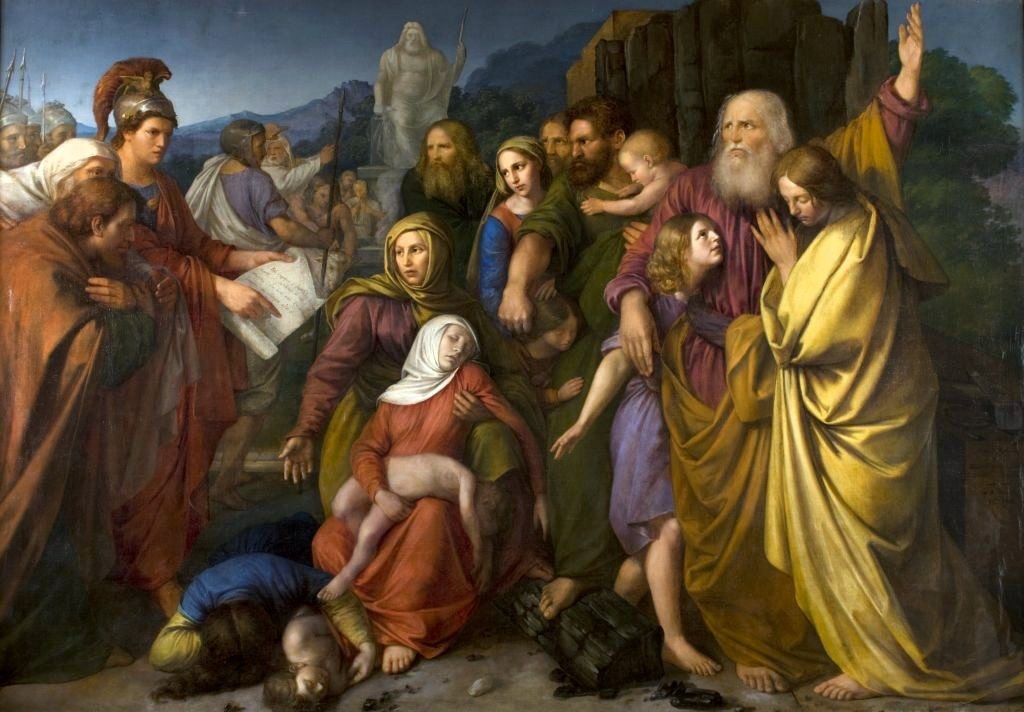
The Holy Machabees

While they were commemorated at Mass yesterday, today I'll post something at least about those sterling Jewish Martyrs, the seven brothers and their mother.

Firstly, their history is given in II Machabees, chapter 7, while that of St Eleazar is in chapter 6; while in the Apocryphal IV Machabees, the majority of the book (i, 7-12, and all of chapters viii-xviii) deal with their sufferings; chapters 5 to 7 deal with St Eleazar.

The Byzantine Rite fêtes all these saints on the 1st of August, and traditionally names the mother St Solomoni; the extremely useful Anastasis website gives a fine translation of the liturgical texts of their feast.

These are the proper orations for the Holy Machabees in the Traditional Roman Rite:

Fratérna nos, Dómine, Mártyrum tuórum corona lætíficet: quæ et fídei nostræ præbeat increménta virtútum; et multíplici nos suffrágio consolétur. Per...

May the fraternal crown of Thy martyrs, O Lord, rejoice us, both to afford our faith increase of virtues and to console us with their manifold prayers. Through...

Mystéria tua, Dómine, pro sanctorum Martyrum tuórum honóre, devota mente tractémus: quibus et, præsidium nobis crescat, et gaudium. Per...

With a devout mind may we deal with Thy mysteries, O Lord, for the honor of Thy holy martyrs, and by them may both protection and joy be increased unto us. Through...

Praesta, quæsumus, Omnipotens Deus: ut, quorum memóriam sacramenti participatione recolimus, fidem quoque proficiéndo sectémur. Per...

Grant, we beseech Thee, Almighty God, that we may more and more closely follow the faith of those whose memory we revere by partaking of the sacrament. Through...

Thursday, July 31, 2008

Ad Majorem Dei Gloriam

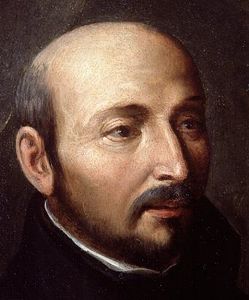
The great St Ignatius!

(Who, BTW, should actually be called Enecus or Innicus in Latin - that's what Íñigo means - but he chose Ignatius as but a seeming variant of his own name that was recognizable throughout Christendom and not strange-sounding.)

Everyone knows that Jesuits are like the proverbial "little girl, who had a little curl, right in the middle of her forehead..." - when they're good, they're very, very good, but when they're bad, they're horrid!

(One fine Jesuit here in Australia, for example, is the formidable Fr Gregory Jordan, S.J., who looks after the Brisbane Latin Mass community; it was good to see him at Juventutem. I won't bore readers with a partial list of the bad ones!)

His proper Mass is excellent, and moving, with its magnificent Introit and Communion, and Epistle borrowed from one of the Common Masses of a Martyr... the three orations even survive (somewhat emasculated) in the Novus Ordo:

Deus, qui ad majórem tui nóminis glóriam propagándam, *novo per* [NO omits] beátum Ignátium *subsídio militantem* [NO: in] *Ecclésiam roborásti* [NO: Ecclesia suscitasti]: concéde; ut, ejus auxílio et imitatióne certántes in terris, coronári cum ipso mereámur in cælis. Per...

Adsint [NO: Placeant], Dómine Deus, *oblatiónibus nostris sancti Ignátii benígna suffrágia* [NO: oblationes in celebratione beati Ignatii tibi delatæ, et præsta]: ut sacrosáncta mystéria, in quibus omnis sanctitátis fontem constituísti, nos quoque in veritáte sanctíficent. Per...

Laudis hóstia, Dómine, quam pro sancto [NO: beato] Ignátio grátias agéntes obtúlimus: ad perpétuam nos majestatis tuæ laudatiónem, *ejus intercessióne* [NO omits], perdúcat. Per ...


In the Collect, the changes made remove reference to strengthening the Church militant with new assistance, and replace it with God's raising up of St Ignatius in the Church - so completely devaluing his establishment of the Society of Jesus. At least the Latin retained mention of fighting (certantes). The modifications to the secret and postcommunion delete all mention of the Saint's intercession; how Jansenistic.

In case you're wondering, I attended Novus Ordo Mass and Confession - Mass was said devoutly, and I was made perfectly welcome when I knelt for Communion (the server even held a communion plate!) - but still I prefer the old ways.

Sunday, July 27, 2008

SS Nazarius, Celsus, Victor and Innocent

I may as well get in early with my comments about tomorrow's saints; after work, I will be able to attend Low Mass in their honour at 6:30pm.

Archdale Arthur King commented, in his Liturgies of the Primatial Sees, that one feature of the Ambrosian Rite is its propensity to feast several disparate saints together, commemorating them by one collect and one Office and one Mass on a given day. This Ambrosian custom, so-called*, may be seen at work in the feast of SS Nazarius, Celsus, Victor and Innocent: two faithful Christian witnesses martyred at Milan, one Pope-martyr, and another sainted Supreme Pontiff and Confessor, who was the hammer of the Pelagian heretics. It is due to St Ambrose that we have the relics of the first two, for it was he who found them.

(* I wonder whether it may not be Roman indeed: for there are like collects grouping the following sets of martyr-saints in the Roman Missal: SS Basilides, Cyrinus, Nabor and Nazarius; SS Sergius, Bacchus, Marcellus and Apuleius; SS Nereus, Achilleus, Domitilla and Pancratius; and SS Marius, Martha, Audifax and Abachum - the last four fascinate me, as a Christian Persian noble family who perhaps unwisely took a holiday in Rome during the persecutions and were nabbed when they went to visit and succour the Christians already languishing in prison!)

Even their proper Lesson at Matins consists of three separate potted biographies one after the other, almost in the manner of an entry in the Martyrology.

These holy four have proper orations for their Mass, and a proper Lesson for the Epistle, but otherwise the texts for the service come from the relevant common.

I think the Proper Lesson (Wisdom x, 17-20 - prefaced by Deus, and concluded with Domine Deus noster) noteworthy, in that at first its application to them does not seem so obvious, for on the face of it the reading but tells the tale of the Israelites delivered from Egypt - but, of course, this is the central type and foreshadowing of the delivery by Baptism of all Christians from the slavery of Satan. This true image was beloved of the early Church, and was applied furthermore to the martyrs, who by their apparent defeat in bloody death drowned in truth all machinations of unbelieving pagans, the Devil's dupes, and confounded accursed Lucifer himself, his intended prey being instead translated to heaven.

God rendered to the just the wages of their labours, and conducted them in a wonderful way: and he was to them for a covert by day, and for the light of stars by night: And he brought them through the Red Sea, and carried them over through a great water. But their enemies he drowned in the sea, and from the depth of hell he brought them out. Therefore the just took the spoils of the wicked. And they sung to thy holy name, O Lord, and they praised with one accord thy victorious hand, O Lord our God.

And here are the proper prayers of the Mass:

Sanctorum tuorum nos, Domine, Nazarii, Celsi, Victoris et Innocentii confessio beata communiat: et fragilitati nostrae subsidium dignanter exoret. Per...

Concede nobis, omnipotens Deus: ut his muneribus, quae in sanctorum tuorum Nazarii, Celsi, Victoris et Innocentii honore deferimus, et te placemus exhibitis, et nos vivificemur acceptis. Per...

Sanctorum Nazarii, Celsi, Victoris et Innocentii, Domine, intercessione placatus: praesta, quaesumus; ut, quae temporali celebramus actione, perpetua salvatione capiamus. Per...


(Lord, may the blessed confession of Thy saints Nazarius, Celsus, Victor and Innocent together defend us: and may it worthily implore support for our frailty. Through...

(Grant unto us, almighty God, that by these gifts, which we bring in honur of Thy saints Nazarius, Celsus, Victor and Innocent, both being shewn forth, we may please Thee, and being accepted, may quicken us. Through...

(Lord, being appeased by the intercession of Thy saints Nazarius, Celsus, Victor and Innocent, grant, we beseech Thee, that, what we celebrate by a work in time, we may grasp in perpetual salvation. Through...)


May their true and therefore blessed witness-unto-death be for us a defence and a support; may what we offer in their honour (being transsubstantiated into the one clean and perfect Oblation) obtain that we may be made God-pleasing, and give us supernatural life both in its being offered in sacrifice, and in its reception by us; and may the divine mystery we celebrate on earth, at their intercession, transpire to be what we lay hold of evermore in heaven. What prayers!

I think there is something very powerful in celebrating the feasts of the early martyrs. It touches at once the earliest days and the greatest witnesses-unto-Christ of the Roman Church, in and through the very raw power of its ancient Liturgy.

Saturday, July 12, 2008

Feast of St Oliver Plunket: Domine, Adauge nobis fidem!

In the traditional calendar for Australia, the 11th of July is the 3rd class feast of St Oliver Plunket(t), Bishop and Martyr (1629-1681). An Irishman, he was brought up by his relative Dom Patrick Plunket, Abbot of St Mary's, Dublin, and went to Rome to study for the priesthood, where he excelled in his studies and exercised a fruitful and holy ministry in the service of Holy Church. In 1669 he was made Archbishop of Armagh and Primate of All Ireland, and likewise did great things back in his native land, then sore oppressed by the Protestant English. On trumped-up charges he was deported to London and barbarously executed at Tyburn on the 1st of July 1681, as a holy martyr, a victorious athlete of Christ, enduring all to witness to our Holy Faith. His Mass and Office is from the Common, apart from the third Lesson and the orations, as follows:

Deus, qui pro tuenda Catholica fide beatum Oliverium Martyrem tuum atque Pontificem, admirabili spiritus fortitudine imbuere dignatus es: concede nobis, ejus intercessione et exemplo, ut ipsius in fide constantiam imitemur, et in periculis patrocinia sentiamus. Per...

Clementissime Deus, munera hæc tua benedictione perfunde, et nos in fide confirma: quam beatus Oliverius Martyr et Pontifex tuus immani supplicii genere adseruit. Per... *

Spiritum, Domine, fortitudinis hæc nobis tribuat mensa caelestis: quae beati Oliverii Martyris tui atque Pontificis vitam pro Ecclesiæ honore jugiter aluit ad victoriam. Per... *


(* Note that the secret prayer is almost the same as that of that other Counter-reformation martyr for Catholic unity, St Josaphat, Bishop of Polotsk (d. 1623): Clementissime Deus, munera hæc tua benedictione perfunde, et nos in fide confirma: quam _sanctus_Josaphat_ Martyr et Pontifex tuus, _effuso_sanguine,_ asseruit. Per...; likewise, their postcommunion is identical (but for the substitution of sancti Josaphat for beati Oliverii.)

The central crisis of modern Catholicism is precisely a lack of faith, a lack of belief in or adherence to the truth and the truths of our Catholic Faith: that is why so many are so lukewarm, why Catholicism appears tired, boring, timorous and repellent, fit to be vomited forth (cf. Apoc. iii, 16). St Oliver Plunket ought, I believe, be invoked to obtain that necessary increase in faith, without which it is impossible to please God (cf. Heb. xi, 6): only by being strengthened in faith, God's supernatural gift of infused intellectual virtue, can we "run with patience to the fight set before us, looking towards the author and finisher of faith, Jesus" Christ our Lord, "having a great cloud of witnesses over us," the saints perfected in the kingdom of Christ in heaven (Heb. xii, 1-2).

Some Byzantine-style compositions of mine addressed to St Oliver Plunket:

The ravening evil of heretics thou didst trample down by thy Christlike passion, O high priest of God, thou true Martyr; as Shepherd of our Lord's flock attacked by wolves, Oliver, thou wert an angel of peace, preaching Truth against lies and unjust warmongers: as God's grace didst save thee, obtain from us from the Trinity great mercy.

Great Martyr Oliver, as thou didst triumph over the insane malice of thy devil-duped foes, confounding their false religion by thy constancy in torment, obtain from us from Christ-God that faith that shall overcome the world, and save our souls!


Domine, Adauge nobis fidem!

Monday, April 21, 2008

Roadtrip! - Part I

Greatly to my surprise, Fr Rowe rang me up at 8.30 on Saturday night, and asked if I could drive him down to Bunbury the next day for his monthly Mass there - "Certainly, Father," said I.

(I had actually gone to bed very early, and so he woke me up - he later confessed that he had wondered why I had sounded so groggy!)

Anyhow, I was then committed to what turned out to be a sort of impromptu extension of my week's holiday.

From some notes I took along the way:

In the morning, I grabbed most of the stuff I'd need for the trip, then got going to church...

I arrived just in time to go to confession and then join in singing the Mass with the other three members of the schola; as Andrew was organist, Justin was cantor (they swap roles each Sunday). It was great to sing Mass I and Credo I, plus one of my absolute favourite Offertories, Jubilate Deo: the long melodic run up the scale is very moving. Because of this long Offertory, we sang no other piece beside it; and at Communion, together with the actual Communion anthem, we sang extracts from the famous Psalm 33, so eminently suitable for the reception of the Sacrament. For vernacular hymns at the beginning and end, we had a Welsh celebration, singing "Love Divine, all loves excelling" (to "Hyfrydol") and "Guide me, O Thou Great Redeemer" - the latter sung out loud enough to bring the house down. Marvellous.

I was struck by the Sunday's Epistle: St James i, 17-21; it contains a very wealth of doctrine:

Every best gift, and every perfect gift, is from above, coming down from the Father of lights, with whom there is no change, nor shadow of alteration.
For of his own will hath he begotten us by the word of truth, that we might be some beginning of his creatures.
You know, my dearest brethren. And let every man be swift to hear, but slow to speak, and slow to anger.
For the anger of man worketh not the justice of God.
Wherefore casting away all uncleanness, and abundance of naughtiness, with meekness receive the ingrafted word, which is able to save your souls.


I for one am a slave to anger and my irascible passions, and must heed this exhortation. On the positive side, it is most wonderful to think of all the gifts and graces of God coming down from Him Who Is Pure Act Impassible! And yet more - He hath begotten us by the Word of Truth; and by the ingrafted Word we may save our souls. Bl Columba Marmion is very big on this point, a constitutive element of our divine adoption as sons in the Son.

Similarly, the singing of the first Alleluia verse occasioned much thought on its text - is not Christ in truth the actual Dextera Dei, Who not merely sitteth on His Right, but in a manner surpassing words Is God's Right Hand (cf. St Irenæus), Who "hath wrought strength", "Who hath exalted me" (Ps 117:16)?

The orations of the Sunday (the 4th after Easter) were all likewise pregnant with significance:

Deus, qui fidelium mentes unius efficis voluntatis: da populis tuis id amare quod præcipis, id desiderare quod promittis; ut inter mundanas varietates ibi nostra fixa sint corda, ubi vera sunt gaudia. Per...

(O God, who makest the minds of the faithful to be of one will, grant to Thy people to love that which Thou commandest, to desire that which Thou dost promise; that amid mundane changing things, our hearts may there be fixed, where true joys are. Through...)

Deus, qui nos per hujus sacrificii veneranda commercia, unius summæ divinitatis participes effecisti: præsta, quæsumus; ut, sicut tuam cognoscimus veritatem, sic eam dignis moribus assequamur. Per...

(O God, Who by the venerable commerce of this sacrifice hast made us partakers of the one supreme divinity: grant, we beseech, that, as we know Thy truth, so we may follow it with worthy manners. Through...)

Adesto, nobis, Domine Deus noster: ut per haec, quae fideliter sumpsimus, et purgemur a vitiis, et a periculis omnibus eruamur. Per...

(Be present to us, Lord our God: that by these, which we have faithfully received, we may be both purged from vices and delivered from all perils. Through...)


(Amusingly, the Sunday collect turns out to be the Monday collect in the Novus Ordo! It is a most beautiful prayer. Likewise, the Secret plainly tells how that the Sacrifice we share in the Eucharist makes us partakers of the Divine Nature, but begs that we may live worthily according to the truth we profess - lest what is promised us comes not to pass.)

Fr Rowe preached an intriguing sermon, elucidating the meaning of the Gospels of the five Sundays between Easter and the Ascension.

After Mass, I prayed the Office of Readings, and Prayer during the Day (Lauds having been said earlier), and then repaired for coffee and conversation with the rest of the usual dozen or so, until the last morning Mass was almost over - I got back in time for the Last Gospel and last hymn (an English version of O filii et filiæ). We then loaded up the car with Fr's stuff, and I set off with him to Kelmscott (via my place: I'd left a bag behind).

I decided to use Michael Sternbeck's new Missalette, put out by Ignatius Press, to so to speak road-test it, at Mass at Kelmscott and Bunbury (I'd used my Abbot Cabrol Missal for the morning's Missa Cantata, when not singing from the Liber Usualis). On Fr Rowe's advice, I don't communicate a second time when assisting at second and third Sunday Masses, but simply renew my thanksgiving for the inestimable gift of Our Lord in the Sacrament I have received.

On arrival and departure from Good Shepherd, Kelmscott, I was thanked for this my blog by the two main altar servers, Matthew and Scott, and their mum - they are readers of it!!!

The 2pm Low Mass was a dialogue Mass, apparently by spontaneous choice of the people: I liked this very much. We accompanied the liturgy with three hymns, "Bring, all ye dear-bought nations, bring", "Soul of my Saviour" (at offertory) and "Jesus Christ is risen today". There were about 40 present for the Holy Sacrifice.

At 3.05pm, Fr and I set off for Bunbury, via the South-West Highway, the inland route, a much more scenic drive than the main road nearer to the coast. We made very good time, arriving in just over 2 hours, and managed to get in a Rosary, my Novena, Vespers and Compline from Fr's Breviary, some naps (for the priest only!) and discussion of some details of Fr's retreat in Ballaarat the week before last, which I hadn't heard a report about because of my holiday last week.

To be continued...

Monday, March 17, 2008

Six days before the Pasch

Ante sex dies Paschæ... (St John xii, 1-9) - Our Lord dines with Martha, Mary, and Lazarus, whom He restored to life; and Mary anoints Him as for burial; Judas the thief complains at all the fuss. Six days before the Passover...

I heard this Gospel thrice this afternoon, once in prayer with others, and then twice at the Pro., where I heard one Low Mass and then served a second. The passage appointed for the Epistle (from Isaias l, 5-10) was one of the great Passion prophecies. As always, the orations of the Mass are pregnant with meaning:

Grant, we beseech, almighty God, that we, who fail by reason of our infirmity in so many adversities, may breathe again by the pleading of the Passion of Thine Onlybegotten Son: Who with Thee liveth...

Cleansed by the potent power of these sacrifices, almighty God, may they make us to come more purified to their source. Through...

May Thy holy gifts, Lord, inspire us with divine fervour, that we may both delight in their celebration and in their fruit. Through...

Help us, O God of our salvation, and grant that we may come joyfully to recollect the benefits whereby Thou hast deigned to restore us. Through...

Thursday, January 17, 2008

St Anthony the Great

That great dweller in the desert, St Anthony of Egypt, is celebrated today. While I attended and communicated at the Traditional Mass, earlier in the day I heard the start of an ordinary Mass just after I'd been shriven, before I left the church. Anyhow, the proper collect and epistle - Ephesians vi, 10-13. 18 (vide infra) - spoke powerfully of St Antony, his life, and combat against the devils; here are the proper orations, alluding to his wonderful life in the wilderness, serving God, laying aside all things, denying himself, loving God above all things, being rich in God alone, and therefore trampling under foot every hostile power:

Deus, qui beato Antonio abbati tribuisti mira tibi in deserto conversatione servire, eius nobis interventione concede, ut, abnegantes nosmetipsos, te iugiter super omnia diligamus. Per...

Accepta tibi sint, Domine, quaesumus, munera nostrae servitutis, pro beati Antonii commemoratione altari tuo proposita, et concede, ut, a terrenis impedimentis absoluti, te solo divites. Per...

Sacramentis tuis, Domine, salubriter enutritos, cunctas fac nos semper insidias inimici superare, qui beato Antonio dedisti contra potestates tenebrarum claras referre victorias. Per...


(
Being people fed, Lord, with Thy sacraments, Who didst give unto blessed Anthony to record illustrious victories over the powers of darkness, make us ever to overcome all the snares of the enemy. Through...)

I was also reminded of once reading St Athanasius' Life of St Anthony. Here is the Douay-Rheims version of the epistle, including the omitted verses 14-17:

Ephesians 6:10 Finally, brethren, be strengthened in the Lord, and in the might of his power. 11 Put you on the armour of God, that you may be able to stand against the deceits of the devil. 12 For our wrestling is not against flesh and blood; but against principalities and power, against the rulers of the world of this darkness, against the spirits of wickedness in the high places. 13 Therefore take unto you the armour of God, that you may be able to resist in the evil day, and to stand in all things perfect. 14 Stand therefore, having your loins girt about with truth, and having on the breastplate of justice, 15 And your feet shod with the preparation of the gospel of peace: 16 In all things taking the shield of faith, wherewith you may be able to extinguish all the fiery darts of the most wicked one. 17 And take unto you the helmet of salvation, and the sword of the Spirit (which is the word of God). 18 By all prayer and supplication praying at all times in the spirit; and in the same watching with all instance and supplication for all the saints.

Food for thought: our wrestling is not against flesh and blood, but against the spiritual powers of wickedness... (Eph. vi, 12).