Showing posts with label Dominican Rite. Show all posts

Saturday, November 10, 2018

Dominican Rite Litany for the Dying


Kyrie, eleison.           
Christe, eleison.
Kyrie, eleison.           

Christe, audi nos.
Christe, exaudi nos.

Pater de cælis, Deus, miserere ei.
Fili, Redemptor mundi, Deus, miserere ei.
Spiritus Sancte, Deus, miserere ei.
Sancta Trinitas, unus Deus, miserere ei.

Sancta Maria, ora pro eo (ea).
Sancta Dei Genetrix, ora pro eo (ea).
Sancta Virgo virginum, ora pro eo (ea).

Sancte Michaël, ora pro eo (ea).
Sancte Gabriel, ora pro eo (ea).
Sancte Raphaël, ora pro eo (ea).
Omnes sancti Angeli et Archangeli, orate pro eo (ea).
Omnes sancti beatorum Spirituum ordines, orate pro eo (ea).

Sancte Joannes Baptista, ora pro eo (ea).
Sancte Joseph, ora pro eo (ea).
Omnes sancti Patriarchæ et Prophetæ, orate pro eo (ea).

Sancte Petre, ora pro eo (ea).
Sancte Paule, ora pro eo (ea).
Sancte Andrea, ora pro eo (ea).
Sancte Jacobe, ora pro eo (ea).
Sancte Joannes, ora pro eo (ea).
Sancte Thoma, ora pro eo (ea).
Sancte Jacobe, ora pro eo (ea).
Sancte Philippe, ora pro eo (ea).
Sancte Bartholomæe, ora pro eo (ea).
Sancte Matthæe, ora pro eo (ea).
Sancte Simon, ora pro eo (ea).
Sancte Thaddæe, ora pro eo (ea).
Sancte Matthia, ora pro eo (ea).
Sancte Barnaba, ora pro eo (ea).
Sancte Marce, ora pro eo (ea).
Sancte Luca, ora pro eo (ea).
Omnes sancti Discipuli Domini, orate pro eo (ea).

Omnes sancti Innocentes, orate pro eo (ea).
Sancte Stephane, ora pro eo (ea).
Sancte Clemens, ora pro eo (ea).
Sancte Corneli, ora pro eo (ea).
Sancte Cypriane, ora pro eo (ea).
Sancte Laurenti, ora pro eo (ea).
Sancte Vincenti, ora pro eo (ea).
Sancte Dionysi cum sociis tuis, ora pro eo (ea).
Sancte Mauriti cum sociis tuis, ora pro eo (ea).
Sancte Januari cum sociis tuis, ora pro eo (ea).
Sancti Fabiane et Sebastiane, orate pro eo (ea).
Sancti Cosma et Damiane, orate pro eo (ea).
Sancte Thoma, ora pro eo (ea).
Sancte Petre, ora pro eo (ea).
Sancte Joannes cum sociis tuis, ora pro eo (ea).
Omnes sancti Martyres, orate pro eo (ea).

Sancte Silvester, ora pro eo (ea).
Sancte Gregori, ora pro eo (ea).
Sancte Pie, ora pro eo (ea).
Sancte Ambrosi, ora pro eo (ea).
Sancte Augustine, ora pro eo (ea).
Sancte Hieronyme, ora pro eo (ea).
Sancte Hilari, ora pro eo (ea).
Sancte Martine, ora pro eo (ea).
Sancte Nicolaë, ora pro eo (ea).
Sancte Antonine, ora pro eo (ea).
Sancte Alberte, ora pro eo (ea).
Sancte Pater Dominice, ora pro eo (ea).
Sancte Thoma, ora pro eo (ea).
Sancte Vincenti, ora pro eo (ea).
Sancte Hyacinthe, ora pro eo (ea).
Sancte Raymunde, ora pro eo (ea).
Sancte Ludovice, ora pro eo (ea).
Sancte Antoni, ora pro eo (ea).
Sancte Benedicte, ora pro eo (ea).
Sancte Bernarde, ora pro eo (ea).
Sancte Francisce, ora pro eo (ea).
Omnes sancti Confessores, orate pro eo (ea).

Sancta Anna, ora pro eo (ea).
Sancta Maria Magdalena, ora pro eo (ea).
Sancta Martha, ora pro eo (ea).
Sancta Felicitas, ora pro eo (ea).
Sancta Perpetua, ora pro eo (ea).
Sancta Agatha, ora pro eo (ea).
Sancta Lucia, ora pro eo (ea).
Sancta Agnes, ora pro eo (ea).
Sancta Cæcilia, ora pro eo (ea).
Sancta Catharina, ora pro eo (ea).
Sancta Margarita, ora pro eo (ea).
Sancta Ursula cum sodalibus tuis, ora pro eo (ea).
Sancta Catharina, ora pro eo (ea).
Sancta Rosa, ora pro eo (ea).
Sancta Agnes, ora pro eo (ea).
Sancta Catharina, ora pro eo (ea).
Sancta Margarita, ora pro eo (ea).
Omnes sanctæ Virgines et Viduæ, orate pro eo (ea).

Omnes Sancti, orate pro eo (ea).

Propitius esto, libera eum (eam), Domine.

A damnatione perpetua, libera eum (eam), Domine.
A subitanea et improvisa morte, libera eum (eam), Domine.
Ab imminentibus peccatorum suorum periculis, libera eum (eam), Domine.
Ab infestationibus dæmonum, libera eum (eam), Domine.

Per mysterium sanctæ Incarnationis tuæ, libera eum (eam), Domine.
Per passionem et crucem tuam, libera eum (eam), Domine.
Per gloriosam resurrectionem tuam, libera eum (eam), Domine.
Per admirabilem ascensionem tuam, libera eum (eam), Domine.
Per gratiam Spiritus Sancti Paracliti, libera eum (eam), Domine.
In die judicii, libera eum (eam), Domine.

Peccatores, te rogamus, audi nos.
Ut iracundiæ tuæ flagella ab eo (ea) amoveas, te rogamus, audi nos.
Ut ejus spiritum a loco angustiæ liberes, te rogamus, audi nos.
Ut eum (eam) in regione vivorum æternis gaudiis confoveri jubeas, te rogamus, audi nos.
Ut nos exaudire digneris, te rogamus, audi nos.
Fili Dei, te rogamus, audi nos.

Agnus Dei, qui tollis peccata mundi, parce ei, Domine.
Agnus Dei, qui tollis peccata mundi, libera eum (eam), Domine.
Agnus Dei, qui tollis peccata mundi, miserere ei, Domine.

Kyrie, eleison.
Christe, eleison.
Kyrie, eleison.

Pater noster (secreto usque ad)
V. Et nos nos inducas in tentationem.
R. Sed libera nos a malo.

V. Salvum (Salvam) fac servum tuum (ancillam tuam).
R. Deus meus sperantem in te.
V. Mitte ei, Domine, auxilium de sancto.
R. Et de Sion tuere eum (eam).
V. Nihil proficiat inimicus in eo (ea).
R. Et filius iniquitatis non apponat nocere ei.
V. Esto ei, Domine, turris fortitudinis.
R. A facie inimici.
V. Domine, exaudi orationem meam.
R. Et clamor meus ad te veniat.
(V. Dominus vobiscum.
(R. Et cum spiritu tuo.)

Oremus.

Oratio.
Omnipotens sempiterne Deus, conservator animarum, qui quos diligis corripis, et quos recipis pie ad emendationem coërces: te invocamus, Domine, ut famulo tuo, qui (famulæ tuæ, quæ) in corpore patitur membrorum debilitatem, gratiam tuam conferre digneris; ut in hora exitus sui de corpore, absque mortalis peccati macula, tibi datori proprio per manus sanctorum Angelorum tuorum ejus anima repræsentari mereatur. Per Christum Dominum nostrum. R. Amen.

Sunday, July 22, 2012

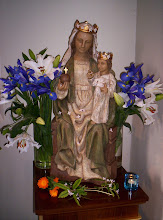
Ancient Dominican Sequence of Our Lady


 Bl Humbert of Romans, 5th Master General of the Dominican Order, explained why Our Lady is specially honoured on Saturday, and even cited the Sequence then sung at Mass on Saturdays; hereunder, my translation:


From The Exposition of Master Humbert on the Constitutions of the Friars Preachers.

XXIV. Why the Sabbath is attributed to the Blessed Virgin.

And it is expedient not to be ignorant why those who are devout to the Blessed Virgin honour her more on Saturday than on another day.

[i] Therefore it must be attended to that on the Sabbath day it is said that the Lord rested: also, he rested in her as if in his tabernacle.  Thus the Sabbath and the Virgin accord, for the Saturday is the time, and she is the place, of the rest of the Lord.

[ii] Also, on the Sabbath the work of creation was completed, or, of nature: while in her was completed the work of re-creation, or, of grace.  Bernard [says]: In thee and through thee, Most Benign, the hand of the Creator hath re-created whatsoever it had created; therefore she and the Sabbath accord in this manner of completion.

[iii] Also, the Sabbath day was blessed above the other days, whence Genesis 2 [says]: The Lord blessed the seventh day; also, she is blessed above all women.

[iv] Also, the Sabbath day was holier than the rest, whence also in the same [chapter it says]: And he hallowed it.  And she is holier than everyone.  Wherefore it is fitting that the one blessed above others and holier than all is more specially to be honoured on the blessed day and on the holier day.

[v] Again, as the Sabbath day is mid-way between the Day of Venus [Friday] which is that of suffering, and the Lord’s Day which is the day of joy, and neither is anyone able to pass from that day of suffering to the day of joy, unless through the Sabbath day; so neither from the suffering of this world to the joy of heaven is anyone able to pass, unless by the Mediatrix of the world herself.

[vi] Again, as the Saints say, the others failed [in faith] on the Sabbath day, she stood by her faith.

[vii] Again, the Sabbath day is filled by her doing many miracles, and coming to the aid of men, as the example is given by John Beleth, of a certain icon of her, whose veil was lifted up on the Sabbath day.  And there are many others similar.

These therefore are the seven reasons why it is we serve her more on the Sabbath day, doing devoutly and solemnly her whole Office in the church.

Then even in the office of the church is sung a certain sequence of her proper to the Saturday, in which the preceding reasons are touched on why Saturday is more specially attributed to her:

Jubilemus in hac die
Quam Reginæ cœli piæ
Dicavit Ecclesia.

Hæc est dies in qua sua
Vota tibi, Virgo, tua
Reddit hæc familia.

Omne sæculum, omni die
Servi Virgini Mariæ:
Sed in hac devotius.

In hac psallas, in hac ores,
In hac laudes et labores,
Et cantes jucundius.

Virgo quæ non habet parem
Diem sibi singularem
Non injuste vindicat.

O quam digne sibi dari
Diem hunc et consecrari
Res inspecta prædicat!

Hodiernæ lux diei
Dies fuit requiei
Plasmatoris omnium.

Sic quievit in Maria,
Dum ipsius in hac via
Virgo fit hospitium.

Cunctæ tunc sunt creaturæ
Factæ dum opus naturæ
Complet Deus hodie.

Universa tunc refecit,
Dum in Matre qui nos fecit
Complet opus gratiæ.

Dies olim benedicta,
Dies quoque sancta dicta
Fuit ista septima.

Quam benedicta dicaris
Scimus, Virgo singularis,
Et quam sis sanctissima.

Dum transis ad gaudiosum
Diem, relinquens pœnosum,
Dies est hæc media.

Hæc de pœnis nos educit
Mediatrix, et adducit
Ad superna gaudia.

In hac die dum desperat
Grex pusillus qui tunc erat
Fidem tenet firmius.

In hac die suspirantes
Ad se, seque deprecantes
Obaudit frequentius.

Veneremur ergo, fratres,
Ut sanxerunt sancti patres,
In hac die Virginem.

Exorantes ut conducat
Nos hic, et tandem perducat
Ad illam dulcedinem.  Amen.


******


Let us rejoice on this day
Which to the pious Queen of heaven
The Church hath dedicated.

This is the day on which their
Vows to thee, Virgin, this
Thy family pays.

Every age, every day
The Virgin Mary is served:
But on this more devoutly.

On this thou sing’st, on this thou pray’st,
On this thou praisest and labourest,
And chantest more happily.

The Virgin who has no peer
To this singular day she herself
Not unjustly lays claim.

O how worthy to be given to herself
This day and to be consecrated
The thing viewed preaches!

The light of today’s day
Was the day of rest
Of the Maker of all.

So he rested in Mary,
When in this way of he himself
The Virgin was made the host.

Then all creatures were
Made when the work of nature
God finished today.

Then all things were re-made,
When in the Mother he who made us
Completed the work of grace.

The day once blessed
And the day called holy
Was the seventh one.

How blessed thou art called
We know, singular Virgin,
And how thou art most holy.

When thou passest to the day
Of joy, relinquishing suffering,
This day is in the middle.

This from pain us led
The Mediatrix, and brought us
To supernal joys.

On this day when despaired
The little flock, she was then
Holding more firmly to faith.

On this day those sighing
To her, and praying to her
She hears more frequently.

Let us revere, brethren,
As hallowed the holy fathers,
On this day the Virgin.

Praying that she conduct
Us here, and at length lead us
To her delight.  Amen.

— Expositio Magistri Humberti super Constitutiones Fratrum Prædicatorum, XXIV. (Quare sabbatum attribuitur Beatæ Virgini). Opera de Vita Regulari, ed. J. J. Berthier O.P., Rome: A. Befani, 1889, Vol. II.

Sunday, November 20, 2011

The Dominican Offertory

A quick Mass is a good Mass – by which I mean, not a rushed Roman Low Mass, old or new, but that noble form of the pluriform Roman Rite, the Dominican Low Mass.  (I have only attended a Dominican High Mass once, back in the nineties, so I can't really comment on it too knowledgeably.  It is certainly more ceremonially complex than the Roman High Mass.)

One of the best features of the Dominican Mass is that the prayers at the foot of the altar, the offertory prayers, and the communion prayers are all shorter and less complicated than the Roman.  However, I will focus on the excellently arranged offertory prayers for the moment, and comment only on the Low Mass.

(To see the minutiæ of the rubrics, please refer to the handy online tutorial provided by the Dominican Province of St Joseph; as for the translations of the texts below, I took them from my copy of The Saint Dominic Missal, published 1959.)

Of course, the Dominican Offertory begins and ends as in all forms of the traditional Roman Rite: firstly Dominus vobiscum and Oremus, followed by the Offertory antiphon; lastly, the Secret.  It is the wisely devised set of prayers emplaced between these age-old parts of the Mass that testify to the genius of the Dominican Order, whose rite was fixed and stabilized in the 13th century.

Most surprisingly, the chalice in the Dominican Mass is already prepared before the Offertory!  This was in fact a common mediæval practice, surviving alone in the Dominican form of the Liturgy.  At a Low Mass, it is mixed at the very start; at a High Mass, during the Epistle.  In either case, the minister presenting the water says Benedicite (Bless), and the celebrant does so, saying In nomine Patris et Filii et Spiritus Sancti (In the name of the Father and of the Son and of the Holy Ghost), to which the minister responds Amen.  There is no long prayer equivalent to the Roman Per hujus vini et aquæ mysterium.

Therefore, having prepared the chalice previously, the Dominican priest, standing at the altar, having read the Offertory antiphon, next says in a low voice, Quid retribuam Domino pro omnibus quæ retribuit mihi? (What shall I render to the Lord for all that He has rendered to me?)  If it were High Mass, the deacon would then say Immola Deo sacrificium laudis et redde Altissimo vota tua. (Immolate to God the sacrifice of praise, and render to the Most High your vows.)

In both cases, these selected psalm texts succinctly express the reason the priest stands at the altar – to render the perfect sacrifice of praise to God for all His blessings poured out upon him and all creation.  The Holy Eucharist is after all the perfect sacrifice of thanksgiving.

Taking up the chalice, already containing wine mixed with water, with the host resting on the paten atop it, the priest then answers his own question by saying Calicem salutaris accipiam et nomen Domini invocabo. (I will take the chalice of salvation and will call upon the name of the Lord.)  Only by taking up the chalice and invoking the Lord's name can the priest proceed to return a perfect sacrifice of thanks to God.

It is interesting to note how Quid retribuam and Calicem salutaris are the words on the priest's lips at the very start of the offertory, whereas in the traditional Roman Mass they are said directly before the celebrant drinks Christ's Blood from the chalice.

The friar celebrant continues to elevate the chalice with the paten atop, elevating the bread and watered wine contained therein, as he offers up the sacrifice to the Holy Trinity, using a short formula, shorter than the Roman, which very curiously is identical to that used in the diocese of Hereford in the Middle Ages:

Suscipe, sancta Trinitas, hanc oblationem, quam tibi offero in memoriam passionis Domini nostri Jesu Christi: et præsta, ut in conspectu tuo tibi placens ascendat, et meam et omnium fidelium salutem operetur æternam.

(Receive, O holy Trinity, this offering, which I present to You in memory of the passion of our Lord Jesus Christ: and grant, that it may ascend to You worthily in Your sight, and may bring about my eternal salvation and that of all the faithful.)

Therefore, there is no separate oblation of each element, as in the Roman Rite with its prayers Suscipe sancte Pater and Offerimus tibi Domine; and the particular Dominican recension of the Suscipe sancta Trinitas – of which dozens of variants existed in mediæval times – focusses admirably, as might be expected from so scholastic an Order, on the Mass as making present the saving Passion of Christ, that the salvation of priest and all believers be wrought by this application of the power of His Sacrifice.

As is expected, next the priest goes to the epistle side of the altar and washes his fingers, praying the usual Lavabo, but only two verses (originally, only one), rather than the whole remainder of the psalm, as in the Roman Mass:

Lavabo inter innocentes manus meas, et circumdabo altare tuum Domine: ut audiam vocem laudis, et enarrem universa mirabilia tua. Domine, dilexi decorem domus tuæ, et locum habitationis gloriæ tuæ. 

(I will wash my hands among the innocent, and will compass Your altar, O Lord: that I may hear the voice of Your praise, and tell of all Your wondrous works. I have loved, O Lord, the beauty of Your house, and the place where Your glory dwells.)

Returning to the middle, he bows down and prays the In spiritu humilitatis, which, however, has a slightly divergent text from that of the general Roman Rite:

In spiritu humilitatis, et in animo contrito, suscipiamur, Domine, a te: et sic fiat sacrificium nostrum, ut a te suscipiatur hodie, et placeat tibi, Domine Deus.

(In a humble spirit, and with a contrite heart, may we be received by You, O Lord: and may our sacrifice be so [performed], that it be received by You this day, and be pleasing to You, O Lord God.)

Several other religious orders having their own proper rite of Mass were forced by Roman pressure to reword this text, but the Dominicans never did. Unlike the Roman practice, this prayer is not followed by the Veni sanctificator.

The Dominican priest then turns to the faithful present and says Orate, fratres, ut meum ac vestrum pariter in conspectu Domini sit acceptum sacrificium.  (Pray, brethren, that my sacrifice and yours may be pleasing in the sight of the Lord.)  There is no response to this – the brethren pray in their hearts in response, no doubt.

The only part of the Dominican offertory rite that seems an unnecessary duplication is that interposed between the Orate fratres and the Secret, albeit a common mediæval addition: the priest, after he has turned back to the altar, prays quietly Domine, exaudi orationem meam: et clamor meus ad te veniat. Oremus. (O Lord, hear my prayer: and let my cry come to You. Let us pray.)  This corresponds to the usual practice when Dominus vobiscum is not used in the Office, which suggests its origin was the transfer of such from Office to Mass; and this helps justify this apparently curious Dominican usage.

In sum, the Dominican Mass – and in particular, the offertory thereof – is to my mind plus simple et plus uni than the Roman.  Unlike Dom Claude de Vert, that early eighteenth century liturgist to whom I owe that phrase, my liturgy of predilection is not the Carthusian, but the Dominican.

If only I lived somewhat closer to a tradition-minded Blackfriar!  It's been weeks since I was at Fr Mannes' Low Mass...

Saturday, November 5, 2011

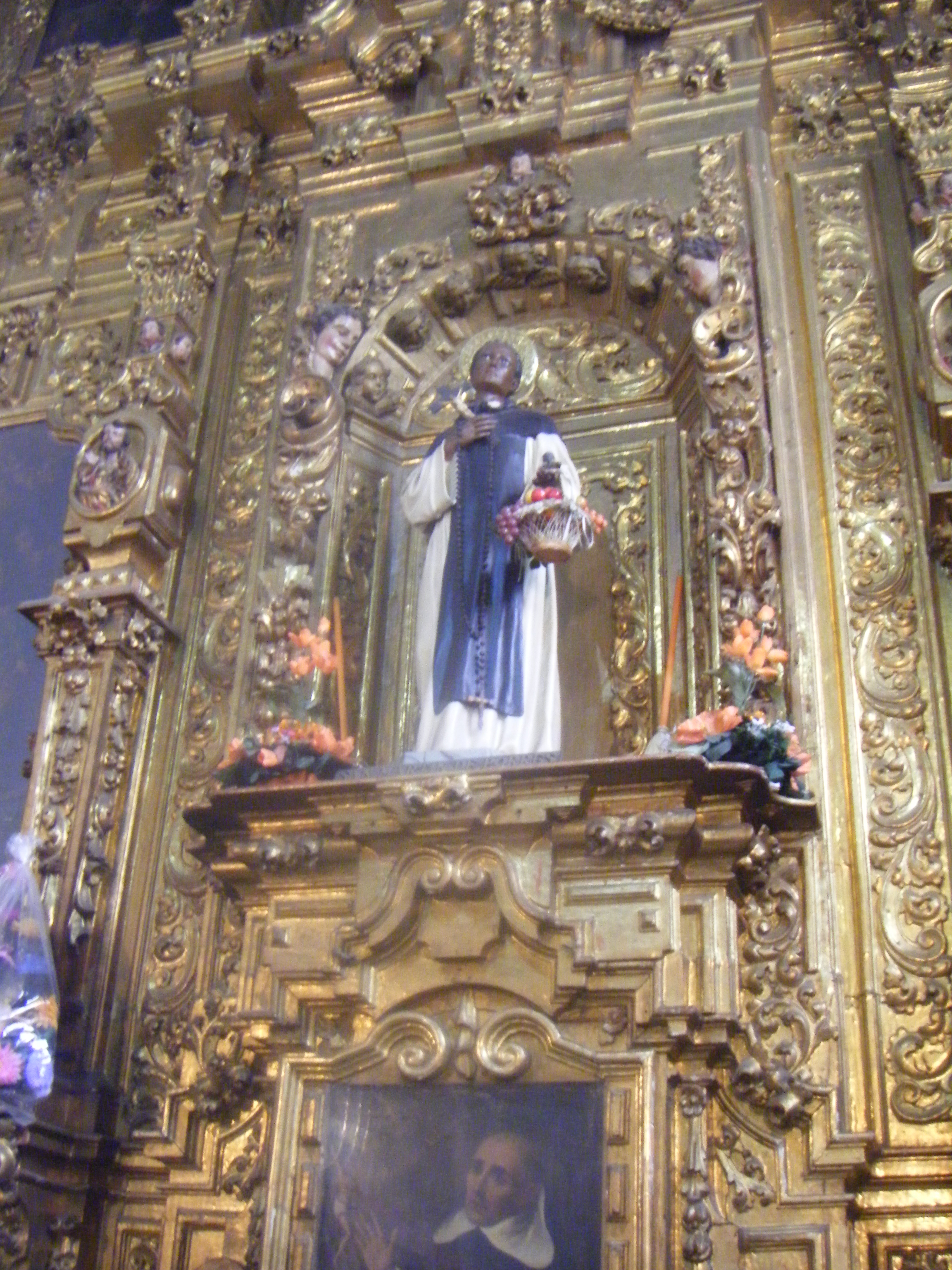
Good St Martin de Porres

I heard Mass of St Martin de Porres, juxta formam ordinariam, on Thursday the 3rd; I read Lauds of his feast to-day, according to the pre-Conciliar Dominican Calendar and Breviary, while waiting to go to confession.  How good to have a Saint twice over, to be an intercessor and support!  (It reminds me of a few years ago, when I kept Epiphany twice – once transferred to the Sunday, once on the 6th of January itself – and also Christmas twice! – once according to the Gregorian, and once the Julian Calendar.)

I am reminded again of one of great St Martin's miracles, worked here in Australia some decades ago: a lady, unsure of whether to accept a proposal of marriage (having been jilted before), came out from the confessional, knelt down to pray, turning all this over in her mind, and looking up beheld none other than St (or as he was then, Blessed) Martin kneeling in front of her: he sagely nodded his head to confirm the verdict of Providence on her suitor's suitability, and then, when she looked away, disappeared.  She and her husband lived a long and happy marriage ere they too passed into eternity – pray for them – and their son is now a Dominican priest.

The Collect of St Martin in the Dominican Rite:

Deus, humilium celsitudo, qui beatum Martinum Confessorem tuum ad cælestia regna transire fecisti: ejus meritis et intercessione concede nos ejus humilitatem ita imitari in terris, ut cum ipso exaltari mereamur in cælis. Per...

(O God, exaltation of the humble, Who didst make blessed Martin Thy Confessor to pass over to the heavenly kingdom: by his merits and intercession grant us so to imitate his humility on earth, that with him we may merit to be exalted in heaven. Through...)

I like the way this collect plays on the contrast between humility and exaltation (humilium celsitudo... humilitatem... exaltari) and also the interesting manner in which "kingdom", "earth" and "heaven" are in fact all plurals in the Latin (regna... terris... cælis).

The Lord solemnly warned us, "And whosoever shall exalt himself shall be humbled: and he that shall humble himself shall be exalted" ( St Matthew xxiii, 12) – and again, "Because every one that exalted (or exalteth*) himself shall be humbled: and he that humbleth himself shall be exalted" ( St Luke xiv, 11 and xviii, 14b*): I am proud, and must learn the way of humility – which is but the way of reason, since what have I to boast about?  Whatever I have, I have received from the Lord.  As the Apostle put it, "Or what hast thou that thou hast not received? And if thou hast received, why dost thou glory, as if thou hadst not received it?" (I Cor. iv, 7).  As the Forerunner taught, "He must increase: but I must decrease" (St John iii, 30).  The very word humility is derived from humus, the earth, from which we come and to which we shall return: to be humble is but to acknowledge the truth of our finitude.  Pride, as well as being the deadly sin at the root of all, is stupid foolishness, mere braggadocio, pretending to what is not really in our possession.  Yet so hard it is to eradicate it!

St Martin de Porres, pray for us.

Thursday, September 8, 2011

Dominican Little Office: Memorials at Lauds and Vespers

A correspondent asked quite some time ago about the commemorations, or memorials, traditionally made in the Dominican Rite Little Office of the Blessed Virgin Mary (which I have posted previously in full, according to the text in force in 1962, and therefore the one declared still usable by the terms of Summorum pontificum).  These were suppressed sometime between 1956 (the date of my Dominican Diurnal, which has them) and 1962 (the date of my Dominican Breviary, which doesn't).  They were four in number:
  1. Of Holy Father Dominic;
  2. Of the Saints of the Order of Preachers;
  3. Of All Saints;
  4. For Peace.
For the benefit of interested parties, here they are in their Latin originals – note the rhyming antiphons, very mediæval indeed, and the fact that the antiphons and versicles for the first two memorials vary between Lauds and Vespers:


MEMORIALS AT LAUDS AND VESPERS

Ad Mem. S. P. Dominici in Laudibus Aña.  Benedictus Redemptor omnium, qui saluti providens hominum mundo dedit sanctum Dominicum.
In Laudibus V/.  Lex Dei ejus in corde ipsius.
R/.  Et non supplantabuntur gressus ejus.
Ad Mem. S. P. Dominici in Vesperis Aña.  Magne Pater sancte Dominice, mortis hora nos tecum suscipe, et hic semper nos pie respice.
In Vesperis V/.  Os justi meditabitur sapientiam.
R/.  Et lingua ejus loquetur judicium.
Or.  Deus, qui Ecclesiam tuam beati Dominici Confessoris tui, Patris nostri, illuminare dignatus es meritis et doctrinis: concede ut ejus intercessione temporalibus non destituatur auxiliis, et spiritualibus semper proficiat incrementis.  Per Christum Dominum nostrum.  R/.  Amen.

Ad Mem. Sanctorum Ordinis Prædicatorum in Laudibus Aña.  O quam felix gloria semper est Sanctorum, quam præclara merita sunt Prædicatorum, quorum verbo et opere mundus decoratur, eorumque munere mens consolidatur!
In Laudibus V/.  Exsultabunt Sancti in gloria.
R/.  Lætabuntur in cubilibus suis.
Ad Mem. Sanctorum Ordinis Prædicatorum in Vesperis Aña.  Christi pia gratia Sanctos sublimavit, quos Patris Dominici Ordo propagavit.  Nos eorum meritis petimus juvari, atque suis precibus Deo commendari.
In Vesperis V/.  Sapientiam Sanctorum narrent populi.
R/.  Et laudem eorum nuntiet ecclesia.
Or.  Concede, quæsumus, omnipotens Deus, ut ad meliorem vitam Sanctorum Ordinis nostri exempla nos provocent: quatenus, quorum memoriam agimus, etiam actus imitemur.  Per Christum Dominum nostrum.  R/.  Amen.

Ad Mem. omnium Sanctorum Aña. Sancti Dei omnes intercedere dignemini pro nostra omniumque salute.
V/.  Orate pro nobis, omnes Sancti Dei.
R/.  Ut digni efficiamur promissionibus Christi.
Or.  Tribue, quæsumus, Domine, omnes Sanctos tuos jugiter pro nobis orare, et eos clementer exaudire digneris.  Per Christum Dominum nostrum.  R/.  Amen.

Ad Mem. de Pace Aña. Da pacem, Domine, in diebus nostris, quia non est alius qui pugnet pro nobis, nisi tu Deus noster.
V/.  Fiat pax in virtute tua.
R/.  Et abundantia in turribus tuis.
Or.  Deus, a quo sancta desideria, recta consilia, et justa sunt opera, da servis tuis illam, quam mundus dare non potest, pacem: ut et corda nostra mandatis tuis dedita, et, hostium sublata formidine, tempora sint tua protectione tranquilla.  Per Dominum nostrum Jesum Christum Filium tuum, qui tecum vivit et regnat in unitate Spiritus Sancti, Deus, per omnia sæcula sæculorum.  R/.  Amen.

Friday, December 24, 2010

Dominican Lessons and Sequence for the Christmas Masses

The Rite of the Friars Preachers retains several ancient elements not conserved in the wider Roman Rite; which is only to be expected, as it was codified and therefore fixed in form earlier, during the thirteenth rather than the sixteenth century.  Readers may be pleasantly surprised to learn that the Old Testament readings appointed for the four Masses of Christmas – for the Vigil, the Midnight, the Dawn and the Day Masses – in the modern Roman Rite are not innovations but attempted restorations, more or less (with a verse or more added or subtracted); for the Dominican Missal never abandoned them.  

(Likewise, the Carthusians, Premonstratensians and Carmelites retained these lessons; alas, the Cistercians removed them in 1657, out of misplaced zeal for conformity to the Roman liturgical books.  As the extinct English order of the Gilbertines apparently used these lessons, so sure enough they were also used in the Sarum Rite.)

Christmas Vigil

Lesson: Isaias lxii, 1-4a [the Novus Ordo adds vv. 4b-5]

Hæc dicit Dominus Deus:
Propter Sion non tacebo, et propter Jerusalem non quiescam donec egrediatur ut splendor justus ejus, et salvator ejus ut lampas accendatur.  Et videbunt gentes justum tuum, et cuncti reges inclytum tuum: et vocabitur tibi nomen novum, quod os Domini nominabit.  Et eris corona gloriæ in manu Domini, et diadema regni in manu Dei tui.  Non vocaberis ultra Derelicta, et terra tua non vocabitur amplius Desolata: sed vocaberis, Voluntas mea in ea, et terra tua Inhabitata, quia complacuit Domino in te.

Thus saith the Lord God:
For Sion's sake I will not hold my peace, and for the sake of Jerusalem, I will not rest till her just one come forth as brightness, and her saviour be lighted as a lamp.  And the Gentiles shall see thy just one, and all kings thy glorious one: and thou shalt be called by a new name, which the mouth of the Lord shall name.  And thou shalt be a crown of glory in the hand of the Lord, and a royal diadem in the hand of thy God.  Thou shalt no more be called Forsaken: and thy land shall no more be called Desolate: but thou shalt be called My pleasure in her, and thy land inhabited, because the Lord hath been well pleased with thee.

Marvellous prophecy!  The "Just One" cometh, and the "Saviour" shining as a lamp in the darkness, to be seen not by Jerusalem only, but by the Gentiles and "all kings", beholding the "Glorious One": Jesus. God will bestow a new name, that of Christian, on those He shall call; and He shall crown them with glory and honour, being well-pleased in His people in Christ Jesus our Lord.

Christmas Midnight

Lesson: Isaias ix, 2. 6-7a [N.O. includes vv. 3-5 & 7b also]

Hæc dicit Dominus:
Populus qui ambulabat in tenebris, vidit lucem magnam: habitantibus in regione umbræ mortis, lux orta est eis.  
Parvulus enim natus est nobis, et Filius datus est nobis, et factus est principatus super humerum ejus; et vocabitur nomen ejus Admirabilis, Consiliarius, Deus, Fortis, Pater futuri sæculi, Princeps pacis.  Multiplicabitur ejus imperium, et pacis non erit finis: super solium David, et super regnum ejus sedebit, ut confirmet illud et corroboret in judicio et justitia, amodo et usque in sempiternum.

Thus saith the Lord:
The people that walked in darkness, have seen a great light: to them that dwelt in the region of the shadow of death, light is risen.
For a Child is born to us, and a Son is given to us, and the government is upon his shoulder: and his name shall be called, Wonderful, Counsellor, God the Mighty, the Father of the world to come, the Prince of Peace. His empire shall be multiplied, and there shall be no end of peace: he shall sit upon the throne of David, and upon his kingdom; to establish it and strengthen it with judgment and with justice, from henceforth and for ever.

Nobis natus, nobis datus: "born for us, given for us" – Christ is come, Emmanuel, Whose kingdom shall have no end.  At midnight we hear the cry, "Behold the Bridegroom cometh!" – and to them that sit in darkness, a great light appeareth in dead of night, in the bleak mid-winter, in the darkness of the weary, fallen world, in its last age: "the Light that enlighteneth every man", born into this world.  Let us not slumber and sleep, but run with glad hearts to greet Him, "born this happy morning: Jesu, to Thee be glory given, Word of the Father, now in flesh appearing".

Christmas Dawn

Lesson: Isaias lxi, 1-3 [N.O. omits these]; lxii, 11-12a [N.O. adds v. 12b]

Hæc dicit Dominus:
Spiritus Domini super me, eo quod unxerit Dominus me: ad annuntiandum mansuetis misit me, ut mederer contritis corde, et prædicarem captivis indulgentiam, et clausis apertionem: ut prædicarem annum placabilem Domino, et diem ultionis Deo nostro: ut consolarer omnes lugentes: ut ponerem lugentibus Sion: et darem eis coronam pro cinere, oleum gaudii pro luctu, pallium laudis pro spiritu mœroris: et vocabuntur in ea fortes justitiæ, plantatio Domini ad glorificandum.
Ecce Dominus auditum fecit in extremis terræ, dicite filiæ Sion: Ecce Salvator tuus venit: ecce merces ejus cum eo, et opus ejus coram illo.  Et vocabunt eos: Populus sanctus, redempti a Domino Deo nostro.

Thus saith the Lord:
The spirit of the Lord is upon me, because the Lord hath anointed me: he hath sent me to preach to the meek, to heal the contrite of heart, and to preach a release to the captives, and deliverance to them that are shut up.  To proclaim the acceptable year of the Lord, and the day of vengeance of our God: to comfort all that mourn: to appoint to the mourners of Sion, and to give them a crown for ashes, the oil of joy for mourning, a garment of praise for the spirit of grief: and they shall be called in it the mighty ones of justice, the planting of the Lord to glorify him.
Behold the Lord hath made it to be heard in the ends of the earth, tell the daughter of Sion: Behold thy Saviour cometh: behold his reward is with him, and his work before him.  And they shall call them, The holy people, the redeemed of the Lord our God.

Here we hear Messiah proclaim His mission, sent by the Lord His Father, anointed with the Holy Spirit, to announce and preach salvation.  "Behold, thy Saviour cometh" with His work to do and his rewards to bestow, that His people may be holy, "the redeemed of the Lord our God".

Christmas Day

Lesson: Isaias lii, 6-10 [N.O. omits v. 6]

Hæc dicit Dominus:
Propter hoc sciet populus meus nomen meum in die illa; quia ego ipse qui loquebar, ecce adsum.  Quam pulchri super montes pedes annuntiantis et prædicantis pacem: annuntiantis bonum, prædicantis salutem, dicentis Sion: Regnabit Deus tuus!  Vox speculatorum tuorum: levaverunt vocem, simul laudabunt, quia oculo ad oculum videbunt cum converterit Dominus Sion.  Gaudete, et laudate simul, deserta Jerusalem, quia consolatus est Dominus populum suum: redemit Jerusalem.  Paravit Dominus brachium sanctum suum in oculis omnium gentium: et videbunt omnes fines terræ salutare Dei nostri.
Thus saith the Lord:
Therefore my people shall know my name in that day: for I myself that spoke, behold I am here.  How beautiful upon the mountains are the feet of him that bringeth good tidings, and that preacheth peace: of him that sheweth forth good, that preacheth salvation, that saith to Sion: Thy God shall reign!  The voice of thy watchmen: they have lifted up their voice, they shall praise together: for they shall see eye to eye when the Lord shall convert Sion.  Rejoice, and give praise together, O ye deserts of Jerusalem: for the Lord hath comforted his people: he hath redeemed Jerusalem.  The Lord hath prepared his holy arm in the sight of all the Gentiles: and all the ends of the earth shall see the salvation of our God.

Indeed and Amen!  The Lord Himself that spoke, "behold, I Am" is "here": thus His Name shall be known by His people, "He hath redeemed Jerusalem", and yet more, the Lord hath made known "His holy arm", that is, His Son, in the sight of all nations: "and all the ends of the earth shall see the salvation of our God", since God has become incarnate and visible and "dwelt amongst us" and "we have seen His glory, the glory as of the Onlybegotten of the Father, full of grace and truth".  Let these glad tidings be spread by the joyful evangelists, and the great company of preachers!

******

Furthermore, the Dominican Rite retains the beautiful mediæval sequence Lætabundus, sung at the Day Mass, and repeated in the Mass of the Epiphany, on the twelfth day of Christmas; and in the Mass of the Baptism of the Lord, on the Octave of the Epiphany at the end of the Christmas season; and yet once more in the Mass of the Presentation, that last re-echo of Christmastide forty days' hence, just before Lent.