Showing posts with label Compline. Show all posts

Tuesday, May 13, 2014

Our Lady of Fatima

Having heard Mass of Our Lady of Fatima at Carmel this morning, it was good to gather with our little schola twelve hours later at St Francis and first practice, then sing Compline followed by Benediction; it seemed fitting to begin the latter with Jesu dulcis memoria, then to chant the Litany of Loreto, before proceeding to the usual Tantum ergo &c. We closed with the Sub tuum, concluding this Marian feast by flying to her patronage, that the Blessed Virgin defend us by her all-powerful intercession in all dangers.

Wednesday, April 9, 2014

Compline and Stations

Another pleasant evening: first we practised, then we sang Compline, followed by Stations of the Cross, with an English version of the Stabat Mater, and, to conclude, the Vexilla Regis and Christus factus est.

Wednesday, March 26, 2014

Compline and Honours

Though unfortunately our priest was unable to attend, and so we didn't have Benediction last night – at which I served at the city church on Monday night in any case, since the weekly Rosary devotions include Benediction this Lent – we did keep the feast of the Annunciation with special care, by singing the Litany of Loreto after Compline, and ending with the hymn "The Angel Gabriel from heaven came".

In other good news, the pre-eminent rank of Knight and Dame in the Order of Australia has been restored by our Prime Minister, just as the title of Queen's Counsel for senior lawyers is in process of being restored in certain State jurisdictions when it had been replaced with "Senior Counsel". We are a monarchy after all...

Tuesday, November 26, 2013

Compline and Benediction

Evening devotions and Benediction for the second day in a row – it reminds me of Hobart, or happy days in Melbourne; I could get used to this.

To-night, we had the last celebration for this year for our Gregorian chant choir, which was also a chance to fondly farewell Fr Allan, our devoted and good priest, who first established the choir at St Francis and ever since has nurtured it until now. Fr Allan is retiring in early January; we are quietly confident that the good work he has done in building up our parish, especially as regards the proper celebration of the sacred liturgy and fit music therefor, will continue to flourish and abound, given that our Archbishop is sending us a new priest.

But this evening – before the lengthy fraternal supper afterward – we first practised, then sung Compline, followed by a particularly elaborate Benediction, with the Christus vincit in procession beforehand, and, looking towards Advent, the Rorate cæli at exposition, and also another favourite, Jesu Redemptor omnium (verses extracted from the Christmas Vespers hymn) before reposition. Having left home at twenty past seven, I got back at twenty to eleven! God bless our priest, and our choir.

Sunday, December 9, 2012

My Favourite Advent Antiphon

On my mind and lips during Advent is the Magnificat antiphon from first Vespers of this, the Second Sunday of Advent: Veni, Domine, visitare nos in pace, ut lætemur coram te corde perfecto – "Come, O Lord, and visit us in peace, that we may joy before thee with a perfect heart."


This antiphon above all others – yes, for the moment, even the O Antiphons, and the Marian anthem of the season, Alma Redemptoris Mater – is my choice, and why? because in sundry Uses it was not a Magnificat antiphon, but the Advent Nunc dimittis antiphon.  Several forms of Compline (such as the Dominican) have variant hymns, antiphons, responsories and the like to be employed at certain times and seasons; in the Sarum Rite, though not that of the Black Friars, Veni, Domine, visitare was sung during Advent in place of the usual antiphon Salva nos Domine.

Consider the wording, unfamiliar as it may seem, of the Nunc dimittis with this antiphon:

Come, O Lord, and visit us in peace, that we may joy before thee with a perfect heart. 
Lord, now lettest thou thy servant depart in peace : according to thy word.
For mine eyes have seen : thy salvation,
Which thou hast prepared : before the face of all people;
To be a light to lighten the Gentiles : and to be the glory of thy people Israel.
Glory be to the Father, and to the Son : and to the Holy Ghost.
As it was in the beginning, is now, and ever shall be : world without end. Amen. 
Come, O Lord, and visit us in peace, that we may joy before thee with a perfect heart.

I take the English wording of this from a curious little volume in my possession, The Hours of Prayer from Lauds to Compline inclusive compiled from the Sarum Breviary and other rites (3rd ed., revised), originally drawn up in 1910, but reprinted in 1946; my copy has a preface by Edward C. Trenholme, S.S.J.E., dated 1928.  This is, in other words, one of the many Sarum-ish or Roman Diurnals drawn up by Anglo-Catholics over the course of their history – Patrimony!

While many such manuals exist, I only have one other here, which also contains the "Come, O Lord": The Priest's Book of Private Devotion, originally compiled in the late 19th C. by Oldknow and Crake, revised in 1929 by Briscoe, and published in a new edition in 1952; unlike The Hours of Prayer, it contains a vast collection of prayers, meditations, and all manner of devotions – but of its 593 numbered pages, the first third, pages 3 to 221, contains "Divine Service for the Lesser Hours of the Day", that is, Prime, Terce, Sext, None, and Compline,  with full Propers of the Temporal and Sanctoral cycle, and the relevant Commons, plus Vespers of the Dead and the Penitential Psalms. These Hours are evidently meant to be said alongside daily recitation of Mattins and Evensong from the BCP.

An interesting point about both these unofficial forms of the Office is that they stick to the pre-1912 psalm cursus: Lauds has its daily Laudate psalms (Pss 148-150); during the Little Hours, each and every day, Psalm 118(119) is read through; and Compline has daily Pss 4, 30(31):1-6, 90(91) and 133(134).

Friday, November 9, 2012

Compline according to the Customary


Compline has always been my favourite Hour of the Daily Office.  Of course, as the Customary of Our Lady of Walsingham points out, the recitation of daily Morning Prayer and Evening Prayer according to the Anglican tradition suffices (since these two Offices were specifically drawn up to gather together the older plethora of Hours); but forms of Compline have been drawn up, first for private use in various pious vade-mecums issued in the later nineteenth century, and later for official Anglican use, since the early twentieth century (e.g. the 1914 U.S Episcopalian Order for Compline, or the forms found in the 1926 Irish, 1928 Proposed English, 1929 Scottish and 1962 Canadian Prayer Books), since this Hour has a peculiarly affecting quality, whose elements, drawn quite directly from the Roman Rite (whether modern or mediæval), are most conducive to prayer.

The Customary provides an order for Compline that is, in fact, more traditional than that found in the modern Roman Liturgy of the Hours, and even in some respects more traditional than that found in the liturgical books of 1962 – since it maintains the immemorial Western tradition of using four fixed psalms at Compline (abandoned in 1912 at St Pius X’s revision of the Breviary), and even retains the preces or suffrages (removed at Roman Compline in the 1950’s).

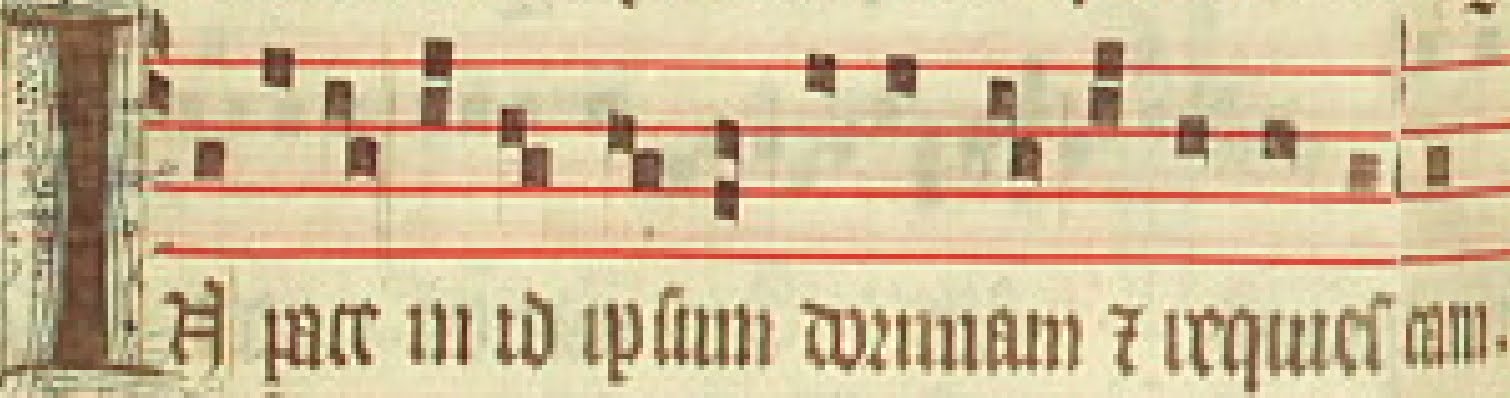
It is much to be applauded that Compline in the Customary is adorned with chant notation so it may be sung to the ancient melodies proper thereto.  Herewith, an outline of the order of service:


  “The Lord almighty grant us a quiet night… (the blessing Noctem quietam)
·      “Brethren, be sober, be vigilant…” (the traditional short lesson, 1 Peter 5:8-9)
·      “But thou, O Lord, have mercy upon us. Thanks be to God.” (the traditional conclusion Tu autem, with response Deo gratias)
·      “Our help is in the name of the Lord…” (the versicle Adjutorium nostrum)
·      (Pause for examination of conscience)
·      “I confess to God…” (the Sarum Confiteor, but put in the Roman position at the start of Compline, rather than in the Sarum, where it was placed among the preces)
·      “May almighty God have mercy…” (the Sarum Misereatur; there is no Indulgentiam, just as at Dominican Compline, which is similar to the Sarum)
·      “O God, make speed to save us…” (the versicle Deus in adjutorium)
·      “Glory be to the Father…” (the lesser doxology)
·      “Alleluia” (but in Lent, the Anglican versicle “Praise ye the Lord…”)
·      “Before the ending of the day…” (Neale’s Englishing of the ancient Compline Hymn Te lucis; or another ad lib. – the hymn is placed before the psalmody, following the modern Roman Liturgy of the Hours, but also Ambrosian custom)
·      Psalms 4, 31:1-6, 91, 134 (the traditional Compline psalms, every day one or more, ad lib.)
·      “Thou, O Lord, art in the midst…” (Jer 14:9) or “Now the God of peace…” (Heb 13:20-21) (or another, ad lib.)
·      “Into thy hands…” (traditional responsory In manus tuas)
·      “Keep me as the apple…” (traditional versicle Custodi me Domine)
·      “Preserve us, O Lord…” (antiphon Salva nos – or, ad lib., various seasonal alternatives as in the Sarum Rite and other mediæval uses, such as the Dominican with which I am more familiar)
·      “Lord, now lettest thou…” (the Nunc dimittis)
·      “Lord, have mercy…” (the threefold Kyrie or Lesser Litany)
·      “Our Father…” (the Lord’s Prayer, but said aloud by all, rather than mainly secretly, as in the traditional Latin preces)
·      “Blessed art thou… Let us bless… Blessed art thou… The almighty… Wilt thou not… O Lord, shew… Vouchsafe, O Lord… O Lord, hear…” (preces or suffrages – all traditional, drawn from Daniel chapter 3 and the Te Deum; for more expediency, the latter four may be omitted)
·      “Let us pray” (Oremus)
·      “Visit, we beseech thee…” (the Roman collect Visita quæsumus Domine) and/or “Lighten our darkness” (the Sarum Compline collect Illumina quæsumus Domine, famous from Evensong), and/or “O Lord Jesus Christ…” (another mediæval collect, commemorating the Lord’s burial in the sepulchre), and/or “Look down, O Lord…” (Respice, Domine, de excelsa, oft found in Anglican forms of Compline, but curiously enough from the Ambrosian Rite), and/or “Be present, O merciful God…” (another ancient collect)
·      “We will lay us down in peace…” (the traditional Sarum versicle In pace in idipsum)
·      “Abide with us… As the watchmen… Come with the dawning…” (three further versicles, drawn from the Gospels and Psalm 130, following the form of Compline given in modern Church of England publications)
·      “The Lord be with you…” (Dominus vobiscum – to be used only if there be one in holy orders)
·      “Let us bless the Lord…” (Benedicamus Domino)
·      “The almighty and merciful Lord…” (the blessing Benedicat et custodiat)
·      An Anthem to the Blessed Virgin, with (optionally) a versicle and collect (all Roman, these, for the seasons of the year: after Pentecost until Advent, the “Hail Holy Queen…”, with “Pray for us…” and collect “Almighty everlasting God…” exactly render the Salve Regina, Ora pro nobis and Omnipotens sempiterne Deus)
·      “May the divine assistance remain with us always…” (the concluding formula, Divinum auxilium)
·    
A real stickler for bringing into play every last traditional part of the ancient Latin Compline service would note in particular the following omissions:
  1. The lack of the versicle Converte nos before Deus in adjutorium (retained in the 1929 Scottish BCP, where it was put at the very start of the service, and in the US 1914 Order for Compline);
  2. The lack of the psalm antiphon Miserere mihi (something Anglican forms all omit, so far as I recall, but which could easily be admitted, especially given the plainchant pointing of the text in the Customary);
  3. The omission of the alternative lesson “Come unto me…” (St Matthew 11:28-30), commonly provided in Anglican forms of Compline – though by the terms of the rubric governing the reading, this could well be used if desired; 
  4. The omission of the Apostles’ Creed, always found in Latin Breviaries among the preces at Compline, and retained in many Anglican forms, such as the 1928 Proposed BCP, and the 1929 Scottish BCP – indeed, made a more prominent part of the service, by appointing it to be said daily, aloud, by all, prior to the Lesser Litany, Lord’s Prayer and preces (just as at Anglican Mattins and Evensong);
  5. The omission of certain alternative collects provided for use at Compline, above all (as the 1929 Scottish BCP provides) that wonderful prayer derived from Blessed John Henry Newman, “O Lord, support us all the day long…”; other possible collects include that in the 1914 American version (“Give us light in the night season…”), and that – attributed to St Augustine – beginning “Keep watch, dear Lord…”, which is appointed for use at Compline in the Book of Divine Worship.
There is something intrinsically Anglican in style about the use of more than one collect at Compline, just as at the end of Mattins and Evensong (though to be fair Compline has four collects merged into one in the traditional Ambrosian Office also). It seems to me that the next edition of the Customary ought at the very least allow the use of Newman’s famous prayer as part of its order of Compline:
O LORD, support us all the day long of this troublous life, until the shades lengthen, and the evening cometh, and the busy world is hushed, the fever of life is over, and our work done. Then, Lord, in thy mercy, grant us safe lodging, a holy rest, and peace at the last; through Jesus Christ our Lord. Amen.
That prayer attributed to Augustine would also be a worthy addition:
KEEP watch, dear Lord, with those who work, or watch, or weep this night, and give thine angels charge over those who sleep. Tend the sick, Lord Christ; give rest to the weary, bless the dying, soothe the suffering, pity the afflicted, shield the joyous; and all for thy love’s sake. Amen.
However, these minor desiderata aside, certainly Ordinariate Compline is a worthy and most beautiful Office to pray at the close of the day, ere we enter into sleep, image of death, in the hope both of awaking to a new day, and of one day arising at the general resurrection.

Wednesday, October 24, 2012

Off on Pilgrimage

Thanks be that the Christus Rex Pilgrimage here in Australia is a great deal easier than the Paris to Chartres Pilgrimage!  I depart on Thursday evening for Ballarat via Melbourne, in order to be ready to begin at the Cathedral in Ballarat at 6:30 am on Friday... God willing, matters conclude in Bendigo with High Mass on Sunday afternoon; then we celebrate that evening, and depart the next morning (after Mass and brunch). I return home on Monday evening.

Last night, our little schola met as usual for practice, followed by Compline and Benediction: but, very appropriately, we interposed a Procession within the church, singing Christus vincit, that marvellous litanic prayer of petition and praise, which by coincidence, or rather, by Providence, is just such as we sing while on the Christus Rex Pilgrimage. Viva Christo Rey!

Wednesday, April 11, 2012

Easter Tuesday Compline and Benediction

It was good to be at church last night, to sing and worship and share Easter cheer.  Just a small flock gathered (some singers being away), but that included our priest of course, and also Bp Robarts of the TAC, waiting on the doorstep of the Church as it were (no offence intended!) as he awaits news from Rome of the establishment of the Australian Ordinariate.  The good bishop was edifying as always, when, during our time of Adoration of the Blessed Sacrament, he set us an example of prayerful intercession extempore, or rather ex abundantia cordis tui, as Fr Allan put it when asking him to do so beforehand.  For the record, it being Easter week, the Sanctissimum was brought forth while we sang Victimæ paschali laudes (I was assisting Fr as thurifer meanwhile), and after It had been returned to the tabernacle at the end, we concluded with O filii et filiæ.  It is good to gaze upon the Risen Christ.


Thursday, March 1, 2012

Long Responsories at the Little Hours

On Septuagesima, Sexagesima and Quinquagesima Sundays – and above all on all the days of Lent from the first Sunday onwards until the eve of the Paschal Triduum – the Little Hours according to the Use of the Friars Preachers feature not the usual short responsories, but long responsories of the type normally reserved to Matins.

(Likewise, the Dominican Office also inserts a long responsory after the chapter of First Vespers of many Sundays and greater feasts, which was a common mediæval practice aiming at lending greater solemnity to the Hour.  However, at the Little Hours during Lent, the accent is rather on penitential solemnity rather than such festal solemnity.)

While I do not have a book of Dominican chant to hand, other than a Libellus Completorii (Compline booklet), it would be my understanding, based on the chant for the responsory therein (number 5 below), that all these responsories would have the sort of melismatic chant that Matins responsories do, rather than the far simpler syllabic chant usually found in the normal short responsories of the Little Hours at all the other seasons of the year.


(1) For Septuagesima, Sexagesima and Quinquagesima Sundays —


at Terce (Ps 70:5b-6a):

R/. Spes mea, Domine, * A juventute mea.
[This R/. is not repeated, but rather the versicle follows at once:]
V/. In te confirmatus sum ex utero: de ventre matris meæ tu es meus protector. * A juventute mea.
Gloria Patri et Filio et Spiritui Sancto.
R/. Spes mea, Domine, * A juventute mea.

(My hope, O Lord, * From my youth.
(By thee have I been confirmed from the womb: from my mother's womb thou art my protector. * From my youth.
(Glory be to the Father and to the Son and to the Holy Ghost.
(My hope, O Lord, * From my youth.)


at Sext (cf. Ps 60:4b):

R/. Esto nobis, Domine, * Turris fortitudinis.
V/. A facie inimici. * Turris fortitudinis.
Gloria Patri et Filio et Spiritui Sancto.
R/. Esto nobis, Domine, * Turris fortitudinis.

(Be to us, Lord, * A tower of strength.
(Against the face of the enemy. * A tower of strength.
(Glory be to the Father and to the Son and to the Holy Ghost.
(Be to us, Lord, * A tower of strength.)


at None (Ps 141:8a (Roman Psalter); Ps 141:5b):

R/. Educ de carcere animam meam, * Ut confiteatur nomini tuo, Domine.
V/. Periit fuga a me, et non est qui requirat animam meam. * Ut confiteatur nomini tuo, Domine.
Gloria Patri et Filio et Spiritui Sancto.
R/. Educ de carcere animam meam, * Ut confiteatur nomini tuo, Domine.

(Bring my soul out of prison, * That I may praise thy name, O Lord.
(Flight hath failed me: and there is no one that hath regard to my soul. * That I may praise thy name, O Lord.
(Glory be to the Father and to the Son and to the Holy Ghost.
(Bring my soul out of prison, * That I may praise thy name, O Lord.)


(2) Sundays and ferias of the first and second weeks of Lent (drawn from Psalm 118) —


at Terce (Ps 118:63,132):

R/. Participem me fac, Deus, omnium timentium te * Et custodientium mandata tua. 
V/. Aspice in me et miserere mei secundum judicium diligentium nomen tuum * Et custodientium mandata tua.
Gloria Patri et Filio et Spiritui Sancto.
R/. Participem me fac, Deus, omnium timentium te * Et custodientium mandata tua. 

(Make me, O God, a partaker with all them that fear thee, * And that keep thy commandments.
(Look thou upon me, and have mercy on me, according to the judgment of them that love thy name. * And that keep thy commandments.
(Glory be to the Father and to the Son and to the Holy Ghost.
(Make me, O God, a partaker with all them that fear thee, * And that keep thy commandments.)


at Sext (Ps 118:101-102):

R/. Ab omni via mala prohibui pedes meos, * Ut custodiam mandata tua, Domine.
V/. A judiciis tuis non declinavi, quia tu legem posuisti mihi, * Ut custodiam mandata tua, Domine.
Gloria Patri et Filio et Spiritui Sancto.
R/. Ab omni via mala prohibui pedes meos, * Ut custodiam mandata tua, Domine.

(I have restrained my feet from every evil way: * That I may keep thy words, O Lord.
(I have not declined from thy judgments, because thou hast set me a law. * That I may keep thy words, O Lord.
(Glory be to the Father and to the Son and to the Holy Ghost.
(I have restrained my feet from every evil way: * That I may keep thy words, O Lord.)


at None (Pss 118:164a; 27:3a; 118:176):

R/. Septies in die laudem dixi tibi, Domine Deus meus: * Ne perdas me.
V/. Erravi sicut ovis quæ perierat: require servum tuum, Domine, quia mandata tua non sum oblitus. * Ne perdas me.
Gloria Patri et Filio et Spiritui Sancto.
R/. Septies in die laudem dixi tibi, Domine Deus meus: * Ne perdas me.

(Seven times a day I have given praise to thee, Lord my God: * Destroy me not.
(I have gone astray like a sheep that is lost: seek thy servant, Lord, because I have not forgotten thy commandments. * Destroy me not.
(Glory be to the Father and to the Son and to the Holy Ghost.
(Seven times a day I have given praise to thee, Lord my God: * Destroy me not.)


(3) Sundays and ferias of the third and fourth weeks of Lent (drawn from Psalm 118) —


at Terce (Ps 118:71a,72,73):

R/. Bonum mihi, Domine, quod humiliasti me: * Bonum mihi lex oris tui super millia auri et argenti. 
V/. Manus tuæ fecerunt me et plasmaverunt me: da mihi intellectum, ut discam mandata tua. * Bonum mihi lex oris tui super millia auri et argenti. 
Gloria Patri et Filio et Spiritui Sancto.
R/. Bonum mihi, Domine, quod humiliasti me: * Bonum mihi lex oris tui super millia auri et argenti. 

(It is good for me, Lord, that thou hast humbled me: * The law of thy mouth is good to me, above thousands of gold and silver.
(Thy hands have made me and formed me: give me understanding, and I will learn thy commandments. * The law of thy mouth is good to me, above thousands of gold and silver.
(Glory be to the Father and to the Son and to the Holy Ghost.
(It is good for me, Lord, that thou hast humbled me: * The law of thy mouth is good to me, above thousands of gold and silver.)


at Sext (Ps 118:125a,73b):

R/. Servus tuus ego sum: * Da mihi intellectum, Domine.
V/. Ut discam mandata tua: * Da mihi intellectum, Domine.
Gloria Patri et Filio et Spiritui Sancto.
R/. Servus tuus ego sum: * Da mihi intellectum, Domine.

(I am thy servant: * Give me understanding, Lord. 
(That I will learn thy commandments. * Give me understanding, Lord. 
(Glory be to the Father and to the Son and to the Holy Ghost.
(I am thy servant: * Give me understanding, Lord.)


at None (cf. Ps 118:41,130):

R/. Declara super nos, Deus, * Tuam misericordiam.
V/. Declaratio sermonum tuorum dat intellectum, Domine, * Tuam misericordiam.
Gloria Patri et Filio et Spiritui Sancto.
R/. Declara super nos, Deus, * Tuam misericordiam.

(Declare upon us, O God, * Thy mercy.
(The declaration of thy words giveth understanding, Lord. * Thy mercy.
(Glory be to the Father and to the Son and to the Holy Ghost.
(Declare upon us, O God, * Thy mercy.)


(4) Sundays and ferias of Passiontide, until Holy Thursday exclusive (without "Glory be" on account of the season) —


at Terce (Ps 21:21-22):

R/. Erue a framea, Deus, animam meam: * Et de manu canis unicam meam. 
V/. Salva me ex ore leonis: et a cornibus unicornium humilitatem meam, * Et de manu canis unicam meam. 
R/. Erue a framea, Deus, animam meam: * Et de manu canis unicam meam. 

(Deliver, O God, my soul from the sword: * And my only one from the hand of the dog.
(Save me from the lion's mouth; and my lowness from the horns of the unicorns. * And my only one from the hand of the dog.
(Deliver, O God, my soul from the sword: * And my only one from the hand of the dog.)


at Sext (Ps 21:22,21):

R/. De ore leonis libera me, Domine: * Et a cornibus unicornium humilitatem meam.
V/. Erue a framea, Deus, animam meam, et de manu canis unicam meam.  * Et a cornibus unicornium humilitatem meam.
R/. De ore leonis libera me, Domine: * Et a cornibus unicornium humilitatem meam.

(From the lion's mouth save me, Lord: * And from the horns of the unicorns my lowness. 
(Deliver from the sword, O God, my soul, and from the hand of the dog my only one. * And from the horns of the unicorns my lowness. 
(From the lion's mouth save me, Lord: * And from the horns of the unicorns my lowness.)


at None (Ps 118:161-162a,162b):

R/. Principes persecuti sunt me gratis, et a verbis tuis formidavit cor meum. * Lætabor ego super eloquia tua.
V/. Quasi qui invenit spolia multa. * Lætabor ego super eloquia tua.
R/. Principes persecuti sunt me gratis, et a verbis tuis formidavit cor meum. * Lætabor ego super eloquia tua.

(Princes have persecuted me without cause: and my heart hath been in awe of thy words. * I will rejoice at thy words.
(As one that hath found great spoil. * I will rejoice at thy words.
(Princes have persecuted me without cause: and my heart hath been in awe of thy words. * I will rejoice at thy words.)


(5) At Compline, on Sundays and feasts from the first Sunday of Lent until the first Passion Sunday (Pss 4:9; 131:4):


R/. In pace in idipsum * Dormiam et requiescam.
V/. Si dedero somnum oculis meis et palpebris meis dormitationem. * Dormiam et requiescam.
Gloria Patri et Filio et Spiritui Sancto.
R/. In pace in idipsum * Dormiam et requiescam.


(In peace in the selfsame * I will sleep, and I will rest.
(If I shall give sleep to my eyes, or slumber to my eyelids, * I will sleep, and I will rest.

(Glory be to the Father and to the Son and to the Holy Ghost.

(In peace in the selfsame * I will sleep, and I will rest.)

Tuesday, November 22, 2011

Compline and Benediction for Christian Unity

To-night, our parish Compline and Benediction was graced by the attendance of Bp Robarts of the TAC, together with his wife and one of his parishioners.  My parish priest had very kindly invited him to attend, in the cause of promoting Christian Unity and more particularly the success in Australia of Anglicanorum cœtibus.

After Compline (sung in Gregorian chant), Exposition of the Blessed Sacrament followed, while we sang Ave verum, and Gaudeamus omnes in honour of St Cecilia, patroness of music, whose feast it is this day.  Bp Robarts then led us all in prayer before Our Lord truly present in the Eucharist, concluding very feelingly with the Prayer for Christian Unity.  Benediction was given by our priest with the usual Tantum ergo &c., then the Sacrament was reposed in the tabernacle while we chanted Jesu Redemptor omnium.  Our worship concluded with that most ecumenical hymn "Let all mortal flesh keep silence" – translated by an Anglican from an Eastern liturgy, set to a French tune.

After our foretaste of the joys of full communion in Eucharistic worship, we had a little agape - wine, savouries, cake...

It was a very blessed occasion in every respect.  Forward the Australian Ordinariate!

Thursday, November 17, 2011

Everyone: Pray Lauds, Vespers and Compline

“I would like to renew my call to everyone to pray the Psalms, to become accustomed to using the Liturgy of the Hours, Lauds, Vespers, and Compline. Our relationship with God can only be enriched by our journeying towards Him day after day”.

— Benedict XVI, Wednesday General Audience, 16th November 2011

I must step up my prayer life to meet this pontifical encouragement: for too long, while I pray Lauds in the Carmelite chapel since I attend an early Mass there daily, I've let pressure of work distract me from the rest, although I make time for Compline.  Hence, I resolve to return to Vespers.

Tuesday, May 24, 2011

Compline, Benediction, and Supper

For the feast of Our Lady Help of Christians, Patroness of Australia, we celebrated with our fortnightly Compline and Benediction, followed by a special supper with good food and good wine.

There was about the best attendance yet, and all were in good voice - even with the rather tricky choice of Gaudeamus omnes in Domino (the Marian version of this Introit) sung as the exposition chant (for indeed we ought all rejoice in the Lord in honour of the Blessed Virgin, at whose solemnity the angels rejoice and together praise the Son of God).

Yours truly, as well as singing, also served as thurifer (thanks, Len, for saying I managed this well, as I am anything but confident wielding the thurible, or "swinging the pot" as you put it!).

Father has just bought a handsome new lamp for Our Lady's statue, which we saw lit for the first time to-night.  De Maria numquam satis...

Friday, January 21, 2011

Vernacular Liturgy: Dolphins, bless the Lord

While in a very interesting bookshop off Cuba Street in Wellington, I found a useful book: Lauds, Vespers and Compline in English (Collegeville: The Liturgical Press, 1965).  It advertises itself as being reprinted from (in conformity with Sacrosanctum concilium) "an officially approved edition of the Roman Breviary".

Therefore, I have this week (recovering from my holiday) been using this book for Lauds, Vespers and Compline: it's curious to pray in English again.  I find the translation of the psalms used - the Confraternity version adapted to the Breviary - strangely reminiscent of the Grail Version.  It is most useful as regards the Office Hymns, which it wisely translates as prose.

Some of the phrases used are a little odd: this morning, for the feast of St Agnes, the Sunday psalms being appointed, I was amazed to read in the Benedicite, "You dolphins and all water creatures, bless the Lord"!  I thought cetus meant whale; but perhaps the translators understood it to signify cetaceans in general.

Saturday, November 6, 2010

Rubrical Query – II: An Answer

Eureka!  I have found it: in a pre-Pius X Dominican Breviary, it is noted that the Little Office of the Blessed Virgin Mary is said before all the Hours of the Daily Office (whereas in the Roman Breviary, it is said after the Little Hours, and before the Martyrology at Prime), except that Compline of the Blessed Virgin is said after the blessing at the end of Compline of the Day, immediately before the Salve Regina, omitting therefore its usual final Ave.  (The Cistercian practice was the same.)

As I prefer to use the Dominican Breviary for sundry reasons, I can, if I wish, thus combine Compline of the Day with Compline of Our Lady, without having to repeat the Marian anthem &c.  Much better.

I must also thank Rubricarius for his help.

Friday, October 22, 2010

Rubrical Query

If one says Compline, and wishes to add Compline of Our Lady (from her Little Office), does one first say the Marian anthem &c. at the end of Compline, and then add Compline de Beata, or does one interpolate the latter after the blessing and before the Marian anthem?

I came to think this may be the case because Compline of the Little Office, when given as an appendix in a Breviary, was given with neither a final blessing nor Marian anthem until the 1962 edition – yet did appear with such when printed as a standalone devotion.  This made me surmise that when the two Complines were said one after the other, the blessing and Marian anthem of the daily Office supplied for its little sibling as well.  It would certainly seem strange, strictly following the '62 rules, to sing Salve Regina twice in close succession...

I recently found that in the Carmelite Breviary, the following rubric appears after the blessing: Statim dicitur Completorium de beata Virgine, si dicendum sit, quo dicto (vel si dicendum non sit) data benedictione, statim dicitur Antiphona Salve Regina...  [It would appear to me that the second parenthesis is misplaced, and should have been after benedictione.]

Therefore, at least in the Carmelite Rite, Our Lady's Compline is interpolated between Compline of the day and the Marian anthem following.

However, the Roman and other Breviaries make no such note, and indeed have a seemingly contrary rubric to the effect that, after the Benedicamus Domino, Fidelium animæ is not said, but rather the blessing and Marian anthem follow immediately.

Friday, August 20, 2010

Dormitionist Compline

Being in receipt of further liturgical details – one of their Completorii Libellus has fallen into my hands, beautifully put together, complete with chant – regarding the Dormitionists, I have updated a post about their rites that I made long ago, which I republish here for those who would otherwise miss these engrossing minutiæ.

A very significant and daily ritual, Compline (along with evening Low Mass, styled "Meditation Mass") is beloved of Dormitionists, since it proclaims in the gracious outward forms of the Liturgy what is their hope to incarnate in their lives: that the eternal rest promised to the Saints they shall have even now some share in, training themselves now in what one day, please God, shall be theirs forever.  

Their Compline basically follows the Roman Rite, or more closely the Dominican Rite, but with some variations.  The most striking are in their opening Confiteor and so forth, after the short reading (which is given in full at the end of these notes):
Confiteor Deo, et beatæ Mariæ, et omnibus sanctis, et vobis, fratres, quia peccavi nimis, cogitatione, locutione, opere et omissione, mea culpa: precor vos orare pro me.
Misereatur tui Deus, et dimittat tibi omnia peccata tua: liberet te ab omni malo, salvet, et confirmet in omni opere bono, et perducat te ad requiem æternam.  R.  Amen.
Confiteor Deo, et beatæ Mariæ, et omnibus sanctis, et tibi, pater, quia peccavi nimis, cogitatione, locutione, opere et omissione, mea culpa: precor te orare pro me.
Misereatur tui Deus, et dimittat tibi omnia peccata tua: liberet te ab omni malo, salvet, et confirmet in omni opere bono, et perducat te ad requiem æternam.  R.  Amen.
Requiem et gaudium cum pace, emendationem vitæ, spatium veræ pænitentiæ, gratiam et consolationem Sancti Spiritus, perseverantiam in bonis operibus, tribuat nobis omnipotens et misericors Dominus.  R.  Amen.
("I confess to God, and to blessed Mary, and to all the saints, and to you, brothers / thee, father, that I have sinned exceedingly, by thought, speech, deed and omission, through my fault: I pray you / thee pray for me.
("God have mercy upon you / thee, and forgive you / thee all your / thy sins, deliver you / thee from every evil, save, and confirm you / thee in every good work, and bring you / thee to rest eternal.  R/.  Amen.
("Rest and joy with peace, amendment of life, space for true penitence, the grace and consolation of the Holy Spirit, and perseverence in good works, the almighty and merciful Lord grant us.  R/. Amen.")
Instead of the expected prayer for everlasting life, these wise Canons pray for everlasting rest in the Misereatur, and have gone so far as to pray firstly for the same in place of the Indulgentiam of the Roman Rite.

For the psalms (which are every day the same - Pss 4, 30:1-6; 90; and 133 - as in the Roman Rite before the reforms of Pope St Pius X), there is instead of the normal Miserere mhi a different antiphon, also used as a versicle, In pace in idipsum dormiam et requiescam ("In peace in the selfsame I will sleep and I will rest"); in the Roman Rite, this was used as the first antiphon of Tenebræ for Holy Saturday.


On great feasts, the Dormitionists replace the usual responsory In manus tuas with the long responsory In pace, as do the Dominicans in Lent.

Most famously, their Nunc dimittis antiphon is proper to the O.Dorms:

Salva nos, Domine, custodi nos dormientes in Christo, ut requiescamus in pace.

("Save us, Lord, keep us, the sleepers-in-Christ, that we may rest in peace.")

There are intercessions, or preces, read daily – the monastic custom, recorded by St Benedict – that is, Kyrie, Pater, versicle In pace, Apostles' Creed, and the ancient versicle Dignare, Domine, nocte ista, sine peccato nos custodire ("Deign, O Lord, this night, to keep us without sin") before the salutation and the usual Collect Visita nos quæsumus.

Since Compline is thus unvarying, it is sung from memory in complete darkness, with only a single tall candle burning before the recumbent statue of Our Lady of the Dormition, the Virgen Dormida or Sleeping Virgin (to which all turn for the Marian anthem at the end).

As is fitting, they sing, not the usual Salve, but the old pre-Tridentine version of the Ave Regina – which was originally used in the Office of the Assumption, or rather the Dormition, of the Virgin.

As with the Dominicans, Compline ends with the versicle Fidelium: "May the souls of the faithful, through God's mercy, rest in peace.  Amen."

The brethren conclude Compline by processing back to their cells, reciting the De profundis (for while others look for daybreak, they look for rest in peace in the Lord), thus praying for those already departed this life in the faith and fear of Christ, that they rest in peace, and softly praying also for themselves with the Order's unique formula – Requiem æternam dona nobis, Domine.  Requiescamus in pace.  Amen.  (Eternal rest grant unto us, O Lord.  May we rest in peace.  Amen.) – then each singly blesses their chamber and bed with holy water, ere they retire.

To give a final flavour of Dormitionist spirituality (to use an overused and abused term), here is the extract from what St Anselm wrote in praise of St Stephen that is used in the Dormitionist Breviary before Compline (replacing the short reading at its beginning, again in line with the monastic custom of the Collation, or patristic reading at the end of the day, that St Benedict enjoined):

«Obdormivit in Domino».  O obdormivit! O somnus cum requie, requies cum securitate, securitas cum æternitate!  Requiescis, o felix, in gaudio, gaudes in requie.  Gloriaris, o secure, in satietate, satiaris in gloria.

O sufficiens beatitudo et beata sufficientia!  Quam felix obdormire, obdormire in Domino!  Quanta pace obdormiunt, qui obdormiunt in Domino!  Non enim gravabunt eos amplius pondera carnis, non eos affligent dolores corruptionis.

«Infelix ego homo, quis me liberabit de corpore mortis hujus?» — gratia Dei per Jesum Christum Dominum nostrum, ut quandoque «in pace in idipsum dormiam et requiescam» in Domino, qui vivit et regnat Deus per omnia sæcula sæculorum, amen.

('He fell asleep in the Lord.'  [Acts vii, 59.]  Ah, he fell asleep!  Sleep with rest, rest with security, security with eternity.  Happy man, to rest in joy, and in joy to rest.  Safe home, you are glorified in fulness and you are filled with glory.  [Cf. Ps 16:15b.]
(O sufficient blessedness and blessed sufficiency!  How happy to fall asleep, to fall asleep in the Lord.  In how much peace do they fall asleep who sleep in the Lord.  For the heavy weight of the flesh does not oppress them, nor do the sorrows of corruption afflict them.
(Who will free me from the body of this death? —the grace of God through Jesus Christ our Lord [Rom. vii, 24], so that some day in peace and the self-same I will be at rest and sleep [Ps 4:9] in the Lord, who lives and reigns, God, for all ages.  Amen.)

— S. Anselmus Cantuariensis, Orationes, XIII. Oratio ad sanctum Stephanum, ll. 240b-244, 269-275, 298-299, 305-308.

Tuesday, August 10, 2010

Signatum est super nos lumen vultus tui Domine

This verse of Psalm 4 – just sung by us at Compline – came powerfully to mind when Father proceeeded to give us Benediction with the Blessed Sacrament:

Signatum est super nos lumen vultus tui, Domine: dedisti lætitiam in corde meo.

"The light of Thy countenance is signed upon us, Lord: Thou hast given joy to my heart."

Truly God has listened, has heeded the voice of my prayer, has not turned His face away from me, but blesses me by His priest, signing us with the Sacrament of His love, giving joy to my heart: "for God is potent in redonating a greater consolation", as the Imitatio Christi avers.

St Augustine comments upon this very verse in his Confessions, writing against the Manichees from following whose falsities he had been delivered, angry at them or rather pitying them for being madly hostile to the medicine of the sacraments (cf. IX, iv, 8):

'The light of your countenance, Lord, is signed upon us' (Ps 4:7).  For we are not 'the light that enlightens every man' (John 1:9).  We derive our light from you, so that we 'who were once darkness are light in you' (Eph 5:8).  If only they [the Manichees] could see the eternal to be inward!  I had tasted this...  
...there you began to be my delight, and 'you gave gladness in my heart' (Ps 4:7).  And I cried out loud when I acknowledged inwardly what I read in external words.
— Confessions, IX, iv, 10

Our small schola, with Father and some parishioners, had gathered on a rainy night to sing God's praises in the immemorial Latin plainchant, and then gone on to worship Emmanuel, God present with us in His Sacrament.  We few, we happy few...

We had supper after, and a good long discussion touching on many of the ills and worries of contemporary society.  It is indeed sad, as it was for Augustine, to think of the wider world's peoples heedless of or even actively spurning the celestial remedies at hand to the fears and dangers of our transient life, the free offer of salvation in Christ Jesus our Lord.

Wednesday, July 28, 2010

Compline & Benediction

What a good idea, what a blessing, and a spiritual consolation: singing Compline and then singing at Benediction.  Our fortnightly Gregorian chant session at St Francis was, as always, most beneficial to weary body and soul.

Wednesday, July 14, 2010

Spiritual Recharge: Compline and Benediction

We few, we happy few: just the nucleus of our Gregorian chant choir, our priest and a faithful parishioner, coming together to practise, to learn and then to offer our sacrifice of praise to God, singing Compline and then Benediction of the Blessed Sacrament.

We sang a chant new to us, one in honour of the Immaculate Conception, and customarily sung by Franciscans on Saturdays: Tota pulchra es.


V/. Tota pulchra es, Maria.
R/. Tota pulchra es, Maria.
V/. Et macula originalis non est in te.
R/. Et macula originalis non est in te.
V/. Tu gloria Jerusalem.
R/. Tu laetitia Israel.
V/. Tu honorificentia populi nostri.
R/. Tu advocata peccatorum.
V/. O Maria.
R/. O Maria.
V/. Virgo prudentissima.
R/. Mater clementissima.
V/. Ora pro nobis.
R/. Intercede pro nobis ad Dominum Jesum Christum.


V/. Thou art all fair, O Mary.
R/. Thou art all fair, O Mary.
V/. And the original stain is not in thee.
R/. And the original stain is not in thee.
V/. Thou glory of Jerusalem.
R/. Thou joy of Israel.
V/. Thou honour of our people.
R/. Thou advocate of sinners.
V/. O Mary.
R/. O Mary.
V/. Virgin most prudent.
R/. Mother most tender.
V/. Pray for us.
R/. Intercede for us with the Lord Jesus Christ.

As I worshipped the Lord present in His true Flesh, while Father censed the Host, it struck me how this is a true act of latria, offering the incense of adoration to Jesus Christ our God – it is only short of the perfect act of latria that is the Mass, when we offer not but earthly incense, but the Divine Victim, Christ Himself, to His Father.

Last night, that was our hour's pastime; as I remarked to Father, it was a spiritual recharge; he smiled and said it was that for him, too.

Sunday, July 11, 2010

Cultor Dei memento

Prudentius wrote a lengthy Hymnus ante somnum, or Hymn before Sleep; the last seven stanzas were used as an Office hymn for Compline in some places at some seasons, at Lent, I seem to recall, which is preëminently the season of ghostly combat, when the soldier of Christ must arm himself with the Cross,  which he took up in Baptism, and with which he was marked with holy chrism in Confirmation:


Christian! the font remember,
The sacramental vow,
The holy water sprinkled,
The oil that marked thy brow!

When at sleep's call thou seekest
To rest in slumber chaste,
Let first the sacred emblem
On breast and brow be traced.

The Cross dispels all darkness,
All sin before it flies,
And by that sign protected
The mind all fear defies.

Avaunt! ye fleeting phantoms
That mock our midnight hours;
Avaunt! thou great Deceiver
With all thy guileful powers.

Thou Serpent, old and crafty,
Who by a thousand arts
And manifold temptations
Dost vex our sleeping hearts,

Vanish! for Christ is with us;
Away! 'tis Christ the Lord:
The sign thou must acknowledge
Condemns thy hellish horde.

And, though the weary body
Relaxed in sleep may be,
Our hearts, Lord, e'en in slumber,
Shall meditate on Thee.


Cultor Dei memento
te fontis et lavacri
rorem subisse sanctum,
te chrismate innotatum.
 
Fac, cum vocante somno
castum petis cubile,
frontem locumque cordis
crucis figura signet.

Crux pellit omne crimen,
fugiunt crucem tenebrae:
tali dicata signo
mens fluctuare nescit.
 
Procul, o procul vagantum
portenta somniorum,
procul esto pervicaci
praestigiator astu!

O tortuose serpens,
qui mille per Maeandros
fraudesque flexuosas
agitas quieta corda,
 
Discede, Christus hic est,
hic Christus est, liquesce:
signum quod ipse nosti
damnat tuam catervam.

Corpus licet fatiscens
iaceat recline paullum,
Christum tamen sub ipso
meditabimur sopore.