Showing posts with label St Martin de Porres. Show all posts

Saturday, November 5, 2011

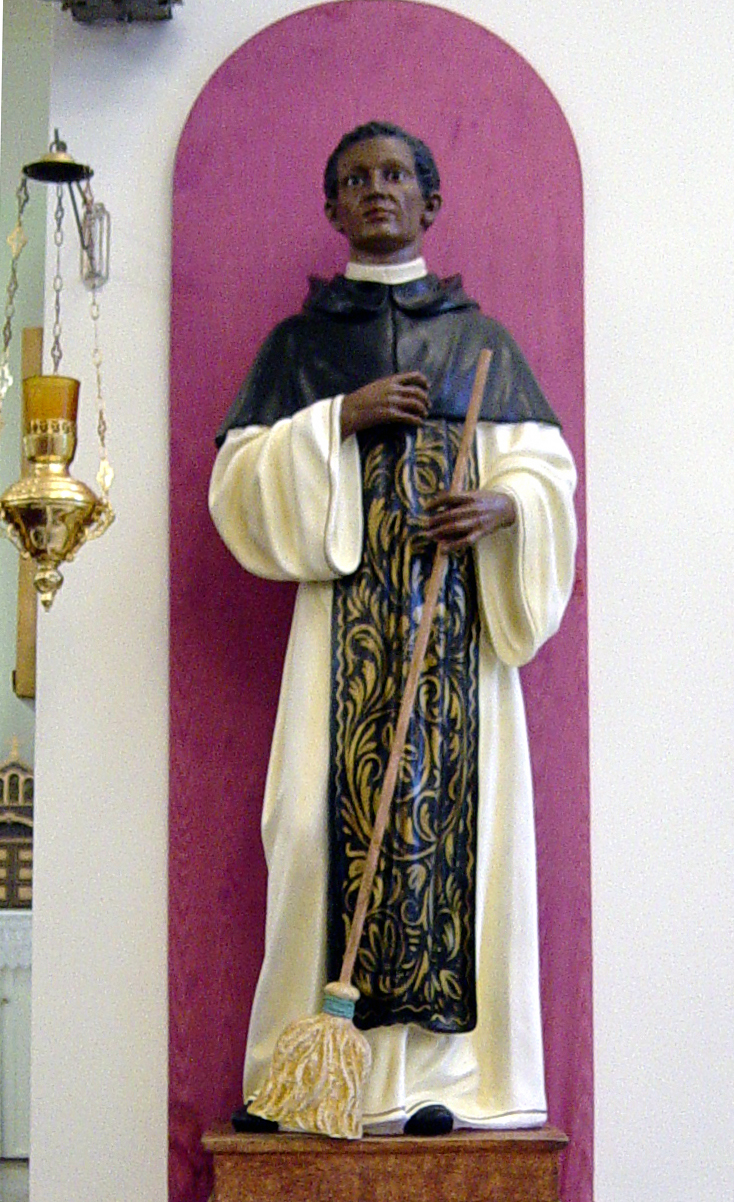
Good St Martin de Porres

I heard Mass of St Martin de Porres, juxta formam ordinariam, on Thursday the 3rd; I read Lauds of his feast to-day, according to the pre-Conciliar Dominican Calendar and Breviary, while waiting to go to confession.  How good to have a Saint twice over, to be an intercessor and support!  (It reminds me of a few years ago, when I kept Epiphany twice – once transferred to the Sunday, once on the 6th of January itself – and also Christmas twice! – once according to the Gregorian, and once the Julian Calendar.)

I am reminded again of one of great St Martin's miracles, worked here in Australia some decades ago: a lady, unsure of whether to accept a proposal of marriage (having been jilted before), came out from the confessional, knelt down to pray, turning all this over in her mind, and looking up beheld none other than St (or as he was then, Blessed) Martin kneeling in front of her: he sagely nodded his head to confirm the verdict of Providence on her suitor's suitability, and then, when she looked away, disappeared.  She and her husband lived a long and happy marriage ere they too passed into eternity – pray for them – and their son is now a Dominican priest.
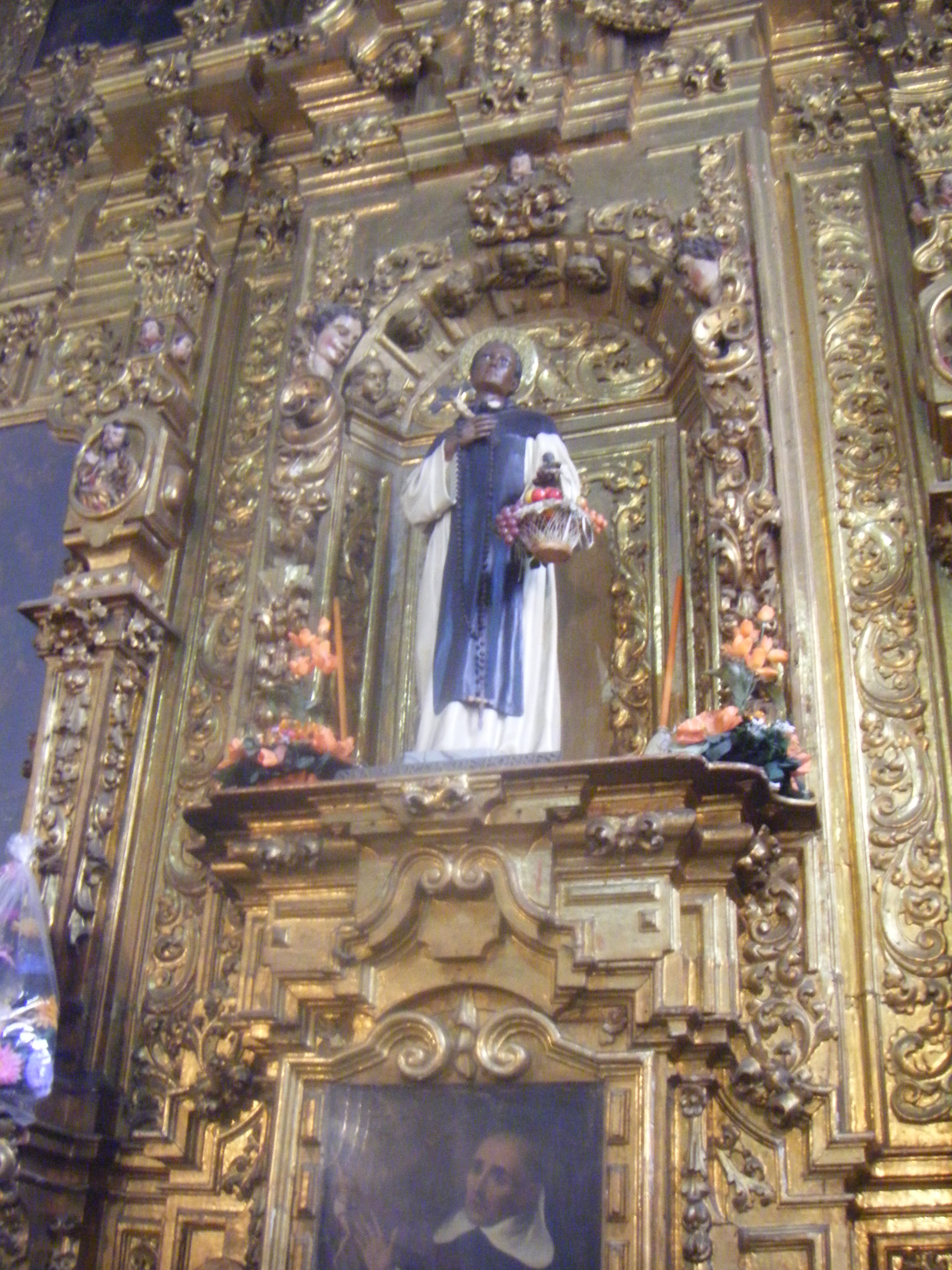
The Collect of St Martin in the Dominican Rite:

Deus, humilium celsitudo, qui beatum Martinum Confessorem tuum ad cælestia regna transire fecisti: ejus meritis et intercessione concede nos ejus humilitatem ita imitari in terris, ut cum ipso exaltari mereamur in cælis. Per...

(O God, exaltation of the humble, Who didst make blessed Martin Thy Confessor to pass over to the heavenly kingdom: by his merits and intercession grant us so to imitate his humility on earth, that with him we may merit to be exalted in heaven. Through...)

I like the way this collect plays on the contrast between humility and exaltation (humilium celsitudo... humilitatem... exaltari) and also the interesting manner in which "kingdom", "earth" and "heaven" are in fact all plurals in the Latin (regna... terris... cælis).

The Lord solemnly warned us, "And whosoever shall exalt himself shall be humbled: and he that shall humble himself shall be exalted" ( St Matthew xxiii, 12) – and again, "Because every one that exalted (or exalteth*) himself shall be humbled: and he that humbleth himself shall be exalted" ( St Luke xiv, 11 and xviii, 14b*): I am proud, and must learn the way of humility – which is but the way of reason, since what have I to boast about?  Whatever I have, I have received from the Lord.  As the Apostle put it, "Or what hast thou that thou hast not received? And if thou hast received, why dost thou glory, as if thou hadst not received it?" (I Cor. iv, 7).  As the Forerunner taught, "He must increase: but I must decrease" (St John iii, 30).  The very word humility is derived from humus, the earth, from which we come and to which we shall return: to be humble is but to acknowledge the truth of our finitude.  Pride, as well as being the deadly sin at the root of all, is stupid foolishness, mere braggadocio, pretending to what is not really in our possession.  Yet so hard it is to eradicate it!

St Martin de Porres, pray for us.

Friday, November 5, 2010

St Martin de Porres

Martinus, filius Joannis de Porres, equitis Hispaniæ, et Annæ Velasquez, suffuscæ libertæ, Limæ in America meridionali anno millesimo quingentesimo [septuagesimo*] nono lucem aspexit  – "Martin, son of Juan de Porres, knight of Spain, and Anna Velasquez, mulatto freedwoman, at Lima in south America in the year 1579 [first] beheld the light": thus begins the third lesson at Matins for to-day in the Dominican Breviary, marking this fifth of November as the feast of St Martin de Porres proper to the Friars Preachers.  (In the modern liturgy, his feast has been moved to the third, the day of his death or rather of his birth into eternal light and life; but I do hope that, in Adelaide, Fr Mannes has offered Mass in his honour to-day.)

[* A strange oversight omits the word "seventy" from his date of birth, implying that he was born in Lima during the Inca Empire!]

Adopting for the moment my latest system of praying the Hours (reading only three psalms at Matins, as is done in the Dominican Breviary throughout Eastertide), which enables me, a reasonably busy layman, to gain most of the benefits of the Office, has indeed brought blessings, such as this holy memorial.  I was minded to reach for my second- and third-class relics, among which I have a holy card of St Martin complete with a piece of linen touched to his body: I paid due veneration to him through this.  How apt, given that in many places to-day is also the feast of All Relics...

St Martin famously wears a now-suppressed variant of the habit of the Blackfriars; pray for Dominican lay-brothers, that their vocation prosper and not perish, and that they get back their proper habit of the black scapular, taken from them on the pretext of equality...

St Martin, son of Spain and son of Africa, son of a gentleman and son of a slave, born and bred in the new conquests of Spain in South America, trained as a surgeon, but aspiring after holiness as a Dominican Tertiary, was in course of time admitted as a lay brother to the convent of the Friars Preachers in Lima, where he exercised a humble and holy ministry as a true servant to all, both within and outwith, to the fathers and to the slaves, to orphans and dumb animals, filled with prayer and working wonders on all sides.  All Lima lamented his passing: but with miracles he continues to coruscate and shine.  

I know a Dominican who owes his parents' meeting, his birth and that of his siblings, and his vocation, to an apparition of St Martin in Melbourne in the last fifty years: an event implicitly commemorated in the Wallace window at St Carthage's Cathedral, Lismore.

Herewith, the Dominican Rite Proper for St Martin de Porres:


Officium (Ps. 91, 13-14)

Justus ut palma florebit: sicut cedrus Libani multiplicabitur: plantatus in domo Domini, in atriis domus Dei nostri.  Ps. 91, 2.  Bonum est confiteri Domino: et psallere nomini tuo, Altissime.  Gloria Patri…  Justus…

Oratio

Deus humilium celsitudo, qui beatum Martinum confessorem tuum ad cælestia regna transire fecisti; ejus meritis et intercessione concede, nos ejus humilitatem ita imitari in terris, ut cum ipso exaltari mereamur in cælis.  Per…

Epistola (Phil. iii, 7-12)

Fratres: 
Quæ mihi fuerunt lucra, hæc arbitratus sum propter Christum detrimenta.  Verumtamen existimo omnia detrimentum esse propter eminentem scientiam Jesu Christi Domini mei: propter quem omnia detrimentum feci, et arbitror ut stercora, ut Christum lucrifaciam: et inveniar in illo non habens meam justitiam, quæ ex lege est, sed illam, quæ ex fide est Christi Jesu: quæ ex Deo est, justitia in fide: ad cognoscendum illum, et virtutem resurrectionis ejus, et societatem passionum illius, configuratus morti ejus, si quo modo occurram ad resurrectionem, quæ est ex mortuis.  Non quod jam acceperim, aut jam perfectus sim: sequor autem, si quomodo comprehendam, in quo et comprehensus sum a Christo Jesu.

Responsorium (Ps. 20, 4-5)

Domine, prævenisti eum in benedictionibus dulcedinis: posuisti in capite ejus coronam de lapide pretioso.  V/.  Vitam petiit a te: et tribuisti ei longitudinem direum in sæculum sæculi.

Alleluia (Ps. 63, 11)

Alleluja, alleluja.  V/.  Lætabitur justus in Domino, et sperabit in eo: et laudabuntur omnes recti corde.  Alleluja.

Evangelium (S. Matt. xi, 25-30)

In illo tempore: Respondens Jesus dixit: Confiteor tibi, Pater, Domine cæli et terræ, quia abscondisti hæc a sapientibus, et prudentibus, et revelasti ea parvulis.  Ita Pater; quoniam sic fuit placitum ante te.  Omnia mihi tradita sunt a Patre meo.  Et nemo novit Filium, nisi Pater: neque Patrem quis novit, nisi Filius, et cui voluerit Filius revelare.  Venite ad me omnes qui laboratis, et onerati estis, et ego reficiam vos.  Tollite jugum meum super vos, et discite a me, quia mitis sum, et humilis corde: et invenietis requiem animabus vestris.  Jugum enim meum suave est, et onus meum leve.

Offertorium (Ps. 91, 13)

Justus, ut palma florebit: sicut cedrus, quæ in Libano est, multiplicabitur.

Secreta

Hanc hostiam, Domine, quam tibi in honorem beati Martini confessoris sacrandam offerimus, benignus suscipe; et præsta ut ejus pia intercessione, nobis effectum tuæ salvationis impendat.  Per…

Communio (S. Matt. xix, 28-29)

Amen dico vobis, quod vos, qui reliquistis omnia, et secuti estis me, centuplum accipietis, et vitam æternam possidebitis.

Postcommunio

Cælestibus alimentis enutriti, supplices te rogamus, Domine Deus noster, ut beato Martino confessore pro nobis intercedente, tuis semper valeamus obedire mandatis.  Per…

Thursday, November 6, 2008

Relics - V - and Abuses Thereof

Having just said Vespers of the feria in our (still intact) chapel, I suddenly realized that atop the empty tabernacle we keep both two third-class relics (of St Pio of Pietrelcina and St Rita of Cascia) and a first class relic, a tiny fragment of the body (of the bones, I suppose) of St Paul of the Cross, Founder of the Passionists.  This I kissed and venerated in particular, calling to mind how earthly and low I am in all truth, compared to such a saint, glorified unspeakably by God in heaven.  How far it is from earth to heaven!  Only by the Ladder of the Man-God, Christ, can we hope to ascend so high.

Having returned to my room, I have just toted up my own very minor collection of third-class relics:

  • a cloth touched to the relics of St Dominic;
  • ditto, of St Pio of Pietrelcina;
  • ditto, of St Faustina;
  • ditto, of St Thérèse (and rose petals blessed in her honour, a sort of quasi-relic given her dying words);
  • ditto, of Bl Maria Sagrario of St Aloysius Gonzaga, Carmelite nun, virgin and martyr of the Spanish Civil War;
  • a piece of the religious habit of Bl Columba Marmion.

Unfortunately, while I used to have a third-class relic of St Martin de Porres, I left it in my pocket once and it got lost in the washing machine, mea maxima culpa...

(Which reminds me of a certain priest, zealously orthodox, who had amassed quite a collection of relics, including those of all the apostles; which he kept in a shoebox under his bed.

(Other friends of mine, both seminarians at one time, had during their time in Rome obtained far too many relics from, in their own words, "a corrupt nun at the Relics Office", who ran a roaring trade until her overgenerosity was detected and she was exiled to Iran - as happened to a certain reputed freemason...

(And of course there was the former student at the North American College within the past decade, who funded his Roman idyll by purveying for a due consideration "relics" to gullible fellow-countrymen, "relics" which it transpired he forged by grinding up animal bones!

(Indeed, along similar lines, for a lark, one of those ex-seminarian mates of mine and I invited a lecturer of ours at the John Paul II Institute to attend a Dry Mass that my friend would pretend to offer up, with elevation of such a relic - an abomination, as Fortescue averred! - but of course  this was only a joke.

(So, in answer to the unspoken question, Are the well-known abuses of the veneration of relics still about, Yes, of course, men are still fallen and sinners, but abusus non tollit usus.)