זמרו משכיל • zammerû maśkîl • ψάλατε συνετως • psallite intellegenter • canite erudite • sing ye wisely • chantez vous avec intelligence • lobsinget ihm klüglich • sing ye praises with understanding
I've had a blessed Advent: last week, I made a five-day silent retreat in Bowral, N.S.W., run by two priests from the Abbey of St Joseph de Clairval in Flavigny. What a marvel that such an orthodox Benedictine monastery flourishes, and has as its apostolate the giving of a condensed form of the Spiritual Exercises of St Ignatius to men, in conformity to the spirit of its founder and first abbot, God rest him, who was converted after making such a retreat in 1940, and in due course became a monk after the death of his wife, with the resolve to give to others what had so changed him. It was easily the best retreat I have ever done, really brilliant, and, I hope, marks a milestone in my spiritual life. I would heartily recommend these retreats to one and all.
Either side of the retreat, I spent the weekend in Sydney, and went to High Mass at Maternal Heart, Lewisham. Since my return home, I've prepared for Christmas in the commercial sense, by buying gifts for family and friends. Tonight, just after sunset, Mass at St Canice-in-the-fields, Glengarry, then Midnight Mass at Carmel; tomorrow morning, back to Carmel for the Day Mass.
My prayer is for all readers and friends to receive every holy blessing from above, with hearts opened wide to Christ Whose glorious Nativity in the flesh we celebrate on this most holy feast.
My favourite Baroque composer, Marc-Antoine Charpentier, set all the O Antiphons to music – beautiful texts containing "the very marrow of Advent" to quote Dom Guéranger – together with the O salutaris hostia (one imagines this was sung at Benediction after Vespers on each of the last days of Advent).
Here is part of a recording thereof; the first of these Greater Antiphons, O Sapientia, begins at 2:37.
At early Mass, Fr Paul reminded us of that grief of separation from the Lord that the Church feels now, in these last days, between His Ascension and Second Advent. We yearn to be with the Lord; Communion, the Blessed Sacrament, is the foretaste and promise of this everlasting abiding with Him – hence Mass, a glimpse of heaven here below (till sacraments shall cease) is a pledge of what shall be forevermore, the Nuptial Banquet and Union with the Triune God through Christ.
Advent is not merely about getting ready for Christmas; as Parsch said (or was it Jungmann?), the Liturgical Year does not so much begin with Advent as end with it – end with it, and with Christmastide, finally concluding with the Presentation and old Simeon's Nunc dimittis. The Year of Grace may be said to begin with Septuagesima, with Genesis telling of Creation and the Fall: Advent and Christmastide is the presage of the Second Coming, and of everlasting bliss in the Kingdom that shall have no end.
We ought not just look backward in sentiment, as look forward in hope tempered with holy fear: the Lord shall come, and all His Saints with Him, and He shall restore Jerusalem. Christ's coming in flesh in the last days is the guarantee that, His warfare ended, having run the race from womb to tomb, soon He shall return in glory, to judge the living and the dead and the world by fire: His Sacred Humanity, the first fruits of bodily resurrection and eternal deification for all who shall be found in Him.
A blessed Christmas to all: prepare yourselves, for in the morning the glory of the Lord shall shine upon us, and we shall behold His glory, glory as of the Father's Only-begotten Son, full of grace and truth.
For Thou art that which is truly sought for, and the unutterable gladness of those that love Thee, O Christ our God, and all creation hymneth Thee unto the ages. Amen.
The Baroque, and Advent – what more could you want? (I am reminded of Bach's Christmas Oratorio, Lutheran though it be, with all its joyful exhuberance and high art, consummating the hoped-for longings of Advent, and of the earlier but just as joyful – and Lutheran – church music of Prætorius.)
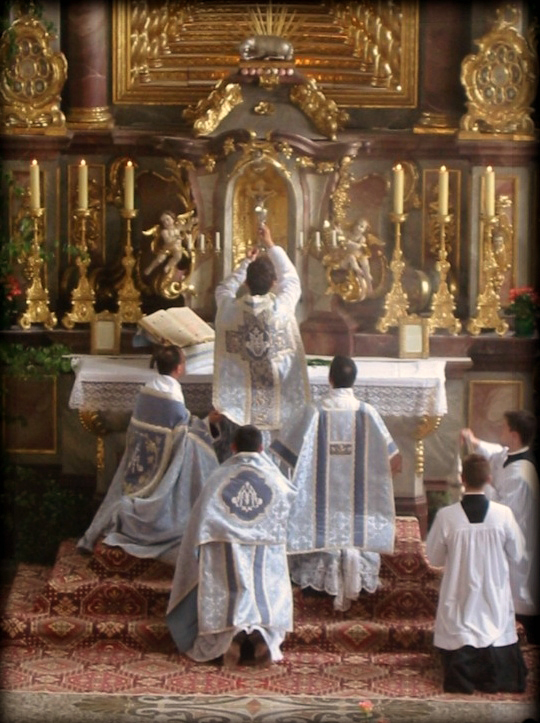
The elevation of the chalice, in Baroque style, at a first Mass (note assistant priest in cope);
by the Priestly Fraternity of Saint Peter, available from http://fssp.org.
The Christmas Novena first sung in Turin in 1720 began with the following canticle; then came the Lætentur cæli and Little Chapter, before the hymn En clara vox (itself consisting of stanzas 1 and 3 of the Advent Lauds hymn, stanzas 2, 3 and 4 of the Christmas Lauds hymn, and a doxology) and the Magnificat with the appropriate O Antiphon (but on the 16th, the Magnificat antiphon Ecce veniet Rex, from the 2nd Monday of Advent, and on the 24th, that day's Magnificat antiphon Cum ortus fuerit). I visualize the whole sung coram Sanctissimo, as would be most fitting. It is clearly a sort of reënvisioning of Vespers, but incorporating many treasures from throughout the Office.
This Canticle is in fact a combination of the Advent Invitatory antiphon of Advent Matins, combined with many Old Testament texts, "prophecies", as digested and recombined to form antiphons and responsories in the Breviary during Advent. I have highlighted any slight modifications made to these texts in order to fit. (I have appended a hasty translation.)
et repetitur antiphona: Regem venturum
Dominum, venite adoremus.
PROPHETIÆ
[Composed by Fr Antonio Vacchetta, 1720]
1. “Jucundare,
filia Sion, et exulta satis, filia Jerusalem”[2]: “ecce
Dominus veniet, et erit in die illa lux magna”[3]et “stillabunt montes dulcedinem, et
colles fluent lac et mel,”[4]quia “veniet Propheta magnus, et ipse
renovabit Jerusalem.”[5]R/.
2. “Ecce
veniet Deus, et homo de domo David sedere in throno,”[6] “et
videbitis, et gaudebit cor vestrum.”[7]R/.
3. “Ecce
veniet Dominus protector noster, Sanctus Israël, coronam regni habens in capite
suo, et dominabitur a mari usque ad mare, et a flumine usque ad terminos orbis
terrarum.”[8]R/.
4. “Ecce
apparebit Dominus, et non mentietur: si moram fecerit expecta eum, quia veniet
et non tardabit.”[9]R/.
5. “Descendet
Dominus sicut pluvia in vellus: orietur in diebus ejus justitia, et abundantia
pacis, et adorabunt eum omnes reges” terræ,
“omnes gentes servient ei.”[10]R/.
6. “Nascetur
nobis parvulus, et vocabitur Deus fortis, ipse sedebit super thronum David
patris sui, et imperabit, cujus potestas super humerum ejus.”[11]R/.
7. “Bethlehem,
civitas Dei summi, ex te exiet Dominator Israël, et egressus ejus sicut a
principio dierum æternitatis, et magnificabitur in medio universæ terræ, et pax
erit in terra nostra dum venerit.”[12] R/.
[24 Dec.]
8. “Crastina
die delebitur iniquitas terræ, et regnabit super nos Salvator mundi.”[13]R/.
R/.
The Lord is the King soon to come, O come, let us adore him.
R/.
The Lord is the King soon to come, O come, let us adore him.
1.
Be glad, O daughter of Sion, and rejoice heartily, O daughter of Jerusalem:
behold, the Lord shall come, and there shall be in that day a great light, and
the mountains shall drop down sweetness, and the hills shall flow with milk and
honey, for the great Prophet shall come, and He will renew Jerusalem.
R/.
The Lord is the King soon to come, O come, let us adore him.
2.
Behold, He shall come, God, and man from the house of David, to sit upon the
throne, and ye shall behold, and your heart shall rejoice.
R/.
The Lord is the King soon to come, O come, let us adore him.
3.
Behold the Lord our protector shall come, the Holy One of Israel, having the
crown of the kingdom on his head [i.e. the Crown of Thorns He shall wear when going forth to save us by His Passion], and He shall rule
from sea to sea, and from the river to the ends of the round world.
R/.
The Lord is the King soon to come, O come, let us adore him.
4.
Behold, the Lord will come, and will not disappoint: if He delay, wait for Him,
for He shall come, and will not be late.
R/.
The Lord is the King soon to come, O come, let us adore him.
5.
The Lord shall come down as rain on the fleece: justice shall dawn in His days,
and abundance of peace, and all the kings of the earth shall worship Him, all
nations shall serve Him.
R/.
The Lord is the King soon to come, O come, let us adore him.
6.
For us shall be born a little One, and He shall be called mighty God, He
Himself shall sit upon the throne of David His father, and rule, whose power is
upon His shoulder [i.e. the Cross He shall bear, the instrument of man's salvation].
R/.
The Lord is the King soon to come, O come, let us adore him.
7.
Bethlehem, city of God Most High, from thee shall go forth the Ruler of Israel,
and His going forth shall be as from the beginning of the days of eternity, and
He shall be magnified in the midst of the earth, and peace shall be in our land
when He comes.
R/.
The Lord is the King soon to come, O come, let us adore him.
8.
To-morrow the iniquity of the earth shall be washed away, and the Saviour of
the world shall reign over us.
R/.
The Lord is now very near, O come, let us adore him.
[1]Invitatorium, a Dominica I usque ad sabbatum ante
Dominicam III Adventus.
[2]Aña 2 ad V. & L., Dominica I Adventus (excl.
“alleluja”).
[3]Aña 3 ad V. & L., Dominica I Adventus (excl. “et
omnes Sancti ejus cum eo” & “alleluja”).
[4] Aña 1 ad V. & L., Dominica I Adventus (excl. “In
illa die” & “alleluja”).
[5]Aña 5 ad V. & L., Dominica I Adventus (excl.
“Ecce” & “alleluja”).
[6]Aña ad Bened., Feria VI infra hebdomadam I Adventus
(excl. “alleluja”).
[7]*, Responsorium ii, Feria VI infra hebdomadam II
Adventus (excl. V/.).
[8]Responsorium i, Feria VI infra hebdomadam II Adventus
(incl. V/.).
[9]Aña 3 ad V. & L., Dominica II Adventus (excl.
“alleluja”).
[10]Responsorium iii, Feria III infra hebdomadam III
Adventus (incl. V/.).
[11]Responsorium i, Feria III infra hebdomadam IV Adventus
(excl. V/.).
[12]Responsorium ii, Feria II infra hebdomadam III
Adventus (excl. V/.).
Some years back, I composed this prayer for use in Advent, especially when reading the prophet Isaias; I've just had a go at translating it into God's own Latin, but could do with some advice on how to do so better – please advise:
O God, who by Isaias thy prophet hast revealed unto thy servants the mysteries of the first advent of thine only-begotten Son in humility to save us by his incarnation, passion and resurrection, and of his second advent in glory to judge the living and the dead and the world by fire: grant us grace so to unite ourselves by faith and good works to the humble Christ, that the glorious Christ may number us among the chosen of his kingdom; who liveth and reigneth world without end. Amen.
******
Deus, qui per Isaiam prophetam tuam revelasti famulis tuis mysteria primi adventus unigeniti Filii tui in humilitatem ad salvandum nos per incarnationem, passionem et resurrectionem suam, et secundi adventus sui in gloria ad judicandos vivos et mortuos, et sæculum per ignem: da nobis gratiam ita unire nosmetipsos fide et bonis operibus Christo humili, ut Christus gloriosus annumeraret nos inter electos regni sui; qui vivit et regnat in sæcula sæculorum. Amen.
From thence he shall come to judge the quick and the dead.
I believe, O glorified love, that from thy throne at God’s right hand, where thou now sittest, thou wilt come again, to judge the world, attended with thy holy angels. All glory be to thee.
I believe, O thou adorable Judge, that all mankind shall be summoned before thy awful tribunal. All the dead, who shall be waked out of their graves when the angel shall blow the last trump, and all that are then quick, and alive, shall then appear before thee. All glory be to thee.
I believe, Lord, that I and all the world shall give a strict account of all our thoughts, and words, and actions; that the books will then be opened; that out of those dreadful registers we shall be judged; that Satan and our own consciences will be our accusers. O let the last trump be ever sounding in my ears, that I may ever be mindful of my great accounts, and that I may neither speak, nor do, nor think anything that may wound my own conscience, or provoke thy anger, or make me tremble at the awful day.
I know, O thou adorable Judge, that love only shall then endure that terrible test, that love only shall be acquitted, that love only shall be eternally blest; and therefore I will ever praise and love thee.
Glory be to thee, O thou beloved Son of God, to whom the Father has committed all judgment.
How can they that love thee, O Jesu, ever despond, though their love in this life is always imperfect, when at last they shall have love for their judge, love that hath felt and will compassionate all their infirmities? and therefore all love, all glory be to thee.
— Thomas Ken's Devotions on the Apostles' Creed, entitled "The Motives of Love"
Upon consulting my copy of Nelson's Festivals and Fasts (1841 reprint of his original, dated 1703), I find that its Chapter II concerns Advent Sundays, and is almost wholly given over to a consideration of Christ's Second Coming to judge the living and the dead, and the world by fire. He concludes his reflections with four prayers, three from the BCP and the last from Bp Ken, with the title For preparation for judgement. As I have a copy to hand of Ken's Devotions on the Apostles' Creed, I have given it above from that source.
(Nelson gives the text with a few minor differences, presumably to turn this excerpt from Ken's long confession into a prayer – he omits "All glory be to thee" in the first and second paragraphs, and "I believe, Lord" in the third, while substituting "blessed Jesus" for glorified love" in the first, and "Lord" for "thou adorable Judge" in the fourth; he has "awaked" for "waked" and "be then" for "then be" in the second and third, and omits "and" before "words" in the third, but such variants are of no matter.)
On my mind and lips during Advent is the Magnificat antiphon from first Vespers of this, the Second Sunday of Advent: Veni, Domine, visitare nos in pace, ut lætemur coram te corde perfecto – "Come, O Lord, and visit us in peace, that we may joy before thee with a perfect heart."
This antiphon above all others – yes, for the moment, even the O Antiphons, and the Marian anthem of the season, Alma Redemptoris Mater – is my choice, and why? because in sundry Uses it was not a Magnificat antiphon, but the Advent Nunc dimittis antiphon. Several forms of Compline (such as the Dominican) have variant hymns, antiphons, responsories and the like to be employed at certain times and seasons; in the Sarum Rite, though not that of the Black Friars, Veni, Domine, visitare was sung during Advent in place of the usual antiphon Salva nos Domine.
Consider the wording, unfamiliar as it may seem, of the Nunc dimittis with this antiphon:
Come, O Lord, and visit us in peace, that we may joy before thee with a perfect heart.
Lord, now lettest thou thy servant depart in peace : according to thy word.
For mine eyes have seen : thy salvation,
Which thou hast prepared : before the face of all people;
To be a light to lighten the Gentiles : and to be the glory of thy people Israel.
Glory be to the Father, and to the Son : and to the Holy Ghost.
As it was in the beginning, is now, and ever shall be : world without end. Amen.
Come, O Lord, and visit us in peace, that we may joy before thee with a perfect heart.
I take the English wording of this from a curious little volume in my possession, The Hours of Prayer from Lauds to Compline inclusive compiled from the Sarum Breviary and other rites (3rd ed., revised), originally drawn up in 1910, but reprinted in 1946; my copy has a preface by Edward C. Trenholme, S.S.J.E., dated 1928. This is, in other words, one of the many Sarum-ish or Roman Diurnals drawn up by Anglo-Catholics over the course of their history – Patrimony!
While many such manuals exist, I only have one other here, which also contains the "Come, O Lord": The Priest's Book of Private Devotion, originally compiled in the late 19th C. by Oldknow and Crake, revised in 1929 by Briscoe, and published in a new edition in 1952; unlike The Hours of Prayer, it contains a vast collection of prayers, meditations, and all manner of devotions – but of its 593 numbered pages, the first third, pages 3 to 221, contains "Divine Service for the Lesser Hours of the Day", that is, Prime, Terce, Sext, None, and Compline, with full Propers of the Temporal and Sanctoral cycle, and the relevant Commons, plus Vespers of the Dead and the Penitential Psalms. These Hours are evidently meant to be said alongside daily recitation of Mattins and Evensong from the BCP.
An interesting point about both these unofficial forms of the Office is that they stick to the pre-1912 psalm cursus: Lauds has its daily Laudate psalms (Pss 148-150); during the Little Hours, each and every day, Psalm 118(119) is read through; and Compline has daily Pss 4, 30(31):1-6, 90(91) and 133(134).
In the last days of Advent, while the wider
Church sings the far-famed O Antiphons, our retiring friends the Canons Regular
of the Dormition instead sound the Z Antiphons, unique compositions found only
in the Breviary proper to their Order.
Liturgiologists, and all who seek to find in the Sacred Liturgy their
proper guide to holiness, ought hearken to this cry, as of herald angels
singing.
It must be recalled, first, that – until
the last preconciliar changes made to the Roman and allied Breviaries – it was
the usual practice to intone only the opening phrase of a given antiphon before
its psalm, and to sing the whole antiphon only at its close. This rule, not
applied to the O Antiphons, is still applied by the Dormitionists to their Z
Antiphons.
Furthermore, in older sources (such as
those of sundry French Uses), the O Antiphons are sometimes found to still be
repeated even within the Magnificat – as for example before as well as after
the Gloria Patri with which the Gospel canticle closes; again, there is
evidence for the repetition of each such antiphon after every verse of the
Magnificat, for greater solemnity.
Finally, the parallel Mozarabic custom
ought be remembered: recall that, on the feast of Our Lady’s Expectation, it
was ever the practice in Spain for the choirs to sing a great prolonged O, in
recapitulation of the impatient groaning of Creation as sea, sky, earth and all
things living looked forward in panting eagerness for Messiah’s birth.
The Dormitionist custom unites all these
three curiosities (no doubt in mystical veneration of the Triune Deity). During
the latter part of Advent (sometimes styled the Christmas Novena), each Canon
in his cell – wherein their Breviary is read, for only Compline is sung in
common according to the Soporific Rule – when tackling Vespers in totally restful, quiet, manner, rejoices
inwardly at the yearly blessing of the Z Antiphons, and signifies his delight
in the manner about to be defined.
The Magnificat about to be read, he
prefaces it with a long trilled Zzzzzzzzz. (Note the threefold triplication
inherent in this, the opening phrase of each Z Antiphon! In this we hear, do we not, the ninefold harmony of the angelic hosts, as once tickled the shepherds' ears near Bethlehem that happy morn.) Each verse thereof
completed, he interpolates a redoubled Zzzzzzzzz, thus:
Zzzzzzzzz
Magnificat: * anima mea Dominum.
Zzzzzzzzz
Et exſultavit ſpiritus meus: * in Deo ſalutari meo.
Zzzzzzzzz
…
Behold, regard with wonder such holy snoring! Thus do the good Canons fulfil the primitive charism of the Dormitionist Order, especially during the Great Sleep in honour of Our Lord's fetal repose in Our Lady's womb ere, nine months after the Annunciation, He deigned to be born. To symbolize His coming forth to run His course from womb to tomb and back to heaven, the Sicut erat of the Gloria Patri ended,
at last each Canon tackles the whole Z Antiphon of the day.
While I do not wish to bore readers with
details of these texts (whose mediæval Latin is, to be frank, somewhat barbarous,
if diverting, in its vigorous expression of a confident simple piety), I must
at least list their incipits, for these reveal the reason the expected O is
replaced with Z – put simply, each antiphon begins with a word starting with Z,
and by a process of elision the primitive O has doubtless been conformed to the
following sibilant, as phoneticians and philologists will understand.
These are the incipits of the Dormitionist Z
Antiphons for use with the Magnificat at Vespers from the 16th to
the 23rd of December each passing year:
Zzzzzzzzz zelo zelatus… (“With zeal have I
been zealous…”)
Zzzzzzzzz zephyrus ſpirat… (“The west wind
bloweth…”)
Zzzzzzzzz Zebaoth mitte… (“O Lord of Hosts,
send…”)
Zzzzzzzzz zinziare dignare… (“Vouchsafe to
sing as a blackbird…”)
Zzzzzzzzz zaconi lætate… (“Deacons, rejoice…”)
Zzzzzzzzz zabule ulula… (“Devil, lament
and cry [literally, ‘ululate’]…”)
Zzzzzzzzz zunior fui… (“I was young…”)
Zzzzzzzzz zona angelica… (“With an angelic
girdle…”)
Note the intriguing use of the German
spelling of Sabaoth (familiar to music lovers from Bach’s settings of the
Sanctus), and of the vulgar Latin spellings zaconus, zabulus and zunior for
diaconus, diabolus and junior. (I leave it to the experts – above all the incomparable Fr Z – to comment further, as would seem most appropriate.)
Many observations could be made about these compositions; suffice to say that the first seems
to be the original source of the well-known motto of the Carmelite Order, while
the second, when its plainchant is reviewed, reveals itself as the remote
origin of the famous Westron Wynde Masses of Taverner, Tye and Sheppard.
Some pedants and Ciceronians have
contemptuously spoken of the language of these antiphons as infra dignitatem;
but what shall we say of those who disdain Christian Latin, and mayhap proceed
to traduce the Vulgate? Such
persons were behind the mutilation of venerable Latin hymns; their works are
vain, and the Vulgate itself says of them, obstructum est os loquentium iniqua.
It will be noted that there are eight Z
Antiphons, not merely seven, the total of the usual set of O Antiphons (though some
Uses had more – the Premonstratensians, twelve). This is surely a numerical reference to the Resurrection and
the Eighth Day, when all Creation shall be renewed at the last. Sacred numerology ought be a happy hunting ground for believers.
We may be unfaithful, but he is always faithful, for he cannot disown his own self.
— II Tim. ii, 13 (Jerusalem Bible)
I always give thanks for the unmerited gift of faith; I always wish I were a good deal more faithful! I often reflect that "the devils believe, and tremble"(James ii, 19); for "faith without works is dead", as the next verse of that Epistle reminds me. It always seems a mystery to me that "the good which I will, I do not; but the evil which I will not, that I do." (Rom. vii, 19) Indeed, with the Apostle, I say "Unhappy man that I am, who shall deliver me from the body of this death?"(Rom. vii, 24) But with him I do go on at once proclaim that my deliverance is "The grace of God, by Jesus Christ our Lord." (Rom. vii, 25)
Thanks be to God, God is so good as not only to give us the gift of divine faith by the Holy Ghost, but forgives us when we fail to be faithful – He always remains faithful, for He is God.
At this Advent season, I do turn in trust and faith to Christ, begging Him come into my life and rule: Veni, Domine Jesu.
When in past years I lived in Melbourne, and had the chance to pray daily before the tabernacle at St Dominic's, East Camberwell, I used to use Newman's formula for a short visit to the Blessed Sacrament, from his Meditations and Devotions, consisting of an Act of Faith in the Real Presence, and then one of the O Antiphons:
+ In the Name...
I place myself in the presence of Him, in whose Incarnate Presence I am before I place myself there.
I adore Thee, O my Saviour, present here as God and man, in soul and body, in true flesh and blood.
I acknowledge and confess that I kneel before that Sacred Humanity, which was conceived in Mary's womb, and lay in Mary's bosom; which grew up to man's estate, and by the Sea of Galilee called the Twelve, wrought miracles, and spoke words of wisdom and peace; which in due season hung on the cross, lay in the tomb, rose from the dead, and now reigns in heaven.
I praise, and bless, and give myself wholly to Him, who is the true Bread of my soul, and my everlasting joy.
Sunday: O Sapientia...
Monday: O Adonai...
Tuesday: O Radix Jesse...
Wednesday: O Clavis David...
Thursday: O Oriens...
Friday: O Rex Gentium...
Saturday: O Emmanuel...
These Advent anthems are ideal for worship of Christ in the Eucharist, since they capture the yearning for Him that we ought have before the Blessed Sacrament - since there we wish once more to receive Him in Holy Communion, to be in union with Him, and thereby make our spiritual communion with Him - just as the old farmer explained his method of prayer to the Curé of Ars: "I look at the Good God, and the Good God looks at me." That is true Eucharistic Adoration.
Each week I was glad as Saturday came round, since Saturday was the day to pray O Emmanuel, the greatest of these Advent anthems, since it names Our Lord as the Lord our God, come to save us.
(Please follow the link to the chant, the text and the sources of O Emmanuel.)
Oops, I read Vespers very late last night, and entirely forgot to post about the O Antiphon for Sunday! So here is a catch-up covering both yester-day's O Clavis David (my post on this a year ago, including another Charpentier Magnificat to match) and to-night's O Oriens...
Mention of Him Who is the true East, to Whom we should turn, reminds me ineluctably of how we must, must return to eastward worship, ad orientem versus. As Aquinas quoting Augustine reminds us, "'The East,' that is Christ, 'calleth thee, and thou [fool] turnest to the West,' namely mortal and fallible man." (S.T., II-II, 189, 10, resp.) How sadly true is this of too many lame and pathetic modern debasings of what ought be divine service, divine worship.
It is a real pity in one sense that the Holy Father has to set special structures for Anglicans - because they find the way Catholics worship nowadays to be so impoverished and philistine! Truly "filthiness is in her skirts" (Lam. i, 9). Her worship needs revitalizing, lest the irreverence inseparable from impiety derogate outrageously from the treasure of Holy Mass.
As regards cleaning up the liturgy, in the light of the old Anglican "Six Points", I blogged on this some months back - see Desiderata Desideravi.
Some more details on Eastward worship, as so rightful given Our Saviour as our true East:
Holy Church should really bring back that significant ceremony, the sputatio, recorded by St Ambrose (and therefore certainly performed by Augustine, whom he baptized): facing West, the catechumen, renouncing the Devil, his pomps (that is, pagan rites) and vanities, spat thither, spat in the Enemy's face as it were! and thereupon turned East, to confess Christ, that he might in the forthcoming laver of regeneration be born again as His for ever.
Let us pray Augustine's prayer of orientation, Conversi ad Dominum Deum, with which he ended his sermons, that his flock might turn them Eastward as he, going to the altar, went to stand and sacrifice before the holy table, looking to the east for the salvation promised by our Lord Who is again to come:
CONVERSI ad Dominum Deum Patrem omnipotentem, puro corde ei, quantum potest parvitas nostra, maximas atque veras gratias agamus: precantes toto animo singularem mansuetudinem ejus, ut preces nostras in beneplacito suo exaudire dignetur; inimicum quoque a nostris actibus et cogitationibus sua virtute expellat, nobis multiplicet fidem, mentem gubernet, spirituales cogitationes concedat, et ad beatitudinem suam perducat per Jesum Christum Filium ejus. Amen.
LET us turn towards the Lord God and Father Almighty, and with a pure heart let us give Him sincere thanks as well as our littleness will allow: Let us with our whole hearts beseech His extraordinary clemency, that He may vouchsafe to hear our prayers according to His good pleasure. May He by His power drive our enemies far from us, lest we fall under the sway of the evil one in act or thought. May He increase our faith, rule our mind, give us spiritual thoughts, and at last lead us to His blessedness, through Jesus Christ His Son. Amen.
(I quote this, replacing consonantal i's with j's as is my preference, from Michael Martin's excellent site, Thesaurus Precum Latinarum, feeling that he - with whom I've had long correspondence ever since my early university days - won't mind me putting this up.)
Précibus Sancti Patrícii, Epíscopi et Confessóris tui, Divínam tuam obsecrámus Majestátem: ut nos te cólere, te adoráre permíttas secúndum ritum Latínum Sanctæ Románæ Ecclésiæ tráditum, cunctis saltem diébus Domínicis et festis:
Acceptábilis tibi sit, Dómine exercítuum, hæc oblátio munda; quam per beáti Patrícii labóres ab ortu solis usque ad occásum magno nómini tuo in géntibus offérri voluísti. Per Christum Dóminum nostrum. Amen.
******
Through the prayers of St Patrick, Thy Bishop and Confessor, we entreat Thy Divine Majesty, that Thou permit us to worship and adore Thee according to the Traditional Latin Rite of the Holy Roman Church, at least on all Sundays and Holy Days:
May this clean oblation be acceptable unto Thee, O Lord of hosts, which, through the labours of blessed Patrick, from the rising to the setting of the sun, shall be offered unto Thy great Name among the nations, as Thou hast willed. Through Christ our Lord. Amen.
PRAYERS FOR THE POPE & ARCHBISHOP ANTHONY
Orémus pro Pontífice nostro Leóne. R/. Dóminus consérvet eum, et vivíficet eum, et beátum fáciat eum in terra, et non tradat eum in ánimam inimicórum ejus.
Orémus pro Antístite nostro Juliáno. R/. Stet et pascat in fortitúdine tua, Dómine, in sublimitáte nóminis tui.
******
(Let us pray for Leo our Pope. R/. The Lord preserve him, and give him life, and make him blessed upon the earth, and deliver him not up to the will of his enemies.
(Let us pray for Anthony our Bishop. R/. May he stand and shepherd in Thy strength, O Lord, in the sublimity of Thy name.)
OUR LADY OF COLEBROOK
We fly to thy patronage, O Holy Mother of God: despise not our petitions in our necessities, but ever deliver us from all dangers, O glorious and blessed Virgin.
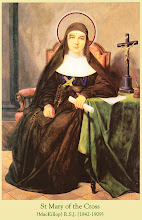
St Mary of the Cross
St Mary, pray for Australia and Australian Catholics; obtain for us deliverance from the unjust actions of bishops and priests; intercede for us that we may for now bear these trials as our apportioned cross, and at length overcome by patience and fidelity, as you did while on earth; now in heaven, be our advocate by your holy merits and glorious suffrages.
To hand over to others what I've contemplated...
Sicut enim majus est illuminare quam lucere solum, ita majus est contemplata aliis tradere quam solum contemplari.
(S. Thomas Aquinatis, S. T., II-II, clxxxviii, 6, resp.)
As for the use of the 1962 Missal as a Formaextraordinaria of the liturgy of the Mass, I would like to draw attention to the fact that this Missal was never juridically abrogated and, consequently, in principle, was always permitted.
… it has clearly been demonstrated that young persons too have discovered this liturgical form, felt its attraction and found in it a form of encounter with the Mystery of the Most Holy Eucharist, particularly suited to them.
What earlier generations held as sacred, remains sacred and great for us too, and it cannot be all of a sudden entirely forbidden or even considered harmful.
— Benedict XVI, Letter to Bishops concerning his Motu Proprio «SummorumPontificum» (7/7/2007)
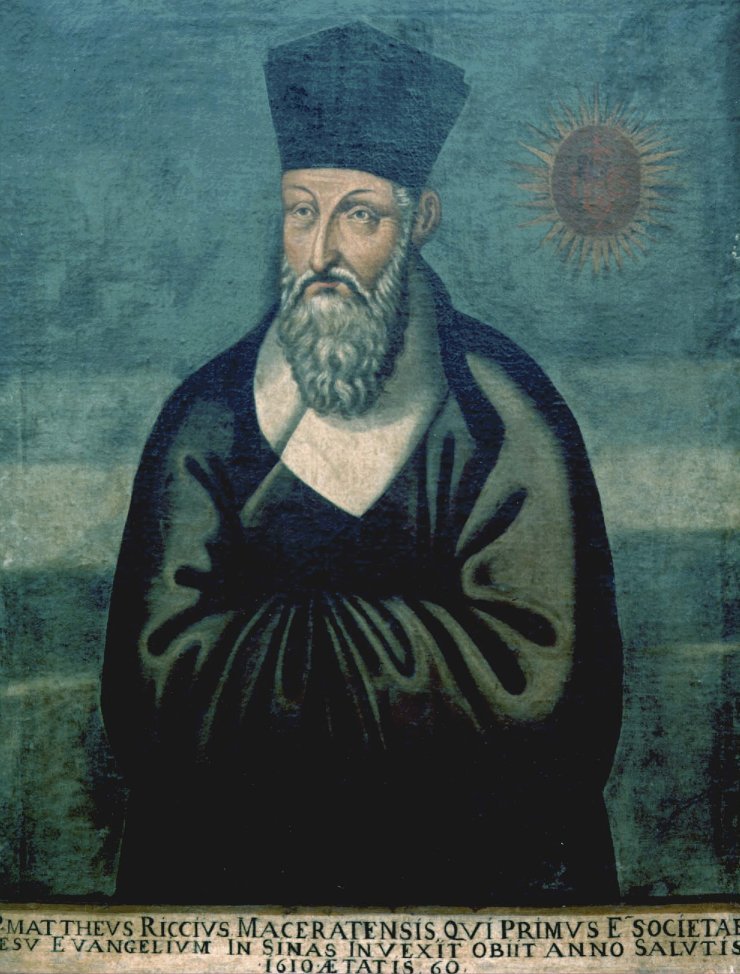
PRAYER FOR THE BEATIFICATION OF MATTEO RICCI, S.J. (1552-1610)
Eternal Father, Who didst send Thine Only-begotten Son into this world to redeem mankind, kindly hear our humble prayer, and grant the favour we ask at the intercession of the Servant of God Father Matteo Ricci, an outstanding preacher of the Gospel by Thy providential plan, one of the first to harvest the field made sacred by Saint Francis Xavier; who, as soon as he became a missionary in China, spread far and wide the teaching of Christ, and wisely guided countless souls along the road to salvation and sanctity; may it please Thee, therefore, to glorify him on earth, as we believe he is glorified in heaven, and to add his name to the list of the Blesseds and Saints; for his elevation to the honours of the altar would give greater glory to Thee and to Thy Church, and greater edification to the Chinese Christians who so courageously live their faith and their charity. Through the same Christ our Lord. Amen.
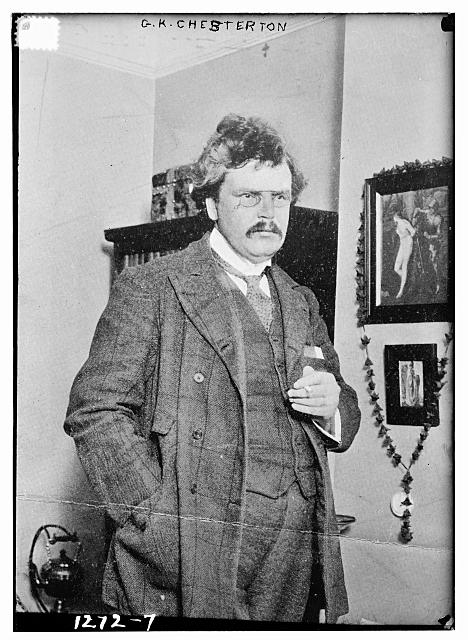
Prayer for the Intercession of G. K. Chesterton
God our Father, Thou didst fill the life of Thy servant Gilbert Keith Chesterton with a sense of wonder and joy, and gave him a faith which was the foundation of his ceaseless work, a hope which sprang from his enduring gratitude for the gift of human life, and a charity towards all men, particularly his opponents. May his innocence and his laughter, his constancy in fighting for the Christian faith in a world losing belief, his lifelong devotion to the Blessed Virgin Mary, and his love for all men, especially for the poor, bring cheerfulness to those in despair, conviction and warmth to lukewarm believers, and the knowledge of Thee to those without faith. We beg Thee to grant the favours we ask through his intercession, [and especially for …,] so that his holiness may be recognized by all, and the Church may proclaim him Blessed. Through Christ our Lord. Amen.
Pater, Ave, Gloria, Credo.
Pastore Tedesco - Santo Subito!
Eternal and Almighty God, who didst inspire in the heart of thy servant Pope Benedict XVI the sincere desire to encounter thee and announce thee, becoming a humble “co-operator with the truth” (cf. 3 John 1:8) and offering himself as a servant, for Christ and for the Church, make me also know how to love the Church of Christ and to be able to follow in my life the eternal truths that she proclaims. Deign, Lord, to glorify thy servant, Pope Benedict XVI, and grant, through his intercession, the favour I now ask of thee (mention your petition). Through the same Christ our Lord. Amen.
[Today,] we honor your prophet, Joshua, O Lord: * By his prayers save our souls.
Chosen by Moses to lead the people of God into the promised land, * you led them through the waters of the Jordan. * Thus, by your actions as well as by your name * you foreshadow the saviour, who leads us through the waters of baptism. * O holy prophet, Joshua, * beg him now to save our souls.
PRAY FOR THE REUNION OF ANGLICANS WITH THE SEE OF ROME
V/. Pray for them, O Holy Mother of God.
R/. That they may be one in the Church of thy Son.
The Collect for the Anglican Use
O HOLY Ghost the Lord, who on Pentecost gavest the Church the gift of tongues that Christ might be known, loved and served by peoples of divers nations and customs: watch over the Anglican heritage within thy Church, we pray thee, that, led by thy guidance and strengthened by thy grace, that Use may find such favor in thy sight that its people may increase both in holiness and number, and so show forth thy glory; who livest and reignest with the Father and the Son, one God world without end. Amen.
the extraordinary form of the roman rite in perth, western australia
The Traditional Latin Mass is celebrated daily at St Anne's, Perth, Western Australia, which is the official Latin Mass Chaplaincy of the Archdiocese of Perth. The following details may, however, be out of date: Sunday Masses are at 7.30am (Low), 9.15am (Missa Cantata) and 11.15am (Low). Confessions are heard before all Sunday and weekday Masses, and afterwards if need be. Weekly programme includes sung Mass on feast days, Holy Hours with Benediction of the Most Blessed Sacrament, and the Holy Rosary before all Masses.
Sites I Refer To (not that I endorse all they contain...)