Tuesday, December 24, 2019

Matins and Midnight Mass

Suddenly the organ burst into a triumphal march; the Abbot entered the nave, preceded by two masters of ceremonies; between them walked the crosier-bearer, wearing an alb and on his shoulders the vimpa, a scarf of white satin lined with cherry-coloured silk, in the ends of which he clasped the stem of the crosier. The Abbot, whose long black train was borne by a novice, gave his blessing right and left as he passed to the kneeling throng of worshippers who crossed themselves.
He knelt at the prie-dieu, and his whole court of attendants, cope-men, and religious vested in albs, likewise knelt, so that all one saw was a golden note of interrogation overlooking a field of dead moons, the crosier dominating the big white tonsures.
At a signal from Father d’Auberoche all arose and the Abbot went to his throne, on each side of which his assistant deacons took their place; whereupon the prie-dieu was removed.
The choir was full, two upper rows of stalls being occupied by the professed and the novices in their black cowls, while in the lower ones were the lay-brothers in brown cowls. Below them again, on benches, were the choir boys in bright red cassocks; and in the empty space between, limited though this was, the servers deployed with absolute precision, crosier-bearer and candle-bearer and mitre-bearer all performing their duties without the slightest hitch.
The Abbot began the Office.
As Father Felletin had foreseen, Durtal was at once fascinated by the Invitatorium. It was the usual Psalm, Venite, exultemus, summoning Christians to adore their Lord, with its refrain, sometimes short “Christ is born to us”; sometimes long, “Christ is born to us; O, come, let us worship.”
This splendid psalm, with its tender half mournful melody, tells of Creation, and of God’s rights; the wondrous works of God are set forth and His lament at the ingratitude of His people.
The. voice of the cantors recounted measuredly His marvels: “The sea is His and He made it, and His hands prepared the dry land. O, come let us worship and fall down and kneel before the Lord, our Maker, for He is the Lord our God, and we are the people of His pasture and the sheep of His hand.” Then the choir took up the refrain, “Christ is born to us, O come, let us worship.”
Then, after the glorious hymn of St. Ambrose, Christe Redemptor, the Office proper began. It was divided into three “vigils” or nocturns, composed of psalms, lessons and responses. These nocturns had a meaning. Durandus, the thirteenth-century Bishop of Mende, explained them clearly in his Rationale. The first nocturn deals allegorically with the period before the Law given to Moses; and, in the Middle Ages, whilst it was sung, the altar was hidden by a black veil to symbolize the gloom of the Mosaic Law and the sentence pronounced on man in Eden. The second nocturn shows the time that elapsed since the written Law, and then the altar was hidden with a white veil because the prophecies of the Old Testament already shed a sort of furtive light on fallen mankind. The third nocturn sets forth the love of the Church and the mercies of the Comforter, and the altar was draped with purple, an emblem of the Holy Ghost and of the Blood of our Saviour.
The service proceeded with alternate psalmody and chanting. The whole was splendid, but the finest was found in the Lessons and their Responses. A monk, led by a master of ceremonies, came down from his stall and took his place at the lectern in the middle of the choir; there he chanted or recited, for it was not exactly the one nor yet the other. The tone was even, the melody slow and somewhat plaintive, sounding like a lullaby of the soul, and breaking off abruptly on a mournful note, like a tear that falls.
“Ah! Dom Felletin was right,” thought Durtal. “It is a grand service for a grand night. While the old world is sinning or sleeping, the Messiah is born and the shepherds, dazzled, come to adore Him; and at the same moment those men of mystery, those dream-figures foretold long before St. Matthew by Isaiah and the Psalmist, set out from one knows not where and race on dromedaries through the night, led by a star, to adore in their turn a Child, and then to disappear along a road other than that by which they came.

“To what a mass of controversy has this star given rise! But to all the blundering hypotheses of our astronomers I prefer the view the Middle Ages borrowed from the Apocryphal Book of Seth and which we find in St. Epiphanius and in the Imperfect Commentary on St. Matthew. They thought that the Star of Bethlehem that appeared to the Magi showed the Child seated beneath a Cross in a glowing sphere and most of the early masters depict the star thus, for instance, Roger Van der Weyden, in one of the panels of his marvellous Nativity in the museum of Berlin.”


Durtal’s reflections were cut short by monks moving to and fro in the choir. The Abbot was being vested. A master of ceremonies, standing in front of the altar, removed one by one the vestments placed on it, the alb, the girdle, the stole and the cope, and handed them to novices who one after another presented them to the deacons at the throne, first bending the knee to the Abbot.
When his long black cappa had been removed and he was robed in his white alb, Dom Anthime Bernard looked taller still, as from the steps of his throne he overlooked the entire church and, after he had put on the girdle, as he moved his arm to adjust the pectoral cross, the ring on his finger sparkled in the light of the tapers. At a sign from Père d’Auberoche the mitre-bearer, covered with a shawl similar to that of the crosier-bearer, approached the throne, and, having donned the stole and cope, the abbot intoned the Te Deum.
Here Durtal was obliged to moderate his enthusiasm, for he remembered other Te Deums heard in the great Paris churches; he said to himself that, for instance at St. Sulpice, the hymn sounds far grander, sung to the blare of a great organ by a full choir reinforced by the whole body of the seminarists. The “Royal” Magnificat, also, had a majesty and a fullness lacking to the jejune and feeble settings used by Solesmes. But, indeed, to give such splendid pieces their full significance, it would need hundreds of voices, and in what monastery could one hope to find so large a choir?
His disenchantment, however, did not last long, for the Abbot, surrounded by cope-men, thurifer and candlebearer, began to chant the genealogy of Christ from a Gospel-book held by a monk in his two hands and resting against his forehead; the strange, sad monotonous cadences seemed to evoke a procession of the Patriarchs who each at the mention of his name flashed past, and then sank back into the gloom.
When the reading was at an end and whilst the Abbot was changing his cope for a chasuble the choir sang the short hymn, Greek in origin, the Te decet laus and the Office closed with the prayer of the day and the Benedicamus Domino.
The four principal cantors who had gone to robe themselves in the sacristy now returned and Dom Ramondoux, the Precentor, had stuck in a ring near his seat surmounted by a statuette of St. Bénigna the copper rod which was his sign of office.
He and the others were now seated on low-backed benches, just inside the communion rails at the entrance to the choir and opposite the altar. Thus their coped backs were turned to the public, backs splendid in shimmering velvet, interwoven with silver and with cherry-silk, on which the Gothic monograms of Christ and our Lady were embroidered in gold.
Leaving their benches and standing in the middle of the choir, they chanted the Introit, whilst the Abbot, attended by his court, began Mass,
When they had reached the Kyrie Eleison, the congregation joined in, the girls and boys of the village being led by the parish-priest. The same happened at the Creed.
Durtal, for a moment, seemed to get a clear glimpse into the past, and to see and hear villagers singing the melodies of St. Gregory in the Middle Ages. Obviously such chanting was not as perfect as that at Solesmes, but it was something different. It lacked art, but it had vim; it was an outburst, an effusion of the soul of the people, the fervour of a mob that for a moment is touched. It was as if, for a few minutes, an early Church had come to life, in which the people, throbbing in unison with its priests, were truly taking a part in the ceremonies and praying with them and using the same tongue and the same musical dialect, and this, for this to happen in our own times seemed so utterly unlooked-for that Durtal thought that he must once more be dreaming.
Thus the Mass went on while the organ flooded the church with sound. The Abbot stood before the altar, or took his seat on the throne; he was shod and gloved in white; he was now bare-headed, then wearing the gold mitre and then the precious mitre all edged with gems; his hands were now clasped, now held the crosier, then restored it to the kneeling novice who kissed his ring. The smoke of incense hid the altar-lights and the two lamps on either side of the relics each looked like a topaz glowing in the blue mist. Through this perfumed haze which was rising to the roof could be seen a motionless figure in gold at the foot of the altar steps; of the sub-deacon holding up before his eyes the paten veiled, waiting for the end of the Paternoster; he was the symbol of the Old Testament, of the Synagogue which had not eyes to see the accomplishment of the mysteries. And the Mass went on, all the serving boys kneeling in a row with lighted torches in their hands during the Elevation which the sound of bells proclaimed to the night outside; finally, after the Agnus Dei, the Abbot gave the Pax to the deacon, who went down the steps and gave it in turn to the sub-deacon, who, preceded by the master of ceremonies, went to the stalls and there embraced the senior monk who transmitted it to the others, each leaning over each other’s shoulders and then bowing to each other with hands joined.
And now Durtal watched no longer; the moment of Communion was at hand and in the apse the little bell was ringing loudly; there was a stir among the novices and the lay-brothers who began to range themselves in double file; the deacon chanted the Confiteor in a tone hardly expressive of contrition, and, while two monks held an outstretched long white cloth, all knelt down to communicate. Then the Abbot came down the altar steps with all his following and gave the Blessed Sacrament to the faithful, while behind him stood the serving boys, each holding a torch.
A noise of rough boots and clogs filled the church, making the Abbot’s voice almost inaudible; one could catch the words “Corpus Domini,” but the rest was lost in the clatter of feet; coming back to his place, Durtal forgot the Liturgy and the Mass, caring only to implore God to forgive him his sins and deliver him from evil. He came back to the world when he heard the Abbot chanting the Pontifical blessing.
“Sit nomen Domini benedictum.”
And all the monks responded:
“Ex hoc nunc et usque in sæculum.”
“Adjutorium nostrum in nomine Domini.”
“Qui fecit cælum et terram.”
And the Abbot, staff in hand, gave the blessing:
“Benedicat vos omnipotens Deus, Pater et Filius et Spiritus Sanctus.”
And at each invocation of the three Persons he made the sign of the cross over the people, to his left, towards the centre, and to his right.

— from Chapter VII of The Oblate (1903) by J.-K. Huysmans

Sunday, November 10, 2019

Prayers for a Desecrated Church

A priest I know happily followed a suggestion to add these prayers at Mass today, and I trust many, many more did, all over the world – even at side altars in St Peter’s, one hopes; indeed, especially there.

For the Reconciliation of a Church or Cemetery 
Oratio 
Deus, qui dixísti: Domus mea domus oratiónis vocábitur: domum istam infidélium spurcítiis contaminátam mundáre et sanctificáre dignéris; et ómnium preces et vota hoc in loco ad te clamántium cleménter exáudias, et benígnus suscípias. Per Dóminum. 
(O God, who hast said: My house shall be called a house of prayer*: deign to cleanse and hallow that house contaminated by the filth of infidels; and both clemently hear and benignly receive the prayers and vows of all crying to thee in this place. Through our Lord…)  
 * Is. 56, 7; Matt. 21, 13; Marc. 11, 17; cf. Luc. 19, 46
Secreta 
Hæc hóstia, quǽsumus, Dómine, et locum istum ab ómnibus immundítiis expúrget: et supplicatiónes nostras semper et ubíque reddat tibi accéptas. Per Dóminum. 
(May this sacrifice, we beg, Lord, both purge that place from all uncleannesses, and render our supplications always and everywhere acceptable unto thee. Through our Lord…) 
Postcommunio 
Percipiéntes, Dómine, múnera salútis ætérnæ súpplices exorámus: ut templum hoc et cœmetérium, ab infidélium inquinaméntis emundátum, benedictióne tua máneat sanctificátum; et péctora nostra ab omni sorde vitiórum alienáta tibíque devóta semper exsístant. Per Dóminum. 
(Securing, Lord, the gifts of everlasting salvation, begging we pray thee: that this temple and cemetery†, cleansed from the filth of infidels, may remain sanctified by thy blessing, and may our hearts exist alienated from every filth of vices and ever devoted unto thee. Through our Lord…)
† St Peter’s Basilica is built over an early Christian cemetery – indeed, St Peter himself is buried directly below the high altar. 

Sunday, November 3, 2019

Senatus Populusque Martialis

The Pope-of-Mars-elect (or should that be the Pope-elect-of-Mars?) has graciously vouchsafed to inform me as his unworthy servant and private secretary that, once his reign begins after touch-down, he will be assisted in his temporal duties by several officials and institutions sensibly based upon those used in the Eternal City down through the ages. After all, the Papal States on Earth were known for their good governance, weren’t they? 

Oh dear… anyway, the Empire worked well, till it declined and fell, and the same is true of the Republic before that, not to mention the present Italian Republic and former Italian Kingdoms and petty states too, as exemplified by many famous political theorists and statesmen such as Berlusconi, Mussolini and Machiavelli. Hmmm… But in any case, Mars will certainly be run better – it won’t be very difficult to surpass the current low level of governance on Earth!

Sancte Michaël Archangele, defende nos in prœlio!

By the way, another proposed decision of His future Holiness ought be mentioned, prior to its official promulgation: idle googling having revealed the embarrassing fact that the planet Mars is associated by some bad folk with Azazel (to whom the scapegoat was driven off into the desert), all such nasty nonsense is going to be quashed and replaced with St Michael Archangel as Patron and Guardian of Mars.

Phobos eclipsing Deimos in real time

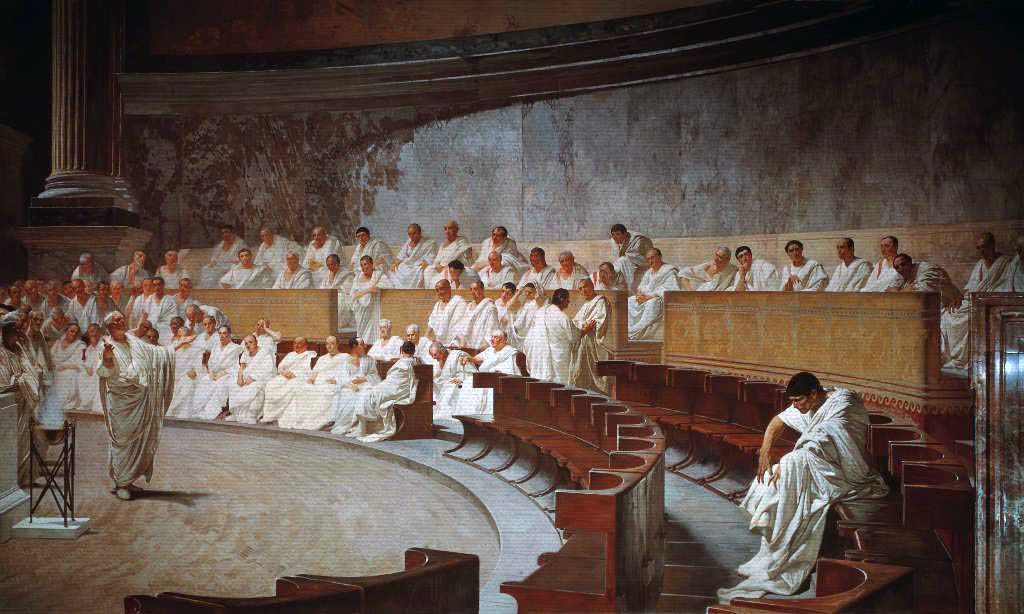
But to return to what is the topic of this update: to advise His Holiness in matters political, and in honour of the two moons of the Red Planet, two Consuls, the Deimotic and the Phobic, will be appointed each year; suffect Consuls will be appointed as replacements as needed, taking the place of one or the other. Likewise, in the New City, or Fourth Rome (the first three* having been on the Third Planet, naturally the fourth must be on the Fourth), there will be established a Martian Senate of six hundred, the lists of its members to be wisely chosen and regularly revised by the diligence of the Holy Father, though all such need not attend sessions – it being understood that Senators, as in Old Rome during the Empire, should attend the House only when they have agreed to vote placet (“yes”), just as is expected in Roman synods today.

There’s always one who won’t vote how they’re expected to...

[* For the moment, let us not worry about including in this count either the multifarious localities named Rome in sixteen of the United States of America, or the Paris Métro station of the same name.]

In addition to this, it will now be clear why St Paul VI in a pathetic yet ultimately prophetic gesture all but abandoned the Papal Nobility, as that has left open a void (quod Natura abhorret) for the soon-to-be-elected Supreme Pontiff of Mars to fill by creating many new Princes and Princesses, Dukes and Duchesses, Marquises and Marquises, Counts and Countesses, and Barons and Baronesses of the Holy Martian Church – some titles to be hereditary, some to be granted ad personam (depending on the merits displayed and/or level of financial contribution provided). Similarly, various equestrian orders will be established (for knighthoods, only modest talents or fees will suffice).

A Martian in native dress

It goes without saying that all of these serried ranks will be merely nominal dignities and sinecures of the sort beloved by those Catholic laity most likely to seek a one-way ticket to Mars. Of course, all actual and meaningful power of governance, temporal as well as spiritual, will remain in the Martian Sovereign Pontiff: after all, the Church has long recognised that the only sure, safe and certain guarantee of orthodoxy and the tranquillity of order is to ensure that the First See is judged by none, no matter what. What could possibly go wrong?

For utterly the same reason, the right of electing the Sovereign Pontiff (so frivolously and so foolishly exercised on Earth, as history sadly teaches) will be taken away from the Cardinals, and each Pope of Mars will simply name his own successor in his last will and testament, to be read out to the Cardinals in Conclave assembled after the Pope’s demise, but kept meanwhile in pectore, so as to preserve the traditional surprise of the announcement Habemus Papam by the Dean of the College of Cardinals. Prior to this, the incineration of the late Pope’s will will supply the necessary very small puff of smoke, oxygen being at a premium on Mars.

A Prince-Bishop (of Andorra, not Mars)

Finally, as settlements spread across Mars, the principle of subsidiarity dictates that local forms of government be introduced: and for this reason, in due season ecclesiastical principalities large and small will be established under the rule of Prince-Archbishops, Prince-Bishops, Prince-Abbots and Princess-Abbesses.

Speaking of Princess-Abbesses, it is good to see that consecrated women will assert their lawful authority on one planet at least; indeed, what on Earth has for many centuries past been granted only to Carthusian nuns will be extended on Mars to all women in solemn vows and Papal enclosure – they will all be consecrated as deaconesses. Amazonis Planitia is one of the youngest and smoothest of the great northern plains of Mars, after all.

Votive Mass for Oxygen

Let every thing that hath breath : praise the Lord. 
— Ps, 150, 6 (Ordinariate Psalter)

We should always work as if all depends on us, whilst ever praying knowing that all depends on God – to this end, for the benefit of future Martian Catholics, I subjoin a proposed Votive Mass from the forthcoming editio princeps of the Missale Martianum, in its native Latin first, to which is appended an unofficial English translation. It will be noted that the orations are of the neo-Gallican type, being pastiches of Scriptural texts, which may betray a Baroque tendency in their compiler!

******

Missa votiva pro oxygenio
ex Missali Martiano

Introitus Sap. 2, 1. 2. 3
Exiguum est tempus vitæ nostræ, quoniam fumus flatus est in naribus nostris: et transibit vita nostra tamquam vestigium nubis, et sicut nebula dissolvetur. (T.P. Alleluja, alleluja.)
Ps. 38, 14 Remitte mihi, ut refrigerer priusquam abeam et amplius non ero.
V. Gloria Patri.

Non dicitur Gloria in excelsis.

Oratio Cf. Dan. 5, 23 & 2 Mach. 7, 23
Deus, mundi Creator, qui habes flatum nostrum in manu tua, et omnes vias nostras: spiritum nostrum iterum cum misericordia redde et vitam. Per.

Lectio Danielis Prophetæ. 10, 2-19

In diebus illis ego Daniel lugebam trium hebdomadarum diebus: panem desiderabilem non comedi, et caro et vinum non introierunt in os meum, sed neque unguento unctus sum, donec complerentur trium hebdomadarum dies. Die autem vigesima et quarta mensis primi, eram juxta fluvium magnum, qui est Tigris. Et levavi oculos meos, et vidi: et ecce vir unus vestitus lineis, et renes ejus accincti auro obrizo: et corpus ejus quasi chrysolithus, et facies ejus velut species fulguris, et oculi ejus ut lampas ardens: et brachia ejus, et quæ deorsum sunt usque ad pedes, quasi species aëris candentis: et vox sermonum ejus ut vox multitudinis. Vidi autem ego Daniel solus visionem: porro viri qui erant mecum non viderunt, sed terror nimius irruit super eos, et fugerunt in absconditum. Ego autem relictus solus vidi visionem grandem hanc: et non remansit in me fortitudo, sed et species mea immutata est in me, et emarcui, nec habui quidquam virium. Et audivi vocem sermonum ejus: et audiens jacebam consternatus super faciem meam, et vultus meus hærebat terræ. Et ecce manus tetigit me, et erexit me super genua mea, et super articulos manuum mearum. Et dixit ad me: Daniel vir desideriorum, intellige verba quæ ego loquor ad te, et sta in gradu tuo: nunc enim sum missus ad te. Cumque dixisset mihi sermonem istum, steti tremens. Et ait ad me: Noli metuere, Daniel: quia ex die primo, quo posuisti cor tuum ad intelligendum ut te affligeres in conspectu Dei tui, exaudita sunt verba tua: et ego veni propter sermones tuos. Princeps autem regni Persarum restitit mihi viginti et uno diebus: et ecce Michaël, unus de principibus primis, venit in adjutorium meum, et ego remansi ibi juxta regem Persarum. Veni autem ut docerem te quæ ventura sunt populo tuo in novissimis diebus, quoniam adhuc visio in dies. Cumque loqueretur mihi hujuscemodi verbis, dejeci vultum meum ad terram, et tacui. Et ecce quasi similitudo filii hominis tetigit labia mea: et aperiens os meum locutus sum, et dixi ad eum, qui stabat contra me: Domine mi, in visione tua dissolutæ sunt compages meæ, et nihil in me remansit virium. Et quomodo poterit servus domini mei loqui cum domino meo? nihil enim in me remansit virium, sed et halitus meus intercluditur. Rursum ergo tetigit me quasi visio hominis, et confortavit me, et dixit: Noli timere, vir desideriorum: pax tibi confortare, et esto robustus. Cumque loqueretur mecum, convalui, et dixi: Loquere, domine mi, quia confortasti me.

Graduale Ps. 103, 29-30
Auferes spiritum eorum, et deficient, et in pulverem suum revertentur.
V. Emittes spiritum tuum, et creabuntur; et renovabis faciem terræ.

Alleluja, alleluja.
V. Job 32, 20 Aperiam labia mea, et loquar, et respirabo paululum.
Alleluja.

Post Septuagesimam, omissis Alleluja et versu sequenti, dicitur:

Tractus Job 33, 4; 27, 3; 32, 20
Spiritus Dei fecit me, et spiraculum Omnipotentis vivificavit me.
V. Quia donec superest halitus in me, et spiritus Dei in naribus meis.
V. Aperiam labia mea, et loquar, et respirabo paululum.

Tempore autem paschali omittitur graduale, et ejus loco dicitur:

Alleluja, alleluja.
V. Job 27, 3 Quia donec superest halitus in me, et spiritus Dei in naribus meis.
Alleluja.
V. Job 32, 20 Aperiam labia mea, et loquar, et respirabo paululum.
Alleluja.

Sequentia sancti Evangelii secundum Lucam. 7, 11-16

In illo tempore: Ibat Jesus in civitatem quæ vocatur Naim: et ibant cum eo discipuli ejus et turba copiosa. Cum autem appropinquaret portæ civitatis, ecce defunctus efferebatur filius unicus matris suæ: et hæc vidua erat: et turba civitatis multa cum illa. Quam cum vidisset Dominus, misericordia motus super eam, dixit illi: Noli flere. Et accessit, et tetigit loculum. (Hi autem qui portabant, steterunt.) Et ait: Adolescens, tibi dico, surge. Et resedit qui erat mortuus, et cœpit loqui. Et dedit illum matri suæ. Accepit autem omnes timor: et magnificabant Deum, dicentes: Quia propheta magnus surrexit in nobis: et quia Deus visitavit plebem suam.

Offertorium Is. 42, 5 & 8a
Hæc dicit Dominus Deus, creans cælos, et extendens eos; formans terram, et quæ germinant ex ea, dans flatum populo qui est super eam, et spiritum calcantibus eam: ego Dominus, hoc est nomen meum. (T.P. Alleluja.)

Secreta Cf. Dan. 10, 17-18 & Is. 42, 5 & Ps. 106, 22
Domine Deus, cujus angelus Danielem prophetiam, cum halitum ejus intercluderetur, confortavit: da, quæsumus, flatum et spiritum populo tuo, ut tibi sacrificent sacrificium laudis. Per.

Præfatio communis.

Communio Gen. 2, 7
Dominus Deus inspiravit in faciem hominis spiraculum vitæ, et factus est homo in animam viventem. (T.P. Alleluja.)

Postcommunio Cf. Act. 17, 24 & 25 & 28
Deus, qui fecisti mundum et omnia quæ in eo sunt: da omnibus, quæsumus, vitam et inspirationem et omnia; in quo vivimus et movemur et sumus. Per.

******

Votive Mass for Oxygen
from the Martian Missal

Introit Wis. 2, 1. 2. 3
The time of our life is short, for the breath in our nostrils is smoke: and our life shall pass away as the trace of a cloud, and shall be dispersed as a mist. (P.T. Alleluia, Alleluia.)
Ps. 38, 14 O forgive me, that I may be refreshed, before I go hence, and be no more.
V. Glory be.

The Gloria in excelsis is not said.

Collect Cf. Dan. 5, 23 & 2 Mach. 7, 23
O God, Creator of the world, who hast our breath in thy hand, and all our ways: restore to us again in mercy both breath and life. Through.

A lesson from the Prophet Daniel. 10, 2-19

In those days: I Daniel mourned the days of three weeks. I ate no desirable bread, and neither flesh, nor wine entered into my mouth, neither was I anointed with ointment: till the days of three weeks were accomplished. And in the four and twentieth day of the first month I was by the great river which is the Tigris. And I lifted up my eyes, and I saw: and behold a man clothed in linen, and his loins were girded with the finest gold: and his body was like the chrysolite, and his face as the appearance of lightning, and his eyes as a burning lamp: and his arms, and all downward even to the feet, like in appearance to glittering brass: and the voice of his word like the voice of a multitude. And I Daniel alone saw the vision: for the men that were with me saw it not: but an exceeding great terror fell upon them, and they fled away, and hid themselves. And I being left alone saw this great vision: and there remained no strength in me, and the appearance of my countenance was changed in me, and I fainted away, and retained no strength. And I heard the voice of his words: and when I heard, I lay in a consternation, upon my face, and my face was close to the ground. And behold a hand touched me, and lifted me up upon my knees, and upon the joints of my hands. And he said to me: Daniel, thou man of desires, understand the words that I speak to thee, and stand upright: for I am sent now to thee. And when he had said this word to me, I stood trembling. And he said to me: Fear not, Daniel: for from the first day that thou didst set thy heart to understand, to afflict thyself in the sight of thy God, thy words have been heard: and I am come for thy words. But the prince of the kingdom of the Persians resisted me one and twenty days: and behold Michael, one of the chief princes, came to help me, and I remained there by the king of the Persians. But I am come to teach thee what things shall befall thy people in the latter days, for as yet the vision is for days. And when he was speaking such words to me, I cast down my countenance to the ground, and held my peace. And behold, as it were the likeness of a son of man touched my lips: then I opened my mouth, and spoke, and said to him that stood before me: O my lord, at the sight of thee my joints are loosed, and no strength hath remained in me. And how can the servant of my lord speak with my lord? for no strength remaineth in me, moreover my breath is stopped. Therefore he that looked like a man touched me again, and strengthened me. And he said: Fear not, O man of desires, peace be to thee: take courage and be strong. And when he spoke to me, I grew strong: and I said: Speak, O my lord, for thou hast strengthened me.

Gradual Ps. 103, 29b-30
Thou shalt take away their breath, and they shall fail, and shall return to their dust.
V. Thou shalt send forth thy spirit, and they shall be created: and thou shalt renew the face of the earth.

Alleluia, alleluia.
V. Job 32, 20 I will open my lips, and I will speak and take breath a little.
Alleluia.

After Septuagesima, omitting Alleluia and the verse following, is said:

Tract Job 33, 4; 27, 3; 32, 20
The spirit of God made me, and the breath of the Almighty gave me life.
V. For as long as breath remaineth in me, and the spirit of God in my nostrils.
V. I will open my lips, and I will speak and take breath a little.

In Paschal Time, however, the gradual is omitted, and in its place is said:

Alleluia, alleluia.
V. Job 27, 3 For as long as breath remaineth in me, and the spirit of God in my nostrils.
Alleluia.
V. Job 32, 20 I will open my lips, and I will speak and take breath a little.
Alleluia.

The continuation of the holy Gospel according to Luke. 7, 11-16

At that time: Jesus went into a city that is called Naim; and there went with him his disciples, and a great multitude. And when he came nigh to the gate of the city, behold a dead man was carried out, the only son of his mother; and she was a widow: and a great multitude of the city was with her. Whom when the Lord had seen, being moved with mercy towards her, he said to her: Weep not. And he came near and touched the bier. And they that carried it, stood still. And he said: Young man, I say to thee, arise. And he that was dead, sat up, and began to speak. And he gave him to his mother. And there came a fear on them all: and they glorified God, saying: A great prophet is risen up among us: and, God hath visited his people.

Offertory Is. 42, 5 & 8a
Thus saith the Lord God, creating the heavens, and stretching them out: establishing the earth, and the things that spring out of it: giving breath to the people upon it, and spirit to them that tread thereon: I the Lord, this is my name. (P.T. Alleluia.)

Secret Cf. Dan. 10, 17-18; Is. 42, 5; Ps. 106, 22
Lord God, whose angel didst strengthen the prophet Daniel when his breath was stopped: give, we beg, breath and spirit to thy people, that to thee they may sacrifice the sacrifice of praise. Through.

The Common Preface.

Communion Gen. 2, 7
The Lord God breathed into the face of man the breath of life, and man became a living soul. (P.T. Alleluia.)

Postcommunion Cf. Act. 17, 24 & 25 & 28
O God, who didst make the world and all things that are therein: give to all, we beg, life, and breath, and all things; in whom we live and move and are. Through.