Showing posts with label Australian Personal Ordinariate. Show all posts

Friday, July 5, 2013

Novo cedat ritui

The Marylebone Ordinariate Group blog has a very interesting account of the new form of Mass for use in the Ordinariates for Anglicans that have come into full communion with the Catholic Church; the full text thereof is not yet available (doubtless to prevent manic bloggers dissecting it ruthlessly and impiously), but here at least are some pursuant extracts about it:
The full form of the Ordinariate Use is not yet freely available. However, we do know that... it is heavily based on an hieratic English translation of the Extraordinary Form of the Roman Rite. Elements that have been retained include the Prayers at the Foot of the Altar, consisting notably of the psalm, Judica me Deus, and the Confiteor; the fuller Offertory prayers taken from the Missal of John XXIII; traditional gestures and liturgical action during the Canon including most importantly the genuflection of the celebrant both before and after the elevation of the Host and the Precious Chalice; the triple Domine non sum dignus; and finally the Last Gospel taken from the Prologue of the Gospel of St. John. 
... the Ordinariate Use has taken a number of prayers and actions from the Ordinary Form, such as the General Intercessions (though heavily regulated), the option of using the Second Eucharistic Prayer (translated into hieratic English – bonkers, we know!) and the inclusion of the last blessing within the Mass as opposed to after the Ite, Missa est
Crucially the Ordinariate Use incorporates some elements of the Book of Common Prayer. Whether it be the 'Humble Crumble' [the Prayer of Humble Access] or the Collect for Purity, it is essential that the Ordinariate Use preserve the linguistic and spiritual treasures written originally in English by the Christian communities of England that succeeded the Catholic Church as the dominant religion in the land. These prayers are indisputably part of what Anglican Patrimony in any physical sense must consist of. 
Despite the many issues the problem of optionality has created since the introduction of the Mass of Paul VI, the Ordinariate Use has retained a substantial amount of choice over which aspects are used at each celebration of Mass. Many of those distinctive elements drawn from the Extraordinary Form are optional, from the Prayers at the Foot of the Altar before Mass through to the reading of the Last Gospel after its conclusion.
It is not surprising that the new form of the Ordinariate Mass (its original form being that in the Book of Divine Worship, drawn up in the 1980's for groups of Anglicans coming into full communion in the U.S.A.) is based in large part on the immemorial forms of the Roman Rite as expressed in the traditional Latin Mass, done into Cranmerian English – for Anglo-Catholics have used various English versions of the Roman Missal ever since the nineteenth century.  Just as at a TAC service here in Launceston that I attended years ago (when Anglicanorum cœtibus was first announced), so at the Ordinariate Mass I attended in Sydney the prayers at the foot of the altar were used: it is part of Anglo-Catholic worship. Would that such adjuncts to Divine service might be more widely restored throughout Holy Church!

Wednesday, June 19, 2013

Liturgical Calendar of the Australian Ordinariate

In between reading up on Byzantine Rite liturgiology (I have been making my way through Taft, as well as sundry liturgical works), I have noticed that Australia's Personal Ordinariate of Our Lady of the Southern Cross has published its official liturgical calendar.

UPDATE:
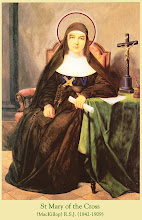
Note that the Ordinariate of course observes all celebrations proper to the Calendar for the Latin Rite dioceses of Australia, such the Solemnities of St Patrick, Our Lady Help of Christians, and St Mary of the Cross (Mackillop).

Herewith, my transcription of the celebrations proper to the Ordinariate itself, first noting that it includes 32 optional memorials (1 downgraded from memorial), 4 memorials (3 upgraded from optional), 2 feasts (one upgraded from memorial) and 1 solemnity:

12 January - St. Benedict Biscop, abbot - optional memorial
13 January - St. Kentigern (Mungo), bishop - optional memorial
19 January - St. Wulfstan, bishop - optional memorial
1 February - St. Brigid of Kildare, abbess - optional memorial
4 February - St. Gilbert of Sempringham, religious - optional memorial
1 March - St. David, bishop - optional memorial
16 April - St. Magnus of Orkney, martyr - optional memorial
19 April - St. Alphege, bishop and martyr - optional memorial
21 April - St. Anselm of Canterbury, bishop and doctor of the Church - memorial
23 April - St George, martyr – memorial
4 May - The English Martyrs - optional memorial
19 May - St. Dunstan, bishop - optional memorial
27 May - St Augustine of Canterbury, bishop and Patron – feast
8 June - St William of York, bishop – optional memorial
9 June - St. Columba, abbot - optional memorial
15 June - [Anniversary of the erection of the Ordinariate of Our Lady of the Southern Cross, by Pope Benedict XVI, 2012] – optional memorial [sic]
16 June - St. Richard of Chichester, bishop - optional memorial
20 June - St. Alban, martyr - optional memorial
22 June - St. John Fisher, bishop, and St. Thomas More, martyrs - memorial
23 June - St. Etheldreda (Audrey), virgin - optional memorial
1 July - St. Oliver Plunkett, bishop and martyr - optional memorial
15 July - St. Swithun, bishop - optional memorial
30 August - St. Margaret Clitherow, St. Anne Line and St. Margaret Ward, martyrs - optional memorial
31 August - St. Aidan of Lindisfarne, bishop, and Saints of Lindisfarne - optional memorial
1 September - Our Lady of the Southern Cross, titular celebration of the Australian Ordinariate - solemnity
4 September - St. Cuthbert, bishop - optional memorial
19 September - St. Theodore of Canterbury, bishop - optional memorial
24 September - Our Lady of Walsingham – feast
3 October - St. Thomas of Hereford, bishop - optional memorial
8 October – [optional memorials transferred from 9 October]
9 October - Bl John Henry Newman, priest – memorial
10 October - St. Paulinus of York, bishop - optional memorial
12 October - St. Wilfrid, bishop - optional memorial
13 October - St. Edward the Confessor - optional memorial
19 October - St. Frideswide, abbess - optional memorial
26 October – St. Chad and St. Cedd, bishops - optional memorial
7 November - St. Willibrord, bishop - optional memorial
17 November - St. Elizabeth of Hungary, religious, or St. Hilda, abbess, or St. Hugh of Lincoln, bishop - optional memorials
20 November - St. Edmund, martyr - optional memorial
1 December - St. Edmund Campion, priest and martyr - optional memorial

The Ordinariate, now just over a year old, has thirteen priests (with an upcoming diaconal ordination in early July); and doubtless (no figures are available) a small but goodly number of lay members. One trusts that God will grant the increase. Forward the Ordinariate!

Monday, May 27, 2013

Sydney Ordinariate Parish UPDATE

I received the following kind email to-day:

Kevin said… 
I ran into this site by chance and am totally astounded at the detail, and capture of what we are about.  It is very good indeed. 
I have been with the Anglican Catholic movement since it hit Australia in the 1980s, and am the acolyte who served the Ordinariate Mass on that fourth Sunday of Lent – Simnel-cake disaster and all. 
For any visitor to this site, please note that, for good reasons, we have now moved to the Church of the Immaculate Heart of Mary at 76 Fiddens Wharf Road, Killara with the new style of Holy Cross Parish and celebrate Holy Mass at 11.00am on Sundays. 
Regretfully, for architectural reasons, we are forced to celebrate the Mass versus populum, but it is the same Anglican Use liturgy as at North Turramurra.  We are Catholics, former Anglicans, adjusting to a new environment and full of thanks for the hospitality of the Lindfield-Killara Catholic parish. 
We should now have quite a deal going for us, an unswerving devotion to Anglican usage, a comfortable Church, a convenient time of day - we are with friends, and no longer in the boondocks. We would very much like people to find us and help us grow.

Of your charity, dear reader, pray for the new Holy Cross Parish, and – if in Sydney – do pay them a visit, and "worship the Lord in the beauty of holiness".

Friday, April 26, 2013

The Ordinariate Grows

The Personal Ordinariate of Our Lady of the Southern Cross – not yet a year old, having been established on the feast of the Sacred Heart in 2012 – continues to grow, quietly and steadily; to-day, its thirteenth priest will be ordained: Fr Gordon Barnier.

Some time ago, another priest of the Ordinariate gave an interview in Kairos, the Melbourne Archdiocesan magazine, indicating that there were fifteen in formation, so we trust that in due course a few more men will be ordained for priestly service in full communion with the Catholic Church. 

In a similar way, groups of Anglicans have been admitted into that full communion – most recently, several members of the St Patrick's Ordinariate Group (centred on Benalla, in north-east Victoria), in early April.  The members of these groups are often widely-spread, but now, rather than being on the fringes of Anglicanism, mainstream or "continuing", they are full members both of the Catholic Church worldwide, and in a special way of the local Ordinariate.

Of your charity, please pray for the following priests of the Australian Ordinariate, especially on the anniversaries of their ordination as Catholic priests:
Western Australia (2):
Very Rev Mgr Harry Entwistle, Ordinary (ord. 15/6/12)
Fr Stephen Hill (ord. 1/3/13) 
Victoria (4):
Fr Christopher Seton (ord. 8/9/12)
Fr Neil Fryer (ord. 8/9/12)
Fr James Grant (ord. 8/9/12)
Fr Ramsay Williams (ord. 8/9/12) 
NSW (1):
Fr Warren Wade (ord. 12/12/12) 
Queensland (6):
Fr Antony (Tony) Iball (ord. 18/10/12)
Fr Lyall Cowell (ord. 18/10/12)
Fr Andrew Kinmont (ord. 5/4/13)
Fr Gordon Barnier (ord. 26/4/13)
Fr Owen Buckton (ord. 1/2/13)
Fr Ron(ald) Wallis (ord. 5/4/13)
Please pray, too, for the Ordinariate, and those considering entering full communion in it, that it may welcome many souls heeding the call to unity, and thus bear fruit for the wider Church:

Our Lady of the Southern Cross, pray for them.

Monday, March 11, 2013

The Anglican Use in Sydney

As mentioned, I was all set to go to Low Mass at St Mary's Cathedral when a chance remark by my host alerted me to the proximity of the local Ordinariate group – so I ended up attending their Anglican Use Mass at the chapel of Lady Davidson Private Hospital, just near the entrance to Ku-ring-gai Chase National Park (where I'd been for a short bushwalk the day before).

The Ordinariate Mass is held there at 9:30 am, which has been their time slot for some years, well before their group came into full communion late last year (they had been members of the Traditional Anglican Communion); the local Anglicans who belong to the Sydney Diocese (notoriously low, more Puritan than anything else, and quite anti-Catholic) hold services there also, before and after, and having to share use of the premises has been less than ideal, since all has to be carefully set up and then packed away every week.


The altar, readied for the Sacred Mysteries (note server on the right). 

My friend (who's been there before), myself, and another cradle Catholic (he tells me he now always goes there) joined the Ordinariate group for the liturgy; Fr Warren Wade (ordained as an Anglican in 1961, and as a Catholic in 2012) kindly introduced himself to Mike and me before the service, while the altar was being readied by the server and members of the congregation, with crucifix, six candles, an altar stone, and all other needful items.

Mass was celebrated ad orientem, with incense, kneeling for Communion (under both kinds), and "the playing of the merry organ"; however, their lack of a choir that can assemble and practise beforehand – they travel from all across greater Sydney to come to this Mass – precluded more than the singing of four hymns. (I recalled that the Capuchins had the immemorial custom of using incense at their conventual Low Mass.) 

For the record, they used the New English Hymnal, from which they sang:
  1. Introit Hymn "And now, O Father, mindful of the love" (NEH 273);
  2. Offertory Hymn "Shall we not love thee, Mother dear" (NEH 184);
  3. Communion Hymn "Wherefore, O Father, we thy humble servants" (NEH 313);
  4. Last Hymn "Love Divine, all loves excelling" (NEH 408, to the tune Blaenwern).
I would have liked to join in in good voice, but I had never sung the first three, and knew a different tune to the fourth! Ah well.

The readings were those of the modern Roman Rite for this Sunday; the homily was very good, the highlight for me being Father's retelling of his visiting a dying parishioner, who was fearful as to whether his sins had really been forgiven him by the Lord: raising a crucifix before his dying eyes, the good priest had reminded that man not to think on sins past, but on the power of Christ Crucified.

Within their Mass booklet, as part of its adaptation for Catholic use, a copy of the Roman Canon as given in traditional language in the Catholic Church's Anglican Use Book of Divine Worship was inserted, and this was prayed.  Earlier, drawing on their own heritage, they had used the prayers of the faithful as drawn up for use in the Anglican Catholic Church of Australia, with suitable adaptations, such as special prayers for the Pope emeritus (how strange that still sounds), the Cardinals, and the new Pope soon to be elected.

As in my earlier experiences of Anglican Use worship, it was most fitting and right to pray the Collect for Purity and the Prayer of Humble Access: Fr Wade told me afterward that several Catholics have asked him for copies of the latter, that they might use it privately in preparation for Holy Communion – that indeed is the sort of cross-fertilization that Holy Church rejoices in, now that the long-sundered Anglican Patrimony is brought back into the fold, reunited to the Western Church from which it sprang.

One amusing detail: given the following of the Order of Mass in the Book of Divine Worship, the offertory prayers, the Orate fratres, the Prayer over the Gifts (Oblations) and the words of consecration were still in their old ICEL version, since the BDW is currently in process of being updated to match the new translation.

Mass concluded, several devotional prayers were appended: the Last Gospel, the Ordinariate Prayers drawn up by Bp Elliott, the Angelus, the Salve Regina with Collect, and then the recessional hymn. I rather too cheekily joked later – forgive me – that Catholics might be put off by the fact that the service ran for just over an hour!

After Mass, while enjoying a cuppa and a biscuit (by ill chance the simnel cake ordered for "Mothering Sunday" had gone astray), I remarked how – given my long acquaintance with the Latin Mass – the service felt quite familiar to me (for instance, before Mass proper began, as a sort of preparatory devotion, the priest and server said Psalm 42(43) alternately in a low voice, etc.); one of them explained how they had long used the English Missal (a translation of the Missale Romanum by Anglo-Papalists), and hence their manner of celebrating Mass is influenced by the older Catholic forms. Fr Wade remarked that he still has to get used to various changes in the wording, and apologized for an innocent mistake he'd made because of this.

I am very glad to have joined these good people to "worship the Lord in the beauty of holiness" and hope to do so again, when next I am in Sydney. May they continue to share their Patrimony, including the dignified and reverent celebration of Holy Mass, with the wider Church, and may their ongoing efforts to grow and evangelize bear much fruit.

Monday, October 22, 2012

The Australian Ordinariate Grows

Latest news from the Ordinariate of Our Lady of the Southern Cross:

Please pray for WARREN WADE to be ordained priest by the Most Rev David Walker, Bishop of Broken Bay, by letters dimissory from the Very Rev Harry Entwistle, at 7:30 on Wednesday December 12th in Our Lady of the Rosary Cathedral, Waitara, NSW.
He will be the eighth priest and ninth cleric of the nascent Ordinariate.

According to records of the TAC's Anglican Catholic Church of Australia, Warren Wade is their priest for the parish of St Mary the Virgin, which currently meets in North Turramurra, one of the northern suburbs of Sydney (and thus within the Catholic Diocese of Broken Bay).

Furthermore, an Ordinariate group is forming in north-east Victoria, around Benalla. My great-aunt and great-uncle live there, so I'm delighted to here of this (though the former is a lapsed and the latter a still-practising Presbyterian, making them probably none too interested in this themselves). 

Saturday, October 20, 2012

Brisbane Ordinariate Ordinations!

It seems strange, but a quick search of the Brisbane Archdiocesan website, and then a google or two, has failed to turn up any mention – other than reportage of the announcement of the date and venue some months ago – of the ordination of several incoming Anglicans for the Ordinariate this Thursday just past, the Feast of St Luke.

However, all is well, the happy event has indeed taken place, there has been no unforeseen delay: I finally found this mention in the weekly bulletin of St Stephen's Cathedral:
Thank you to everyone who assisted in any way with the Ordinations on Thursday evening. Your assistance was very much appreciated.
The bulletin also included this pleasant reflection, which I assume the author will be happy enough for me to quote in extenso:

Witnesses to Christ
I always get a certain thrill out of attending an ordination. Not only do they remind me of my own ordination, but they remind all of us that we are called to offer our lives in service of the Church and the Gospel. For me, an ordination stands as a pertinent reminder that the Church is not primarily about the past, but is in fact about the present and the future.
On Thursday night, as many of you would be aware, we celebrated the ordinations of Lyall Cowell and Tony Iball to the Priesthood and Stephen Hill to the deaconate. All ordinations are a significant moment in the life of the church; however these ordinations had an extra significance. These men were being ordained to minister to the newly instituted “Personal Ordinariate of Our Lady of the Southern Cross,” which is often referred to as, “the Anglican Ordinariate”. This ordinariate was created by the Holy Father as a vehicle to allow some Anglican communities to enter into full communion with the Roman Catholic Church.
In his homily on Thursday night, Archbishop Mark Coleridge made a very important point. While we can get caught up with a lot of “church speak” and perhaps even find the various complexities of the church’s structure bewildering at times, the purpose behind Thursday’s ordinations is remarkably simple. These men, like all ordained ministers and indeed the whole church, are called to witness to Christ. That is to say, they are called to look upon Christ with the eyes of faith, to hear his voice and to experience his power, and then to testify to the truth of what they have experienced. While members of the Ordinariate may speak in an accent which is new to the Catholic Church, the message is the same, Jesus Christ risen and active in our world.
The church does not speak with one homogeneous voice, with a single monotonous expression. Rather, it speaks with the rich sounds of many voices. All of us, in a certain sense, speak this message of Christ with a different accent. We each bring something unique, from our own perceptions and experience of Christ. The challenge for each of us is to add our own voices to the “great cloud of witnesses” which is the church.
Please keep [Deacon] Stephen, [and Fathers] Lyall and Tony in your prayers as they begin this new chapter in their lives as witnesses to Christ.
Fr Michael Grace

In any case, here is the Collect of St Luke, in two forms from the Anglican Patrimony, to pray for blessings on all involved, and all others:
Almighty God, who calledst inspire Luke the physician, whose praise is in the Gospel, to be an Evangelist, and Physician of the soul; May it please thee, that, by the wholesome medicines of the doctrines delivered by him, all the diseases of our souls may be healed; through the merits of thy Son Jesus Christ our Lord. Amen.  (1662 BCP) 
Almighty God, who didst inspire thy servant Luke the physician to set forth in the Gospel the love and healing power of thy Son: Graciously continue in thy Church the like love and power to heal, to the praise and glory of thy Name; through the same thy Son Jesus Christ our Lord, who liveth and reigneth with thee, in the unity of the Holy Spirit, one God, now and for ever. Amen.  (Book of Divine Worship)

Tuesday, September 18, 2012

Brisbane Ordinariate Ordinations

Praise the Lord: two more men to be ordained priests for the Ordinariate of Our Lady of the Southern Cross.  The Ordinariate's official website states:
Your prayers are asked for Lyall Cowell and Antony Iball to be ordained priest, and for Stephen Hill to be ordained to the transitional diaconate, in St Stephen’s Cathedral, Brisbane, on the evening of the Feast of St Luke, Thursday October 18th 2012.
The ordinations will be conducted by the Most Reverend Mark Coleridge, Archbishop of Brisbane, on behalf of the Very Reverend Harry Entwistle, Ordinary of the Personal Ordinariate of Our Lady of the Southern Cross.
A quick check of the Anglican Catholic Church in Australia's directory reveals that Antony Iball is currently curate at the ACCA's Patmos House Community in  Brisbane; I assume the others are also associated with the same – certainly a 2011 report lists Stephen Hill as "the youngest priest of the TAC" and also as a curate there.  There is a Padre Lyall Cowell listed as an Anglican Army chaplain... so he may come, not from the TAC, but from the Brisbane Anglican diocese.

Patmos House was for some time in the care of Bp David Chislett, prior to his leaving the ACCA a year or more ago.  Is the Patmos House Community of lay faithful to enter the Ordinariate en bloc?  Pray that it be so.

Saturday, September 15, 2012

Ordinariate Low Mass

Having been glad to attend Sunday worship at Holy Cross, South Caulfield, with the new Ordinariate parish based there, I determined to come back on Monday evening the 10th of September for the advertised 7 pm Mass, which was to be Fr Seton's first as a Catholic priest and sole celebrant – he had announced that it would be a Votive of the Holy Ghost, in thanksgiving for priesthood.  This late evening Mass was also very convenient for me, since I spent Monday visiting both Ballarat and Bendigo, following the route of the upcoming Christus Rex Pilgrimage between those cities in order to further familiarize myself with it, and so I drove the better part of four hundred kilometres!

The evening Mass was to be followed at 8 pm by the weekly meeting of the Ordinariate Discussion Group, but of course I didn't stay on for that; I was a little surprised that so few attended the Mass before it however: apart from Father and his two adult servers, there were only four communicants present.  Clearly the servers are used to serving at Mass ad orientem: since the credence table was on the right side of the sanctuary (as seen from the nave), but they had to go to the left side of the altar to bring up the cruets, etc., they seemed a bit puzzled as how to best move around the sanctuary.  I sympathized, as I remember having the same problem in the Lithuanian Chapel under St Peter's Basilica, where Fr Rowe said Mass at an altar at which – as at Holy Cross – it was impossible to celebrate facing liturgical east.

Mass took about forty minutes (there was no singing nor sermon, unfortunately – I must still look forward to hearing Fr Seton preach, good preaching being of course an element of Anglican Patrimony that the whole Church is desperately in need of receiving – but, luckily, no collection: I had heard horror stories of Anglicans taking up collections even at weekday services). The minor propers used, as also the readings and orations, were all, of course, in honour of the Holy Ghost; the service was seemingly that found in the existing Book of Divine Worship for Catholics of the Anglican Use (presently undergoing revision in a more traditional direction – I believe the Roman commission looking after this is called Anglicanæ Traditiones, significantly enough.)

There is something very fine about beginning Mass with the Collect for Purity, especially in this case:
Almighty God, unto whom all hearts be open, all desires known, and from whom no secrets are hid: Cleanse the thoughts of our hearts by the inspiration of thy Holy Spirit, that we may perfectly love thee, and worthily magnify thy holy Name; through Christ our Lord. Amen. 
(This is one prayer that I myself have taken to heart, repeating it in my private prayers morning and night, and before Mass.)

Similarly, before the Offertory, to hear the Invitation "Ye that do truly and earnestly repent you of your sins...", to join in the general confession with its sobering words, and to hear the words of the absolution pronounced is to benefit greatly from the real treasures of the Anglican Patrimony, now brought into full union with the Catholic Church.  As David Schütz said to me, the average Catholic doesn't think about sin in the way that the Anglican general confession talks about it – but should:
Almighty God, Father of our Lord Jesus Christ, maker of all things, judge of all men: We acknowledge and bewail our manifold sins and wickedness, which we from time to time most grievously have committed, by thought, word, and deed, against thy divine Majesty, provoking most justly thy wrath and indignation against us. We do earnestly repent, and are heartily sorry for these our misdoings; the remembrance of them is grievous unto us, the burden of them is intolerable. Have mercy upon us, have mercy upon us, most merciful Father; for thy Son our Lord Jesus Christ’s sake, forgive us all that is past; and grant that we may ever hereafter serve and please thee in newness of life, to the honor and glory of thy Name; through Jesus Christ our Lord. Amen.
Again, how good to hear the longer Anglican version of the Preface of the Holy Ghost! I quote now from the 1662 BCP, as I have it to hand – though I am unsure whether this was the exact wording employed at Mass – since its words are so very apposite for such recently-received persons as the celebrant and his flock:
It is very meet, right, and our bounden duty, that we should at all times, and in all places, give thanks unto thee, O Lord, Holy Father, Almighty, Everlasting God, through Jesus Christ our Lord; according to whose most true promise, the Holy Ghost came down as at this time from heaven, with a sudden great sound, as it had been a mighty wind, in the likeness of fiery tongues, lighting upon the Apostles, to teach them, and to lead them to all truth; giving them both the gift of divers languages, and also boldness with fervent zeal constantly to preach the gospel unto all nations; whereby we have been brought out of darkness and error into the clear light and true knowledge of thy Son Jesus Christ. Therefore with Angels and Archangels, and with all the company of heaven, we laud and magnify thy glorious Name; evermore praising thee, and saying, 
Holy, holy, holy, Lord God of Hosts, heaven and earth are full of thy glory: Glory be to thee, O Lord most High. Blessed is he that cometh in the name of the Lord. Hosanna in the highest.
(The Sanctus of course included the Benedictus at this Mass, which is why I quote it here, despite not being in the 1662.)

The Roman Canon and the other prayers of the Mass were beautiful in their sacral English wording.  But to my mind best of all (unfortunately, it had not been used at the Sunday Mass) at the point just before Communion when the server at a Low Mass would say the Third Confiteor (as Fr Rowe prefers), Fr Seton's servers instead led us in the Prayer of Humble Access:
We do not presume to come to this thy Table, O merciful Lord, trusting in our own righteousness, but in thy manifold and great mercies. We are not worthy so much as to gather up the crumbs under thy Table. But thou art the same Lord whose property is always to have mercy. Grant us therefore, gracious Lord, so to eat the flesh of thy dear Son Jesus Christ, and to drink his blood, that we may evermore dwell in him, and he in us. Amen.
Communion was distributed to all under both kinds, all kneeling.

All said, apart from some few differences (above all, being in sacral English rather than in Latin), the service was closer in reverence, ethos and structure to the EF Low Mass one may find in the next suburb (at St Aloysius) than to the OF otherwise found in average parishes.  As a confirmed Traddie, I would have liked it if the prayers at the foot of the altar, the Last Gospel and such other EF devotions had been read at this Mass, but truly I can hardly complain – I caught myself thinking how convenient it was that it was in English not Latin, which is not my normal default setting when at worship.  I suppose this form of Mass is if anything closest to the 1965 transitional Missal, of which I have a copy in the form of a Mass booklet as used here in Australia at that time: if only the reform of the liturgy had proceeded no further...

Given this most reverent liturgy, I also went to Holy Cross on Tuesday morning, hoping to experience it again, but found it was the ordinary scheduled OF parish Mass instead of the Ordinariate Mass I had been expecting – of course, Mass is Mass, so I was glad to stay on and receive Communion.

Ad multos annos, Fr Seton; God grant that the Ordinariate of Our Lady of the Southern Cross expand and flourish.

Friday, September 14, 2012

Ordinariate Evensong and Benediction

Last weekend, I joined in celebrating with the new Ordinariate parish in Melbourne, based henceforth at Holy Cross, South Caulfield.  As I was staying with a friend in Essendon, I had quite a drive to get there – about 20 km across town; and I didn't have an e-tag for the tollway...

Two friends of mine attended the Ordination of the Ordinariate's four Melbourne priests on Saturday, Our Lady's Birthday, and with one of them I attended the Ordinariate Mass on Sunday the 9th of September.  But David has already blogged about that, and I've left some comments there on his blog also, so I won't repeat those details here.  (Apologies for not blogging here earlier, but I didn't have my laptop with me.)

Now, however, I will mention my experience of Ordinariate Evensong and Benediction, celebrated for the first time last Sunday, at 7 pm.  Fr Christopher Seton presided in green cope (which was changed to white for Benediction), assisted by two servers in cassock and surplice (they carried candles, and one doubled as thurifer); the same organist as in the morning doubled as soloist for the singing.  The congregation was very small, less than a dozen (there had been seventy at the morning Mass – and I know that some had been going to the first Mass of one of the new priests at Mentone late that afternoon, which may explain the low numbers, as also the fact that the newly-received Ordinariate flock is spread throughout metropolitan Melbourne), but this will grow.  An organ prelude accompanied the entrance of the ministers.

As is the general Anglican practice, at least on feasts when the service is sung, the penitential preface to Evensong was omitted, as was all after the Third Collect (instead, Benediction followed).  In place of the penitential opening, Fr Seton began "In name of the Father...", then – still standing – intoned the familiar versicles "O Lord, open thou our lips...", "O God, make speed to save us...", the "Glory be" and "Praise ye the Lord".

The psalms chanted were Pss 73, Quam bonus Israel, and 77, Voce mea ad Dominum. While they were sung with Gregorian (or Sarum) psalm tones (I. 4. and II. 1.), as I have never attempted to chant in Tudor English before, it seemed more prudent to simply listen to the music.  The Magnificat (during which the altar, then the priest, servers and congregation were censed) after the First, and the Nunc dimittis after the Second Lesson, were sung in like manner.

First one, then the other server went to the lectern to read the First and Second Lessons, according to the RSV (I checked this by reading along on my iPhone), these being Isaiah 45:1-13 and St Matthew 22:1-33 (I wonder if the server had been meant to stop at verse 13, but just kept reading).  They announced and concluded the Lessons in the  appointed words of the BCP.  Following that old Anglican custom, the Office Hymn – Deus Creator omnium, "Creator of the earth and sky" (New English Hymnal, 152) – was sung after the First Lesson, before the Magnificat.

Bizarrely, a collection was taken up during this hymn!  I've never liked the Anglican love of collections at each and every service, nor the curious practice of putting the offerings into an alms-dish held by the server, and then lifting up the same before the priest, who makes the sign of the cross over it (sanctifying the money, I suppose) before it is borne off for safekeeping in the sacristy.

The exact wording of the 1662 BCP was followed for Evensong, even reading the Collect for the 14th Sunday after Trinity; so I joined with all in the Lord's Prayer beginning "Our Father, which art in heaven...".  After the Third Collect, however, the service was concluded with "The Lord be with you", "Let us bless the Lord" and "May the souls of the faithful, through the mercy of God rest in peace".  Evensong took forty minutes.

Benediction came next, lasting for twenty minutes, thus filling out the hour.  The altar and surrounds were bedecked with no less than thirty-six candles!  (I have a eye that notes such minute details, as readers may have by this point deduced.)  We sang, not an anthem, but a hymn, "Virgin born, we bow before thee" (NEH 187), in veneration of the Blessed Mother and her Divine Son, while all was readied for Benediction.

Benediction began with the very familiar words and tune of O salutaris hostia (in English), so I was glad to break into full voice at last while the Sanctissimum was solemnly exposed in the monstrance.  Fr Seton, kneeling at a prie-dieu before the altar, led us all in three short prayers before the Blessed Sacrament (I recall him quoting words of St Anselm and St Augustine), then was sung Tantum ergo (in English) with the usual versicle and collect, albeit in a slightly unfamiliar translation.  (After the service, I mentioned to him the usual Australian practice of saying the prescribed Prayer for Christian Unity just before Tantum ergo.)  First being vested with the humeral veil, he then went up the altar steps and gave Benediction while the servers censed and rang the bell.

The Divine Praises were next repeated (the only verbal difference being "Comforter" in place of "Paraclete"), then the singing of Adoremus and Psalm 116(117) – in English, however, which I have hardly ever done, and in the Prayer Book version.  This business of worship in a sacral vernacular is unfamiliar to me, especially at Benediction, which even today is often sung mainly in Latin in my experience.

The Blessed Sacrament having been reposed in the tabernacle, we all sang "Let all mortal flesh keep silence" (NEH 295), Moultrie's great Englishing of the ancient anthem sung in the Liturgy of St James during the Great Entrance.  The organ played as the ministers processed out.

It was good to meet and chat a little with Fr Seton after the service, and to receive his blessing.  Ad multos annos!  And may the Ordinariate flourish under the protection of the Most High.

Saturday, September 8, 2012

Off to Marvellous Melbourne

I love Melbourne; and will be glad to fly over there for a little holiday break this evening.  To-morrow, I'll attend the inaugural Ordinariate Mass at Holy Cross, South Caulfield, at 11 am – and also Evensong at the same at 7 pm, if I have read their schedule aright.

For those four priests just ordained this morning, I pray every blessing, that their ministry be fruitful, and they give great glory to God and a good hope to men.  May their congregation, just-received into the full communion of the Catholic Church last night, alike receive every blessing from the Lord, that they persevere and grow in holiness to his honour and their own salvation, preaching the Gospel by their very lives, and thus evangelizing all.  Our Lady of the Southern Cross, rejoicing with these co-heirs and adopted brothers and sisters of her Son, on this happy feast of her Nativity, will no doubt intercede with a mother's love for them all.

Tuesday, September 4, 2012

Prayers for Those to be Ordained

I will fly to Melbourne this Saturday afternoon, God willing – though I'll be too late to attend the Saturday morning ordinations at St Patrick's Cathedral on Our Lady's birthday, I will be attending the Sunday Mass to be concelebrated by four of those newly-ordained at Holy Cross, South Caulfield, and there share the joy of those just come into full communion with the Catholic Church, as the first Victorian members of the Ordinariate of Our Lady of the Southern Cross join in solemn worship, offering Christ to the Father, for the praise and glory of his name, for our good, and the good of all the Holy Church of God.  Of course, we must not forget the other four men also to be ordained priests of God and ministers of the New Testament: they, too, will be celebrating their First Masses in Melbourne this Sunday.

The Anglican Patrimony that such incomers bring with them contains such gems as these following prayers for those to be ordained: while I should have posted them earlier, at least now I have tardily done so I hope readers may spare a moment to pray them for all those soon to be ordained, particularly these four for the Australian Ordinariate: James Grant, Neil Fryer, Christopher Seton and Ramsay Williams.  It will be my pleasure to assist at their Mass, to receive their blessing, and to congratulate them on their brave move into full communion.

******


Let us pray for those that are to be admitted into Holy Orders.


V. Let thy priests be clothed with righteousness;
R. And let thy saints sing with joyfulness. 

ALMIGHTY God, our heavenly Father, who hast purchased to thyself an universal Church by the precious blood of thy dear Son: Mercifully look upon the same, and at this time so guide and govern the minds of thy servants the Bishops and Pastors of thy flock, that they may lay hands suddenly on no man, but faithfully and wisely make choice of fit persons to serve in the sacred Ministry of thy Church. And to those which shall be ordained to any holy function give thy grace and heavenly benediction; that both by their life and doctrine they may set forth thy glory, and set forward the salvation of all men; through Jesus Christ our Lord. Amen.  

ALMIGHTY God, the giver of all good gifts, who of thy divine providence hast appointed divers Orders in thy Church: Give thy grace, we humbly beseech thee, to all those who are to be called to any office and administration in the same; and so replenish them with the truth of thy doctrine, and endue them with innocency of life, that they may faithfully serve before thee, to the glory of thy great Name, and the benefit of thy holy Church; through Jesus Christ our Lord. Amen.

-->
V. O ye Priests of the Lord, bless ye the Lord:
R. Praise him, and magnify him for ever.

Our Lady of the Southern Cross, pray for them.
St Augustine of Canterbury, pray for them.
Blessed John Henry Newman, pray for them.

Saturday, August 4, 2012

500% Increase

On Our Lady’s Birthday, the 8th of September, His Grace the Archbishop of Melbourne will ordain eight men, four of whom will be ordained for the Ordinariate of Our Lady of the Southern Cross:
  • James Grant, 
  • Neil Fryer, 
  • Ramsay Williams, and 
  • Christopher Seton.
Their ordination (just over a month away) will extend the Australian Ordinariate from Western Australia to Victoria, and quintuple its number of priests.  No doubt their ordination, consequent upon formal reception into full communion, will be paralleled by the reception also of many of their parishioners, resulting in much good for souls.

Now, who are these good men?  For a start, they are all from the mainstream Anglican Church in Australia...

There is a James Grant who is a retired Anglican bishop, but I suspect he’s not the one making the jump!  I find a newspaper article (available online) quite critical of compromised modern Anglicanism by one James Grant, “departing priest of Jika Jika” in Melbourne’s northern suburbs… is this the one who will soon be part of the Ordinariate’s clerical ranks?  The website of his (former?) parish – last updated in February – talks of its worship being in the tradition of the Catholic revival, with vestments, candles, even incense…  This same James Grant is described as “ordinariate-bound” in an article by Bp Robarts posted on the website of Fr Stephen Smuts (a TAC priest in South Africa).

As for the others, a comment on Smuts’ blog reveals them to be: Fr Neil Fryer, retired priest from All Saints, East Saint Kilda (the last true Anglo-Catholic church in Melbourne, as the commenter described it); Fr Ramsay Williams, former Parish Priest also from All Saints, East St Kilda; and Father Christoper Seton, Parish Priest of All Saints Kooyong (and a leading member of Forward in Faith Australia) – the latter has been forcefully in favour of accepting the Papal invitation for years, and, one prays, will be bringing many with him: he certainly will, if his reported comments from 2009 about his parishioners badgering him to lead them home to Rome prove fruitful.

I find also that Neil Fryer was received into the Church on the 2nd of April this year, as a handy online parish bulletin notes – as it says it was “through the ‘Personal Ordinariate’” he has the rare distinction of joining it before it had even been established!

Eureka!  On the excellent Melbourne Archdiocese website, I find an account about Ramsay Williams: he was first a journalist, then for 38 years an Anglican priest, and was received into the Catholic Church last year; happily, he has been part of the Mentone parish, whose priest, Fr Walshe, is an excellent mentor and a model pastor.


God bless these men as they prepare for ordination and priestly service in Our Lady's Australian Ordinariate: as they are to be ordained on her Nativity, well may we regard them as a birthday gift to her – and from her, for all her spiritual children.  Our Lady of the Southern Cross, pray for them.

Monday, July 30, 2012

Domina nostra a cruce australi

I was musing – as one does – about how to put "Personal Ordinariate of Our Lady of the Southern Cross" into Latin; and I recalled that St Mary of the Cross is not called in that language Sancta Maria Crucis, but Sancta Maria a Cruce.

Hence, on the analogy of the UK's Personal Ordinariate of Our Lady of Walsingham, Ordinariatus Personalis Dominæ nostræ Walsinghamensis, it seems to me that the Latin title for the Australian Ordinariate should therefore be Ordinariatus Personalis Dominæ nostræ a Cruce Australi (perhaps without capitalizing "Southern Cross").

Please correct me if I am wrong!

Also, I recall that, while in the Diocese of Toowoomba – the only part of Australia having Our Lady of the Southern Cross as Patroness – her feast is kept on the 1st of September, even the latest Australian edition of the modern Missal contains no notice of this, no proper Mass, nothing.  Will the Australian Ordinariate also feast Our Lady a cruce australi on the 1st?

Sunday, July 22, 2012

Mass at SS Ninian and Chad for the 7th Sunday after Trinity

A West Australian friend has been attending Sunday Mass at the Principal Church of the Ordinariate of Our Lady of the Southern Cross for the last several weeks, ever since the happy day of the reception into full communion of many incoming Anglicans, and the ordination to the priesthood of their leader the new Ordinary, Monsignor Harry Entwistle, in Perth last month.

For all interested readers, then, here is an account – extracted over the telephone – from my correspondent (who is himself a former Anglican, and thus particularly sympathetic to the Ordinariate) of Mass in Perth this morning.

The Church of SS Ninian and Chad (which I have peeped into myself some years ago) is quite small; it was full for the 9.30 am Sunday Mass, which means a congregation of perhaps seventy.  As well as the recently-arrived Ordinariate members, quite a number of other Catholics were in attendance, including (I am told) some familiar faces from my years in the West.

As should be expected, Mass began with full-throated hymn-singing (Patrimony! Catholics can’t sing like that!), and the music was excellent throughout, including the organ-playing.

Mass was conducted in the Ordinary Form, with two notable (approved) additions: the Collect for Purity at the outset (between the salutation and the Penitential Act, I understand), and the Prayer of Humble Access at Communion (just before “Behold the Lamb of God”, at the place when the priest says a private prayer for worthy reception).

[From what I am given to understand, this use of these two prayers is a preparation for using the Anglican Use Mass as given in the Book of Divine Worship, and is thus wholly appropriate and right.]

For the benefit of readers unfamiliar with these prayers, here are their texts, as given in the Catholic Book of Divine Worship for the Anglican Use:
Almighty God, unto whom all hearts are open, all desires known, and from whom no secrets are hid: Cleanse the thoughts of our hearts by the inspiration of thy Holy Spirit, that we may perfectly love thee, and worthily magnify thy holy Name; through Christ our Lord. Amen.
We do not presume to come to this thy Table, O merciful Lord, trusting in our own righteousness, but in thy manifold and great mercies. We are not worthy so much as to gather up the crumbs under thy Table. But thou art the same Lord whose property is always to have mercy. Grant us therefore, gracious Lord, so to eat the flesh of thy dear Son Jesus Christ, and to drink his blood, that we may evermore dwell in him, and he in us. Amen.
Mgr Entwistle remarked at the very good bunfight afterward (Patrimony!) that to Anglican laity, the use of those two prayers are the sine qua non of Anglican liturgy, and I think I may as an interested observer agree: the first is of course Sarum, and the second is Cranmerian but certainly orthodox.

One tiny variant was also quietly pleasing: whether “official” or not, the congregation very devoutly said “And with thy spirit” throughout, and who can but applaud this?

The readings were taken from the Revised Standard Version Catholic Edition (the so-called Ignatius Press Lectionary); apparently the ACCA has been using the RSV for some years prior to the establishment of the Ordinariate in any case.  The sermon was good, solid, and of fair length – more Patrimony!  (If Catholics can’t sing, neither in the main can the average Catholic priest preach, after all – this is my own wry observation – so may these good people diffuse their gifts widely and quickly…)

The prayers of intercession were not, as I had surmised, recited using the Anglican Prayer for the Church.  As I have said, only two prayers from the Anglican tradition supplemented the liturgy.  The celebrant said the Roman Canon on this Sunday, but I am informed that he has used other Eucharistic Prayers from the Roman Missal on other days.

There were two servers, and incense was used – this being the first time in my friend’s experience of attending Ordinariate Masses there.  Why so?  SS Ninian and Chad being a very small church in truth, the sanctuary is not suited to large services, and this accounts for the restrained but reverent liturgical style there – in such a small church one cannot expect the sort of liturgical pageantry that larger churches can put on.  In other words, SS Ninian and Chad is not the Brompton Oratory!

Mass was, of course, said ad orientem, and everyone knelt for Communion at the rail.  My friend was careful to remind me that Communion was given in Both Kinds, and that the chalice was administered by being held to each communicant’s lips, in the usual Anglican fashion, so that the communicants did not themselves handle the chalice.  This would be entirely new to average Catholics!

(Since at present the Monsignor is the only priest of the Ordinariate – though I hear that ordinations in Melbourne, Queensland, Adelaide, and so forth will occur fairly soon, as least as regards the first city named – it has seemed prudent to use the Ordinary Form, just slightly supplemented, rather than the Book of Divine Worship’s Eucharistic liturgy, the only other approved Anglican Use Mass at present, since if a local diocesan priest has to say Mass while Entwistle is off on Ordinariate business around Australia, it would be difficult for such a supply priest to celebrate a liturgy to him unknown.)

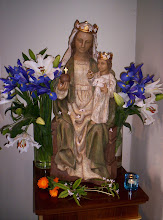
The Ordinariate is still but newly-born; the Ordinary has very slender resources, and so matters will progress slowly at first.  One might say that Our Lady of the Southern Cross indeed holds a precious infant in her arms – one of Our Lord’s youngest brethren, still literally infans, unable to speak (having no website for the moment)!  We know that she will dearly care for this her latest adopted child.

Given this, it is unsurprising that these recently-arrived Ordinariate members have been happily received by the wider Archdiocese of Perth, and feel very much welcomed.  Holy Mother Church rejoices in these members now fully united to her!

Our Lady of the Southern Cross, pray for them, pray for more to join them, and pray for us.

Friday, June 15, 2012

Entwistle, First Ordinary of the Australian Ordinariate

Fresh from the Vatican's daily Bulletin, the first two paragraphs translated from the Italian, the rest being supplied in English:

The Congregation for the Doctrine of the Father, according to the norms of the Apostolic Constitution Anglicanorum cœtibus, has erected* the Personal Ordinariate of Our Lady of the Southern Cross in the territory of the Australian Episcopal Conference.
At the same time, the Holy Father Benedict XVI has nominated as first Ordinary of Our Lady of the Southern Cross the Reverend Harry Entwistle.
[Reverend] Harry Entwistle
Reverend Harry Entwistle was born on May 31, 1940 at Chorley, Lancashire, England and baptised an Anglican in the Parish Church on July 7, 1940. After studies at St. Chad's Theological College in the University of Durham, he was ordained [an Anglican] priest [prete anglicano] on September 20, 1964 for the Anglican Diocese of Blackburn, Lancashire. After priestly service in Fleetwood, Hardwick, Weedon, Aston Abbotts and Cubligton, he was Chaplain in Her Majesty's Prison Service from 1974 to 1981 and from 1981 to 1988, Senior Chaplain at HM Prison Wansworth.
He migrated to Australia in 1988 where he was the Senior Chaplain for the Department of Corrective Services in the Anglican Diocese of Perth, Western Australia.
From 1992 to 1999 he was Archdeacon and Parish Priest of Northam; from 1999 to 2006 Parish Priest of Mt Lawley. In 2006 he joined the Traditional Anglican Communion and was appointed Western Regional Bishop and Parish Priest of Maylands in Perth.
After reception into the Church and ordination as a deacon [on June 10, 2012], he was† ordained to the priesthood in St. Mary's Cathedral, Perth on June 15, 2012.

*According to this Decree, most interestingly, the formerly Traditional Anglican church of SS Ninian and Chad in Maylands, Perth (a humble structure I visited some years ago) is to be the principal church of the Ordinariate.

†Actually, his Ordination has not yet begun, since it is not yet 7 pm in Perth!

For the record, his name is spelled without an "h" - his surname does not mean "the whistle of an Ent", whatever Tolkien fans may think!

Friday, May 11, 2012

Australian Ordinariate At Last! - 15th June 2012

The Personal Ordinariate of Our Lady of the Southern Cross, under the patronage of St Augustine of Canterbury, for incoming "groups of Anglicans" here in Australia, is to be established on the Feast of the Sacred Heart, Friday the 15th of June 2012.  Deo gratias!

The Ordinary is still to be announced.

Herewith, the media release from the Australian Catholic Bishops Conference:

Personal Ordinariate to be established in Australia on 15 June 
Media Release 
11 May, 2012

The President of the Australian Catholic Bishops Conference, Archbishop Denis Hart, announced today that Pope Benedict XVI intends to announce the establishment in Australia of a Personal Ordinariate for Former Anglicans to commence on 15th June 2012.

A Personal Ordinariate is a church structure for particular groups of people who wish to enter into communion with the Catholic Church.

In 2009 Pope Benedict announced special arrangements to cater for groups of Anglicans who wished to join the Catholic Church. This provision allows them to maintain some of the traditions of prayer and worship of Anglicanism.

Personal Ordinariates have already been established in the United Kingdom (2011) and the United States of America (2012).

The Australian Bishops have already put in place procedures to enable clergy and lay church members to join the Catholic Church through the Ordinariate.

Archbishop Hart hopes that there will be a warm welcome to those wishing to enter the Catholic Church through the Ordinariate.

“I am confident that those former Anglicans who have made a journey in faith that has led them to the Catholic Church will find a ready welcome”, he said.

This new community will have the status of a diocese and will be known as the Personal Ordinariate of Our Lady of the Southern Cross under the patronage of St Augustine of Canterbury.

Wednesday, December 7, 2011

Personal Ordinariate of Our Lady of the Southern Cross

It seems that we await word from the Vatican on the official starting date for the Australian Personal Ordinariate* for former Anglicans – early next year? – but at least we know it has been placed under the patronage of Our Lady of the Southern Cross: a busy Lady, seeing as she is patroness of the troubled diocese of Toowoomba, indeed chosen as such by none other than the notorious last Ordinary of that see (though officially approved by the Holy See, unlike the disapproval voiced by Rome of most of his other acts); then again, it certainly seems she gets things done when she is invoked!  As a devout elderly Chinese Catholic of my acquaintance would say in words that brook no dissent, "Our Lady of Southern Cross – very powerful."

Whatever of this title – curiously, the feast of Our Lady of the Southern Cross, fixed in Toowoomba on the 1st of September, is not included in the Calendar for Australia in the new Missal! – it appears very much as if the precedent of the English Ordinariate of Our Lady of Walsingham will be followed: at least the first wave of clerical converts will be ordained quickly, and the laity will soon thereafter follow, to keep together these various "groups of Anglicans".  It appears that this process, as employed in England, was quite successful.  I do know that each Anglican minister has been asked to choose a wise and experienced Catholic priest as a mentor, to help bridge the gap between the very different clerical cultures of each, which is a most practical and charitable measure.

Of course, the English Ordinariate, while under the title of Our Lady of Walsingham, has also Bl John Henry Newman as its patron; no doubt, officially or not, he will play a similar role in respect of the Australian (and indeed of the American) Ordinariate.  May Our Lady, spiritual Mother of all Christians, intercede powerfully with her Divine Son, ut unum sint – may Bl John Henry supplicate the Lord in union with her, and with him all the Saints.  Forward the Australian Ordinariate!

*There is no word yet on whether the Church of the Torres Strait, which has voted en bloc to come into union with Rome, will be part of this or not.  The Torres Strait Islands are not very populous...

Tuesday, November 22, 2011

Compline and Benediction for Christian Unity

To-night, our parish Compline and Benediction was graced by the attendance of Bp Robarts of the TAC, together with his wife and one of his parishioners.  My parish priest had very kindly invited him to attend, in the cause of promoting Christian Unity and more particularly the success in Australia of Anglicanorum cœtibus.

After Compline (sung in Gregorian chant), Exposition of the Blessed Sacrament followed, while we sang Ave verum, and Gaudeamus omnes in honour of St Cecilia, patroness of music, whose feast it is this day.  Bp Robarts then led us all in prayer before Our Lord truly present in the Eucharist, concluding very feelingly with the Prayer for Christian Unity.  Benediction was given by our priest with the usual Tantum ergo &c., then the Sacrament was reposed in the tabernacle while we chanted Jesu Redemptor omnium.  Our worship concluded with that most ecumenical hymn "Let all mortal flesh keep silence" – translated by an Anglican from an Eastern liturgy, set to a French tune.

After our foretaste of the joys of full communion in Eucharistic worship, we had a little agape - wine, savouries, cake...

It was a very blessed occasion in every respect.  Forward the Australian Ordinariate!

Thursday, December 16, 2010

Forward the Australian Ordinariate

Good news reported over at The Anglo-Catholic – the Australian Ordinariate for incoming Anglicans will be up and running within months, and an official Implementation Committee has been formed.  Prayers please, for this great work of Christian Unity, for which Our Lord Himself did pray.