On advice from a bookdealer I'm waiting for the latest Fortescue-O'Connell-Reid, the one with Summorum Pontificum cura in it; in the meanwhile, I make do with Dale's Ceremonial according to the Roman Rite (ninth edition, 1904)...
Fortescue, famously, was right to note Dale's unintentionally humorous style, which in some places is flagrantly un-English, even bizarre ("The postures to be maintained in choir are the standing, the sitting, and the kneeling. ... The clergy will observe not to kneel at... During High Mass all retain the standing posture from..." - Part I, Chapter I, Nos. 3. & 4., page 3).
That said, Dale seems a useful source - and makes some candid observations (I, I, 10., page 4f):
"The clergy should comport themselves in choir with silence, modesty, and recollection; abstaining from everything that would indicate frivolity or irreverence, such as reading letters, talking, giving snuff to each other, gazing about, sitting cross-legged, lolling in their seats, and other acts of this nature."
I do hope that some of my readers in or aspiring to Holy Orders (hi, Quasi! hello, reverend members of the Cloister!) take note - imagine that, reading letters or giving snuff to one another in choir... but wait a moment, I'm sure a Dominican told me that the old rule was that snuff could be taken by the sacred ministers during Mass, down to the end of the Gloria in excelsis (presumably this was the case in the Baroque period, when the Gloria could be half-an-hour long).
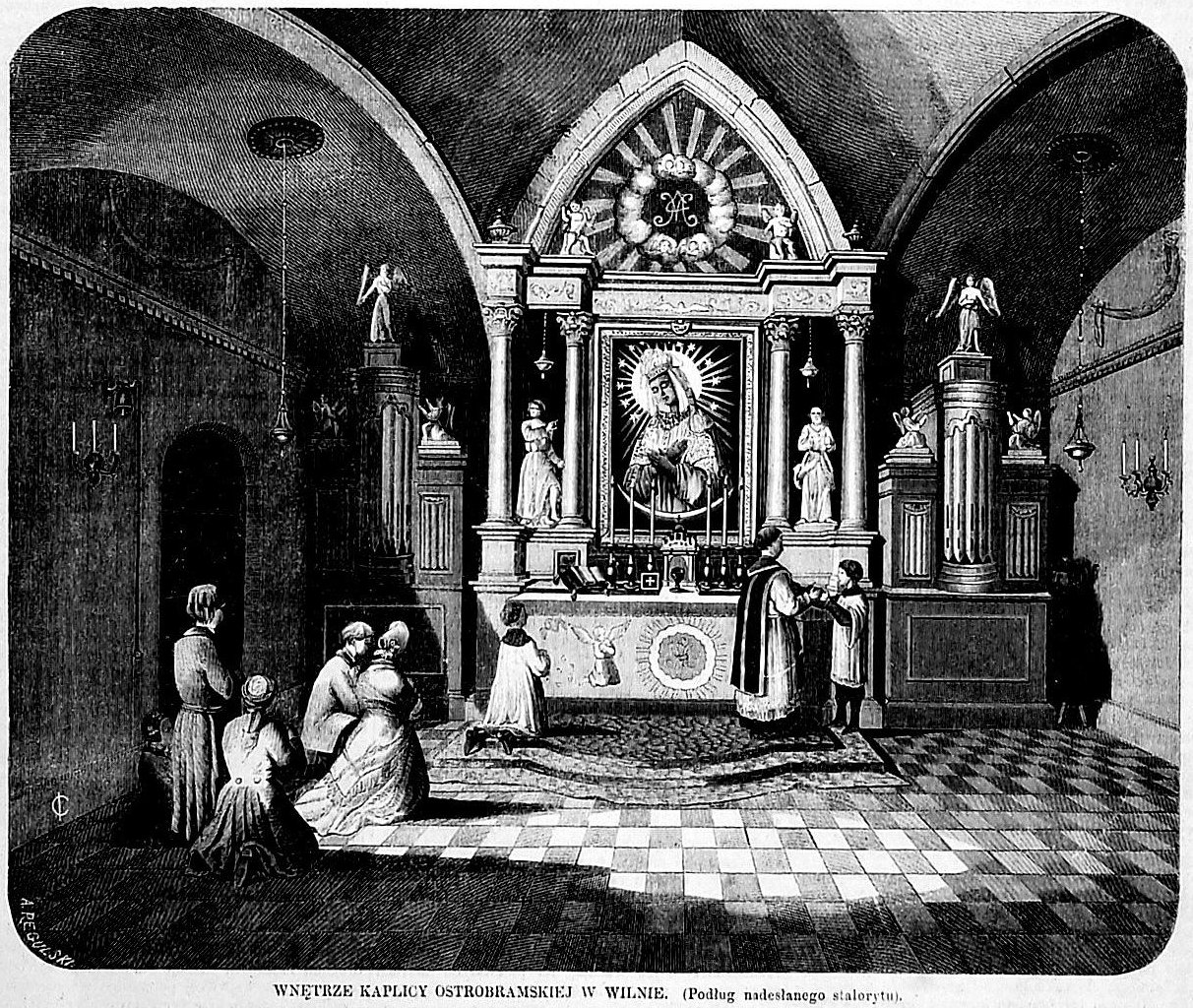
Reading over Dale's instructions for serving Low Mass, I note some interesting points, quaintly expressed:
"1. The Server at Low Mass should strictly be a Cleric as the Rubrics prescribe; nevertheless Laics are now through custom allowed to serve. They will observe all that is prescribed for the Cleric, with the exception that they do not wear the cassock and cotta.² [I assume this meant that "laics" served Mass, when permitted, in default of a Cleric to do so, in lay clothes.]"[Footnote]² The use of the cassock and cotta is now universally allowed to laics serving at the Altar, in those countries where the first tonsure is seldom conferred upon any but adults. The use of gloves [let O.A.T.H. members take note!] is prohibited. (S.C.R., Aug. 12, 1854.)"5. Before leaving the sacristy with the Priest, the Server will, if necessary, light the candles on the Altar..." [He must presumably use a very long taper to light them with.]"7. At the door of the church will take holy water for himself, but will not offer any to the Priest. [Interesting - I learnt and use the contrary custom.]"9. The Server should discreetly request [i.e. not loudly abuse or kick] those who are kneeling to make way for the Priest, beckoning them to withdraw their feet, or to stand up, as occasion may require: the same should be observed in returning to the sacristy. [What a crowded church full of hoi polloi this assumes...]"15. ... In genuflecting he will not bend himself in an ungraceful manner [this is easier said than done, especially when my bad knee is playing up], but descend straight to the ground on the right knee, with the face turned towards the Altar."16. Should the Priest inadvertently have put the burse of the corporal where it is liable to be stained by wax from the candles, the Server will place it in a better position; he will also do the same, at the proper time [vide infra, No. 27.], with regard to the veil of the chalice."18. ... And here, in order that these things may be better attended to, we may as well state, that one [serving Mass] should abstain from reading the office, or reading spiritual books, as also from speaking with others, or turning around to look at what is going on. This is what St. Charles Borromeo enjoined... [See previous comments about clergy in choir.] At the Psalm Judica me Deus, at the Kyrie eleison, and the rest, the Server should be careful to answer alternately with the Priest, and not to anticipate him, lest he become confused."27. Should the Celebrant [at the Offertory] give him the veil of the chalice, he will fold it; and if the Altar be large enough, leave it there, near the Altar-card, but beyond the corporal, on the Epistle side. Should, however, the Altar be narrow and there be danger of the veil being stained by wax from the candles, he should carry it to the credence, or elsewhere. Should the Priest himself fold it, he will observe what has been mentioned above, respecting the burse (No. 16.) [While oft priests have the server carry the veil from one side to the other after the ablutions - which custom Dale entirely omits to mention - I've never seen the server take the veil at the Offertory...]"36. At the Sanctus... He should not strike his breast..."37. At the conclusion of the first Memento, or a little earlier, he will proceed to light the small candle for the Elevation. [Here in Australia, the Latin Mass sayers of Melbourne and Sydney, F.S.S.P. and ex-F.S.S.P., keep this custom, as do the Dominicans who use their old rite.]"38. He will... for the Elevation,... take the chasuble with his left hand, not drawing it toward himself, but only lifting it when the Priest elevates the Host and the chalice, and not when he genuflects, for then it should not be held. [I have observed, and having observed it for a while myself followed, the contrary custom - which appears to follow the precedent of the Hæmorrhisa, boldly taking hold of Christ's garments, on the theory that the saving power that went out from Him then, may now spill over from the consecrating Priest, Christ's Sacramental Instrument, even to the lowly Server. to sanctify him.] ... He should not kiss the chasuble, either before or after. ... [Dale also does not mention the pious practice of bowing moderately when the Priest bowed low to pronounce the Verba Domini, before then bowing down deeply at the genuflections ensuing.]"41. Whilst the Priest is signing himself with the chalice,² the Server should not ring the bell, since the Elevation of the chalice is not made to excite the people to the adoration, which is already over, but the Priest only signs himself as he did with the Host. Besides, the Rubric of the Missal prescribes that the bell should be rung at the Sanctus and at the Elevation only; and to do so at this time would merely cause the people to stand up, whereas they should remain kneeling till the Benediction inclusively.³"[Footnote]¹ Should any of the faithful approach for Holy Communion, he will now say the Confiteor. He should not accompany the Priest when he communicates the people [this was written before the use of the communion plate was enjoined], but, if necessary, he may assist to sustain the [communion] cloth."[Footnote]² There is no Rubric which directs the bell to be thrice rung at the Domine, non sum dignus, in the Mass. It is usual in some countries to ring the bell at the "Hanc igitur oblationem," though the Rubric does not recognise the custom."48. ... [The candles] should not be left smoking, as is too often the case, nor should they be put out by the breath, but with the proper extinguisher."
(Part VI, Chapter V, pages 355-363)
Amongst my readers and fellow-bloggers, perhaps Patricius, as an interested M.C. and peruser of ceremonials, may find this of interest.