In Translatione Almæ Domus Lauretanæ Beatæ Mariæ Virginis
(1826 Supplement to the Roman Breviary)
In I Vesperis
Psalmus Dixit Dominus… cum reliquis ut in Festis B. M. V.
Aña. 1. Domum tuam, Domine, decet sanctitudo in longitudinem dierum. [Aña 1 ad L. de Comm. Ded. Eccl. (Ps 92:5)]
Aña. 2. Domus mea domus orationis vocabitur: in ea omnis qui petit, accipit; et qui quærit, invenit, et pulsanti aperietur. (Is 56:7b & Mt 21:13b & Mk 11:17; Mk 7:8 =&Lk 11:10)
Aña. 3. Propter domum Domini Dei nostri quæsivi bona tibi. (Ps 121:9)
Aña. 4. Domine Deus, exaltasti super terram habitationem tuam. (Cf. Ecclus 51:13)
Aña. 5. Domum majestatis meæ, et locum pedum meorum glorificabo. (Is 60:7b, 13b)
Cap. In omnibus requiem quæsivi, et in hereditate Domini morabor. Tunc præcepit, et dixit mihi Creator omnium: et qui creavit me, requievit in tabernaculo meo. (Ecclus 24:11b-12)
Hymnus: Ave maris stella… ut in Festis B. M. V.
V/. Hæc est Domus Domini… ut in Commune Dedicationis Ecclesiæ.
Ad Magnificat Aña. Sanctificavit… Domus… ut in Comm. Ded. Eccl.
Oratio. (Cf. Ps 83:11)
Deus, qui beatæ Mariæ Virginis domum per incarnati Verbi mysterium misericorditer consecrasti, eamque in sinu Ecclesiæ tuæ mirabiliter collocasti: concede; ut segregati a tabernaculis peccatorum, digni efficiamur habitatores Domus sanctæ tuæ. Per eumdem…
[O GOD, Who in Thy mercy didst hallow the house of the Blessed Virgin Mary by the incarnation of Thy Word, and hast wondrously given unto the same a resting-place in the midst of Thy Church, grant us the grace to be cut off from the tents of wickedness, and made worthy to dwell in Thine holy house. Through the same…]
Et fit commem. Feriæ et S. Melchiadis.
Ad Matutinum
Invitatorium. Salvatorem mundi in domo Virginis de Spiritu Sancto conceptum, * Venite adoremus.
Hymnus. Cœlestis Urbs Jerusalem… ut in Comm. Ded. Eccl.
Pss ut in Festis B.M.V.
In I. Nocturno
Aña. 1. Elevata est magnificentia tua super cœlos. [Ps 8, 2]
Aña. 2. In sole posuit tabernaculum suum, et ipse tamquam sponsus procedens de thalamo suo. [Ana. 2, Octava Nativitatis Domini (Ps 18, 5)]
Aña. 3. Quis ascendet in montem Domini? aut quis stabit in loco sancto ejus? Innocens manibus, et mundo corde. [Ps 23, 3-4a]
V/. Domum tuam… ut in I Noct. Mat. Com. Ded. Eccl.
Lectio I
De libro tertio Regum. [8:22-23a, 27-29a, 30]
Stetit autem Salomon ante altare Domini in conspectu ecclesiæ Israël, et expandit manus suas in cælum, et ait: / Ergone putandum est quod vere Deus habitet super terram? si enim cælum, et cæli cælorum, te capere non possunt, quanto magis domus hæc, quam ædificavi? Sed respice ad orationem servi tui, et ad preces ejus, Domine Deus meus: audi hymnum et orationem quam servus tuus orat coram te hodie: ut sint oculi tui aperti super domum hanc nocte ac die : super domum, de qua dixisti: Erit nomen meum ibi: / ut exaudias deprecationem servi tui et populi tui Israël, quodcumque oraverint in loco isto, et exaudies in loco habitaculi tui in cælo : et cum exaudieris, propitius eris.
[R/. i. de Assumptione B.M.V. (Cf. Cant 3:6):]
R/. Vidi speciosam sicut columbam, ascendentem desuper rivos aquarum: cujus inæstimabilis odor erat nimis in vestimentis ejus: * Et sicut dies verni circumdabant eam flores rosarum et lilia convallium.
V/. Quæ est ista quæ ascendit per desertum sicut virgula fumi, ex aromatibus myrrhæ et thuris? * Et sicut dies verni circumdabant eam flores rosarum et lilia convallium.
Lectio II [3 Reg. 8:33-36]
Si fugerit populus tuus Israël inimicos suos (quia peccaturus est tibi), et agentes pœnitentiam, et confitentes nomini tuo, venerint, et oraverint, et deprecati te fuerint in domo hac: exaudi in cælo, et dimitte peccatum populi tui Israël, et reduces eos in terram quam dedisti patribus eorum. Si clausum fuerit cælum, et non pluerit propter peccata eorum, et orantes in loco isto, pœnitentiam egerint nomini tuo, et a peccatis suis conversi fuerint propter afflictionem suam: exaudi eos in cælo, et dimitte peccata servorum tuorum, et populi tui Israël: et ostende eis viam bonam per quam ambulent, et da pluviam super terram tuam, quam dedisti populo tuo in possessionem.
(Cf. Cant 6:9)
R/. ii. Quæ est ista, quæ ascendit sicut aurora consurgens, pulchra ut luna, electa ut sol, * Terribilis ut castrorum acies ordinata?
V/. Filia Sion, tota formosa et suavis es, pulchra ut luna, electa ut sol. * Terribilis…
Lectio III [3 Reg. 8:38b-43, excl. last two words (quam ædificavi)]
Si quis cognoverit plagam cordis sui, et expanderit manus suas in domo hac, tu exaudies in cælo in loco habitationis tuæ, et repropitiaberis, et facies ut des unicuique secundum omnes vias suas, sicut videris cor ejus (quia tu nosti solus cor omnium filiorum hominum), ut timeant te cunctis diebus quibus vivunt super faciem terræ quam dedisti patribus nostris. Insuper et alienigena, qui non est de populo tuo Israël, cum venerit de terra longinqua propter nomen tuum (audietur enim nomen tuum magnum, et manus tua fortis, et brachium tuum extentum ubique), cum venerit ergo, et oraverit in hoc loco, tu exaudies in cælo, in firmamento habitaculi tui, et facies omnia pro quibus invocaverit te alienigena: ut discant universi populi terrarum nomen tuum timere, sicut populus tuus Israël, et probent quia nomen tuum invocatum est super domum hanc.
[R/. 3 de Assumptione B.M.V. (Cf. Cant 6:8b):]
R. Quæ est ista quæ processit sicut sol, et formosa tamquam Jerusalem? * Viderunt eam filiæ Sion, et beatam dixerunt, et reginæ laudaverunt eam.
V/. Et sicut dies verni circumdabant eam flores rosarum et lilia convallium. * Viderunt eam filiæ Sion, et beatam dixerunt, et reginæ laudaverunt eam.
Gloria Patri, et Filio, et Spiritui Sancto. * Viderunt eam filiæ Sion, et beatam dixerunt, et reginæ laudaverunt eam.
In II. Nocturno
Aña. 4. Diffusa est gratia in labiis tuis, propterea benedixit te Deus in æternum, et in sæculum sæculi. [Ps 44, 3b. 20b]
Aña. 5. Sanctificavit tabernaculum suum Altissimus. [Ps 45, 4b]
Aña. 6. Homo natus est in ea, et ipse fundavit eam Altissimus. [Ana. 5, Octava Nativitatis Domini (Ps 86, 5b)]
V/. Domine, dilexi decorem Domus tuæ.
R/. Et locum habitationis gloriæ tuæ. (Ps 25:8)
Lectio IV.
Sermo sancti Bernardi Abbatis. [Sermo 52 de diversis]
Sapientia, quæ Dei erat et Deus erat, de sinu Patris ad nos veniens ædificavit sibi Domum, ipsam scilicet Matrem suam Virginem Mariam, in qua septem columnas excidit. Quid est in ea septem columnas excidere, nisi ipsam dignum sibi habitaculum fide et operibus præparare? Nimirum ternarius numerus ad fidem propter sanctam Trinitatem, quaternarius pertinet ad mores propter quatuor principales virtutes. Quod autem in beata Maria sancta Trinitas fuerit, (fuerit dico per præsentiam majestatis,) ubi solus Filius erat per susceptionem humanitatis, testatur Nuntius cœlestis, qui ei arcana mysteria reserans, ait: Ave, gratia plena, Dominus tecum; et post pauca: Spiritus Sanctus superveniet in te, et virtus Altissimi obumbrabit tibi. Ecce habes Dominum, habes virtutem Altissimi, habes Spiritum sanctum, habes Patrem, Filium et Spiritum Sanctum.
[That Wisdom which was of God, and which was God, came unto us from the bosom of the Father, He builded Himself an house, even His mother the Virgin Mary, and therein He hewed out seven pillars. (Cf. Prov. 9:1) And what is signified by His hewing out in her seven pillars, but that He made her ready to be by faith and works a meet dwelling-place for Himself? Of the component elements of the number seven, the number three relateth to faith, because it is the number of the Holy Trinity, and the number four to good works, because it is the number of the cardinal virtues. In the blessed Mary, God the Son alone was present by the taking of manhood unto God, but that the Holy Trinity was present in her, was present, I say, by His Majesty, is attested by the messenger from heaven, who, when he revealed the hidden mystery unto her, said: "Hail, thou that art full of grace, the Lord is with thee"; and anon, "The Holy Ghost shall come upon thee, and the power of the Highest shall overshadow thee." Behold, here thou hast the Lord, thou hast the power of the Highest, thou hast the Holy Ghost. Thou hast God the Father, God the Son, and God the Holy Ghost.]
R/. O quam metuendus… Domus… Domus… [R/. 5 de Comm. Ded. Eccl.]
Lectio V.
Utrum autem et quatuor principales virtutes tamquam quatuor columnas, possederit, inquisitione dignum videtur. Primum ergo videamus, an fortitudinem habuerit, quæ nimirum virtus quomodo illi abesse potuit, quæ, abjectis sæcularibus pompis spretisque voluptatibus carnis, soli Deo in virginitate vivere proposuit? Ni fallor, hæc Virgo est, quæ apud Salomonem legitur: Mulierem fortem quis inveniet? procul et de ultimis finibus pretium ejus. Porro, quod temperans et justa fuerit, ex Angeli collocutione et sui ipsius responsione luce clarius comprobamus. Salutata quippe tam venerabiliter ab Angelo: Ave, gratia plena, Dominus tecum; non se extulit, quasi quæ ex singulari gratiæ privilegio benediceretur; sed siluit, et qualis esset insolita hæc salutatio, secum cogitavit. Qua in re, quid, nisi temperans fuit? At vero, cum de cœlestibus mysteriis ab eodem Angelo doceretur, diligenter quæsivit, quomodo conciperet et pareret, quæ virum utique non agnosceret: et in hoc sine dubio prudens exstitit.
[It is right, then, to see whether she possessed also the four cardinal virtues as the four remaining pillars. Let us then first see whether she possessed fortitude; but how could this virtue be lacking to one who cast away the pomps of the world, and despised the pleasures of the flesh with the resolution to live in virginity for God alone? Unless I am widely mistaken, this virgin was the woman of whom Solomon said (Prov. xxxi. 10): Who can find a virtuous woman? for her price is far above the rarest merchandise. That she was temperate and just is clearer than light from the communing of the angel with her, and her answers unto him, for when the angel so reverently saluted her, saying, "Hail, thou that art full of grace, the Lord is with thee," she was not lifted up like one who should be blessed for so singular a privilege of grace, but was silent and cast in her mind what manner of salutation this should be; and in this was she not temperate? And when the angel gave her further to wit of the mysteries from heaven, she diligently asked of him how she should conceive and bring forth, seeing that she knew not a man; and herein she was undoubtedly prudent.]
R/. Fundata est Domus… [R/. 2 de Comm. Ded. Eccl.]
Lectio VI
Justitiæ autem præ se fert insigne, ubi se ancillam Domini confitetur; nam quod justorum sit confessio, testatur qui ait: Verumtamen justi confitebuntur nomini tuo. Fuit igitur beata Virgo Maria fortis in proposito, temperans in silentio, prudens in interrogatione, justa in confessione. His itaque quatuor morum columnis et tribus fidei prædictis exstruxit in ea sibi domum Sapientia cœlestis, quæ adeo mentem ejus replevit, ut de plenitudine mentis fœcundaretur et caro.
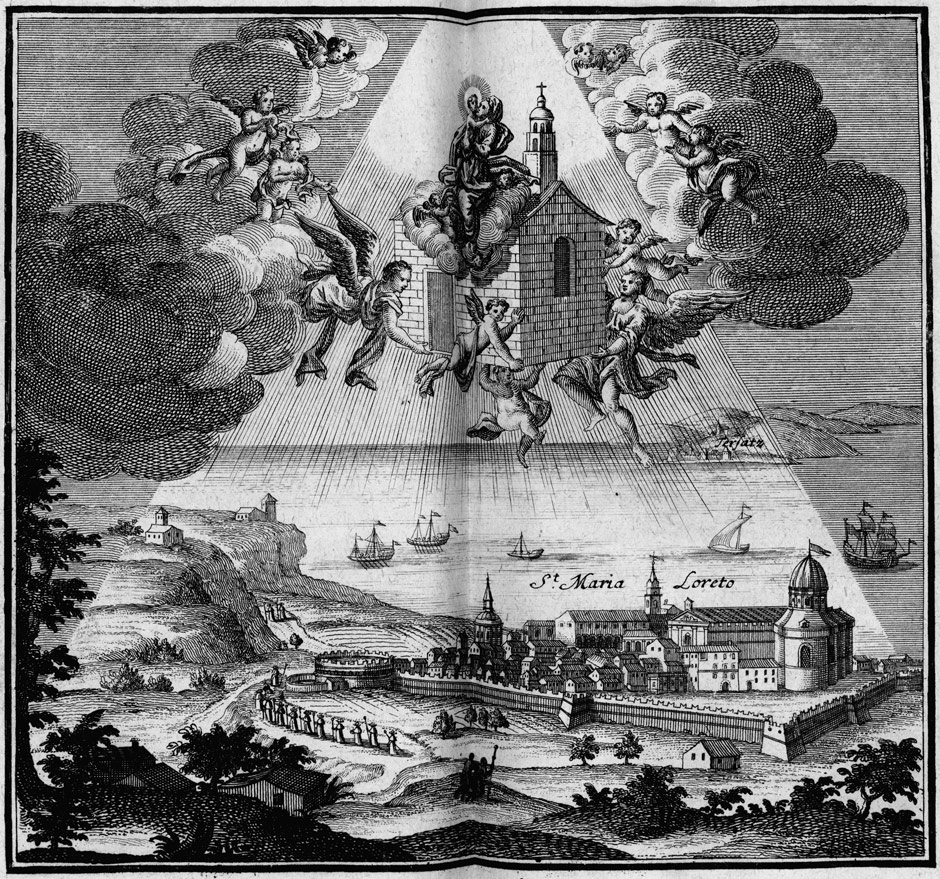
– Ipsius autem Virginis natalis Domus, divinis mysteriis consecrata, Angelorum ministerio ab infidelium potestate in Dalmatiam prius, deinde in Agrum Lauretanum Picenæ Provinciæ, translata fuit, sedente sancto Cœlestino Quinto; eamdemque ipsam esse, in qua Verbum caro factum est et habitavit in nobis, tum Pontificiis diplomatibus et celeberrima totius Orbis veneratione, tum continua miraculorum virtute et cœlestium beneficiorum gratia comprobatur. Quibus permotus Innocentius Duodecimus, quo ferventius erga Matris amantissimæ cultum Fidelium memoria excitaretur, ejusdem sanctæ Domus Translationem anniversaria solemnitate in tota Piceni Provincia veneratam, Missa etiam et Officio proprio celebrari præcepit: Pius vero Septimus Pontifex Maximus hanc Translationem ubique celebrari posse benignissime indulsit.
[Of justice she gave an eminent proof when she confessed herself to be the handmaid of the Lord. And what the confession of the just is, is attested by him who said, “Surely the righteous shall give thanks unto Thy Name" (Ps. cxxxix. 14.) The blessed Virgin Mary then showed fortitude in her intention, temperance in her silence, prudence in her questioning, and justice in her confession. These, then, were the four pillars of works which, when added to the three pillars of faith whereof we have spoken, formed the seven pillars which the heavenly Wisdom hewed out in her when He builded her as His house, even that heavenly wisdom which so filled her mind, that from the fullness of her mind her body became fruitful.
– The very home of the Virgin, hallowed by the mysteries of God, was carried by the ministry of the Angeli, in the time of holy Celestine V., out of the dominions of the unbelievers, first into Dalmatia, and then into the country of Loreto, in the province of Picenum; and that it is the very same house wherein the Word was made Flesh and dwelt among us, is attested, not only by Papal documents, and by the famous veneration of the whole world, but also by an unceasing number of wondrous works of power, and by the grant of gifts from heaven. By these things Innocent XII. was moved in order to stir up the memory of the faithful to a more fervent honouring of the most loving of mothers, to command that the translation of her holy house, held by an annual festival throughout all the province of Picenum, should be kept with a special Mass and office. Moreover, the Supreme Pontiff Pius VII most benignly granted that this Translation may be celebrated everywhere.]
R/. Domus mea, domus orationis… [R/. 7 de Comm. Ded. Eccl., cum Gloria Patri…]
In III. Nocturno.
Aña. 7. Tollite hostias, et introite in atria ejus, adorate Dominum in aula sancta ejus. [Ps 95, 8]
Aña. 8. Viderunt omnes populi gloriam ejus. [Ps 96, 6b]
Aña. 9. Cantate Domino canticum novum, quia mirabilia fecit Dominus, alleluja. [Ps 97, 1 + Dominus, all.]
V/. Domum tuam, Domine, decet… ut in I Noct. de Comm. Ded. Eccl. [repeated from 1st Nocturn]
Lectio VII
Lectio sancti Evangelii secundum Lucam. [Cap. 1, 26]
In illo tempore: Missus est Angelus Gabriel a Deo in civitatem Galilææ, cui nomen Nazareth, ad Virginem desponsatam viro, cui nomen erat Joseph, de domo David, et nomen Virginis Maria. Et reliqua.
Homilia sancti Bernardi Abbatis. [Ex Homilia super Missus est.]
Quæ est hæc Virgo tam venerabilis, ut salutetur ab Angelo, tam humilis, ut desponsata sit fabro? Pulchras permixtio virginitatis et humilitatis: nec mediocriter placet Deo illa anima, in qua et humilitas commendat virginitatem, et virginitas exornat humilitatem, sed quanta putas veneratione digna est, in qua humilitatem exaltat fœcunditas, et partus consecrat virginitatem? Audis virginem, audis humilem? Laudabilis virtus virginitas, sed magis necessaria humilitas: illa consulitur, ista præcipitur.
[Who is this virgin, so worshipful as to be saluted by an angel, and so lowly as to be espoused to a carpenter? Lovely is this mingling of virginity and lowliness, neither doth that so little please God, wherein the lowliness exalteth the virginity, and the virginity adorneth the lowliness. But of what worship is she worthy, whose lowliness is ennobled by motherhood, and whose motherhood halloweth her virginity? Dost thou hear that she is a virgin? dost thou hear that she is lowly? Virginity is praiseworthy, but lowliness is more needful. Virginity is advised, lowliness is commanded.]
[R/. 7 de Assumptione B.M.V. (Ps 44:3b; 9-10a):]
R/. Diffusa est gratia in labiis tuis: * Propterea benedixit te Deus in æternum.
V/. Myrrha, et gutta, et casia a vestimentis tuis, a domibus eburneis, ex quibus delectaverunt te filiæ regum in honore tuo. * Propterea benedixit te Deus in æternum.
Lectio VIII. [Ex Hom 2 super eodem loco.]
Missus est, inquit, Angelus ad Virginem, virginem carne, virginem mente, virginem professione, virginem denique, qualem describit Apostolus, mente et corpore sanctam, nec noviter nec fortuito inventam, sed a sæculo electam, ab Altissimo præcogitam, et sibi præparatam, ab Angelis servatam, a Patribus præfiguratam, a Prophetis promissam: ut pauca loquar de pluribus, quam tibi aliam prædixisse Deus videtr, quando ad serpentem ait: Inimicitias ponam inter te, et mulierem? Et si adhuc dubitas, an de Maria dixerit, audi quod sequitur: Ipsa conteret caput tuum. Cui hæc servata victoria est, nisi Mariæ?
["The Angel Gabriel was sent from God... to a virgin " a virgin in body, a virgin in mind, a virgin in profession, a virgin such as she of whom the Apostle saith (i Cor. vii. 34) that she "careth for the things of the Lord, that she may be holy both in body and in spirit." A virgin not found newly nor perchance, but chosen from everlasting, foreknown by the Most High, and made ready for Himself, guarded by angels, prefigured by patriarchs, foretold by prophets, or to say it in short, she whom God Himself would seem to have foretold (Gen. iii. 15) when He said unto the serpent, "I will put enmity between thee and the woman"; and if thou yet doubtest whether He spake of Mary, hearken to what followeth, "She shall bruise thy head." For whom was this victory reserved but for Mary?]
[R/. 8 de Assumptione B.M.V. (Cf. Lk 1:45, 28)]
R/. Beata es Virgo Maria, Dei Genitrix, quæ credidisti Domino: perfecta sunt in te quae dicta sunt tibi: ecce exaltata es super choros Angelorum: * Intercede pro nobis ad Dominum Deum nostrum.
V/. Ave Maria, gratia plena, Dominus tecum. * Intercede pro nobis ad Dominum Deum nostrum.
Gloria Patri, et Filio, et Spiritui Sancto. * Intercede pro nobis ad Dominum Deum nostrum.
Lectio IX. [Ex Hom. 3 super eodem loco.]
Et ingressus Angelus ad eam dixit: Ave gratia plena: Dominus tecum. Quo ingressus ad eam? Puto in Sacrarium pudici cubiculi, ubi illa fortassis clauso super se ostio orabat Patrem in abscondito. Solent Angeli adstare orantibus, et delectari in his, quos vident levare puras manus in oratione. Holocaustum sanctæ devotionis gaudent se offerre Deo in odorem suavitatis. Mariæ autem orationes quantum placuerint in conspectu Altissimi, Angelus indicavit, qui ingressus ad eam tam reverenter salutavit.
["And the Angel came in unto her, and said: Hail, thou that art full of grace, the Lord is with thee." Whither came he in unto her? I conjecture that he came into the sanctuary of her modest bedchamber, where perchance she, when she had shut her door, was praying to her Father Who is in secret. (Matth. vi. 6.) It is the use of angels to stand beside them that pray, and to delight in them whom they see lifting up pure hands in prayer: they rejoice to offer up unto God for a sweet savour the burnt-offering of holy earnestness, and how well-pleasing in the sight of the Most High were the prayers of Mary is shown by the action of the Angel who came in unto her and so reverently saluted her.]
Te Deum.
Ad Laudes et per Horas
Aña. 1. Domum tuam, Domine, decet sanctitudo in longitudinem dierum.
Aña. 2. Domus mea domus orationis vocabitur: in ea omnis qui petit, accipit; et qui quærit, invenit, et pulsanti aperietur.
Aña. 3. Propter domum Domini Dei nostri quæsivi bona tibi.
Aña. 4. Domine Deus, exaltasti super terram habitationem tuam.
Aña. 5. Domum majestatis meæ, et locum pedum meorum glorificabo.
Cap. In omnibus requiem quæsivi, et in hereditate Domini morabor. Tunc præcepit, et dixit mihi Creator omnium: et qui creavit me, requievit in tabernaculo meo. (Ecclus 24:11b-12)
Hymn. Alto ex Olympi vertice… ut in Comm. Ded. Eccl.
V/. Introibimus in tabernaculum ejus.
R/. Adorabimus in loco, ubi steterunt pedes ejus. (Ps 131:7)
Ad Benedictus Aña. Ecce tabernaculum Dei cum hominibus, et habitabit cum eis: et ipsi populus ejus erunt, et ipse Deus cum eis erit eorum Deus. (Apoc. 21:3b)
Or. ut supra.
Et fit comm. Feriæ et S. Melchiadis (non autem Oct. Concept. B.M.V.)
Ad Primam
Aña. Domum tuam, Domine, decet sanctitudo in longitudinem dierum.
In R/. br. dicitur: V/. Qui natus es de Maria Virgine.
Ad Tertiam
Aña. Domus mea domus orationis vocabitur: in ea omnis qui petit, accipit; et qui quærit, invenit, et pulsanti aperietur.
Cap. In omnibus requiem quæsivi, et in hereditate Domini morabor. Tunc præcepit, et dixit mihi Creator omnium: et qui creavit me, requievit in tabernaculo meo. (Ecclus 24:11b-12)
R/. br. Hic domus Dei est, * Et porta cœli. Hic… [NB not D-]
V/. Et vocabitur aula Dei. Et. (Gen. 28:17b; cf. 22:22a)
Gloria Patri… Et…
V/. Domine, dilexi decorem Domus tuæ.
R/. Et locum habitationis gloriæ tuæ. (Ps 25:8)
Ad Sextam
Aña. Propter domum Domini Dei nostri quæsivi bona tibi.
Cap. Et sic in Sion… ut in festis B.M.V.
R/. br. Domine * Dilexi decorem Domus tuæ. Domine…
V/. Et locum habitationis gloriæ tuæ. Dilexi. (Ps 25:8)
Gloria Patri… Domine…
V/. Domum tuam, Domine, decet sanctitudo.
R/. In longitudinem dierum. (Ps 92:5b)
Ad Nonam
Aña. Domum majestatis meæ, et locum pedum meorum glorificabo.
Cap. In plateis… ut in festis B.M.V.
R/. br. Domum tuam, Domine, * Decet sanctitudo. Domum tuam…
V/. In longitudinem dierum. Decet sanctitudo. (Ps 92:5b)
Gloria Patri… Domum…
V/. Hic domus Dei est, et porta cœli. [NB not D-]
R/. Et vocabitur aula Dei. (Gen. 28:17b; cf. 22:22a)
In II. Vesperis
Omnia ut in I Vesp., præter sequentia:
Ad Magnificat Aña. O quam metuendus… ut in Comm. Ded. Eccl. [NB not D-]
Et fit commem. S. Damasi… Deinde fit commem. Feriæ.