זמרו משכיל • zammerû maśkîl • ψάλατε συνετως • psallite intellegenter • canite erudite • sing ye wisely • chantez vous avec intelligence • lobsinget ihm klüglich • sing ye praises with understanding
Showing posts with label Mass contra Paganos. Show all posts
Showing posts with label Mass contra Paganos. Show all posts
Again we must pray against the pagans, that is, against terrorists who may as well worship a demon (since it is to Hell's depths they have been damned, barring a prodigy of grace efficacious to convert such atrocious sinners in their dying moments as they were shot). I spent the whole time driving to Hobart and back today listening on the ABC radio to nothing but coverage of the terrorist attack in London, so this is in the forefront of my mind.
Yet, as our priest reminded us today in an aside during his sermon, if we consider our own sins, we know that, but for God's forbearance and mercy, we ourselves would already have fallen into Hell – as Dathan and Abiron, who in their mad pride had outrageously sinned against the Lord by daring to offer unholy fire, went down alive into Hell (Numbers xvi, 33).
All have sinned and fallen short of God's glory, but are justified by his grace as a gift, through the redemption that is in Christ Jesus (Romans iii, 23f); else nothing but sin, Satan, death and Hell await us. Repent, pray, and pray for the conversion of all sinners!
I attach a link to last year's post, and append herewith extracts from the writings of St Maximus of Turin, who preached to his people, afflicted by the impending advance of barbarian invaders, in words which may help at this time of crisis and fear:
From the Sermons of St Maximus of Turin.
(Sermons 83, 1; 85, 1-2; 86, 1; 85, 3; 86, 3)
I remember having frequently said that we should not fear any warlike disturbances nor be frightened at any great multitude of foes since, as the Lord [sic; lege St John] says (1 John 4:4), “The one who is in us is greater than the one who is in this world”; that is to say, Christ is more powerful to protect his servants than the devil is to provoke our enemies. For although this same devil collects mobs for himself and arms them with cruel rage, nonetheless they are easily destroyed because the Saviour surrounds his people with superior auxiliaries, as the prophet says (Psalm 33:8): “The angel of the Lord comes round about those who fear him, and he will save them.” If the angel of the Lord snatches those who fear him from dangers, then one who fears the Saviour cannot fear the barbarians, nor can one who observes the precepts of Christ be afraid of the onslaught of the foe. These are our weapons, with which the Saviour has outfitted us: prayer, mercy, and fasting. For fasting is a surer protection than a rampart, mercy saves more easily than pillage, and prayer wounds from a greater distance than an arrow, for an arrow only strikes the person of the adversary at close range, while a prayer even wounds an enemy who is far away.
Perhaps you are anxious, brethren, at the fact that we hear continually of the tumult of wars and the onslaught of battles, and perhaps your love is still more anxious inasmuch as these are taking place in our times. But this is the reason: the closer we are to the destruction of the world, the closer we are to the kingdom of the Saviour. For the Lord himself says: “In the last days nation will rise against nation and kingdom against kingdom. But when you see wars and earthquakes and famines, know that the kingdom of God is at hand.” (Cf. Luke 21:9-11,31.) This nearness of wars, then, demonstrates to us rather that Christ is near. Therefore I must not be afraid of the approaching adversary, since by these signs do I understand instead that the Saviour is approaching, for although the one induces a temporal fear, yet the other will bring an eternal salvation. The same Lord, however, is powerful both to drive from us fear of the foes and to bestow on us his own presence. By these warlike disturbances, then, the destruction of the world is somehow signified, for this unrest precedes the future judgement of God.
Your love remembers that we preached that by good actions and constant prayers we may open to ourselves the gates of righteousness (cf. Psalm 117:19) and that by frequent almsgiving we may fortify ourselves as with a rampart of mercy. For to resist by almsgiving and to struggle by fasting are indeed an impregnable wall against the adversary. For although the enemy’s weapons may be powerful, nonetheless these weapons of the Saviour are stronger. If anyone is armed with them, even though he appear defenceless in the eyes of human beings, he is nonetheless adequately armed because the most high Divinity is guarding him. In tribuation then, it is good to pray, to fast, to sing psalms, and to be merciful, for by these weapons Christians are accustomed to conquer their adversaries; by these arms they are accustomed to guard the bulwarks of the city. For the holy prophet says (Psalm 126:1): “Unless the Lord guard the city, those who guard it keep watch in vain.” At the same time this teaches us that victory is not to be hoped for from arms alone but is to be prayed for in the name of the Saviour. Therefore, brethren, let us arm ourselves throughout this week with fasts, prayers, and vigils so that, when the mercy of God comes upon us, we may hold back the savagery of the barbarians.
The 1962 edition of the Roman Missal changed the title of the Votive Mass contra paganos to pro Ecclesiæ defensione (for the defence of the Church), but left all of its texts unchanged. Being a Votive Mass for a pressing need, it is said without Gloria in excelsis and Credo, and the sacred ministers wear violet vestments. If it is said by order or consent of the Ordinary for a grave and public reason (as, for example, in contemporary France), it ranks as a Votive of the II class, and the salutations, orations, lessons and so forth are sung to the solemn tone; otherwise, it is of the IV class, and the ferial tone is employed.
The Dominican Missal changes the term "pagans" (also commonly translated as "heathen") to "Turks and heretics", but this seems a little tactless. There is a ruling, centuries past (I think in Gavantus), proscribing the change of the word "pagans" in this Mass of the Roman Missal into other more specific terms, such as Moors, Turks and Saracens, for example, so it is probably best to leave the word "pagans" in place.
Such wicked deluded zealots of another, ahem, Abrahamic religion as currently carry out atrocities are, in point of fact, acting precisely as barbaric pagan votaries of devils, so they deserve to be prayed against in those terms. The martyred Fr Hamel was quite right to rebuke his murderers as agents of Satan in his last words. May God by his grace convert all such by a great miracle!
(For this cause, the corresponding prayer pro inimicis could be profitably added after each of the three proper orations of this Mass, as is allowable if it be of the IV class – I include these below, for, just as we should pray for protection against our enemies, we should also pray for our enemies themselves, that they be converted and saved.)
Apparently the Collect, Secret and Postcommunion of this Mass have been used as a triplet together since the 11th century, unsurprisingly in connexion with prayer for the success of the Crusades, and Pope Calixtus III promulgated the full Mass proper by his Bull Cum hiis superioribus of 20th June 1456, though I have not yet found a copy thereof.
Other researches of mine have revealed no Sequence once used for this Mass (as similar Votive Masses generally did not have Sequences), but several Prefaces contra Paganos exist, and I include a slight abbreviation and conflation of two of them in the following texts.
The Mass against the Pagans is liturgically well-structured, being a holy recycling of chants, lessons and prayers from earlier Masses, thus:
Or. O. s. Ds, in cujus –(Cf. Good Friday, Prayer for the Roman Emperor)
Ep. Oravit Mardochæus –(Wednesday after Second Sunday of Lent)
Grad. Sciant gentes – Liber Usualis, 506 (Sexagesima Sunday)
All. Excita Domine –Liber Usualis, 336 (Third Sunday of Advent)
Tr. Adjuva – not in Liber Usualis; 1961 Graduale Romanum [131]
All. Deus virtutum – not in Liber Usualis; 1961 Graduale Romanum [132]
Evang. Quis vestrum –(Rogation Mass)
Off. Populum humilem – Liber Usualis, 1015 (Eighth Sunday after Pentecost)
V. Clamor & Liberator – Offertoriale, 93
Secr. Sacrificium –(Cf. Mass in Time of War, Secret)
Comm. In salutari – Liber Usualis, 1069 (Twenty-first Sunday after Pentecost)
PC. Protector noster – (Cf. Votive Prayer for Defence against Foes, Postcommunion)
The way the prayers of this Mass were adapted from earlier sources is instructive:
Oratio
Omnipotens sempiterne Deus, in cujus manu sunt omnium potestates et omnium jura regnorum: respice in auxilium christianorum; ut gentes paganorum, quæ in sua feritate confidunt, dexteræ tuæ potentia conterantur. Per.
(Cf. Good Friday, Solemn Prayers, Prayer for the Roman Emperor:
Omnipotens sempiterne Deus, in cujus manu sunt omnium potestates et omnium jura regnorum: respice ad Romanum benign us Imperium; ut gentes, quæ in sua feritate confidunt, potentiæ tuæ dextera comprimantur. Per.)
Secreta
Sacrificium, Domine, quod immolamus, intende: ut propugnatores tuos ab omni eruaspaganorum nequitia, et in tuæ protectionis securitate constituas. Per.
(Cf. Tempore Belli, Secreta:
Sacrificium, Domine, quod immolamus, intende placatus: ut ab omni nos eruatbellorum nequitia, et in tuæ protectionis securitate constituat. Per.)
Postcommunio
Protector noster, aspice, Deus: et propugnatores tuos a paganorum defende periculis; ut, omni perturbatione submota, liberis tibi mentibus deserviant. Per.
(Cf. Pro defensione ab hostibus, Postcommunio:
Protector noster, aspice, Deus, et ab inimicorum nos defende periculis: ut, omni perturbatione submota, liberis tibi mentibus serviamus. Per.)
In these prayers, we pray that the pagan nations who trust in their own ferocity may be crushed by the power of God's right hand (Collect), and that those who fight for us may escape all pagan snares and perils (Secret and Postcommunion): or, in modern-day terms, may Daesh, Boko Haram, etc. be smashed and all police, military and security services win out against terrorists, that God by his aid may keep us safe.
The handy Versus Psalmorum et Canticorum, 134, suggests various verses of Psalm 118 to be sung with the Communion antiphon In salutari on the 21st Sunday after Pentecost, but since these psalm-verses can be freely chosen, I would suggest a more apposite selection (Ps. 118, 53. 61. 85. 87. 95. 98. 110. 126. 139. 150. 157) when the same Communion is used at Mass against the Pagans.
In France, it was long the custom to sing O salutaris hostia after the Elevation, and this is still done today at some EF Masses there. This being a prayer to Christ our Sacrifice for delivery from our foes, it would be highly appropriate to sing this as a Motet during or after Communion at this Votive Mass (in France itself, after Communion at some EF Masses, Domine salvam fac Galliam is sung at the same point).
As for the Offertory, if some Motet be desired, there are many settings of the Matins Responsory Congregati sunt inimici nostri (used during October, when the books of the Machabees are read during the Night Office), which would be most suitable – I happen to like the setting by Clément Janequin (music here) – and I give the Latin amongst the other texts of the Mass below.
Here is a translation of it:
R. Our enemies are gathered together, and make their boast of their own strength. O Lord, break their power, and scatter them: * That they may know that there is none other that fighteth for us, but only thou, O our God. V. Scatter them in thy strength, and destroy them, O Lord our Shield. *That they may know that there is none other that fighteth for us, but only thou, O our God. Glory be to the Father, and to the Son, and to the Holy Ghost. * That they may know that there is none other that fighteth for us, but only thou, O our God.
Another suitable Matins responsory, also used during October, would be Impetum inimicorum ne timueritis, set by several composers. Indeed, if polyphony be employed at this Mass, either Janequin's Missa super « La Bataille » (music here) or Victoria's more ambitious nine-part Missa pro Victoria (music here) – both based on Janequin's own chanson commemorating the French victory at the Battle of Marignano in 1515 – could be fitting choices.
Missa pro Ecclesiæ defensione (olim, contra Paganos)
Antiphona ad Introitum (Ps. 43, 23-24 et 25-26)
Exsurge, quare obdormis, Domine? exsurge, et ne repellas in finem: quare faciem tuam avertis, oblivisceris tribulationem nostram? Adhæsit in terra venter noster: exsurge, Domine, adjuva nos, et libera nos. (T. P. Alleluja, alleluja.)
Omnipotens sempiterne Deus, in cujus manu sunt omnium potestates et omnium jura regnorum: respice in auxilium christianorum; ut gentes paganorum, quæ in sua feritate confidunt, dexteræ tuæ potentia conterantur. Per Dominum.
ad lib., Oratio pro inimicis
Deus, pacis caritatisque amator et custos: da omnibus inimicis nostris pacem caritatemque veram; et cunctorum eis remissionem tribue peccatorum, nosque ab eorum insidiis potenter eripe. Per Dominum.
Lectio libri Esther. (13, 8-11 et 15-17)
In diebus illis: Oravit Mardochæus ad Dominum, dicens: Domine, Domine Rex omnipotens, in dicione enim tua cuncta sunt posita, et non est qui possit tuæ resistere voluntati, si decreveris salvare Israël. Tu fecisti cælum et terram, et quidquid cæli ambitu continetur. Dominus omnium es, nec est qui resistat majestati tuæ. Et nunc, Domine Rex, Deus Abraham, miserere populi tui, quia volunt nos inimici nostri perdere, et hereditatem tuam delere. Ne despicias partem tuam, quam redemisti tibi de Ægypto. Exaudi deprecationem meam, et propitius esto sorti et funiculo tuo, et converte luctum nostrum in gaudium, ut viventes laudemus nomen tuum, Domine, et ne claudas ora te canentium, Domine Deus noster.
Graduale (Ps. 82, 19 et 14)
Sciant gentes, quoniam nomen tibi Deus: tu solus Altissimus super omnem terram.
V. Deus meus, pone illos ut rotam, et sicut stipulam ante faciem venti.
Alleluja, alleluja.
V. Ps. 79, 3 Excita, Domine, potentiam tuam, et veni: ut salvos facias nos.
Alleluja.
Post Septuagesimam, omissis Alleluia et versu sequenti, dicitur:
Tractus (Ps. 78, 9-11)
Adjuva nos, Deus salutaris noster: et propter honorem nominis tui, Domine, libera nos: et propitius esto peccatis nostris, propter nomen tuum.
V. Ne quando dicant gentes: Ubi est Deus eorum? et innotescat in nationibus coram oculis nostris.
V. Vindica sanguinem servorum tuorum, qui effusus est: intret in conspectu tuo gemitus compeditorum.
Tempore autem paschali omittitur graduale, et eius loco dicitur:
Alleluja, alleluja.
V. Ps. 79, 3 Excita, Domine, potentiam tuam, et veni: ut salvos facias nos.
Alleluja.
V. Ibid., 15-16 Deus virtutum, convertere, respice de cælo, et vide, et visita vineam istam: et perfice eam, quam plantavit dextera tua.
Alleluja.
Sequentia sancti Evangelii secundum Lucam. (11, 5-13)
In illo tempore: Dixit Jesus discipulis suis: Quis vestrum habebit amicum, et ibit ad illum media nocte, et dicet illi: Amice, commoda mihi tres panes, quoniam amicus meus venit de via ad me, et non habeo quod ponam ante illum: et ille deintus respondens, dicat: Noli mihi molestus esse, jam ostium clausum est, et pueri mei mecum sunt in cubili, non possum surgere et dare tibi. Et si ille perseveraverit pulsans: dico vobis, et si non dabit illi surgens eo quod amicus ejus sit, propter improbitatem tamen ejus surget, et dabit illi quotquot habet necessarios. Et ego dico vobis: Petite, et dabitur vobis: quærite, et invenietis: pulsate, et aperietur vobis. Omnis enim qui petit, accipit: et qui quærit, invenit: et pulsanti aperietur. Quis autem ex vobis patrem petit panem: numquid lapidem dabit illi? Aut piscem: numquid pro pisce serpentem dabit illi? Aut si petierit ovum: numquid porriget illi scorpionem? Si ergo vos, cum sitis mali, nostis bona data dare filiis vestris: quanto magis Pater vester de cælo dabit spiritum bonum petentibus se?
Ant. ad Offertorium (Ps. 17, 28. 32. 7. 48-49)
Populum humilem salvum facies: et oculos superborum humiliabis: * Quoniam quis Deus præter te, Domine? (T. P. Alleluja.)
ad lib., V. 1. Clamor meus in conspectu ejus introivit in aures ejus. * Quoniam quis Deus præter te, Domine? (T. P. Alleluja.)
ad lib., V. 2. Liberator meus de gentibus iracundis: ab insurgentibus in me exaltabis me. * Quoniam quis Deus præter te, Domine? (T. P. Alleluja.)
ad lib., Motectum ad Offertorium (Cf. Ecclus 36, 12-13; Agg. 2, 23; Pss. 48, 7; 58, 12)
R. Congregati sunt inimici nostri, et gloriantur in virtute sua; contere fortitudinem illorum, Domine, et disperge illos: * Ut cognoscant, quia non est alius qui pugnet pro nobis, nisi tu, Deus noster. V. Disperge illos in virtute tua, et destrue eos, protector noster, Domine. * Ut cognoscant, quia non est alius qui pugnet pro nobis, nisi tu, Deus noster. Gloria Patri, et Filio, et Spiritui Sancto. * Ut cognoscant, quia non est alius qui pugnet pro nobis, nisi tu, Deus noster.
Secreta
Sacrificium, Domine, quod immolamus, intende: ut propugnatores tuos ab omni eruas paganorum nequitia, et in tuæ protectionis securitate constituas. Per Dominum.
ad lib., Secreta pro inimicis
Oblatis,
quæsumus, Domine, placare muneribus: et nos ab inimicis nostris clementer
eripe, eisque indulgentiam tribue delictorum. Per Dominum.
Olim Præfatio contra Paganos
Vere dignum et justum est, æquum et salutare, nos tibi semper et ubique gratias agere, Domine, sancte Pater, omnipotens æterne Deus: Clementiam tuam humiliter implorantes, ut omni Ecclesiæ tuæ præstes auxilium: ut, sicut liberasti filios Israël de manu Ægyptiorum, ita liberes populum christianum de oppressione paganorum, et des victoriam servis tuis: Per Christum Dominum nostrum. Per quem majestatem tuam laudant Angeli, adorant Dominationes, tremunt Potestates. Cæli cælorumque Virtutes, ac beata Seraphim, socia exsultatione concelebrant. Cum quibus et nostras voces ut admitti jubeas, deprecamur, supplici confessione dicentes:
Antiphona ad Communionem Ps. 118, 81, 84 et 86
In salutari tuo anima mea, et in verbum tuum speravi: quando facies de persequentibus me judicium? Iniqui persecuti sunt me, adjuva me, Domine Deus meus. (T. P. Alleluja.)
ad lib., Versus Psalmorum (Ps. 118, 53. 61. 85. 87. 95. 98. 110. 126. 139. 150. 157)
1. Defectio tenuit me, pro peccatoribus derelinquentibus legem tuam.
2. Funes peccatorum circumplexi sunt me, et legem tuam non sum oblitus.
3. Narraverunt mihi iniqui fabulationes, sed non ut lex tua.
4. Paulo minus consummaverunt me in terra; ego autem non dereliqui mandata tua.
5. Me exspectaverunt peccatores ut perderent me; testimonia tua intellexi.
6. Super inimicos meos prudentem me fecisti mandato tuo, quia in æternum mihi est.
7. Posuerunt peccatores laqueum mihi, et de mandatis tuis non erravi.
8. Tempus faciendi, Domine; dissipaverunt legem tuam.
9. Tabescere me fecit zelus meus, quia obliti sunt verba tua inimici mei.
10. Appropinquaverunt persequentes me iniquitati, a lege autem tua longe facti sunt.
11. Multi qui persequuntur me, et tribulant me; a testimoniis tuis non declinavi.
Gloria Patri.
ad lib., Motectum ad Communionem (attr. S. Th. Aq.)
O salutaris Hostia,
Quæ cæli pandis ostium:
Bella premunt hostilia;
Da robur, fer auxilium.
Uni trinoque Domino
Sit sempiterna gloria:
Qui vitam sine termino
Nobis donet in patria. Amen.
Postcommunio
Protector noster, aspice, Deus: et propugnatores tuos a paganorum defende periculis; ut, omni perturbatione submota, liberis tibi mentibus deserviant. Per Dominum.
ad lib., Postcommunio pro inimicis
Hæc nos communio, Domine, eruat a delictis: et ab inimicorum defendat insidiis. Per Dominum.
Précibus Sancti Patrícii, Epíscopi et Confessóris tui, Divínam tuam obsecrámus Majestátem: ut nos te cólere, te adoráre permíttas secúndum ritum Latínum Sanctæ Románæ Ecclésiæ tráditum, cunctis saltem diébus Domínicis et festis:
Acceptábilis tibi sit, Dómine exercítuum, hæc oblátio munda; quam per beáti Patrícii labóres ab ortu solis usque ad occásum magno nómini tuo in géntibus offérri voluísti. Per Christum Dóminum nostrum. Amen.
******
Through the prayers of St Patrick, Thy Bishop and Confessor, we entreat Thy Divine Majesty, that Thou permit us to worship and adore Thee according to the Traditional Latin Rite of the Holy Roman Church, at least on all Sundays and Holy Days:
May this clean oblation be acceptable unto Thee, O Lord of hosts, which, through the labours of blessed Patrick, from the rising to the setting of the sun, shall be offered unto Thy great Name among the nations, as Thou hast willed. Through Christ our Lord. Amen.
PRAYERS FOR THE POPE & ARCHBISHOP ANTHONY
Orémus pro Pontífice nostro Leóne. R/. Dóminus consérvet eum, et vivíficet eum, et beátum fáciat eum in terra, et non tradat eum in ánimam inimicórum ejus.
Orémus pro Antístite nostro Juliáno. R/. Stet et pascat in fortitúdine tua, Dómine, in sublimitáte nóminis tui.
******
(Let us pray for Leo our Pope. R/. The Lord preserve him, and give him life, and make him blessed upon the earth, and deliver him not up to the will of his enemies.
(Let us pray for Anthony our Bishop. R/. May he stand and shepherd in Thy strength, O Lord, in the sublimity of Thy name.)
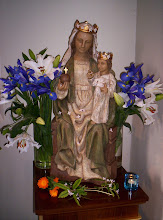
OUR LADY OF COLEBROOK
We fly to thy patronage, O Holy Mother of God: despise not our petitions in our necessities, but ever deliver us from all dangers, O glorious and blessed Virgin.
St Mary of the Cross
St Mary, pray for Australia and Australian Catholics; obtain for us deliverance from the unjust actions of bishops and priests; intercede for us that we may for now bear these trials as our apportioned cross, and at length overcome by patience and fidelity, as you did while on earth; now in heaven, be our advocate by your holy merits and glorious suffrages.
To hand over to others what I've contemplated...
Sicut enim majus est illuminare quam lucere solum, ita majus est contemplata aliis tradere quam solum contemplari.
(S. Thomas Aquinatis, S. T., II-II, clxxxviii, 6, resp.)
As for the use of the 1962 Missal as a Formaextraordinaria of the liturgy of the Mass, I would like to draw attention to the fact that this Missal was never juridically abrogated and, consequently, in principle, was always permitted.
… it has clearly been demonstrated that young persons too have discovered this liturgical form, felt its attraction and found in it a form of encounter with the Mystery of the Most Holy Eucharist, particularly suited to them.
What earlier generations held as sacred, remains sacred and great for us too, and it cannot be all of a sudden entirely forbidden or even considered harmful.
— Benedict XVI, Letter to Bishops concerning his Motu Proprio «SummorumPontificum» (7/7/2007)
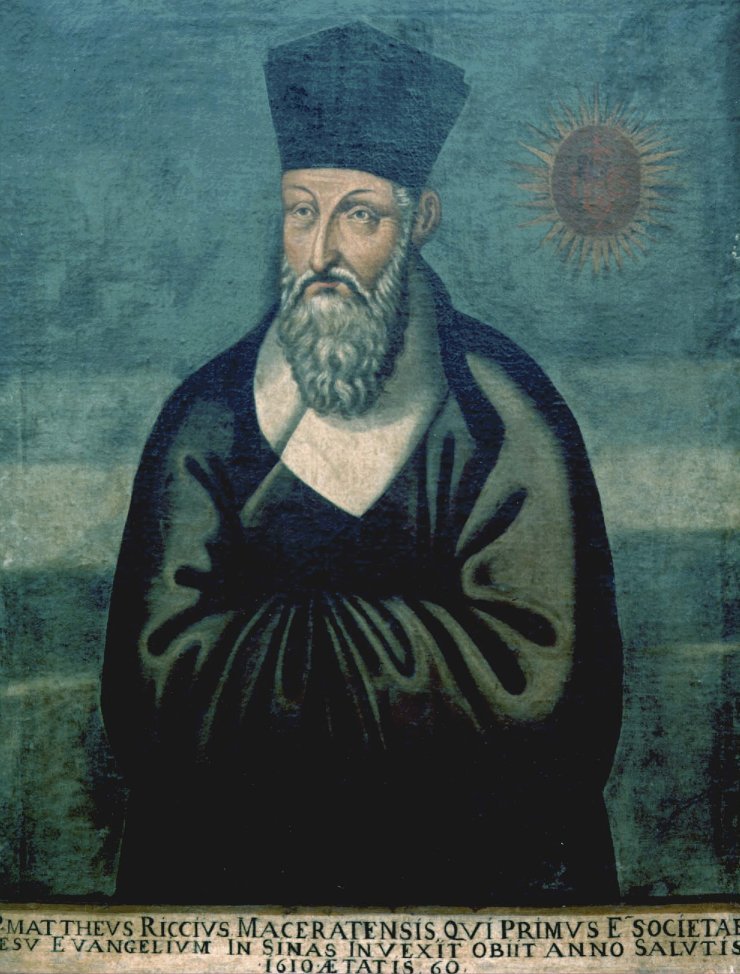
PRAYER FOR THE BEATIFICATION OF MATTEO RICCI, S.J. (1552-1610)
Eternal Father, Who didst send Thine Only-begotten Son into this world to redeem mankind, kindly hear our humble prayer, and grant the favour we ask at the intercession of the Servant of God Father Matteo Ricci, an outstanding preacher of the Gospel by Thy providential plan, one of the first to harvest the field made sacred by Saint Francis Xavier; who, as soon as he became a missionary in China, spread far and wide the teaching of Christ, and wisely guided countless souls along the road to salvation and sanctity; may it please Thee, therefore, to glorify him on earth, as we believe he is glorified in heaven, and to add his name to the list of the Blesseds and Saints; for his elevation to the honours of the altar would give greater glory to Thee and to Thy Church, and greater edification to the Chinese Christians who so courageously live their faith and their charity. Through the same Christ our Lord. Amen.
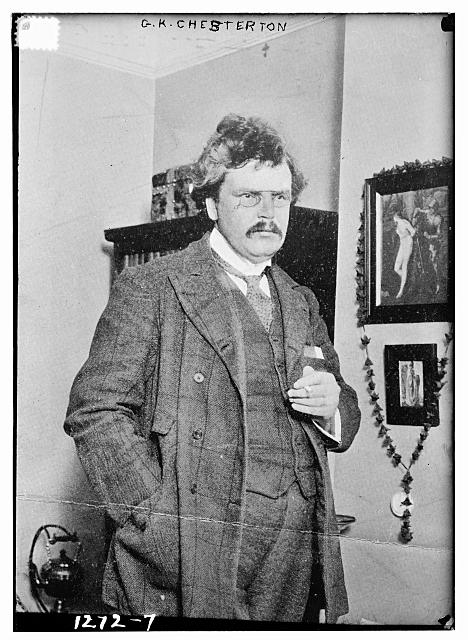
Prayer for the Intercession of G. K. Chesterton
God our Father, Thou didst fill the life of Thy servant Gilbert Keith Chesterton with a sense of wonder and joy, and gave him a faith which was the foundation of his ceaseless work, a hope which sprang from his enduring gratitude for the gift of human life, and a charity towards all men, particularly his opponents. May his innocence and his laughter, his constancy in fighting for the Christian faith in a world losing belief, his lifelong devotion to the Blessed Virgin Mary, and his love for all men, especially for the poor, bring cheerfulness to those in despair, conviction and warmth to lukewarm believers, and the knowledge of Thee to those without faith. We beg Thee to grant the favours we ask through his intercession, [and especially for …,] so that his holiness may be recognized by all, and the Church may proclaim him Blessed. Through Christ our Lord. Amen.
Pater, Ave, Gloria, Credo.
Pastore Tedesco - Santo Subito!
Eternal and Almighty God, who didst inspire in the heart of thy servant Pope Benedict XVI the sincere desire to encounter thee and announce thee, becoming a humble “co-operator with the truth” (cf. 3 John 1:8) and offering himself as a servant, for Christ and for the Church, make me also know how to love the Church of Christ and to be able to follow in my life the eternal truths that she proclaims. Deign, Lord, to glorify thy servant, Pope Benedict XVI, and grant, through his intercession, the favour I now ask of thee (mention your petition). Through the same Christ our Lord. Amen.
[Today,] we honor your prophet, Joshua, O Lord: * By his prayers save our souls.
Chosen by Moses to lead the people of God into the promised land, * you led them through the waters of the Jordan. * Thus, by your actions as well as by your name * you foreshadow the saviour, who leads us through the waters of baptism. * O holy prophet, Joshua, * beg him now to save our souls.
PRAY FOR THE REUNION OF ANGLICANS WITH THE SEE OF ROME
V/. Pray for them, O Holy Mother of God.
R/. That they may be one in the Church of thy Son.
The Collect for the Anglican Use
O HOLY Ghost the Lord, who on Pentecost gavest the Church the gift of tongues that Christ might be known, loved and served by peoples of divers nations and customs: watch over the Anglican heritage within thy Church, we pray thee, that, led by thy guidance and strengthened by thy grace, that Use may find such favor in thy sight that its people may increase both in holiness and number, and so show forth thy glory; who livest and reignest with the Father and the Son, one God world without end. Amen.
the extraordinary form of the roman rite in perth, western australia
The Traditional Latin Mass is celebrated daily at St Anne's, Perth, Western Australia, which is the official Latin Mass Chaplaincy of the Archdiocese of Perth. The following details may, however, be out of date: Sunday Masses are at 7.30am (Low), 9.15am (Missa Cantata) and 11.15am (Low). Confessions are heard before all Sunday and weekday Masses, and afterwards if need be. Weekly programme includes sung Mass on feast days, Holy Hours with Benediction of the Most Blessed Sacrament, and the Holy Rosary before all Masses.
Sites I Refer To (not that I endorse all they contain...)