Monday, November 14, 2011

Caveat Emptor

I resolved some months ago to buy a hand-missal, having the new translation of the Ordinary Form Mass I perforce attend, as soon as possible.  Enquiries suggested that layfolk would have to wait till next year, but then I saw something advertised that seemed right – thus, having paid $80.10, plus postage and handling, I had delivered today... the U.S. edition of the Roman Missal, chapel edition!

While a handsome volume, but for the ugly cover illustration, at 24 by 19 cm (or about 9.5 by 7.5 inches) it is hardly portable, being intended for use by the priest himself at the altar, and I'd look a right mental if I dragged it to church with me.

(I seem to recall that Belloc used to port an altar missal to church with him, but that was odd even then.)

Best laid plans and all that...

From the Sublime to the Ridiculous

The useless priest who said Mass this morning preached the most spectacularly inappropriate homily – it being the feast of All Carmelite Saints, what does he talk about?  The recent suicide (complete with all the gory details) of a sports journalist, and then the usual liberal put-downs of "mediæval" ideas of "mortal sin", an allusion to the grim "institutional Church", and so forth.  

(In charity, I suppose it is right to focus on "nothing can separate us from the love of Christ", but the implication that suicide is unfortunate, but not really a cause of anxiety about any self-murderer's salvation, is hardly uncontroversial.)

And this, I repeat, on the feast of All Carmelite Saints!

This is the same priest who found it too difficult to get up on Saturday morning to celebrate the 7.30 am Mass, meaning the Carmelites had to alter their monastic timetable and postpone it till 9 am, and get another priest to say it for them (he being otherwise engaged).  Now, having increased the workload for others, he has been reassigned to take the Monday early Mass (one wonders how long he'll stick at it).

At Carmel, a slow, meditative manner is encouraged: he belts through the Mass, and you hear the outside door bang when he leaves, having very quickly devested before even the final hymn is ended.

This priest obviously hasn't bothered to learn the new words for "Behold the Lamb of God" or any of the other bits of the new translation (he conspicuously didn't recite the Gloria with the congregation this morning).

I was so cross it was all I could do not to shout out "Lazy ignorant priest!" during the service.  I certainly muttered under my breath.

When I left after Mass, I was fortunate enough to have a chance to disburden myself to Sandra, one of the regulars - I confessed my fault to her: she told me not to worry, since this had actually been one of his better sermons!  Apparently his antics at the Saturday Masses (which I've hardly ever attended at Carmel) were appalling: once, he preached on how good Bishop Morris of Toowoomba was, and how nasty the Holy Father - and this to cloistered religious!

I now understand why other parishioners have told me they have stopped going to Mass in his parish, and go elsewhere on Sundays.

From shitten shepherds who lead astray and drive away the flock – Good Lord, deliver us.

Sunday, November 13, 2011

Hobart Missa Cantata: the Postcommunion

To-day I’ve been down to Hobart and back, for to M.C. at our monthly Traditional Latin Mass, the one and only permitted in the Archdiocese (whatever a certain Supreme Pontiff may have decreed).

(This began as a comment on David Schütz's blog, but I've decided to save time and cross-post it here on my own.)

In any case, not to belly-ache but to celebrate, I was indeed uniquely privileged to stand at the priest’s side throughout the Liturgy (but for the prayers at the foot of the altar, the Consecration and my own Communion, naturally), and doing so made me suddenly aware (as I pointed it out for Father in the Missal) that the Postcommunion of to-day, the 23rd Sunday after Pentecost in the Extraordinary Form is – that of this selfsame Sunday in the Ordinary Form, the 33rd Sunday per annum!

It is actually quite rare to find any prayer or chant occurring in both forms of the Roman Rite on the same day, so my curiosity was piqued.

The first thing to note is an important change of address made by the revisers: in the traditional Missal, the Postcommunion is as follows:


Súmpsimus, Dómine, sacri dona mystérii, humíliter deprecántes, ut, quæ in tui commemoratiónem nos * fácere præcépisti, in nostræ profíciant infirmitátis auxílium. Qui vivis et regnas cum Deo Patre…


I have highlighted the words subsequently changed, and inserted an asterisk where two new words were inserted in the reform – obviously, the prayer was redirected, so as to address God the Father rather than God the Son (and if I recall correctly that was itself a change made centuries earlier, from the initial almost total address of all such orations to the Father, to also addressing the Son if the prayer seemed to better suit it):


Súmpsimus, Dómine, sacri dona mystérii, humíliter deprecántes, ut, quæ in sui commemoratiónem nos *Fílius tuus* fácere praecépit, in nostræ profíciant caritátis augméntum. Per Christum…


The other interesting, and, I am afraid, all too predictable modification was that made to the intention of the prayer: no longer do we pray for aid for our weakness, but for an increase of charity. Now, both intentions are good and orthodox, but unfortunately the semi-Pelagian feel of “Gaudium et Spes” (to quote the current Pope when commenting when yet a priest on the Council documents!) has here made itself manifest: we do not confess our weakness, but perhaps too complacently ask for a boost to our lovingkindness.

In other news from today’s Mass, the choir was without its usual director, and the threat of having only a Low Mass was upon us – but, perhaps high-handedly and selfishly preferring a  Missa cantata (mea culpa), I reminded Simon, as locum tenens of the choir director, that as a bare minimum the Propers could simply be monotoned, advised him to sing the most familiar setting of the Ordinary (Missa VIII – de Angelis – and Credo III), and suggested that any other Latin ditties he knew could be sung to fill in the time at Offertory and Communion, so the good old Salve and Adoro te devote saved the day.

Before Mass and afterward, I reminded him that such was the practice over in Perth, W.A.,  whenever Fr Rowe wanted a sung Mass at the drop of a hat on a weekday (it brings back memories of a week's retreat, at which myself as the one chorister, and Aaron as the one server, had to provide him with a sung Mass between us daily).

We even sang “Faith of our Fathers” as a fitting recessional. Best of all (as we Catholics say) Mass was a bit faster than usual, taking just an hour.


Deo gratias et Mariæ!

Past, Present - and Future?

While reading a little from Dom Edmund Martene's De antiquis Ecclesiæ ritibus (Antwerp, 1763), I came across the following rather startling prayer (p. 216), part of the response to the Orate fratres, in a Mass Ordo he quotes as deriving from the monastery of St Gregory in the Gregorian Valley (?) in the Diocese of Basel (if I translate it aright):

Misereatur tui omnipotens Deus, et dimittat tibi omnia peccata tua præterita, præsentia et futura.

(Almighty God have mercy upon thee, and forgive thee all thy sins past, present and future.)

While it makes sense to pray that a person's past and present sins be forgivenen, it seems mighty presumptuous to pray that their sins of the future be forgiven!  How can what has not come to pass be already forgiven?

Saturday, November 12, 2011

Missa Cantata in Hobart

To-morrow I drive down to Hobart, as our monthly Missa cantata is being held on the 2nd Sunday of November this year, our priest having been away last Sunday.

In other news, I've bought my airline tickets for my trip to Europe next year, so, God willing, I will most definitely be participating in the Paris to Chartres Pilgrimage.

Tuesday, November 8, 2011

Blessed Elizabeth of the Trinity

Laudem gloriæ – that was the "new name" that Blessed Elizabeth believed the Lord to have vouchsafed her: to live unto God as "a praise of glory", living by grace to the praise of His glory (cf. Ephesians i, 6. 12. 14).  (In her simplicity, she didn't note that, while laudem is the word thrice repeated in the Latin Vulgate, as a name it should be in the nominative, not the accusative, and so really would be Laus gloriæ.  But everything is received according to the mode of the receiver.)

One delight amongst others of attending Mass at Carmel is to celebrate the feasts of their Order's saints, and thereby to be edified.  I was doubly delighted this morning, since a very good preacher indeed, Fr Gregory, a Dominican whom I knew when I lived in Melbourne, is down to visit the good nuns, and blessed us all with well-chosen words.  It was a special day also for Mother Elizabeth,  the Prioress, whose name-day it is: pray for her, that she have all needed graces.

Every saint is a gift of God to the Church, pointing us heavenward (to try and paraphrase somewhat of what he spoke); in Bl Elizabeth we see the mystery of Divine election in particular – the mystery whereby, for no merit of our own, God chose her, chooses you, chooses me, and invites us to respond to His inexpressible gift by living as we must if we are to fulfil this call, this vocation, and fulfil it evermore in eternity, in heaven.

As is most fitting, given her great devotion to these words of St Paul, the Epistle was taken from that of his to the Ephesians, the first chapter, verses 3 to 14, which I subjoin in the Douay version:
Blessed be the God and Father of our Lord Jesus Christ, who hath blessed us with spiritual blessings in heavenly places, in Christ: as he chose us in him before the foundation of the world, that we should be holy and unspotted in his sight in charity. Who hath predestinated us unto the adoption of children through Jesus Christ unto himself: according to the purpose of his will: unto the praise of the glory of his grace, in which he hath graced us in his beloved Son, in whom we have redemption through his blood, the remission of sins, according to the riches of his grace, which hath superabounded in us in all wisdom and prudence, that he might make known unto us the mystery of his will, according to his good pleasure, which he hath purposed in him, in the dispensation of the fulness of times, to re-establish all things in Christ, that are in heaven and on earth, in him. In whom we also are called by lot, being predestinated according to the purpose of him who worketh all things according to the counsel of his will. That we may be unto the praise of his glory, we who before hoped Christ: in whom you also, after you had heard the word of truth, (the gospel of your salvation;) in whom also believing, you were signed with the holy Spirit of promise, who is the pledge of our inheritance, unto the redemption of acquisition, unto the praise of his glory.
Meditate on these glorious words!

Monday, November 7, 2011

Bring Back the Placeat

A gift much to be hoped for would be the extension of several rubrics in the modern Carthusian Missal of 1981 to the whole Roman Rite.

To repeat what I have blogged on before:

  • the Carthusian Mass retains the Introit, Gradual, Alleluia or Tract, and Communion – the chant Propers – just as the Roman Mass does (in scarce books such as the Graduale), but incorporates their texts into the Missal for greater convenience (alas, even the Carthusians only retain the chant of the Offertory for sung Masses, and do not include its text in their Missal);
  • the Carthusian Mass has but one Penitential Act, that using the Confiteor &c.;
  • the Carthusian Mass retains the Lavabo at the washing of the priest's hands (which could at least be given as an alternative text in the Roman Missal, alongside the modern choice of Lava me);
  • above all, the Carthusian Mass has the rule (Introduction, I, 6) Precem eucharisticam de more secreto proferimus, concelebratione aliisque circumstantiis particularibus exceptis – "The Eucharistic Prayer we customarily offer secretly, excepting at concelebrations and other particular circumstances" – and would that this rule be returned to use in the Roman Rite (where until the reform of the Liturgy, the Roman Canon was only prayed aloud at ordinations);
  • the Carthusian Mass has no Memorial Acclamations (which are foreign to the Roman Rite, after all, being derived from the Coptic if I recall correctly);
  • the Carthusian Mass appoints the Placeat (in their recension of that venerable prayer) to be said after the dismissal, as the priest bows before the altar before kissing it.

I would like to emphasise, not so much even the very desirable making Memorial Acclamations and the Eucharistic Prayer aloud optional, but the reinsertion of the Placeat into the modern, Ordinary Form of the Mass.

As Michael Davies pointed out somewhere in his writings, even the inclusion of the Placeat alone would safeguard the traditional understanding of the Mass as a propitiatory sacrifice, offered by the priest, for the living and the dead, against modern tendencies to read it as but a Protestant commemorative service.

None other than the Sacred Congregation of Rites, in Tres Abhinc Annos, its Second Instruction “for the orderly implementation of the Constitution on the Liturgy of the Second Vatican Council” (May 4, 1967), specified that:

It is recommended that the priest recite the Placeat silently as he is leaving the altar. (n. 16)

The Placeat also well-expresses the consensus of East and West (as confirmed by the Byzantines at the Synod of Constantinople in 1156) that the Divine Sacrifice of Christ is offered up to all Three Divine Persons, He receiving as God what He offers as Man: hence the prayer prays the Holy Trinity to receive the Holy Sacrifice.

My own reflection has made me realize how the Placeat well corresponds and answers to the Orate fratres and its response Suscipiat, and also how the Placeat well-summarizes and reflects the phrasing and theology of the Roman Canon.

Herewith, the texts of the Orate fratres &c. (in Latin and the new English version), and then the Placeat (with an unofficial translation):

Orate, fratres, ut meum ac vestrum sacrificium acceptabile fiat apud Deum Patrem omnipotentem. R/. Suscipiat Dominus sacrificium de manibus tuis, ad laudem et gloriam nominis sui, ad utilitatem quoque nostram, totiusque Ecclesiæ suæ sanctæ.

Pray, brethren (brothers and sisters), that my sacrifice and yours may be acceptable to God, the almighty Father. R/. May the Lord accept the sacrifice at your hands for the praise and glory of his name, for our good and the good of all his holy Church. 


Placeat tibi, sancta Trinitas, obsequium servitutis meæ, et præsta, ut sacrificium, quod oculis tuæ Majestatis indignus obtuli, tibi sit acceptabile, mihique et omnibus, pro quibus illud obtuli, sit, te miserante, propitiabile. Per Christum Dominum nostrum. Amen.

(May the homage of my service be pleasing to Thee, O holy Trinity; and grant, that the sacrifice, which I, though unworthy, have offered in the sight of Thy Majesty, may be acceptable to Thee: and through Thy mercy win forgiveness for me and for all those for whom I have offered it.  Through Christ our Lord.  Amen. – Cabrol's translation)

It will be evident how the thoughts expressed in the Orate fratres &c. are resumed in the Placeat.

The parallels between the Placeat and the Roman Canon are very many; evidently, the sacramental theology of the latter suffused the composer of the former, who simply put into the singular what the Canon renders in the plural: 
  • Placeat… acceptabile… propitiabile – cf. accepta habeas… placatus accipias… acceptabilemque… accepta habere (Roman Canon, Te igitur, Hanc igitur, Quam oblationem, Supra quæ); 
  • obsequium servitutis meæ – cf. oblationem servitutis nostræ (Roman Canon, Hanc igitur); 
  • quod oculis tuæ Majestatis – cf. offerimus præclaræ Majestati tuæ… Supra quæ propitio ac sereno vulto respicere digneris… in conspectu divinæ Majestatis tuæ (Roman Canon, Unde et memores, Supra quæ, Supplices te rogamus); 
  • sacrificium… mihique et omnibus pro quibus illud obtuli – cf. pro quibus tibi offerimus, vel qui tibi offerunt hoc sacrificium laudis, pro se, suisque omnibus (Roman Canon, Memento Dñe); 
  • indignus – cf. Nobis quoque peccatoribus (Roman Canon, Nobis quoque); 
  • te miserante – cf. de multitudine miserationum tuarum sperantibus... veniæ… largitor (Roman Canon, Nobis quoque).
It may be added that, by analogy with the what was done elsewhere to private prayers of the priest in the reform of the liturgy of Mass, the short ending Per Christum Dominum nostrum could be deleted; it does not occur in all recensions of this prayer (cf. Jungmann).

Priests: even for the moment as a private devotion, bring back your praying of the Placeat!

Mass in Hebrew, Greek, Latin – and English

The Roman Mass is of course always offered in the three sacred languages (cf. St John xix, 20) of Hebrew, Greek and Latin, at least in the Extraordinary Form thereof – for Amen, Alleluia, Sabaoth and Hosanna are of course Hebrew words, as Kyrie and Christe eleison are Greek, and the rest is Latin.

In my own parish, the weekday Mass, in the Ordinary Form, is offered in these tongues together with English: for daily the Kyrie is chanted in Greek, and the Sanctus and Agnus Dei in Latin, while of course those four Hebrew words Amen, AlleluiaSabaoth and Hosanna occur during the liturgy, the latter two within the Sanctus, while the Alleluia is sung, and many times we say Amen.

Since to-day is a public holiday here in northern Tasmania ("Recreation Day", whatever that means), I attended the 9am parish Mass.  Our priest likes music, and, seeing as to-day is a feria, he offered a Mass for the dead in purple vestments: "The Lord's my shepherd" was the opening hymn, while a version of the commendation said at funerals, set to a hymn-tune, was used as the closing hymn.  As is done always, the Kyrie, Sanctus and Agnus Dei were chanted, as was the Alleluia (bearing in mind that this is sung even at Requiems in the modern Mass, as is done in the Byzantine Rite also).  [I cannot now recall if he sang the doxology to the Eucharistic Prayer, but he usually does so.]

For this Requiem Mass, the 1st Preface of the Dead was used, together with Eucharistic Prayer III and its specially enlarged intercessions for  the departed as may be used at Masses for the dead; the orations were those "For Several Deceased Persons or for All the Dead", as follows:

Collect 
O God, who willed that your only Begotten Son, 
having conquered death, 
should pass over into the realm of heaven, 
grant, we pray, to your departed servants (N. and N.) 
that, with the mortality of this life overcome, 
they may gaze eternally on you, 
their Creator and Redeemer. 
Through our Lord Jesus Christ, your Son, 
who lives and reigns with you in the unity of the Holy Spirit, 
one God, for ever and ever.

Prayer over the Offerings 
Look with favour, we pray, O Lord, 
on the sacrificial offerings 
we present to you for the souls of your servants 
and, just as you bestowed on them 
the dignity of the Christian faith, 
grant them also its reward. 
Through Christ our Lord. 

Preface I for the Dead
It is truly right and just, our duty and our salvation, 
always and everywhere to give you thanks, 
Lord, holy Father, almighty and eternal God, 
through Christ our Lord. 
In him the hope of blessed resurrection has dawned, 
that those saddened by the certainty of dying 
might be consoled by the promise of immortality to come. 
Indeed for your faithful, Lord, 
life is changed not ended, 
and, when this earthly dwelling turns to dust, 
an eternal dwelling is made ready for them in heaven. 
And so, with Angels and Archangels, 
with Thrones and Dominions, 
and with all the hosts and Powers of heaven, 
we sing the hymn of your glory, 
as without end we acclaim: 

Eucharistic Prayer III, in Masses for the Dead
...
Remember your servant[s] N. 
whom you have called (today) 
from this world to yourself. 
Grant that he (she) [they] who was [were] united with your Son in a death like his, 
may also be one with him in his Resurrection, 
when from the earth 
he will raise up in the flesh those who have died, 
and transform our lowly body 
after the pattern of his own glorious body. 
To our departed brothers and sisters, too, 
and to all who were pleasing to you 
at their passing from this life, 
give kind admittance to your kingdom. 
There we hope to enjoy for ever the fullness of your glory, 
when you will wipe away every tear from our eyes. 
For seeing you, our God, as you are, 
we shall be like you for all the ages 
through Christ our Lord, 
through whom you bestow on the world all that is good.
Through him...

Prayer after Communion 
Through these sacrificial gifts, 
which we have received, O Lord, 
bestow on your departed servants your great mercy, 
and, to those you have endowed with the grace of Baptism, 
grant also the fullness of eternal joy. 
Through Christ our Lord. 

Note especially the mention of offering the Sacrifice for the souls of the departed in the Prayer over the Offerings – reference to the "souls" of the departed was often dropped in the reform of the Missal, but survives in certain of the prayers for use at Masses for the Dead.

For the Prayer of the Faithful or General Intercessions, Father took the intercessions from Lauds in the Office for the Dead, as also may be done.

After Mass and thanksgiving, I had a chat with Fr Allan, and he mentioned something sad that several priests have told of: a parishioner, quite devout, has just died – but the children, doubtless unchurched, didn't even want a Mass for her funeral, just some inoffensive private ceremony not even at the church; thus their shame and embarrassment at not being churchgoers, their rejection through laziness or sin of the practice of the Faith, deprives their Catholic mother of a proper Requiem, a terrible injustice.  Father of course indicated that, like those other priests I've heard the like from, he would be offering a Mass for the repose of her soul, lest she be deprived of the suffrages of Holy Church through the fault of her children.

(I of course do not quote kindly Father in referring to the unchurched persons in such a manner, but I think it quite true to do so.  Even an unbeliever ought have respect to the wishes of the departed, methinks.  It reminds me of the dreadful crime of Simone de Beauvoir in not letting her dying mother be told of her terminal illness, and refusing to allow her a priest when her mother would have surely wanted one.)

Sunday, November 6, 2011

Travel Advice, Please

Having resolved to attend next year's Paris to Chartres Pilgrimage, I am now casting about for ideas for places to visit in la belle France and environs.  (I do have cause to cross the border into southern Germany for a start.)

I think at least a few days in a good monastery will be high on my agenda.

Any and all suggestions may be left in the comments box.

First Sunday using the New Missal

This Sunday, at my parish of St Francis, the new translation of the Mass was at last used for all parts of the liturgy, with the arrival of the new Missal and our priest's usage of it, not just for all the Ordinary (as he had been doing since Pentecost) but for the Proper as well – in other words, to-day, the 32nd Sunday  in Ordinary Time, we heard the Collect, Prayer over the Offerings and the Prayer after Communion in the new translation for the first time.

Before Mass began, the very handsome "chapel edition" of the new Missal was on display, open to some of its beautiful illustrations – in Australia, the Missals are published by CTS, and are very fine.  Father told me after Mass that the large altar edition was even more grand, with gold-edged pages.  Name-plates listing all parishioners who donated funds towards the purchase of these volumes will be inserted soon as a memorial to their largesse.

My own copy of the new Missal is still in transit, but such are the wonders of the Internet that I have these texts to hand:

Collect 
Almighty and merciful God, 
graciously keep from us all adversity, 
so that, unhindered in mind and body alike, 
we may pursue in freedom of heart 
the things that are yours. 
Through our Lord Jesus Christ, your Son, 
who lives and reigns with you in the unity of the Holy Spirit, 
one God, for ever and ever.

Prayer over the Offerings 
Look with favour, we pray, O Lord, 
upon the sacrificial gifts offered here, 
that, celebrating in mystery the Passion of your Son, 
we may honour it with loving devotion. 
Through Christ our Lord.


Prayer after Communion 
Nourished by this sacred gift, O Lord, 
we give you thanks and beseech your mercy, 
that, by the pouring forth of your Spirit, 
the grace of integrity may endure 
in those your heavenly power has entered. 
Through Christ our Lord.

Standing in the pews hearing these prayed, it was obvious that the priest read them with good diction and evident comprehension; likewise, as I listened and considered their words, it was easy to understand them – not that it is my ears for whom they are meant, seeing as it is God they address! – so that furphy about the new translation being impossible to understand is easily confuted as a most stupid claim.

It is interesting to compare and contrast my own parish's uneventful reception of the new texts, and easy adjustment to the new words, to what I hear of the difficulties and unwelcoming attitude (played up and encouraged, I suspect, by the priests) in our neighbouring parish...

Come Advent Sunday, out with the old and in with the new: willy-nilly, the new Missal will be the only one allowed to be used at the Mass in the Ordinary Form.  Those who have dragged their heels and belly-ached will have to stop whining eventually and move with the times!  I must say, it amuses me no end to say this; perhaps the experience that some liberals are having will give them compassion for those who have endured far more in order to get Mass in the Extraordinary Form, but I doubt it.  How amusing it will be, that those who love the 1970's, and all its works, and all its empty promises, will have the choice of the more-accurately-translated Mass, some first fruit of the Reform of the Reform (and, with the upsurge in musical settings of the Propers in English, not to mention a push for a more solemn liturgy, is not this movement bearing yet further fruit?), or of the Mass of the Ages.

I suppose if they don't like either option they can become refugees from the Roman Rite.

Saturday, November 5, 2011

Litany of the Three Magi

As is my wont, I was perusing old prayer books, when came I across this delightful composition, a litany of SS Gaspar, Melchior and Balthasar, otherwise known as the Magi or the Three Kings of Cologne.  I surmise this was composed in Cologne by a Jesuit, given that city's devotion to those famous three whose relics grace its cathedral, and to the successful translation of almost every detail of the Epiphany gospel into prayer and moral reflection in a most Ignatian manner.  I particularly like the mention in one petition of the Roman Empire! – presumably referring to the Holy one, which encompassed Germany including Cologne until its lamented dissolution at the hands of the dreadful Napoleon.

The Altar and Shrine of the Three Kings at Cologne


LITANIÆ DE SANCTIS TRIBUS REGIBUS, SIVE MAGIS EVANGELICOS.

Kyrie, eleison.
Christe, eleison.
Kyrie, eleison.

Christe, audi nos.
Christe, exáudi nos.

Pater de cœlis, Deus, Miserere nobis.
Fili Redémptor mundi, Deus, Miserere nobis.
Spiritus Sancte, Deus, Miserere nobis.
Sancta Trínitas, unus Deus, Miserere nobis.

Jesu, Rex Regum, Miserere nobis.

Sancta Maria, Regina Regum, Ora pro nobis.
Sancte Joseph, nutricie Regis omnium, Ora pro nobis.

Sancte Rex Gaspar, Ora pro nobis.
Sancte Rex Melchior, Ora pro nobis.
Sancte Rex Balthazar, Ora pro nobis.

Sanctissimi Tres Reges, Orate pro nobis.
Sanctissimi Tres Magi Orientales, Orate pro nobis.
Reges Tharsis, Orate pro nobis.
Reges Árabum et Saba, Orate pro nobis.
Patriarchæ fidelium, Orate pro nobis.
Primitiæ gentium, Orate pro nobis.
Principes populorum, Orate pro nobis.
Quorum expectatio Jesus, Orate pro nobis.
Quorum desiderium Jesus, Orate pro nobis.
Quorum perfectum gaudium Jesus, Orate pro nobis.
Fide illuminatissimi, Orate pro nobis.
Spe robustissimi, Orate pro nobis.
Charitate ferventissimi, Orate pro nobis.
Auro amoris splendissimi, Orate pro nobis.
Thure devotionis religiosissimi, Orate pro nobis.
Myrrha patientiæ incorruptissimi, Orate pro nobis.
Humilitate profundissimi, Orate pro nobis.
Constantia fortissimi, Orate pro nobis.
Gratitudine amplissimi, Orate pro nobis.
Munificentia liberalissimi, Orate pro nobis.
Virtutum omnium specula, Orate pro nobis.
Qui instinctum divinum visa stella reverenter admisistis, Orate pro nobis.
Qui gratiæ efficaci prompta voluntate obtemperastis, Orate pro nobis.
Qui terram vestram, cognatos et amicos amore cœlestis Regis deseruistis,
Orate pro nobis.
Qui itineris molestias et difficultates nihil formidastis, Orate pro nobis.
Qui natum Regem Judæorum Hierosolymis quæsivistis, Orate pro nobis.
Qui coram Herode Christi fidem intrepide confessi estis, Orate pro nobis.
Qui per Scribas et Pharisæos de loco nascituri Messíæ ex Scripturis educti estis,
Orate pro nobis.
Qui ab Herode in Bethlehem dimissi estis, Orate pro nobis.
Qui stella denuo apparente gaudio magno valde gavisi estis, Orate pro nobis.
Qui eamdem vos antecedentem, donec staret supra, ubi erat puer, secuti estis,
Orate pro nobis.
Qui intrantes domum, puerum cum Maria matre ejus invenistis, Orate pro nobis.
Qui procidentes infantem virgineo residentem in gremio adorastis, Orate pro nobis.
Qui apertis thesauris vestris aurum, thus, et myrrham puero Jesu obtulistis,
Orate pro nobis.
Qui mystico muneribus fidem vestram universo orbi demonstrastis, Orate pro nobis.
Qui puerum Jesum auro Regem, thure Deum, myrrha hominem mortalem esse declarastis, Orate pro nobis.
Qui puero Jesu in Ægyptum deferendo viaticum præbuistis, Orate pro nobis.
Qui adoratione vestra supplice omnium virtutum exempla nobis præbuistis,
Orate pro nobis.
Qui nos aurum charitatis, thus orationis, et myrrham patientiæ Deo offerre docuistis,
Orate pro nobis.
Qui post adoratum Dominum et oblata munera Sacrosanctam Virginem Matrem, et hujus Sponsum Joseph humiliter salutastis, Orate pro nobis.
Qui ab eadem Sanctissima Virgine Maria, Virgineoque ejus Sponso Josepho gratias cum gaudio pro oblatis muneribus retulistis [sic; lege recipistis], Orate pro nobis.
Qui vosmet, vestraque regna et gentiles populos Christo, Sanctissimæque Virgini, ejusque Sponso commendastis, Orate pro nobis.
Qui ab eadem Sanctissima Virgine, ejusque Sponso cum felicissima omnium bonorum apprecatione [sic; lege appretiatione] digressi estis, Orate pro nobis.
Qui angelico in somnis alloquio ad Herodem redire prohibiti per aliam viam in regionem reversi estis, Orate pro nobis.
Qui Herodi divino jussu sapienter illusistis, Orate pro nobis.
Qui puerum Jesum prudenter periculo necis liberastis, Orate pro nobis.
Sancti Tres Reges, Orate pro nobis.

Peccatores, Vos rogamus, audite nos.
Ut veram et perfectam contritionem nobis impetretis, Vos rogamus, audite nos.
Ut nostri patrocinium dignanter suscipiatis, Vos rogamus, audite nos.
Ut Regi Regum nos reconciliare, commendare, et præsentare velitis,
Vos rogamus, audite nos.
Ut vestris virtutibus animas nostras illustretis, Vos rogamus, audite nos.
Ut aurum charitatis, thus devotionis, et myrrham mortificationis nobis impetretis,
Vos rogamus, audite nos.
Ut Christum Dominum Regem nostrum vobiscum semper quærere et invenire mereamur, Vos rogamus, audite nos.
Ut coram hæreticis et infidelibus Christi fidem intrepide confiteamur,
Vos rogamus, audite nos.
Ut ad Herodem, id est, mundi blandimenta et noxia desideria, ubi Christus non invenitur, nunquam redeamus, Vos rogamus, audite nos.
Ut per aliam viam vobiscum aliquando in cœlestem patriam revertamur,
Vos rogamus, audite nos.
Ut nobis in agonía existentibus, omniaque relinquentibus assistatis,
Vos rogamus, audite nos.
Ut paupertatem nostram vestris pretiosis muneribus ditetis, Vos rogamus, audite nos.
Ut Ecclesiam militantem, in primis [Sacrum] Romanum Imperium [i.e. Germania], ad ampliorem erga vos amorem et cultum excitetis, Vos rogamus, audite nos.
Ut clientes vobis devotos, et loca cultui vestro destinata ab adversariorum insidiis, bellorum tumultibus, inimicorum insultibus, fame denique et peste, aliisque periculis vestro patrocinio præmuniatis, vindicetis, et protegatis, Vos rogamus, audite nos.
Ut omnes pertinaces hæreticos ab hac provincia longe arceatis,
Vos rogamus, audite nos.
Ut omnibus iis, quicumque hoc promovere possunt, auxilium gratiæ efficacis impetretis, Vos rogamus, audite nos.
Ut precibus, et piis moribus populi exorati locum illum nunquam deseratis,
Vos rogamus, audite nos.
Ut gratiam finalem, et perseverantiam vestris cultoribus obtineatis,
Vos rogamus, audite nos.
Ut nos exaudire dignemini, Vos rogamus, audite nos.

Agnus Dei, qui tollis peccata mundi, Parce nobis, Domine.
Agnus Dei, qui tollis peccata mundi, Exaudi nos, Domine.
Agnus Dei, qui tollis peccata mundi, Miserere nobis.

Kyrie, eleison.
Christe, eleison.
Kyrie, eleison.

Pater noster…
V/. Et ne nos inducas in tentationem.
R/. Sed libera nos a malo.

V/. Tria sunt munera pretiosa.
R/. Quæ obtulerunt Magi Domino.
V/. Reges Tharsis, et insulæ munera offerent.
R/. Reges Árabum, et Saba dona adducent.

Oremus.

Deus, qui Tres Magos Orientales, Sanctosque Reges Gasparum, Melchiorem, et Balthazarum, ut recens natum in Bethlehem Filium tuum inviserent, et honorarent, mirabiliter illustrasti: tribue quæsumus, ut eorum exemplo et intercessione adjuti, veraque fide in hujus mundi tenebris illuminati, te lumen æternum agnoscamus, atque inter prospera et adversa tute gradiamur, donec ad te, qui lucem habitas inaccessibilem, remotis impedimentis omnibus, expedite perveniamus. Per Christum Dominum nostrum. R/. Amen.

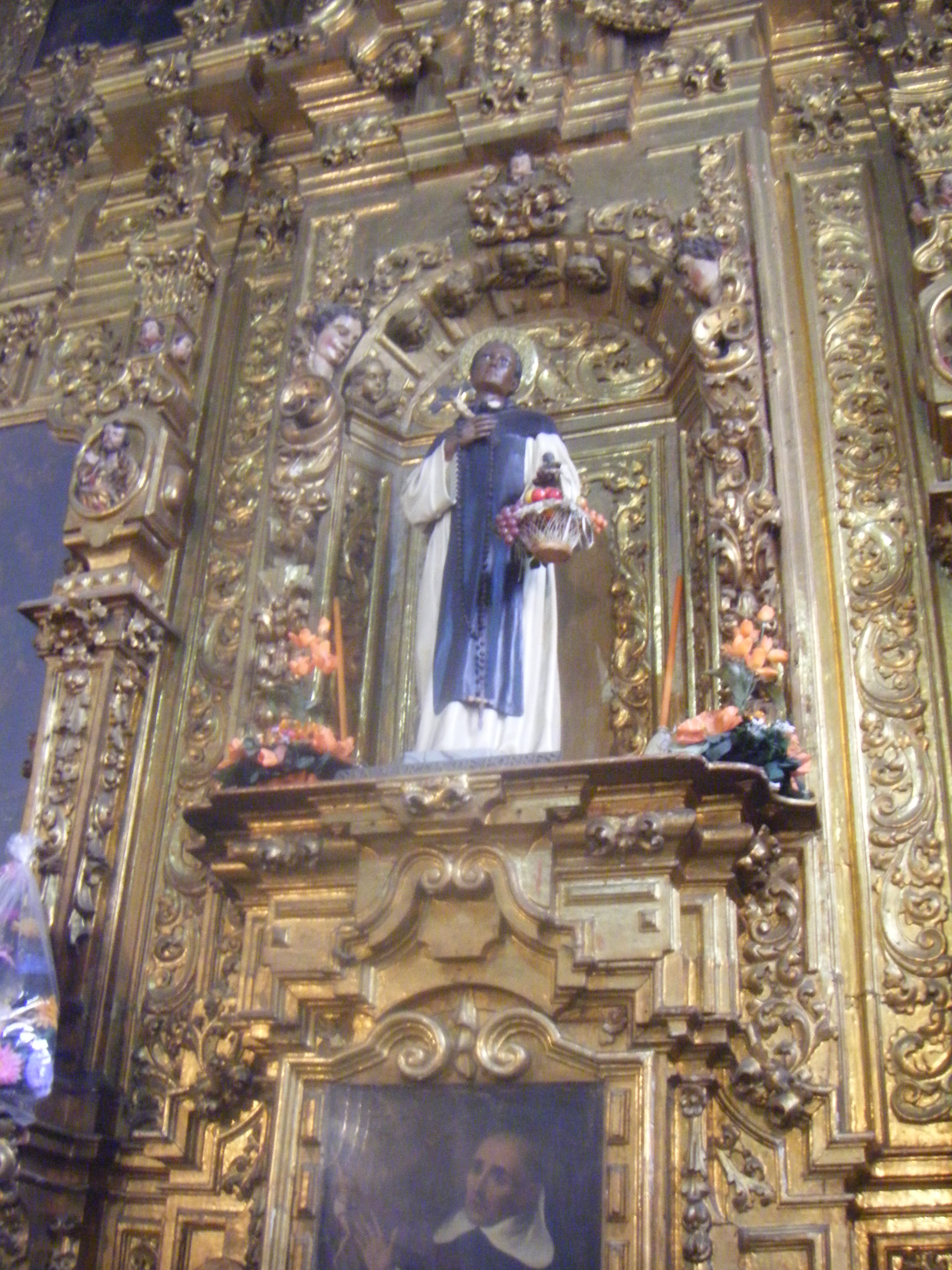
Good St Martin de Porres

I heard Mass of St Martin de Porres, juxta formam ordinariam, on Thursday the 3rd; I read Lauds of his feast to-day, according to the pre-Conciliar Dominican Calendar and Breviary, while waiting to go to confession.  How good to have a Saint twice over, to be an intercessor and support!  (It reminds me of a few years ago, when I kept Epiphany twice – once transferred to the Sunday, once on the 6th of January itself – and also Christmas twice! – once according to the Gregorian, and once the Julian Calendar.)

I am reminded again of one of great St Martin's miracles, worked here in Australia some decades ago: a lady, unsure of whether to accept a proposal of marriage (having been jilted before), came out from the confessional, knelt down to pray, turning all this over in her mind, and looking up beheld none other than St (or as he was then, Blessed) Martin kneeling in front of her: he sagely nodded his head to confirm the verdict of Providence on her suitor's suitability, and then, when she looked away, disappeared.  She and her husband lived a long and happy marriage ere they too passed into eternity – pray for them – and their son is now a Dominican priest.

The Collect of St Martin in the Dominican Rite:

Deus, humilium celsitudo, qui beatum Martinum Confessorem tuum ad cælestia regna transire fecisti: ejus meritis et intercessione concede nos ejus humilitatem ita imitari in terris, ut cum ipso exaltari mereamur in cælis. Per...

(O God, exaltation of the humble, Who didst make blessed Martin Thy Confessor to pass over to the heavenly kingdom: by his merits and intercession grant us so to imitate his humility on earth, that with him we may merit to be exalted in heaven. Through...)

I like the way this collect plays on the contrast between humility and exaltation (humilium celsitudo... humilitatem... exaltari) and also the interesting manner in which "kingdom", "earth" and "heaven" are in fact all plurals in the Latin (regna... terris... cælis).

The Lord solemnly warned us, "And whosoever shall exalt himself shall be humbled: and he that shall humble himself shall be exalted" ( St Matthew xxiii, 12) – and again, "Because every one that exalted (or exalteth*) himself shall be humbled: and he that humbleth himself shall be exalted" ( St Luke xiv, 11 and xviii, 14b*): I am proud, and must learn the way of humility – which is but the way of reason, since what have I to boast about?  Whatever I have, I have received from the Lord.  As the Apostle put it, "Or what hast thou that thou hast not received? And if thou hast received, why dost thou glory, as if thou hadst not received it?" (I Cor. iv, 7).  As the Forerunner taught, "He must increase: but I must decrease" (St John iii, 30).  The very word humility is derived from humus, the earth, from which we come and to which we shall return: to be humble is but to acknowledge the truth of our finitude.  Pride, as well as being the deadly sin at the root of all, is stupid foolishness, mere braggadocio, pretending to what is not really in our possession.  Yet so hard it is to eradicate it!

St Martin de Porres, pray for us.